After a good breakfast we waited outside for Gursewa Singh. We have decided to share the cost of the Tuk Tuk. Works out to be around USD$7.50 each.
Our first port of call was to buy the entrance tickets. You must possess an admission pass (an ‘Angkor Pass’) to visit the temples and sites in the Angkor Archaeological Park. Passes may be purchased at the main entrance on the road to Angkor Wat. One-day tickets only can be purchased at the secondary tollgate on airport road entrance near Angkor Wat and at Banteay Srey.
Passes are sold in one-day ($20), three-day ($40) and seven-day ($60) blocks. The three day pass is valid for one week, i.e. 3 days to be used within the week, not necessarily consecutively. The seven day pass is valid for one month, i.e. 7 days to be used within the month, not necessarily consecutively.
A one-day visit allows you to see the highlights of the most famous temples but very little more. Three days is sufficient to visit all of the major temples once, a few of the minor ones and have a little extra time at your favorites. Seven days is enough time to really explore some of your favorite ruins and visit many of the minor structures as well. One passport-sized photo is require at time of purchase of three and seven day passes. If you do not have a photo, free photos are provided at the main entrance, though this can be a time consuming process at peak entrance hours.
Visiting hours are 5:00AM – 6:00PM. Angkor Wat closes at 6:00PM, Banteay Srey closes at 5:00PM and Kbal Spean at 3:00PM. Always carry your ticket. It will be checked upon each park entry and at major temples. There is a significant fine for not possessing a valid ticket inside the park. A regular admission ticket is not required to visit Phnom Kulen, Koh Ker or Beng Melea, but there is a separate entrance fee of $20, $10 and $5, respectively.
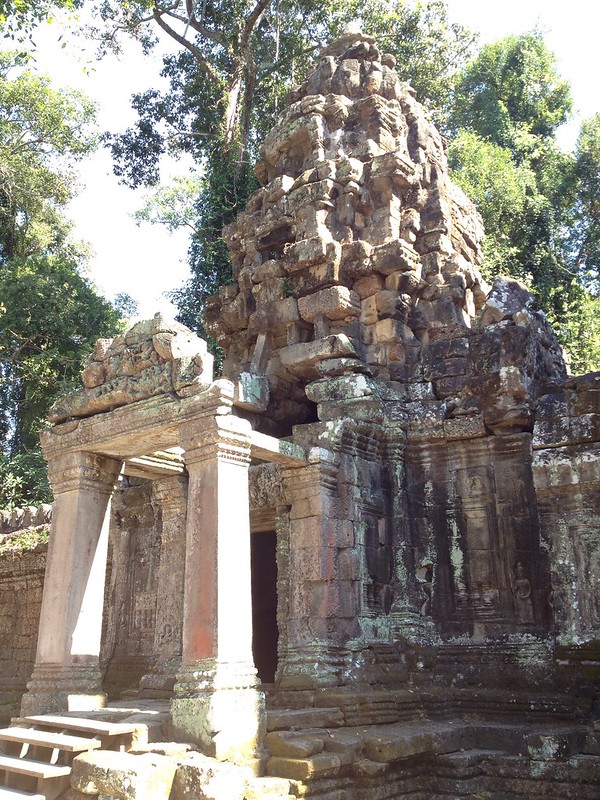
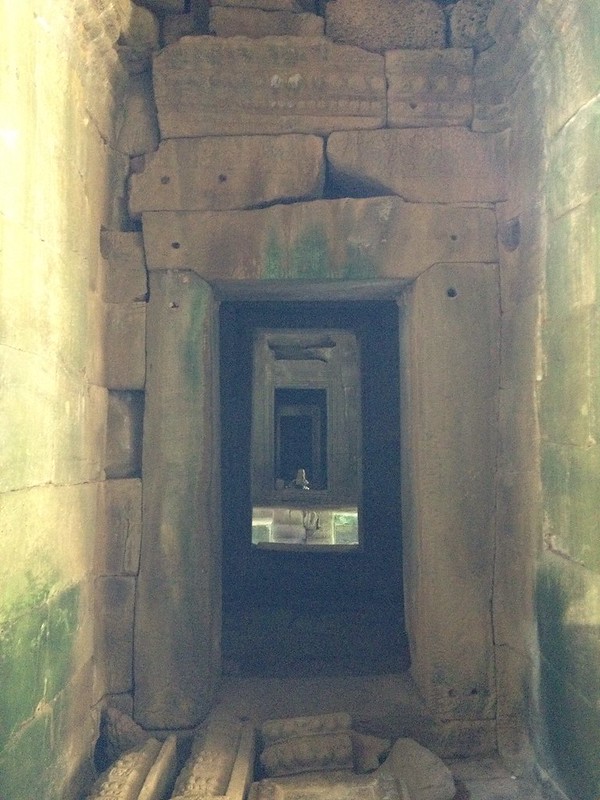
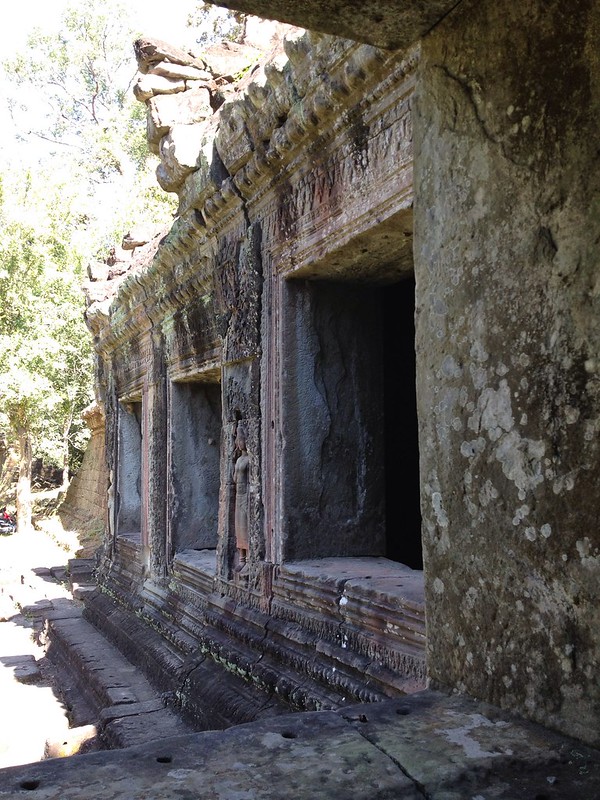
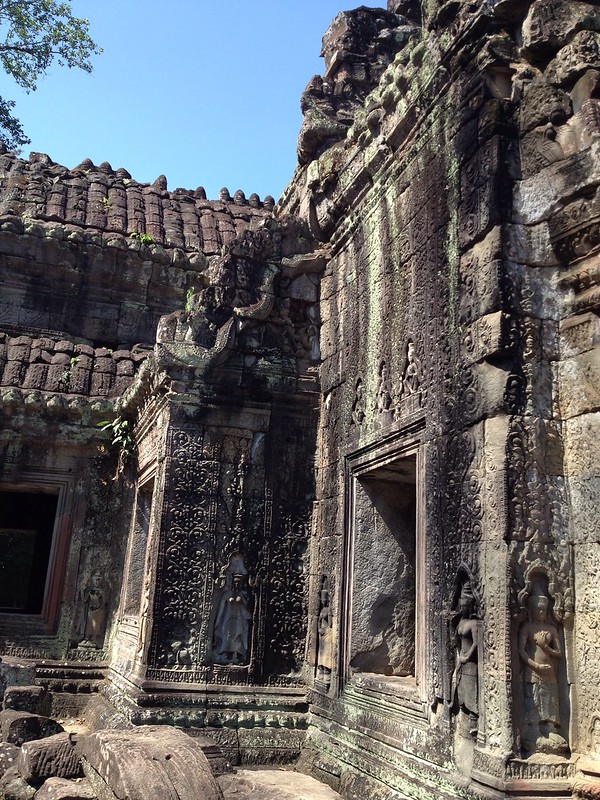
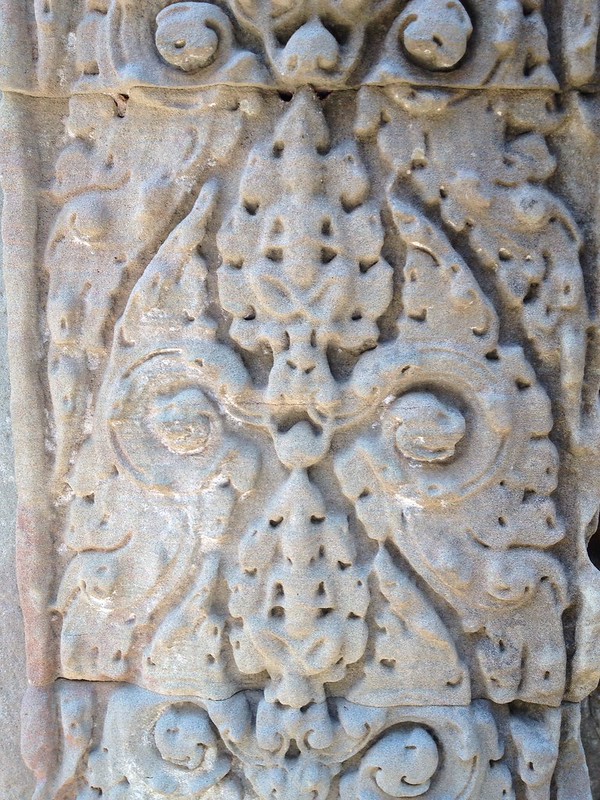
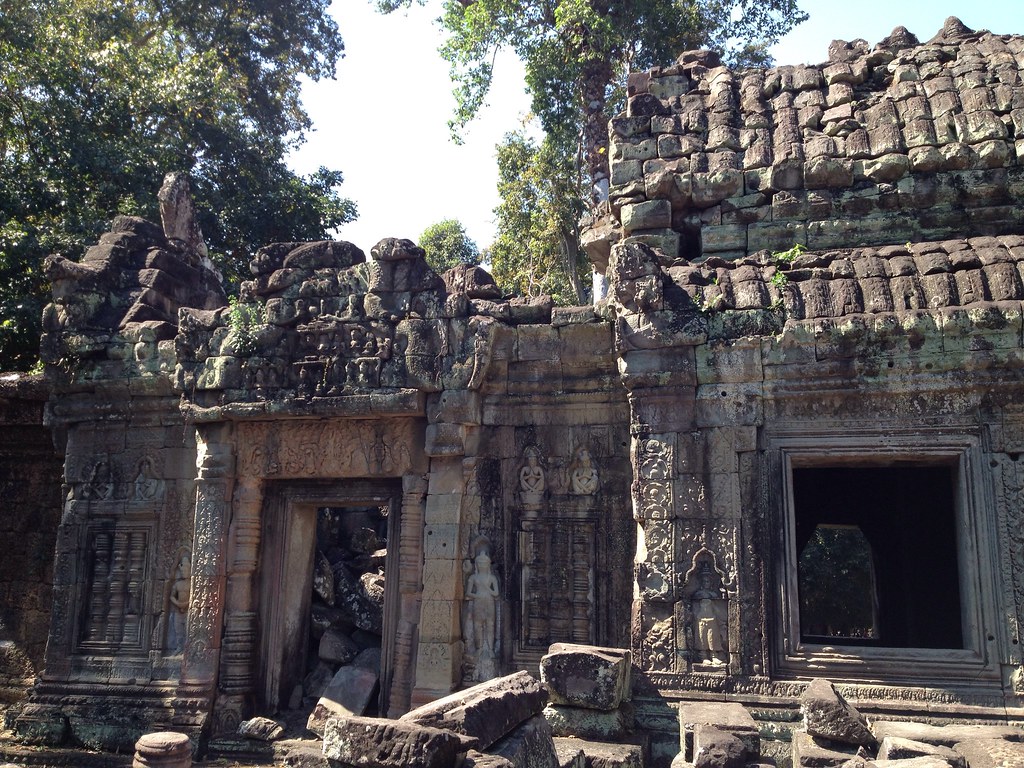
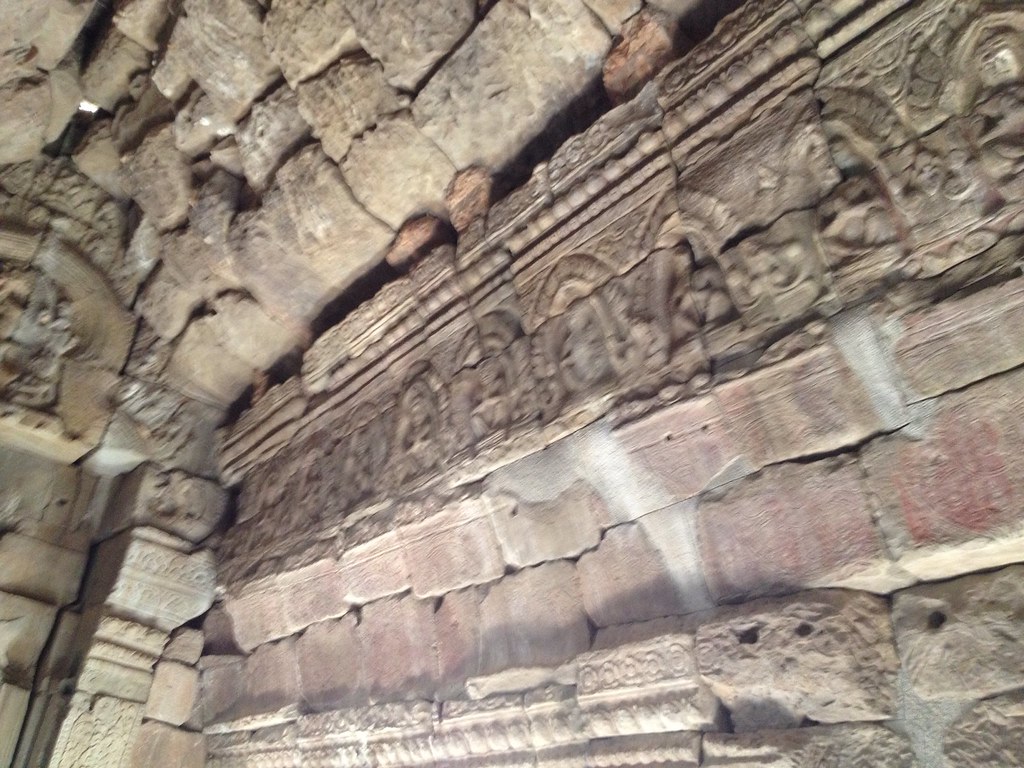
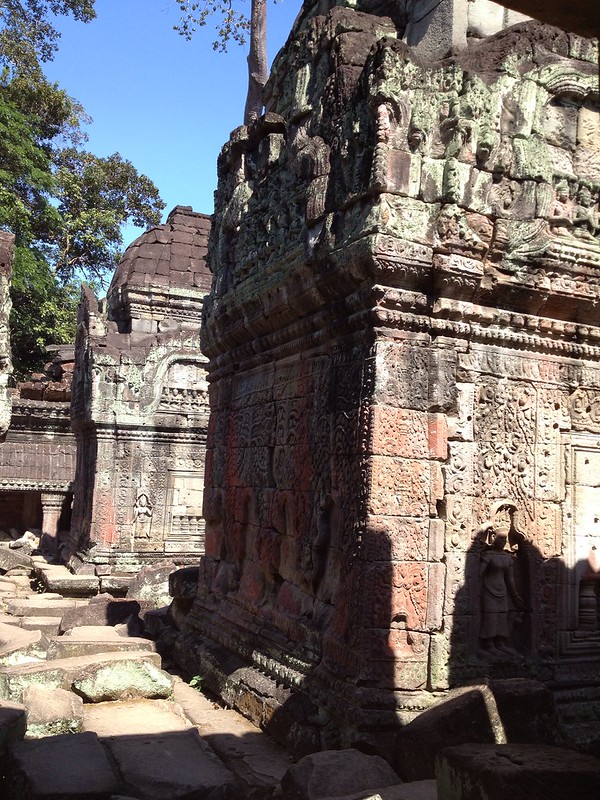
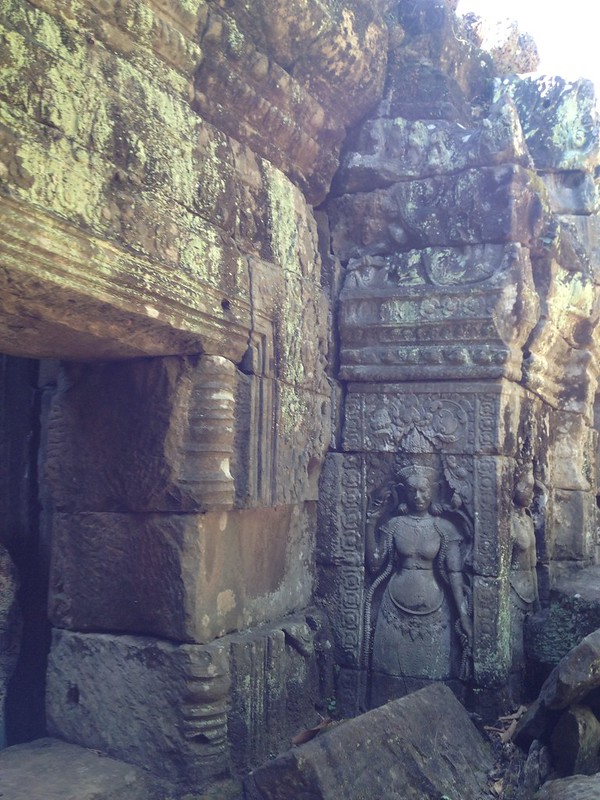
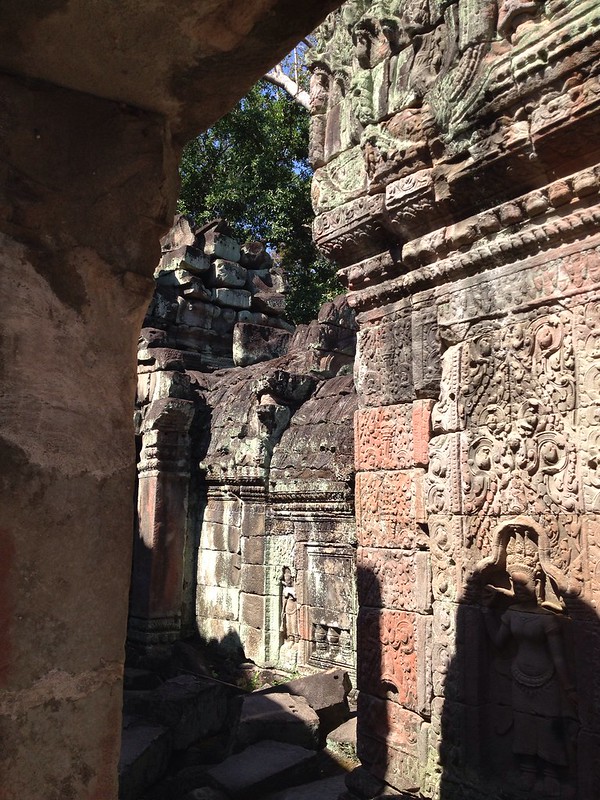
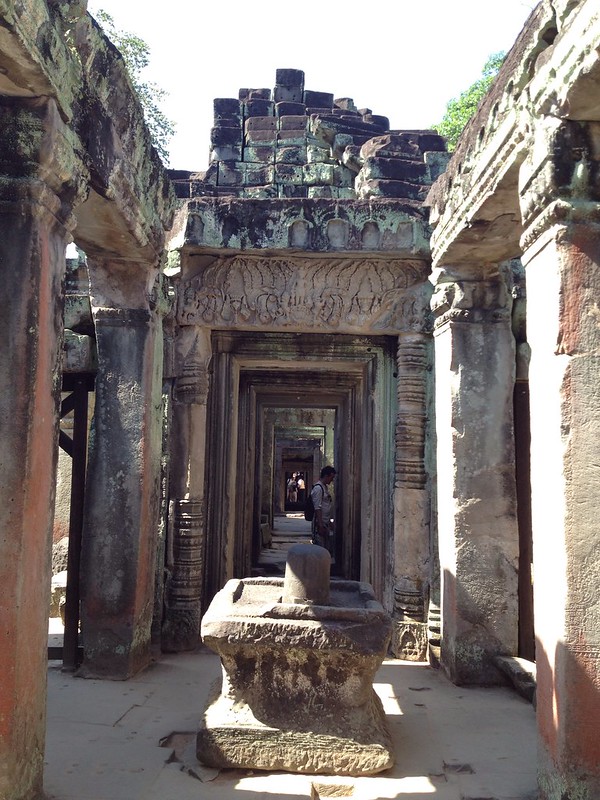
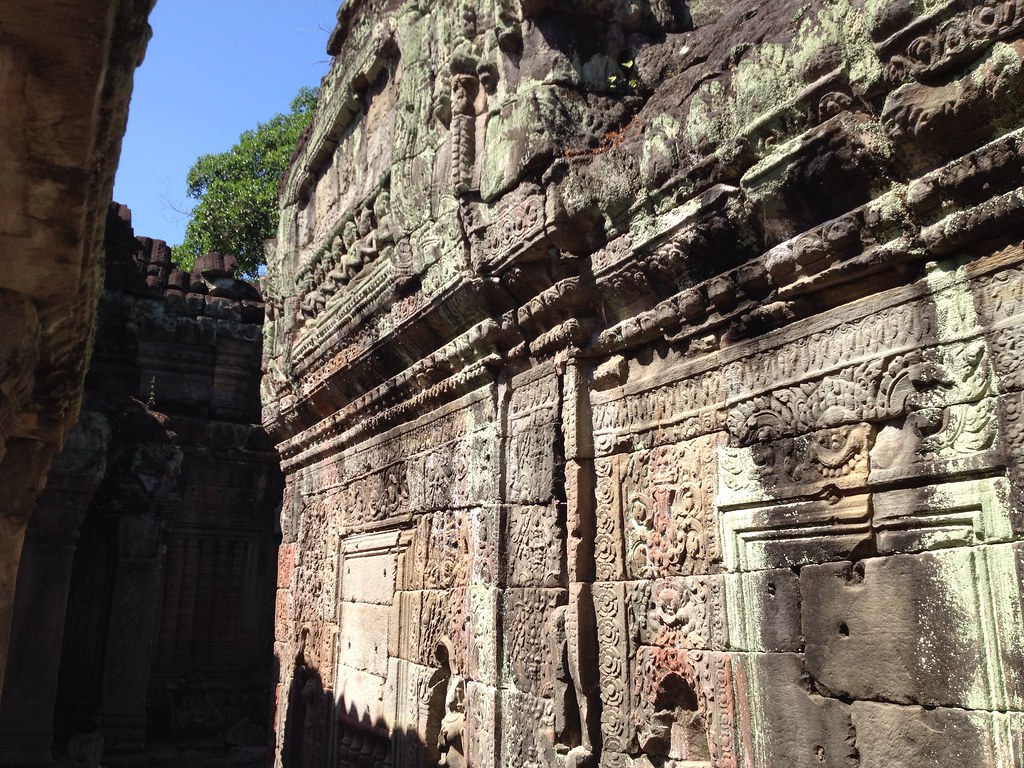
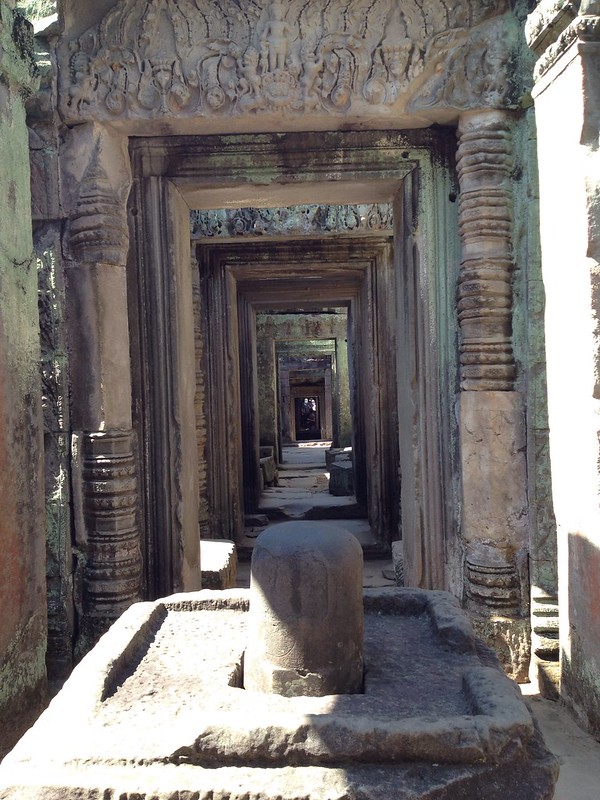
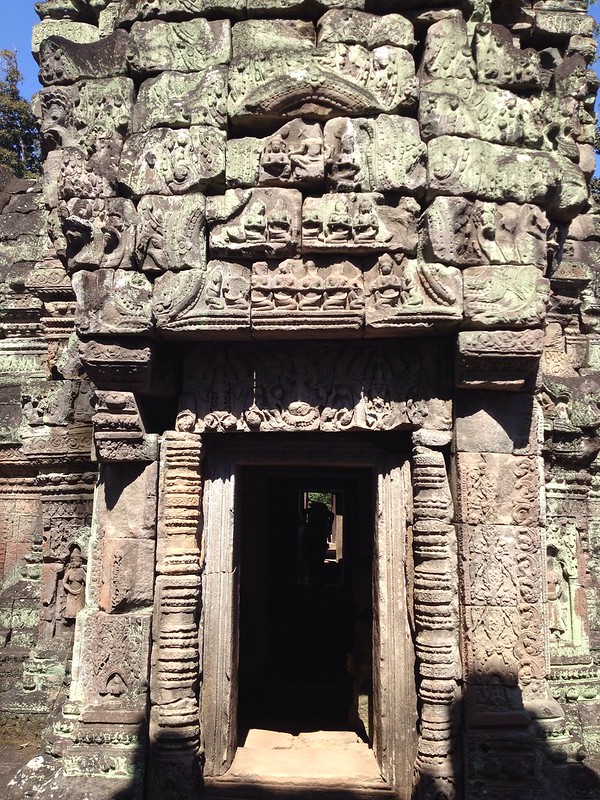
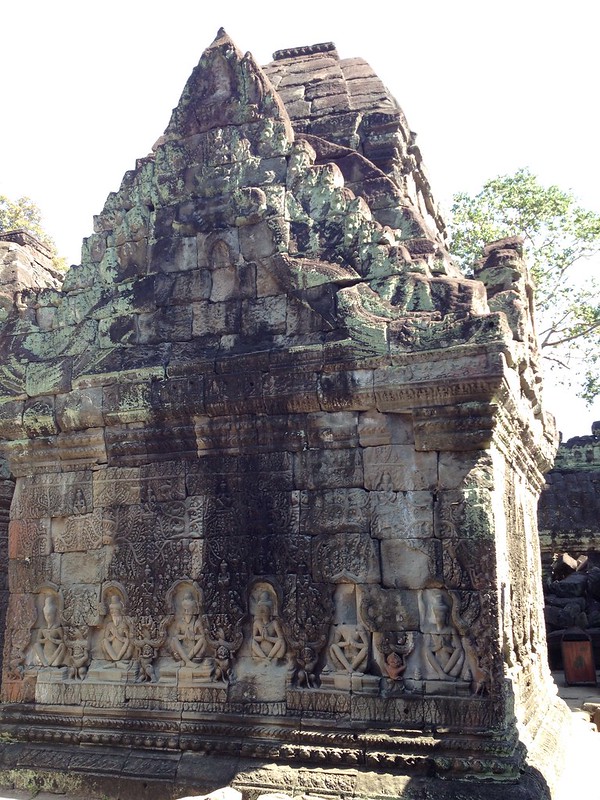
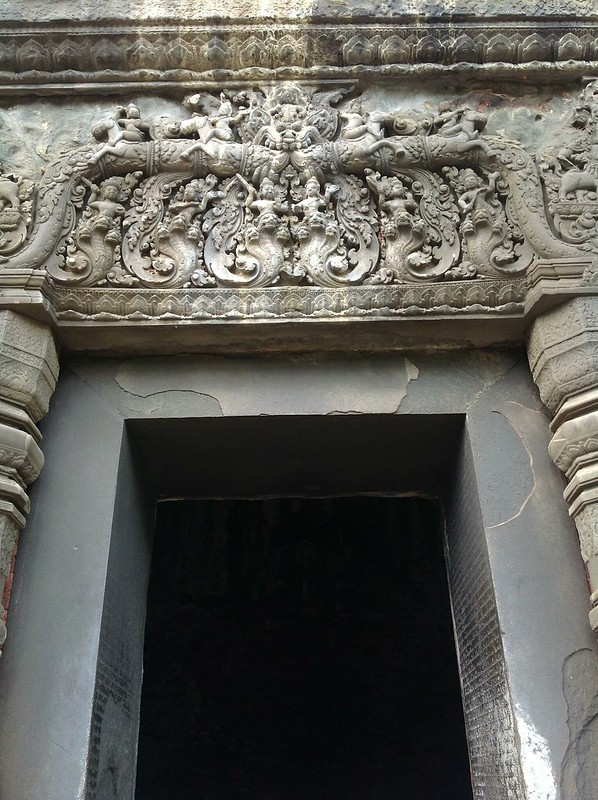
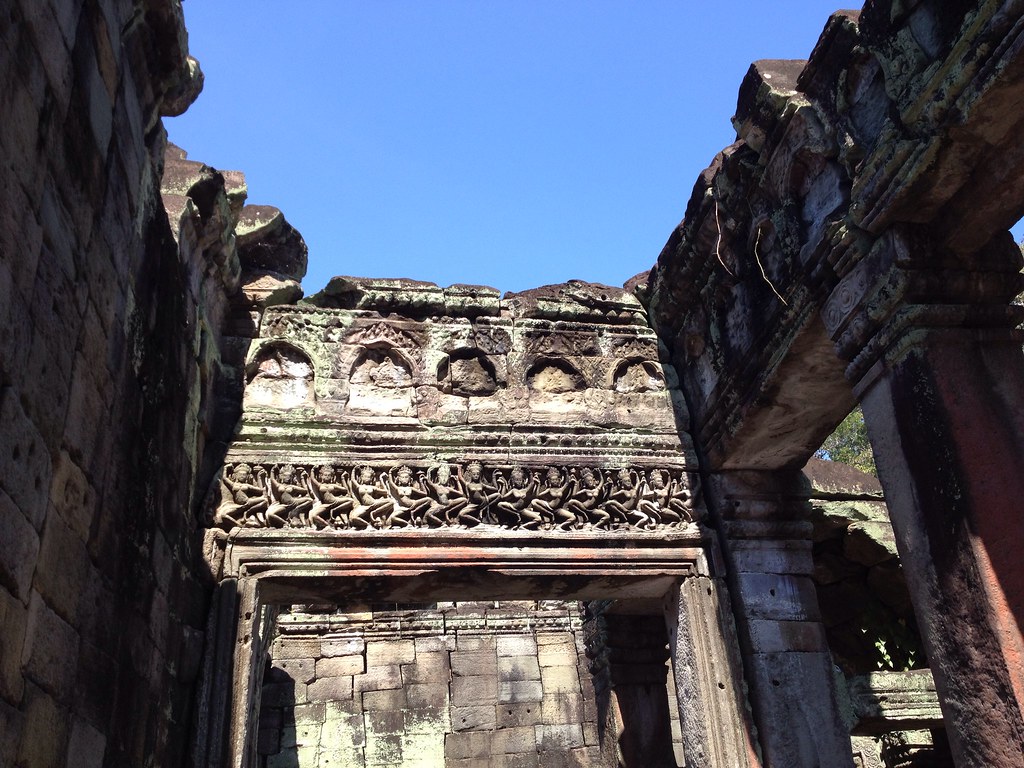
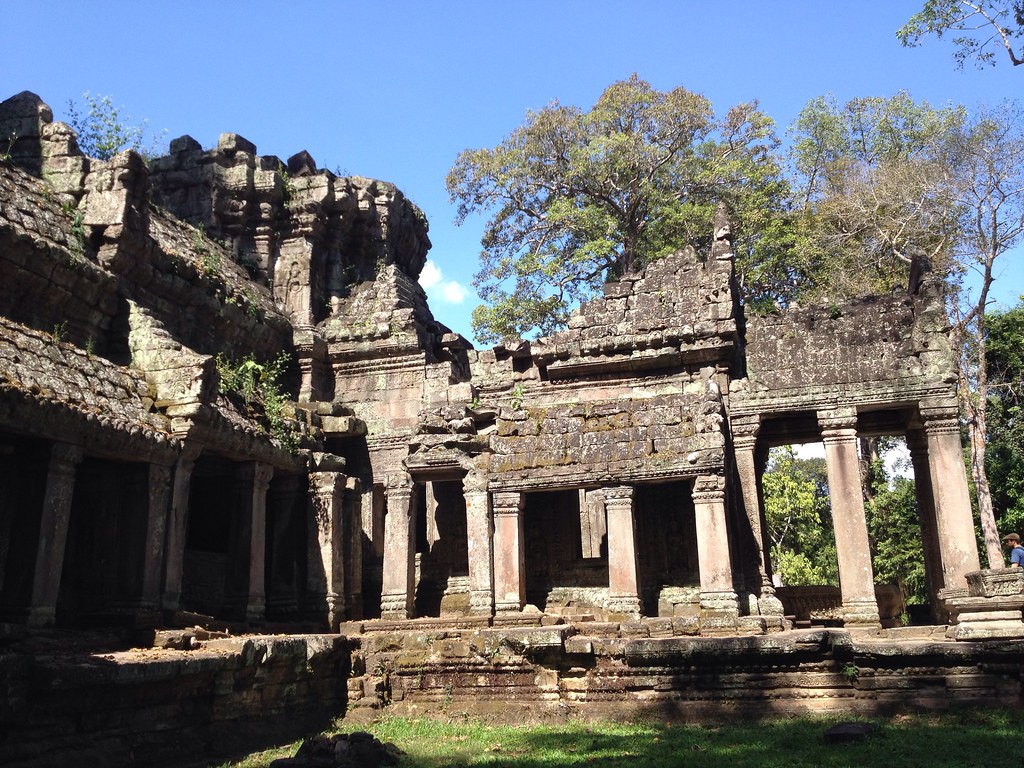
We then rode to Preah Khan. Sometimes transliterated as Prah Khan, is a temple at Angkor, Cambodia, built in the 12th century for King Jayavarman VII. It is located northeast of Angkor Thom and just west of the Jayatataka baray, with which it was associated. It was the centre of a substantial organisation, with almost 100,000 officials and servants. The temple is flat in design, with a basic plan of successive rectangular galleries around a Buddhist sanctuary complicated by Hindu satellite temples and numerous later additions. Like the nearby Ta Prohm, Preah Khan has been left largely unrestored, with numerous trees and other vegetation growing among the ruins.
Preah Khan
The Entrance where we spent an hour before realising the temple is further on!
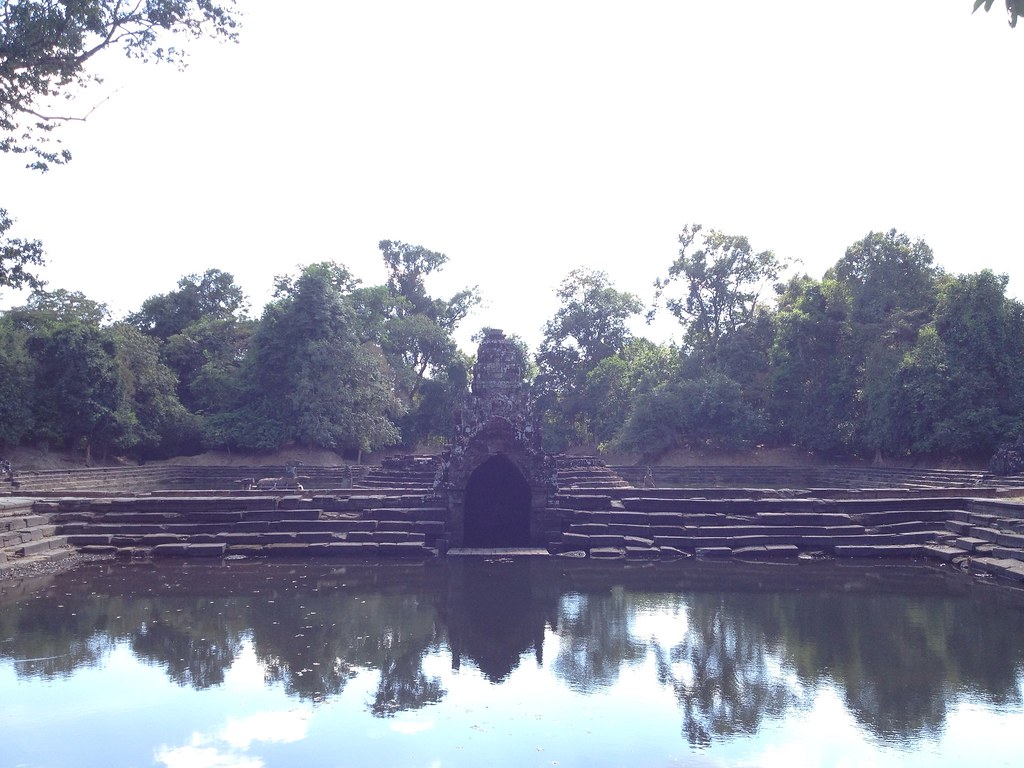
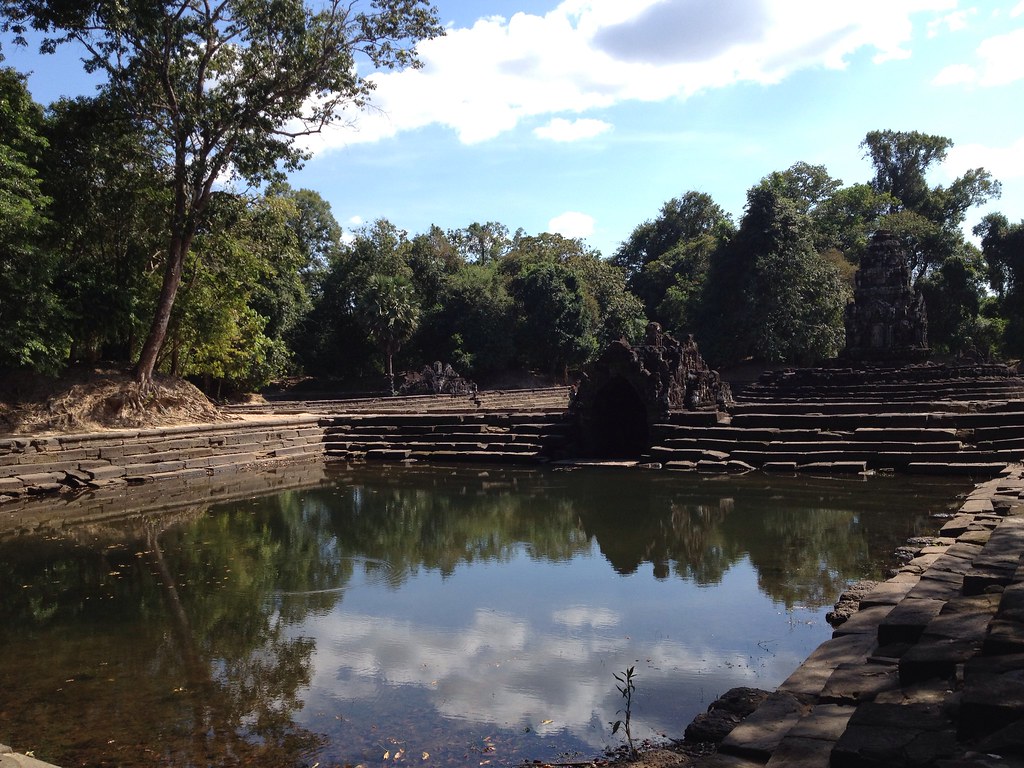
Afterwards we saw Neak Pean (“The entwined serpents”) at Angkor, Cambodia is an artificial island with a Buddhist temple on a circular island in Preah Khan Baray built during the reign of King Jayavarman VII. It is the “Mebon” of the Preah Khan baray (the “Jayatataka” of the inscription).
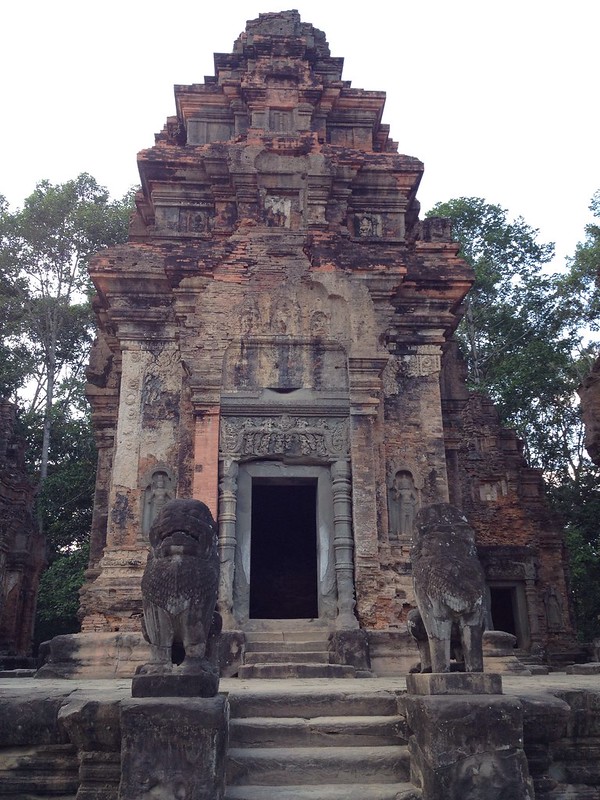
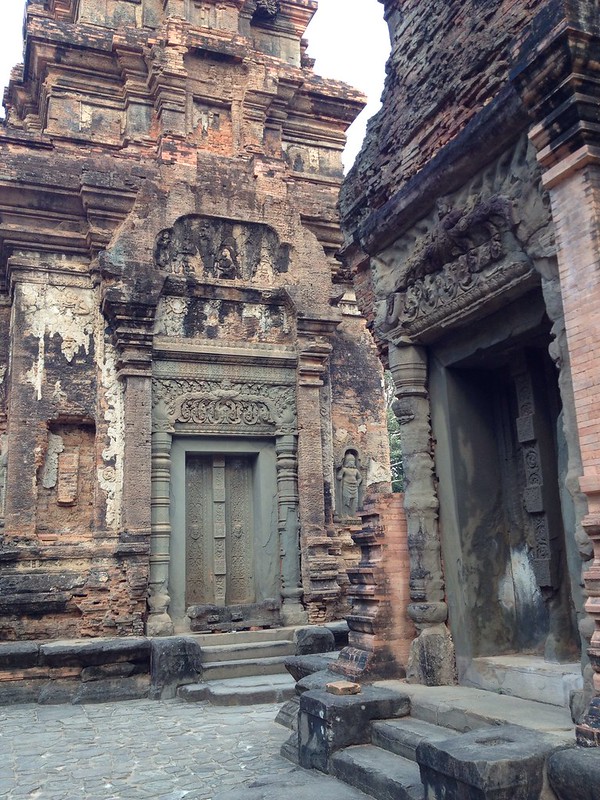
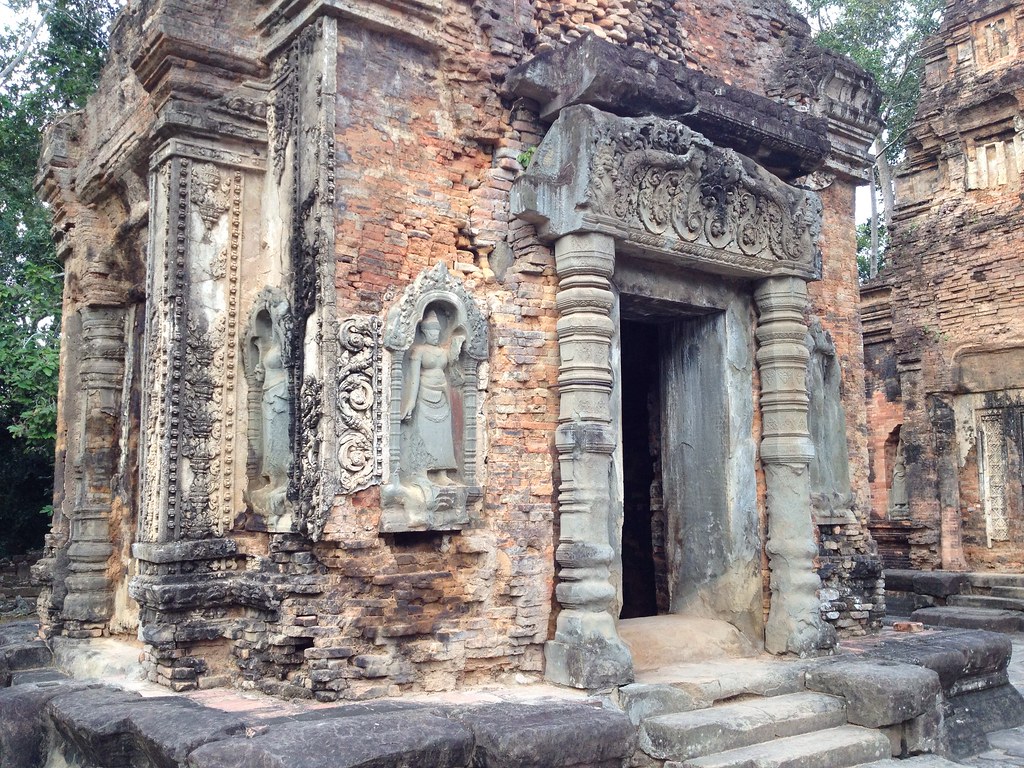
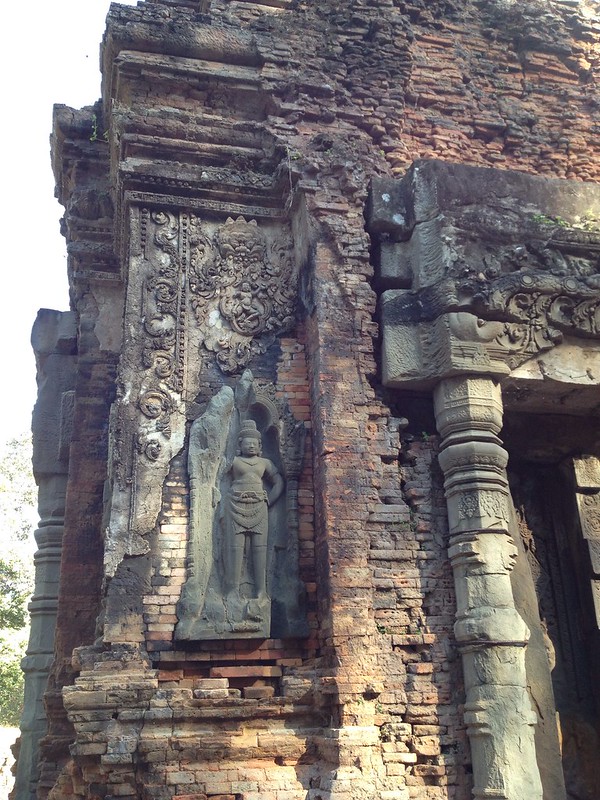
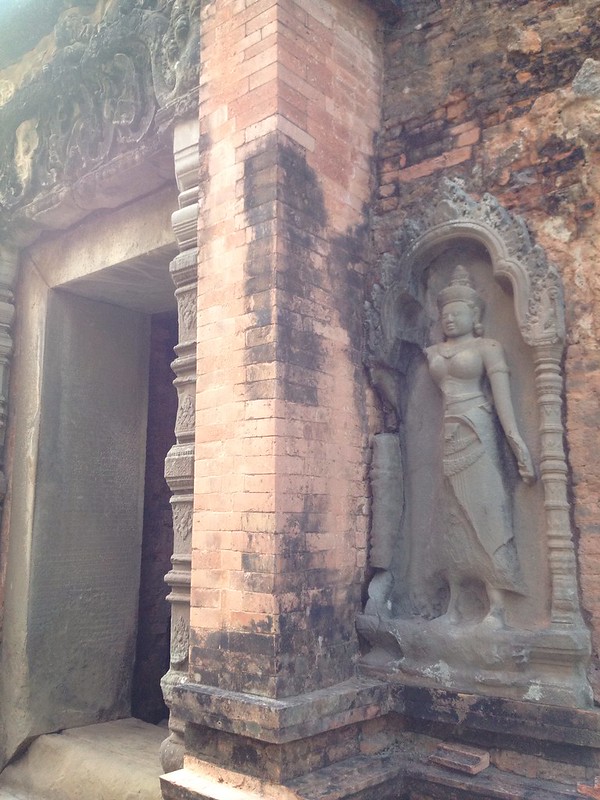
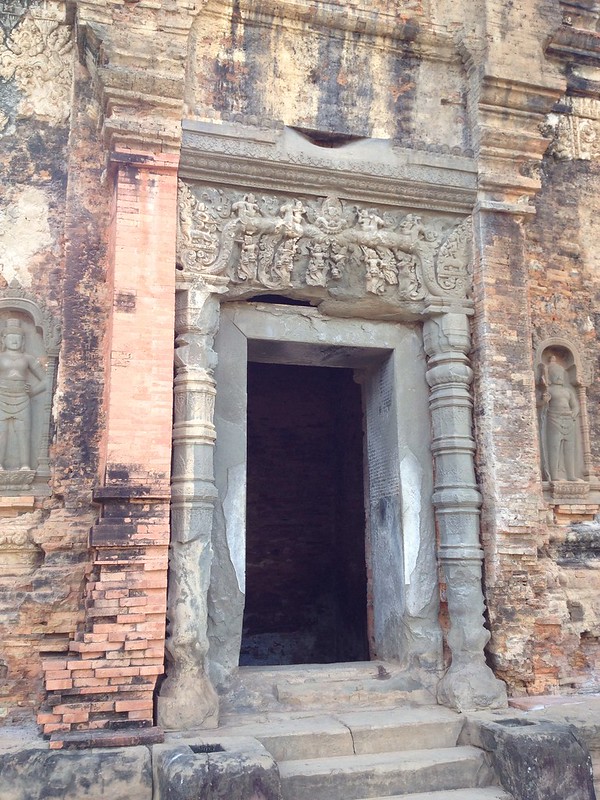
Next was, Roluos Group which is a collection of monuments representing the remains of Hariharalaya, the first major capital of the Angkorian-era Khmer Empire. It has become known as the ‘Roluos Group’ due to its proximity to the modern town of Roluos. The ancient capital was named for Hari-Hara, a synthesis of the Hindu gods Shiva and Vishnu. Though there was an existing settlement in the area before the rise of Angkor, Hariharalaya was established as a capital city by Jayavarman II and served as the Khmer capital for over 70 years under four successive kings. Setting the pattern for the next four centuries, the first great Khmer temples (Bakong Temple, Preah Ko Temple, Lolei Temple) and baray (reservoir) were constructed at Hariharalaya. The last king at Hariharalaya, Yasovarman I, built the first major temple at Angkor, Phnom Bakheng Mountain, and moved the capital to the Bakheng area in 905 C.E. With the exception of a 20 year interruption in the 10th century, the capital would remain at Angkor until 1422 C.E., 12km southeast of Siem Reap.
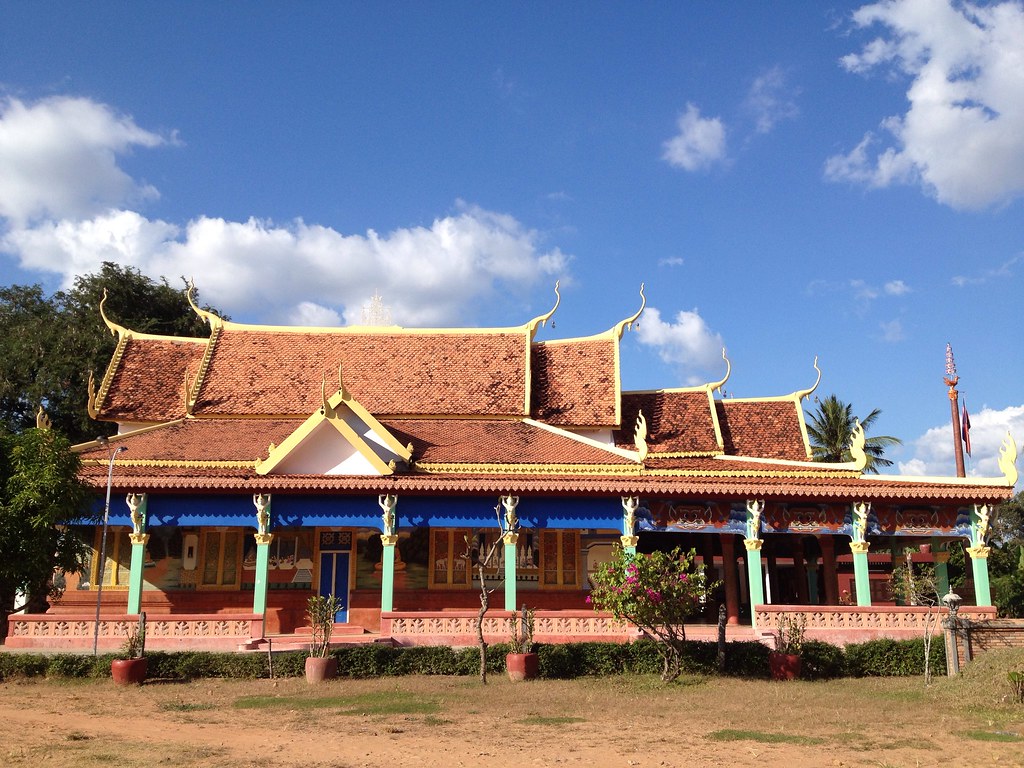
A modern temple
Temple at Lolei
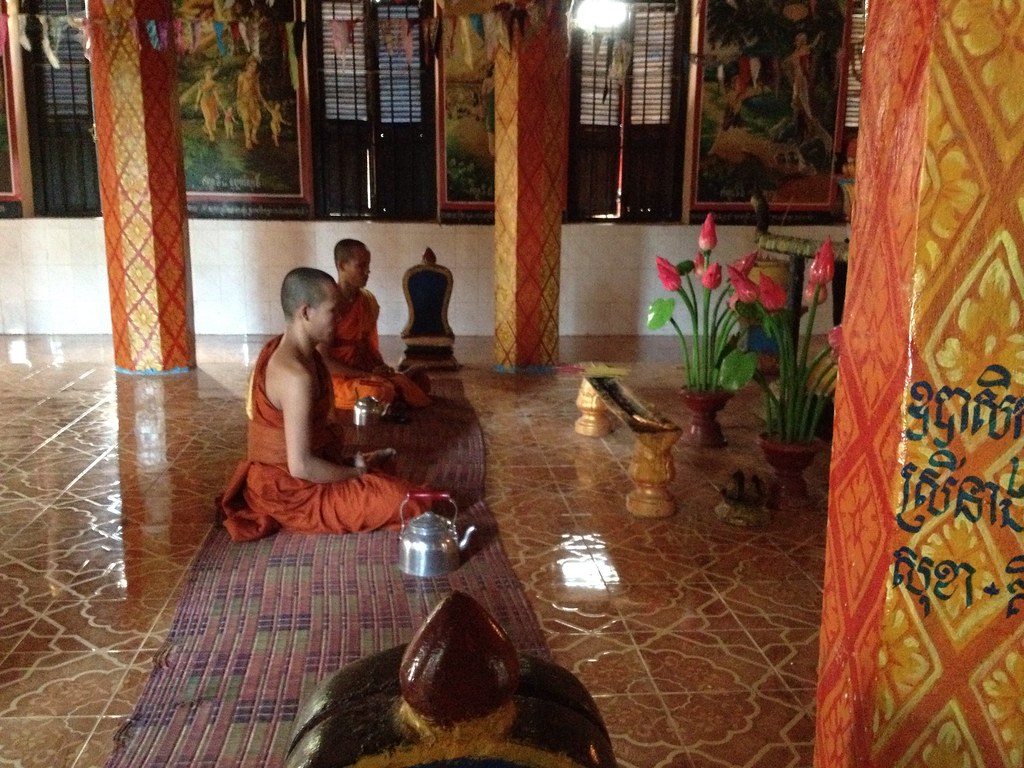
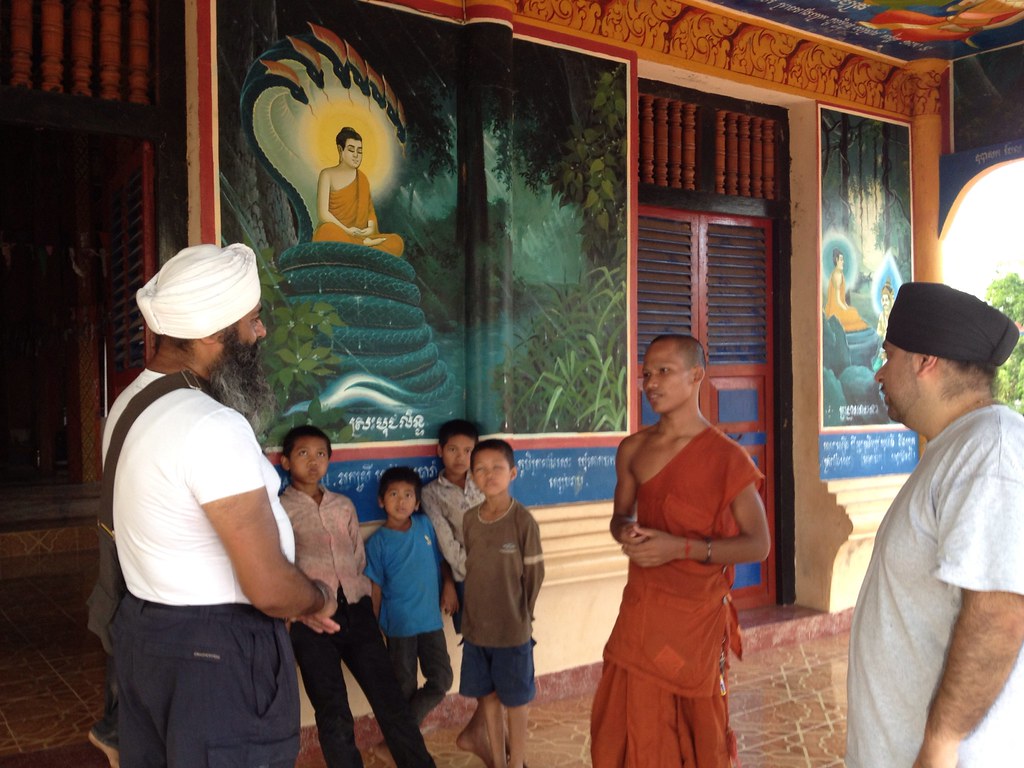
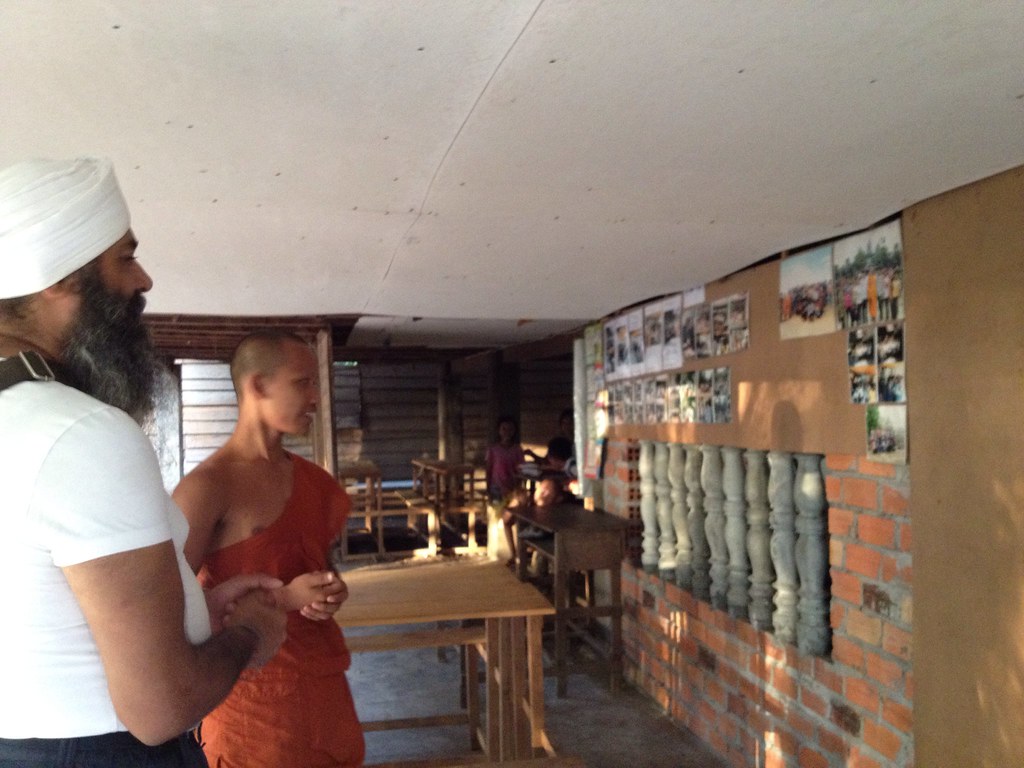
Here the budhists have setup a free school for the local children
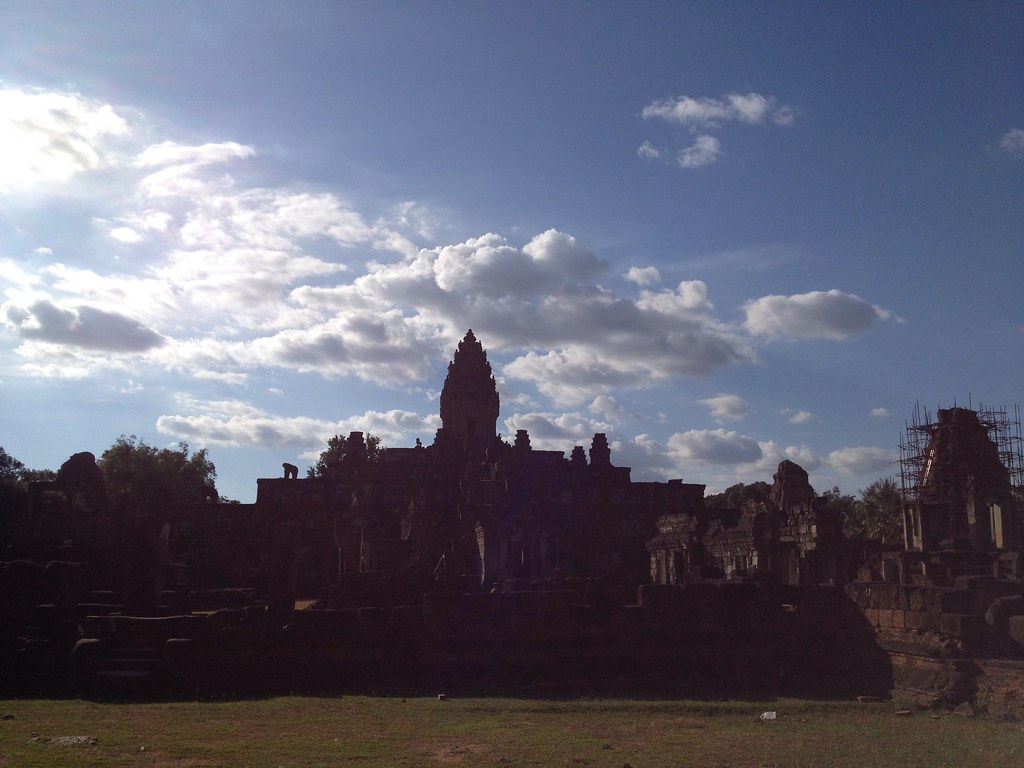
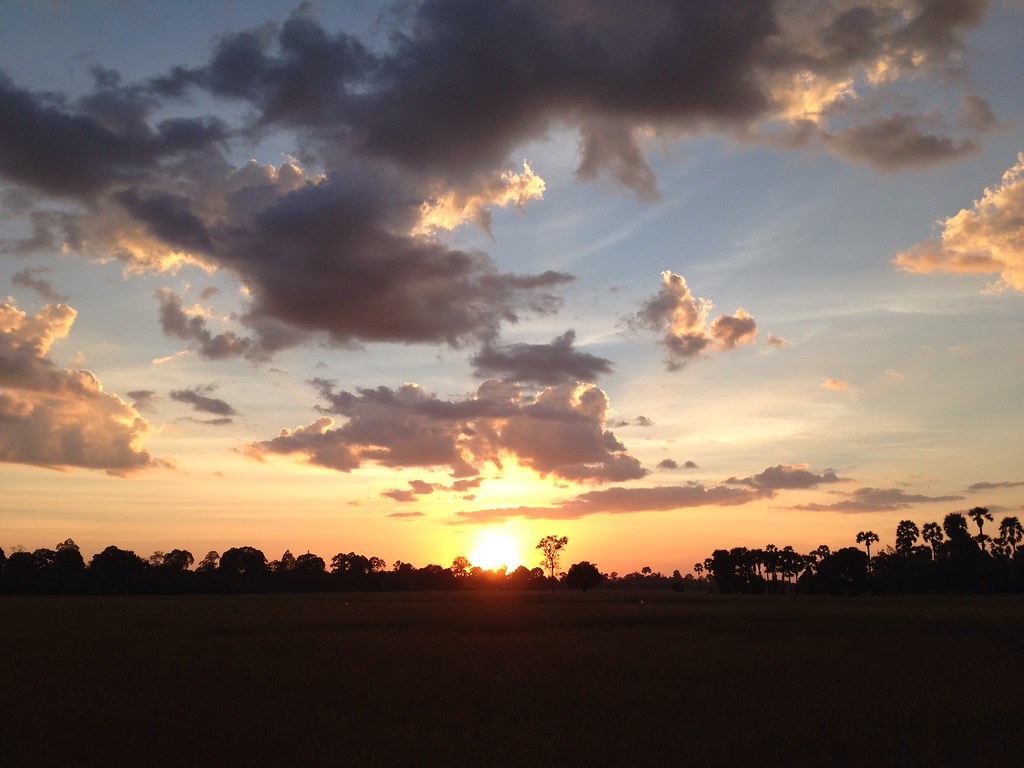
Sunset
On entering and exiting the temples you are bombarded with adults and children selling you books, drinks and whatever else they can sell you! A simple no will not make them go away….I usually find that no eye contact, no talking and just carry on walking does the trick. The day was very hot around 32 degrees c and a humidity of 80%.
Afterwards we headed to Chamkar for dinner. Once the tuk tuk driver had dropped us off, his price had gone from USD$15 to USD$25 he said it is because he had to take us to Rolous Group…….I just got angry and told him not to bother picking us up tomorrow, his greed had lost the business for the next two days……to get rid of him, Gursewa gave him USD$5…..I was not happy – this place is exactly like India, they want to get more out of you!
The dinner at Chamkar was okay at the time, afterwards it gave me a bad stomach……not what I need in this part of the world.
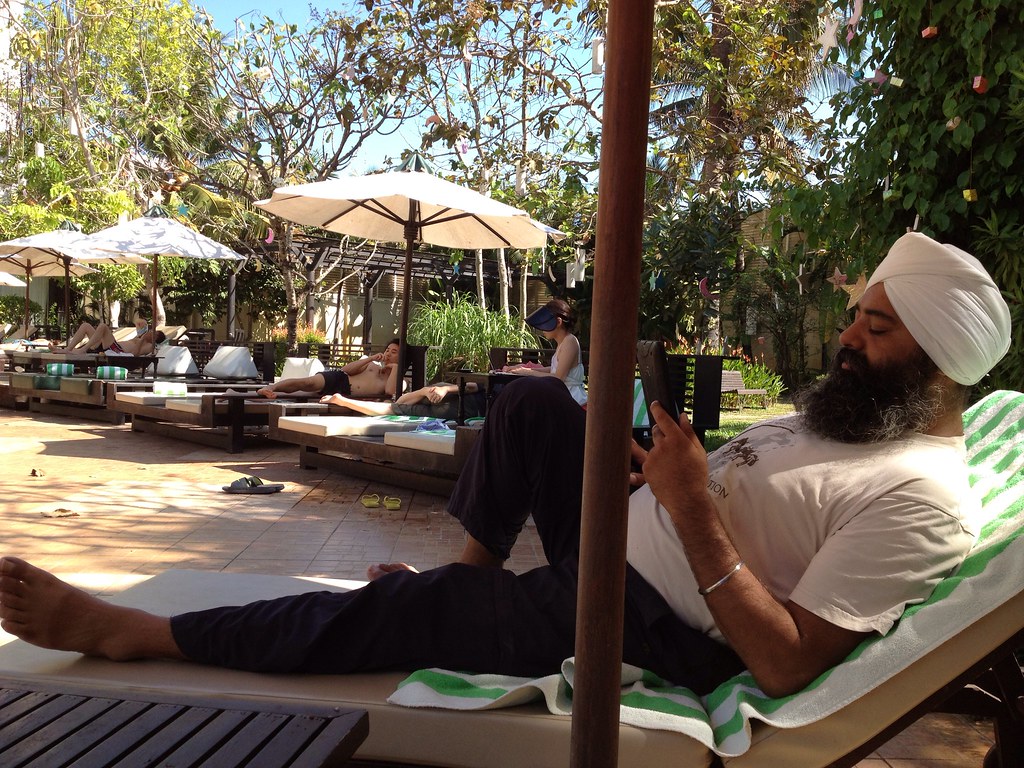
This morning was a nice lazy morning just relaxing and reading beside the pool.
Yes, I know what you are thinking. Perfect pool side attire!
The very fresh and cold coconut water ordered by Sangeet
After a while (30 minutes, I got bored!) I went for a walk to get some water. It cost me 2,000 Cambodian riel, which equates to GBP£0.31 a price I can handle. The hotel charges US$2.00!
You maybe asking why ‘relaxing by the poo’ – I uploaded a picture to Facebook.com/Ggholidays and nobody questioned poo?! Do people just want to like things without questioning? – update my cousin Appay Plaha picked up on this!
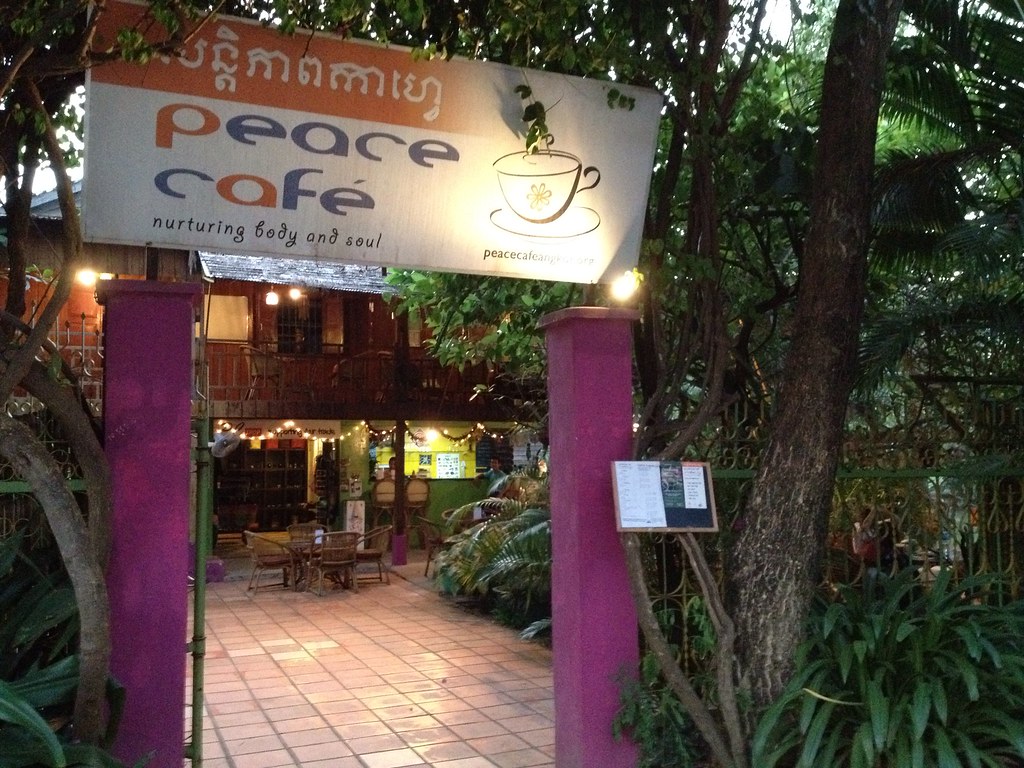
In the afternoon we went for a late lunch to
Peace Cafe
Street 26 off River Road,
Siem Reap,
Cambodia.
From Old Market, cross the bridge and turn left,
follow the river and turn right at the second street.
E: [email protected]
T: +855 063 965210 | +855 092 177127
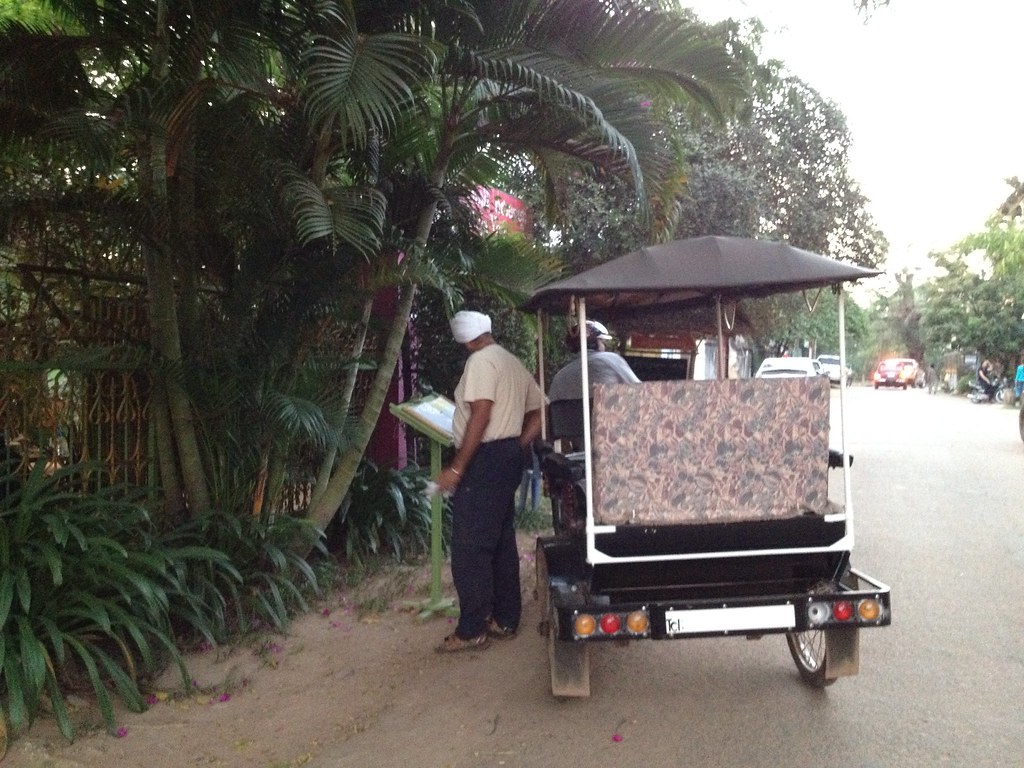
The tuk tuk that took us to the restaurant (tuk tuk took – rhymes! Well it made me chuckle!)
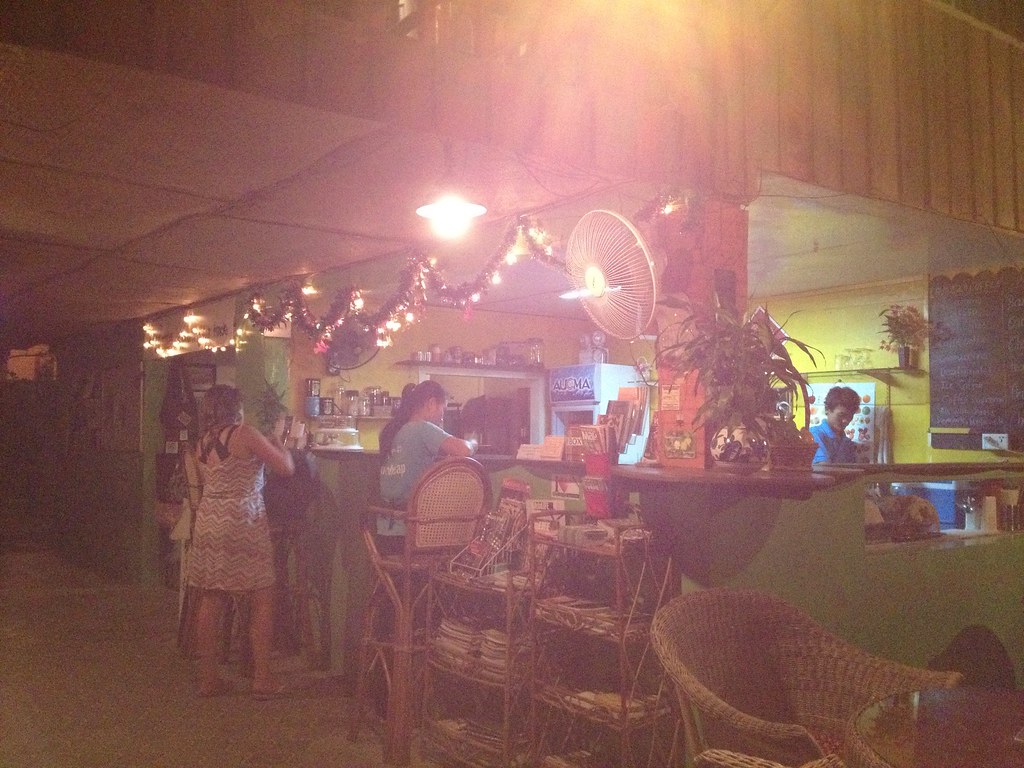
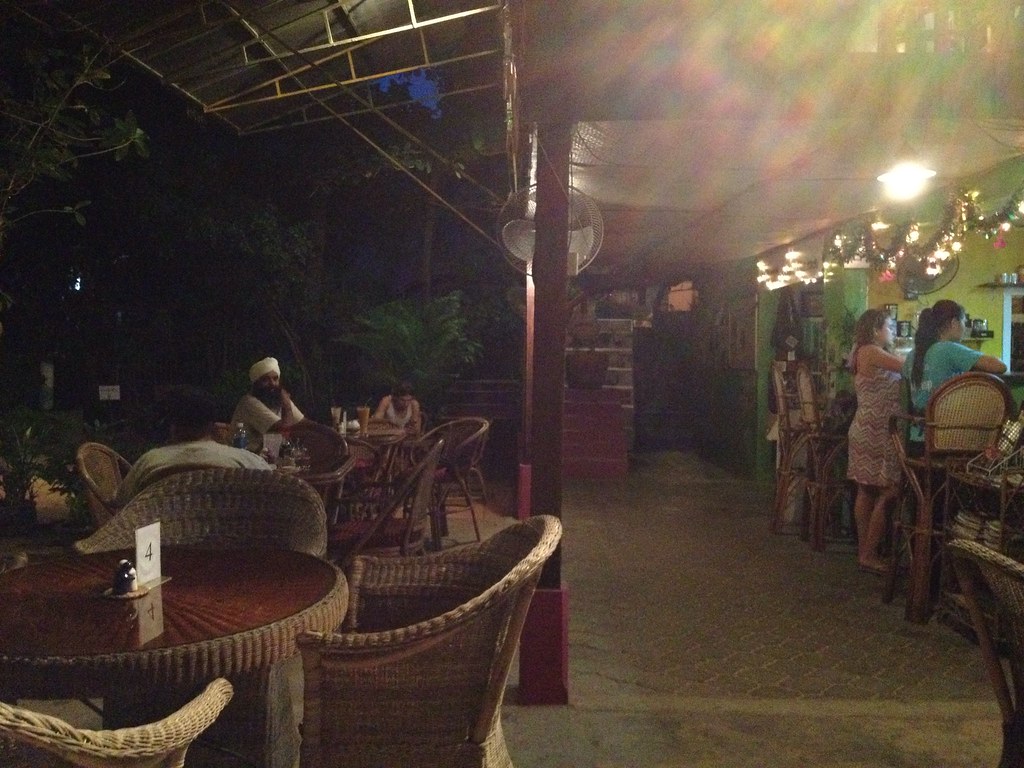
Inside
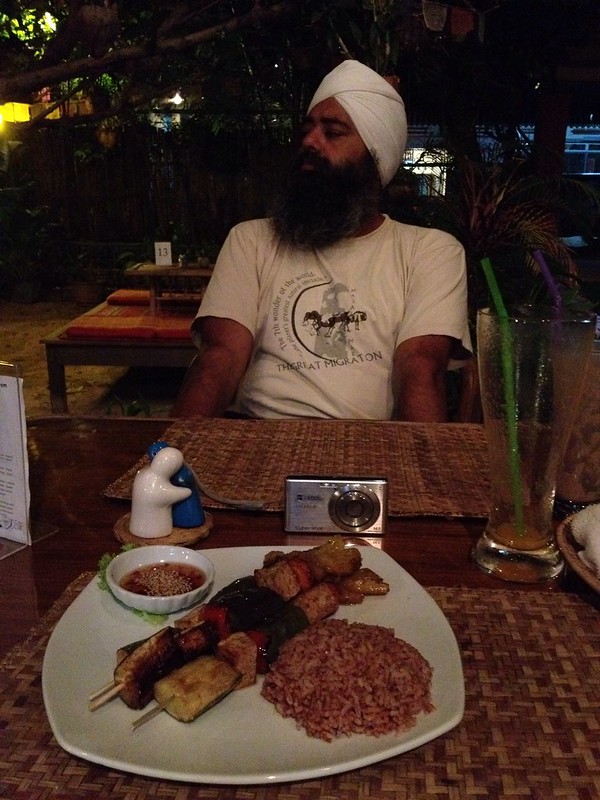
As soon as we entered we met a fellow Sikh. His name is Gursewa Singh. He arrived yesterday from Phnom Penh. His parents were from Kenya and now they all reside in London.
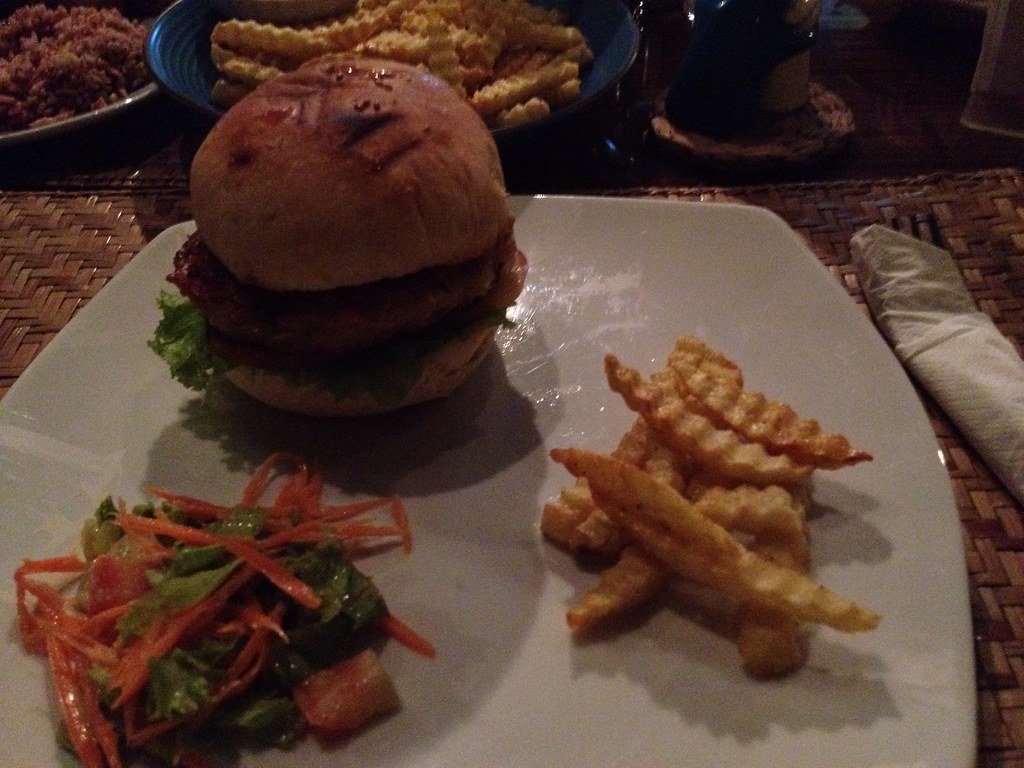
We ordered our drinks which were very tasty and the food came quite a while later. By the time it had come I was starving. There was no doubt how fresh and good the meals tasted.
Some info on the cafe
Peace Cafe, nurturing body and soul
Peace Cafe provides fresh healthy vegetarian food, a bakery and a fair trade shop. Just 5 minutes from Siem Reap’s Old Market, a hassle free oasis of tranquility with a beautiful spacious garden.
For an even deeper experience of peace, welcome to the Meditation Hut, located in a secluded corner of the garden surrounded by song birds. Relax and enjoy a dinner under the stars with traditional Cambodian chapei music on Thursday evenings or join the kids for a dance on Saturday nights or bring your own kids to enjoy the swings, a sand pit and values-based board games.
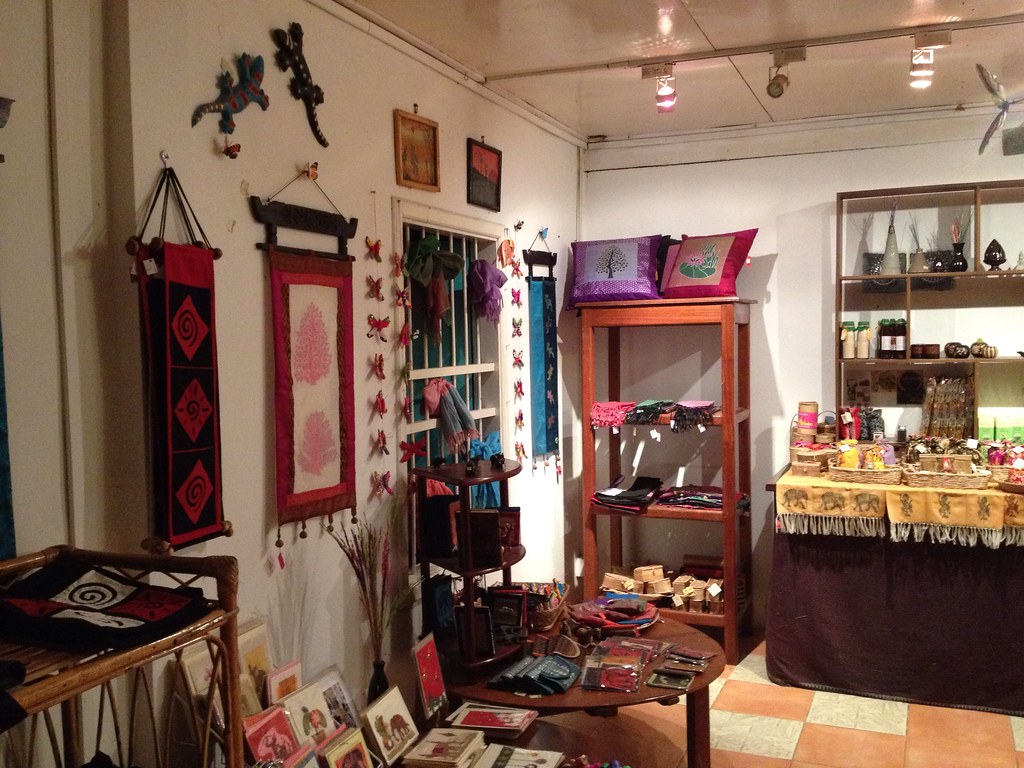
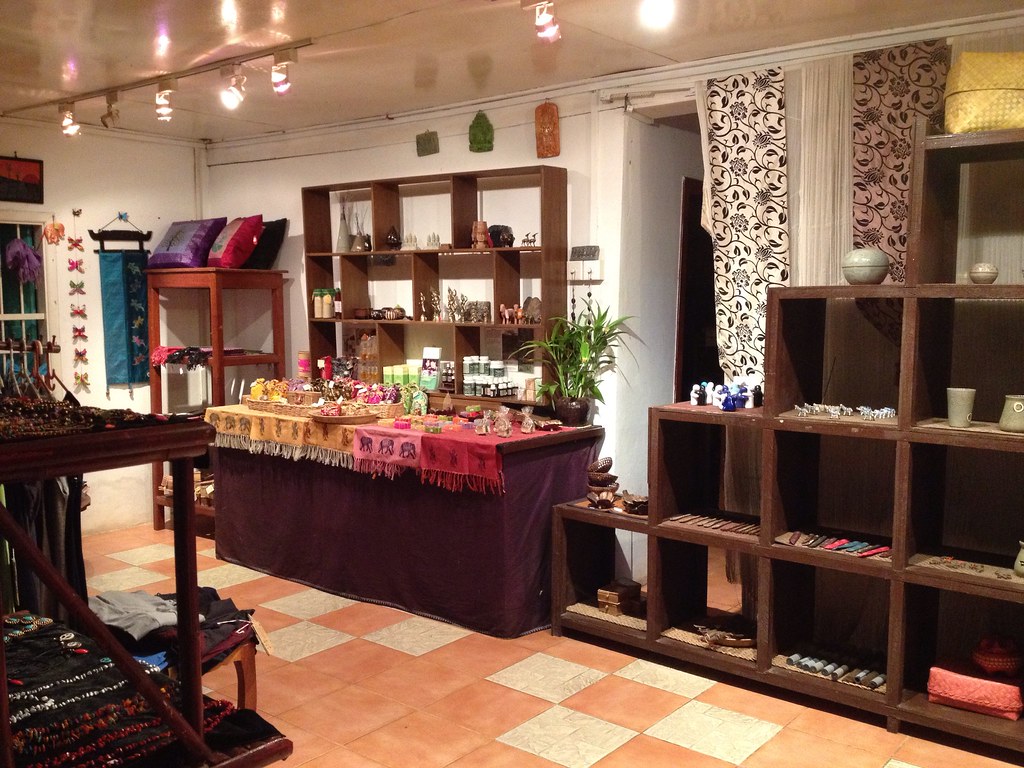
Shop at Peace Cafe
Community programs available include meditation, yoga, pilates, monk chat.
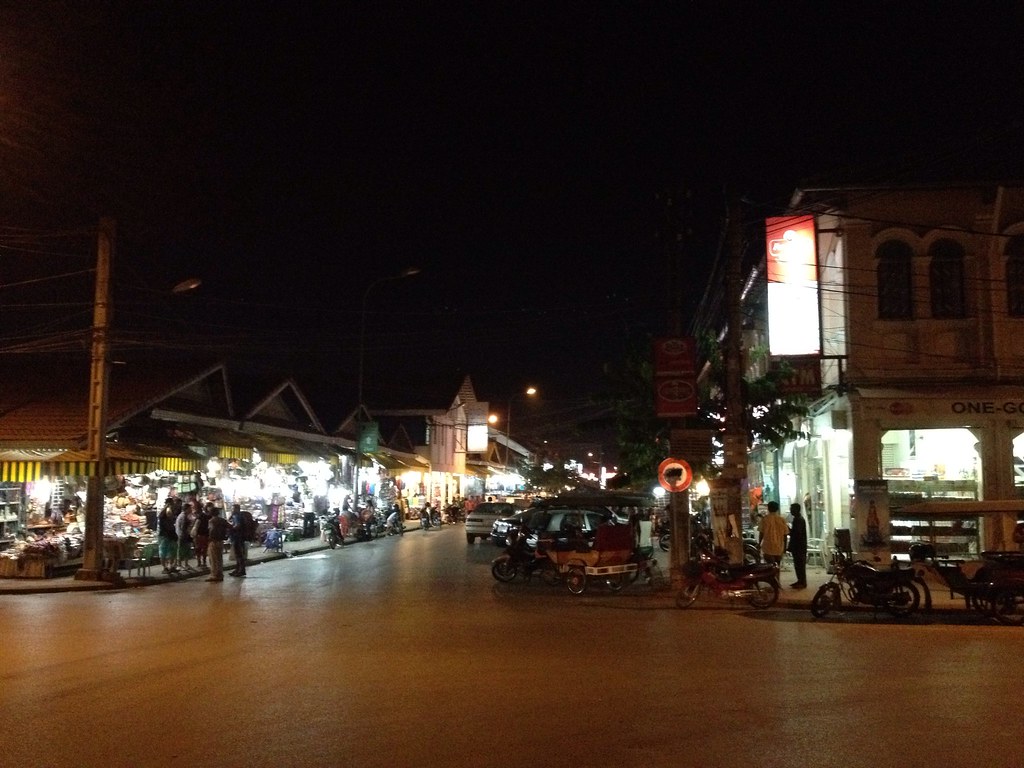
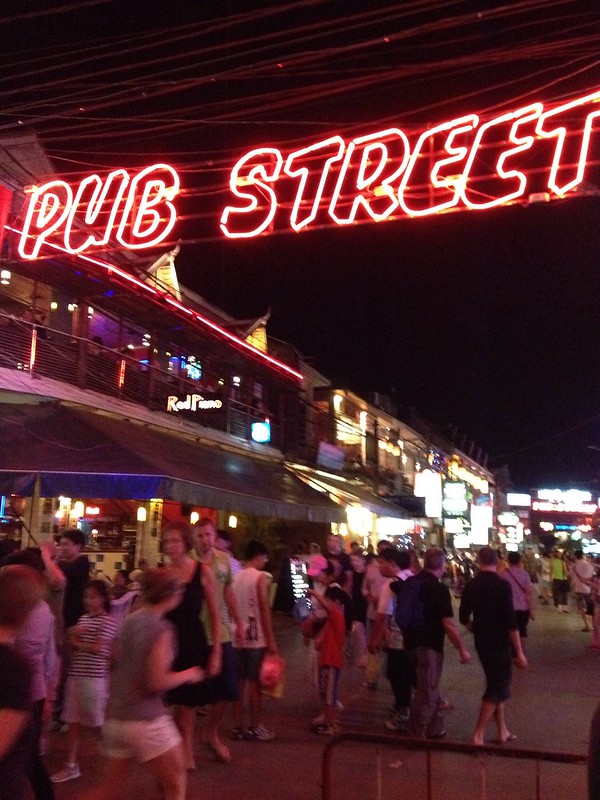
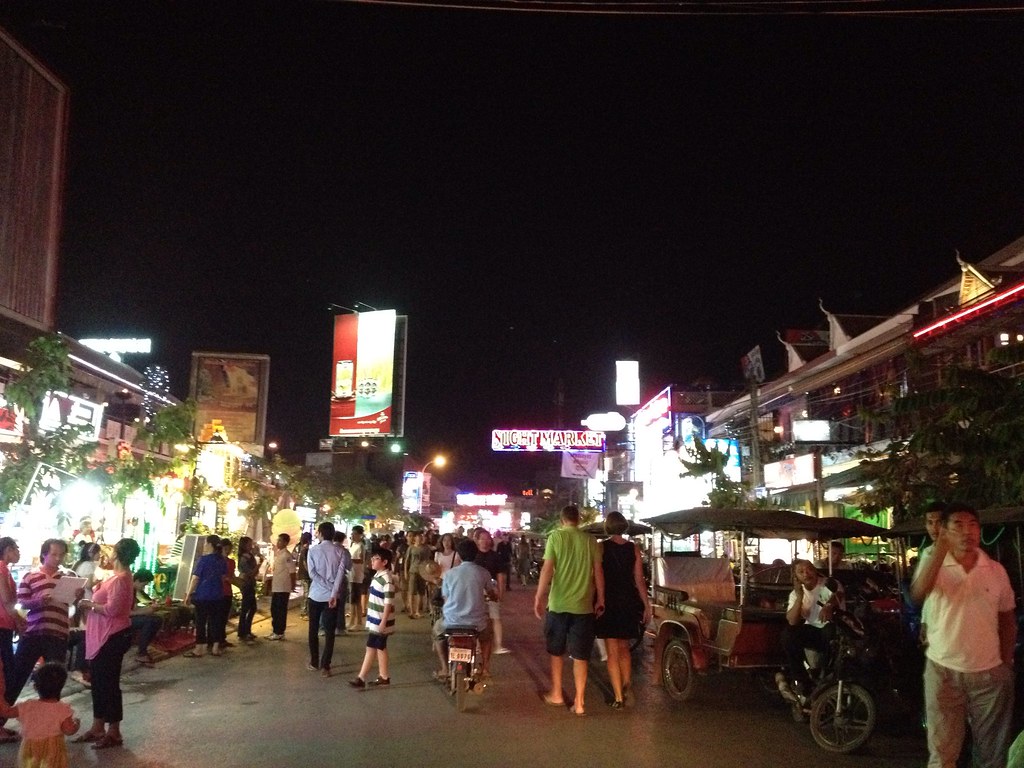
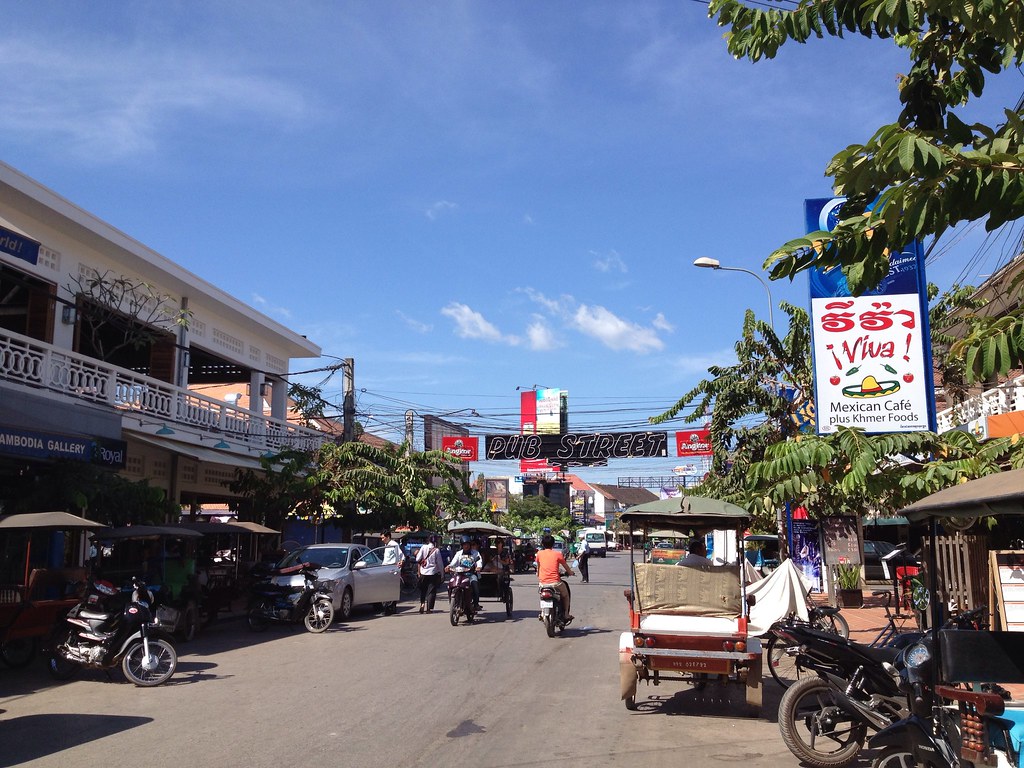
Afterwards we had a wander to Pub Street.
The street and market was very lively the pubs/restaurants were crowded, the beggars were having a field day from the tourists.
For you who like to give to the beggars here is something you should read
”
It seems so natural and harmless, and resistance feels so callous and cruel, to give to the kids that fill the streets of Siem Reap selling books, postcards, flowers and jewellery, or sometimes just begging for money. They are poor, they’re clearly in need, and they’re so full of fun and banter that it’s impossible to say no.
School’s out — permanently.
It’s tough even for those who know that giving to street kids actually locks them into the cycle of poverty they’re trapped in. And make no mistake, there is no such thing as a harmless dollar when it’s pressed into a small hand on the streets of any town in a developing country. This may seem harsh, as after all a dollar will surely get them and their family a meal for the day, which they clearly seem to need, or will pay for the kid to go to school and that can’t be bad at all, can it?
The unfortunate truth is that yes it is bad. Put brutally, the only person helped in this transaction is the visitor who gets to feel virtuous for a while, believing they have done something to resist this dreadful poverty they can see all around them. It’s a completely human and understandable response, it doesn’t make anyone a bad person, but it’s still wrong and here’s why.
Sleeve licking is the new black.
Giving to street kids is a short-term solution that ensures that long-term answers are more difficult to implement. It helps to ensure that they stay poor for the rest of their lives and, as uneducated parents, means that their children will probably be just as poor too. It ensures a thriving labour market for young children who should not be working, many of whom are not from Siem Reap at all but brought in from other provinces to work the streets. Worse yet, working on the streets not only impairs their education, it exposes these children to predators: traffickers, drug dealers and child sex tourists.
There are a number of reputable charities in Siem Reap that work with street children, ensuring that they go to school, providing additional schooling for them, giving them an arts education, supporting their families and generally working very hard to ensure the children in their care have the power to shape their own destinies.
Smiles all round.
Sam Flint, the director of the shelter Anjali, says that when travellers give to street kids, it makes his job that much harder to do. “Giving to street kids jeopardises their future, and it’s difficult for an organisation to offset the attraction for parents to send their kids out to the streets”.
His organisation provides each family that takes their kids off the street and enrols them in the programme with rice every month, to balance out some of the lost income. But every dollar that a tourist gives deprives the parents of an incentive to make sure their kids go to school and get a proper education, which includes not being too tired to study.
Flint continues, “Yes, these are low income families, but there are alternatives. Not giving money to street kids however cuts out the easy option”.
It’s not all gloomy: there are ways that visitors can help kids without sustaining a system that exploits them and deprives them of a future. Several organisations are registered with an NGO called Concert Cambodia, which imposes strict accountability and accounting standards on members. They can advise you on ways to support organisations, and which ones are safe to give to and which not. They can also help you with volunteering options too.”
Taken from http://www.travelfish.org/blogs/cambodia/2011/06/03/why-giving-money-to-street-kids-is-a-really-terrible-idea/
So it may seem harsh but best not to give.
On the way to Pub Street
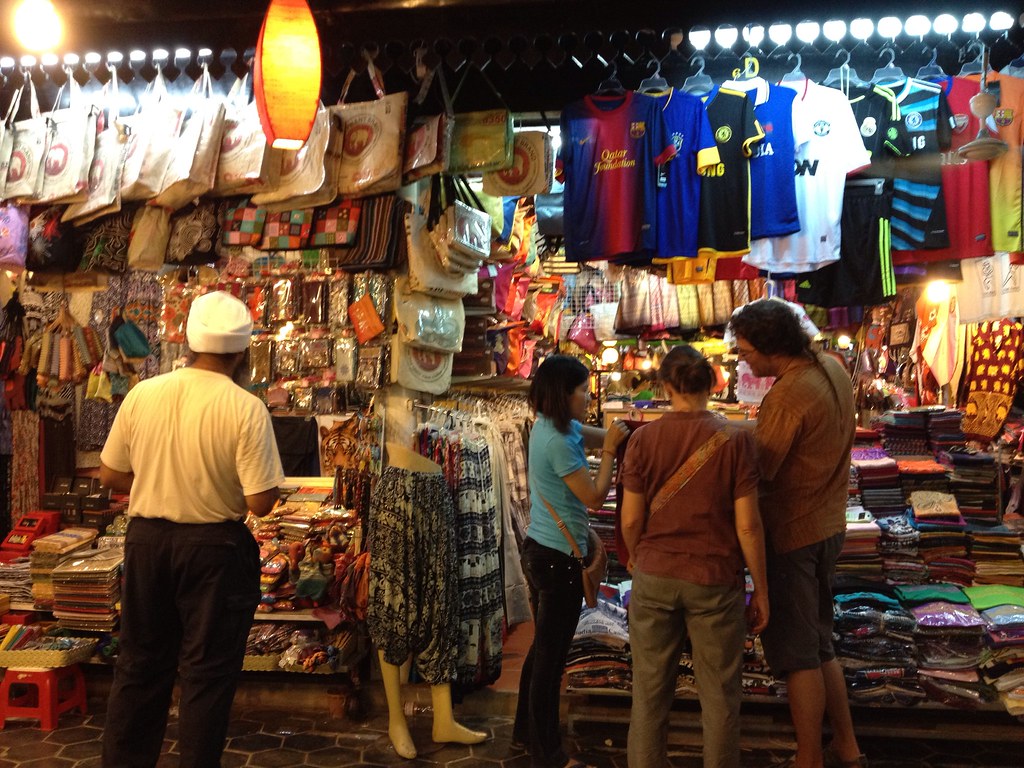
Sangeet bought some Cambodian trousers at the market.
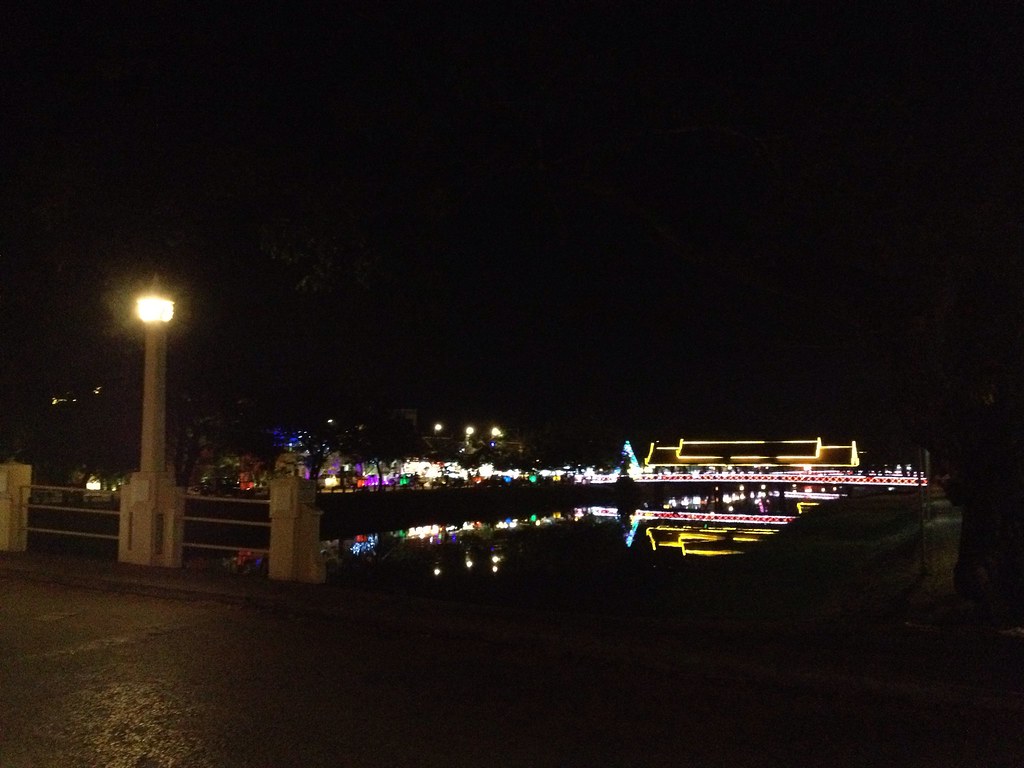
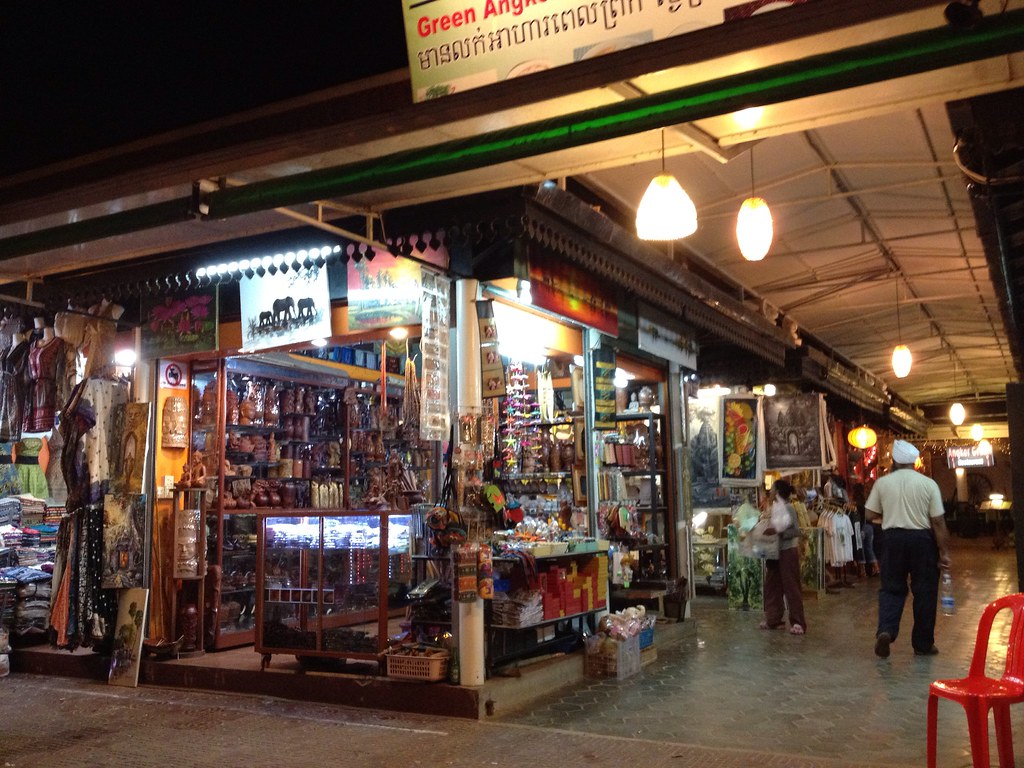
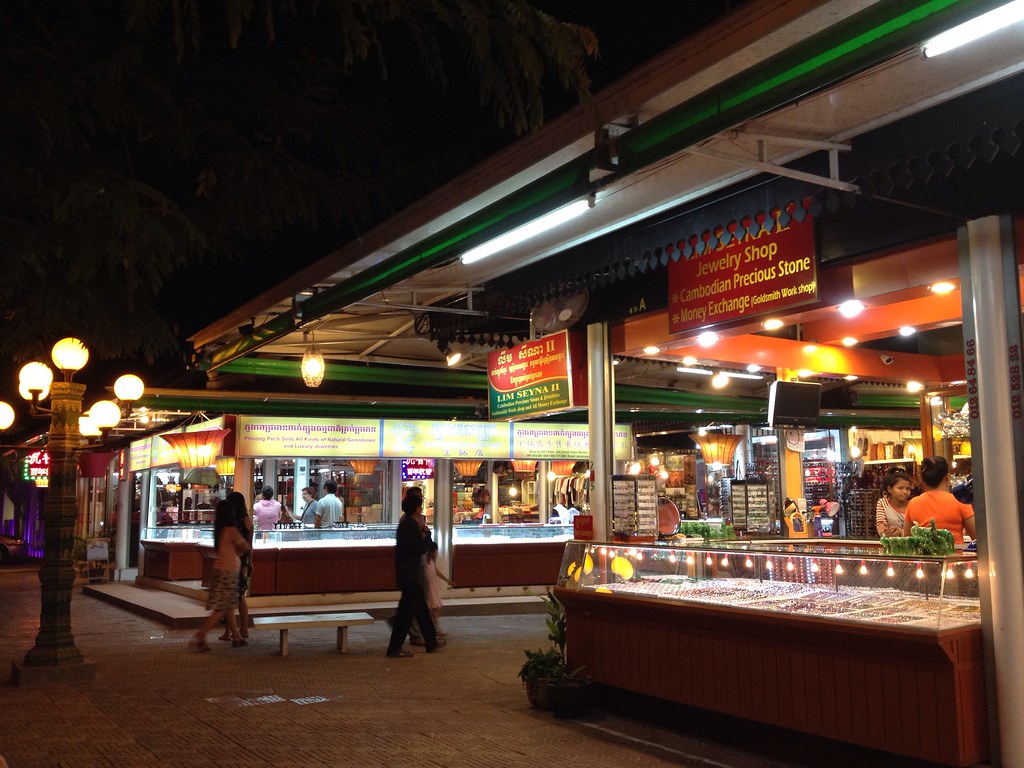
After a wander we headed over to the night market. Angkor Night Market established in 2007, was the first night market to open in Cambodia. The market founders were careful not to create a tourist park. Instead of warehouse-liked setting as in often case, you will find smoothly laid out huts built from natural materials and designed beautifully in Khmer style. Over the years, we have 240 souvenirs shops which sells traditional Cambodian made handicrafts from clothing’s, silk, painting and photography’s, jewelries, wood and stone carvings. After a tiring shopping you can pamper yourselves with our original Dr. Fish massage, Body and Feet massage, spa or relax at our two bars. The Island bar with its impressive bamboo tower and tiered lamp which you cannot see in any other bars here in Siem Reap, Cambodia or the secluded Brick House bar with its thatched roof and large bamboo furniture’s blend a relaxed stylishness surrounded by a tropical garden. We also have a food court which offers Cambodian, Western, Asian Cuisine, Cafe Puka Puka with its milk snow ice and try our many varieties of shisha flavors at Shisha bar. Angkor Night Market, a place for you to shop & dine in a vibrant contemporary Khmer environment. At the night market Sangeet bought a gift.
This market is a lot cleaner then the previous market
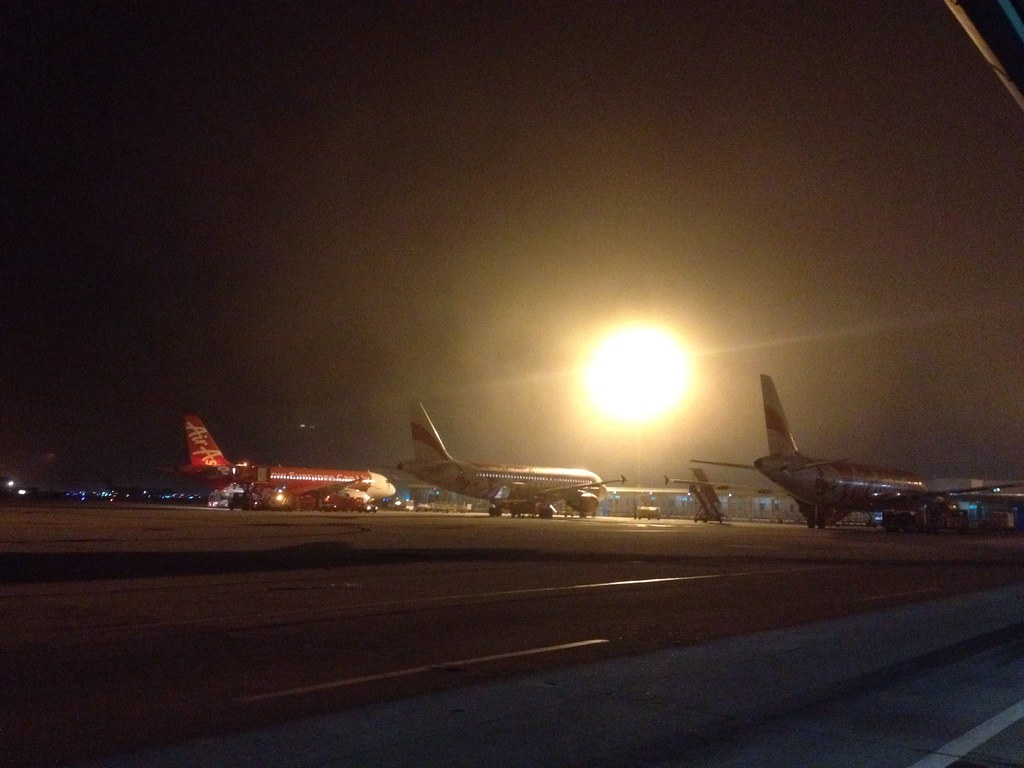
This morning we had an early morning flight with Air Asia from LCCT. Low cost carrier terminal or LCCT aka budget terminal is a specific type of airport terminal designed with the needs of low cost airlines in mind. Though terminals may have differing charges and costs, as is common in Europe, the concept of an all budget terminal was promoted and pioneered by Tony Fernandes of AirAsia at Kuala Lumpur International Airport in 2006.
AirAsia Berhad is a Malaysian-based low-cost airline. AirAsia is Asia’s largest low-fare, no-frills airline and a pioneer of low-cost travel in Asia. AirAsia group operates scheduled domestic and international flights to over 400 destinations spanning 25 countries. Its main hub is the Low-Cost Carrier Terminal (LCCT) at Kuala Lumpur International Airport (KLIA). Its affiliate airlines Thai AirAsia, AirAsia Philippines and AirAsia Japan have hubs in Suvarnabhumi Airport, Clark International Airport and Narita International Airport respectively. AirAsia’s registered office is in Petaling Jaya, Selangor while its head office is at Kuala Lumpur International Airport.
The taxi was scheduled to picked us up at 4:30 which ended up being nearer 5. The hotel tried to charge us for the laundry RM497 (close to £100!!!) we ‘discussed’ the payment and finally managed to take it off our final bill.
The journey to LCCT takes around 45 minutes, we had already checked in online. So that eased the stress!
Once you arrive at the LCCT the front looks nice plenty of shops, cafes, restaurants. Once you get inside it is like a hanger! The airport is badly labelled so you are running around trying to figure out where to go. Finally we managed to work it out. On the opposite side to where we were standing there is a security scanner, security scan your baggage before you go to the check in desk. Once there it is like any other check in desk. A guy on the mobile tried to push passed everybody, one person told him to move back. He shouted saying he is on the phone. The attendant at the check in desk sent him back. Once checked in you then go through two lots of people who wanted to see our boarding pass. Up the escalator and then through customs. You then go through a security check for yourself and any carry on luggage. Once through you are free to enjoy the shops!!
We spent a couple of minutes in the shops before boarding the plane.
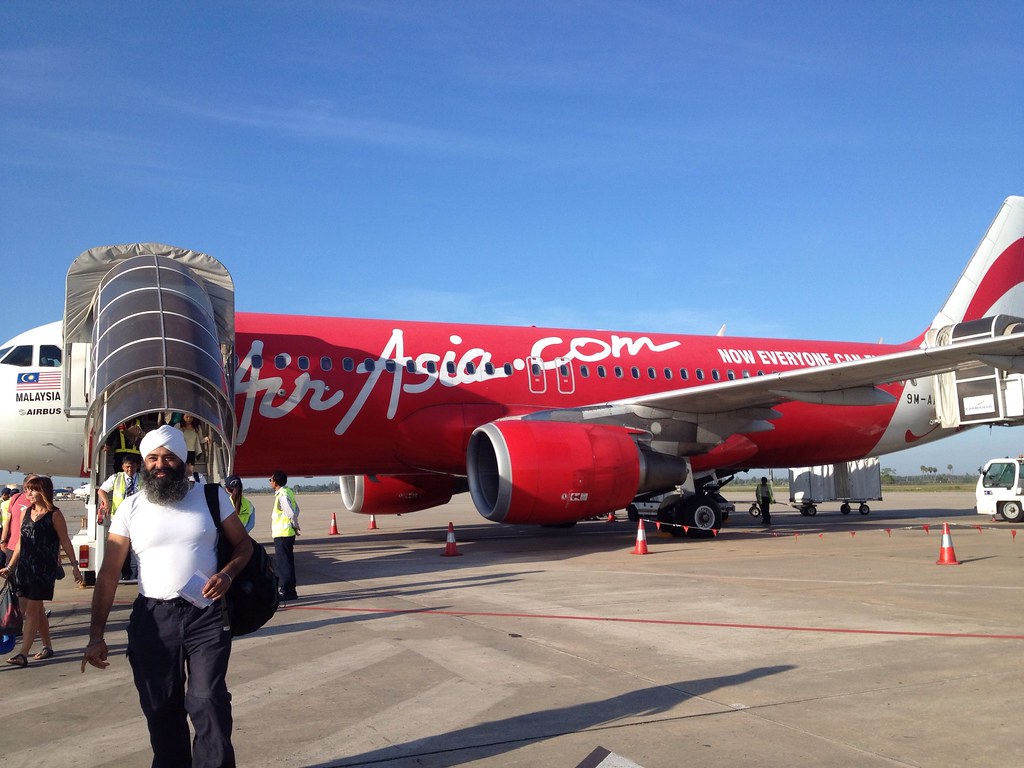
The flight from KL, Malaysia to Siem Reap, Cambodia takes two hours and you gain an hour. We landed in Siem Reap at 7:50am to a glorious temperature of 26 degrees C.
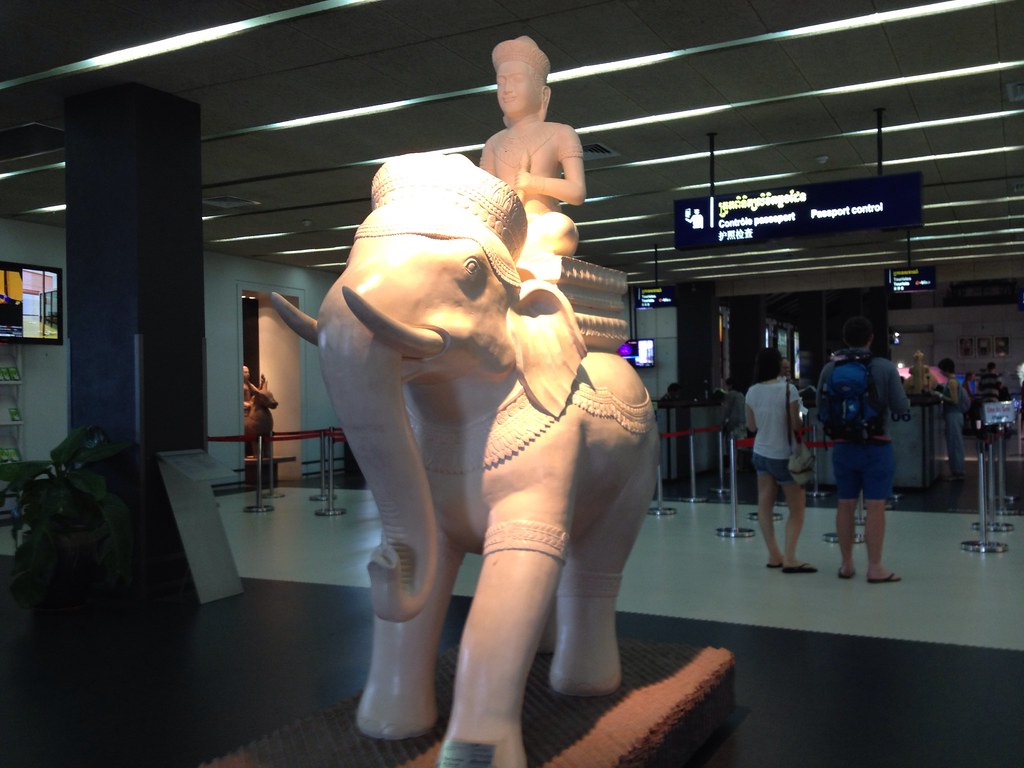
As you enter the airport, you’ll be greeted by a striking statue of a white elephant in the middle of the room.
The statue, the live plants behind the visa area, and the overall design of the airport makes you realize that they did some serious designing here. All in all, the Siem Reap airport has somewhat of holiday resort feel.
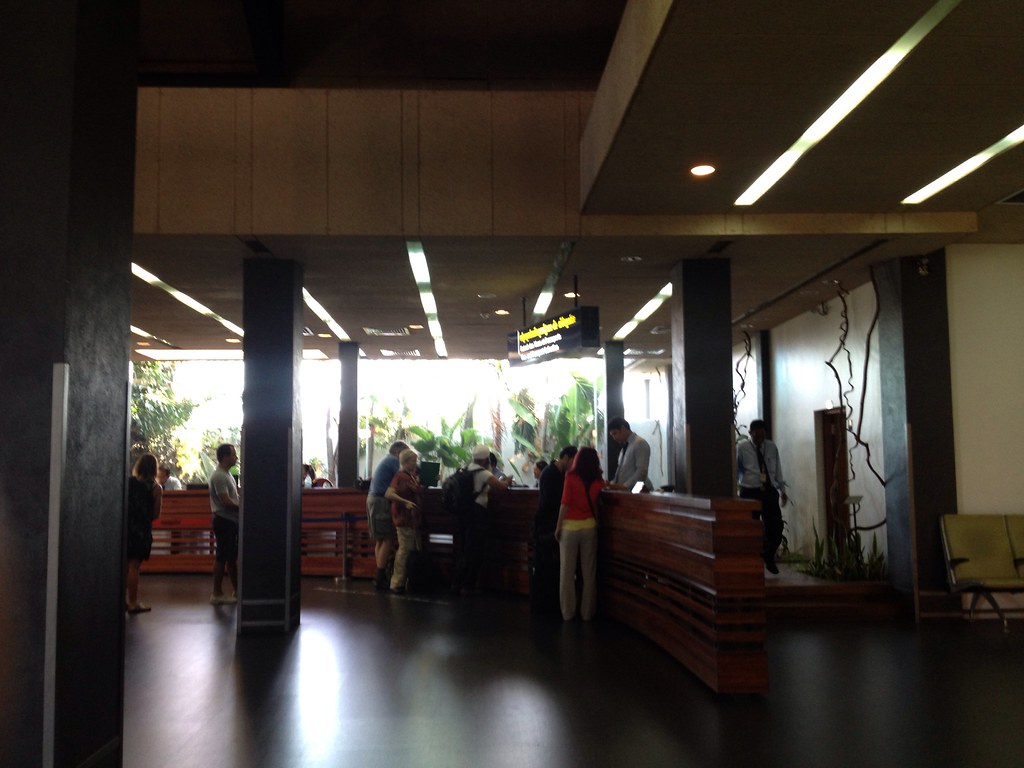
The visa section
If you don’t yet have your visa, you can apply for it on your arrival.
There are mainly two types of visas for travelers: the tourist visa (valid for 30 days, not renewable) and the business visa (valid for 30 days, but can be renewed multiple times).
The process of applying for a visa is simple, but you do have to wait while it is processed.
If don’t like to wait, you can get your Cambodia visa online instead.
The electronic visa process allows you to print the visa yourself and go straight to the e-visa immigration line as soon as you arrive.
That way you can be out and about faster!
The immigration
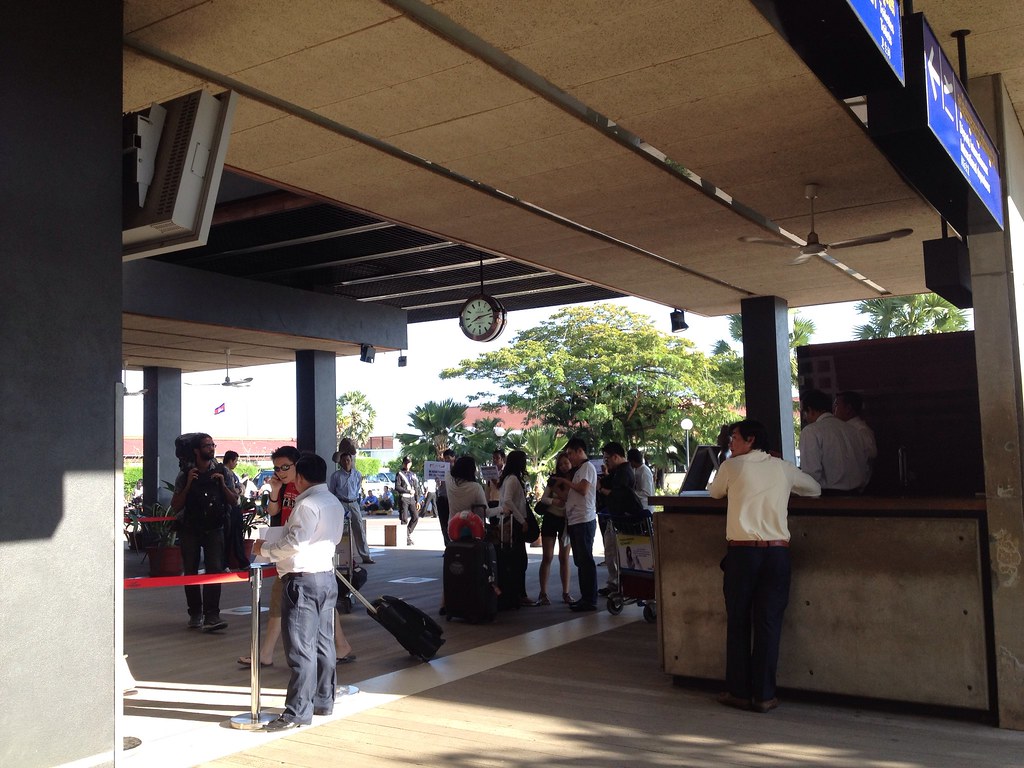
You’ll see the immigration line as soon as you step inside. Yes, the airport is that small.
Unfortunately, the passport check line does not move very quickly. But it’s not overly slow either.
Just be patient, and you’ll be out of there as soon as they take a digital photo of you and stamp your passport with their multiple stamps.
ATMs
There are at least two ATM machines in the arrival hall; one near the visa section and another near the immigration line.
If you need to apply for an on-arrival visa, the visa fee must be paid in cash. So these ATM machines come in handy if you don’t have enough on hand.
Once we had the visas we walked onto immigration which was a simple process. Once through I saw the backpacks on the conveyor and rushed to get them.
Siem Reap is the capital city of Siem Reap Province in northwestern Cambodia, and is the gateway to Angkor region.
Siem Reap has colonial and Chinese-style architecture in the Old French Quarter, and around the Old Market. In the city, there are traditional Apsara dance performances, craft shops, silk farms, rice-paddy countryside, fishing villages and a bird sanctuary near the Tonle Sap Lake.
Siem Reap today, being a popular tourist destination, has a large number of hotels and restaurants.
The name Siem Reap means the ‘Flat Defeat of Siam’ — today’s Thailand — and refers to the centuries-old conflict between the Siamese and Khmer peoples.
This name, according to an oral tradition, was baptized by King Ang Chan (1516-1566) as “Siem Reap”, meaning “the flat defeat of Siam” (Cambodians call Siam or Thailand “Siem”). It was because of the victory over the Thais which King Ang Chan counter-attacked, and shot Prince Ong dead on an elephant’s back, and routed the Thais and captured no less than 10,000 Thai troops.
The history was told that King Ang Chan of Cambodia tried to assert further independence against Thailand. The Thais also had been through internal trouble themselves during these years. King Chairacha was poisoned by his concubine, Lady Sri Sudachan, who committed adultery with a commoner, Worawongsathirat, while he was on the campaign against Chiang Mai. The Queen then raised Worawongsathirat to the throne. The nobles hated Worawongsathirat and lured the usurper and his family to a place outside the city where he was assassinated together with Lady Sri Sudachan and a new-born daughter during the royal family’s procession by barge to see a white elephant (allegedly just captured). The nobles then invited Prince Thianracha, who was a monk in a monastery, to disrobe and ascend the throne under the title of King Maha Chakkraphat (1548-1569). Being informed of the internal troubles in Ayutthaya, King Ang Chan attacked Prachin Buri in 1549 and successfully took away Thai inhabitants. At Prachin, he obtained information that King Maha Chakkraphat had become the new king of Ayutthaya, signaling that the question of succession in Ayutthaya had thus become settled. King Ang Chan therefore retreated and did not advance any further. King Maha Chakkraphat was very angry at this, but his hands were tied, because the Burmese had just come by the way of the Three Pagoda Pass, took Kanchanaburi and Suphanburi, and appeared in front of Ayutthaya.
Cambodian history presents the reason for the next Thai attack because King Ang Chan refused to give King Maha Chakkraphat a white elephant when he asked for it, it is indicated that King Ang Chan declined any symbol of vassalage to Thailand. King Maha Chakkraphat’s attention was now turned towards Cambodia. He put Prince Ong, the Governor of Sawankhalok and Srey’s son, in charge of an expedition against Cambodia. King Ang Chan counter-attacked, and shot Prince Ong dead on an elephant’s back, and routed the Thais and captured no less than 10,000 Thai troops. It was because of this victory over the Thais that King Ang Chan baptized that battle area as “Siem Reap” meaning “the flate defeat of Siam”. However most of sources mentioned the final defeat of Angkor Kingdom by the Thais from Ayutthaya in the fifteenth century. The city was abandoned since then.
From the sixteenth through the nineteenth centuries, the feuds among the Cambodian lords caused the interventions and domination from the more powerful neighbors, Vietnam and Siam. Siem Reap, along with Battambang and Sisophon, major cities in the north western part of Cambodia, were under Siamese rule from time to time until the French rule.
We were met at the airport by the hotel representative and got a transfer to the hotel. It is still amazing the rate we managed to secure this five star accommodation. I checked on the iPad and a few minutes later Sangeet checked the rate on the iPhone. The iPhone showed half the price. We are not paying much more then a hostel room!
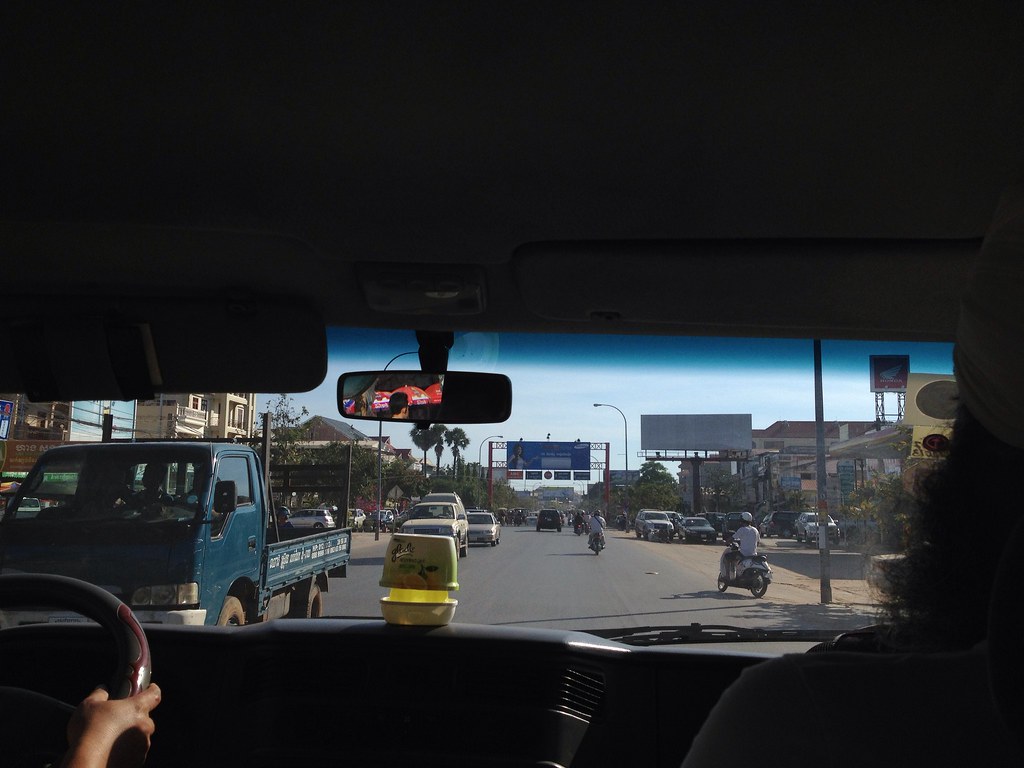
On the way to the hotel
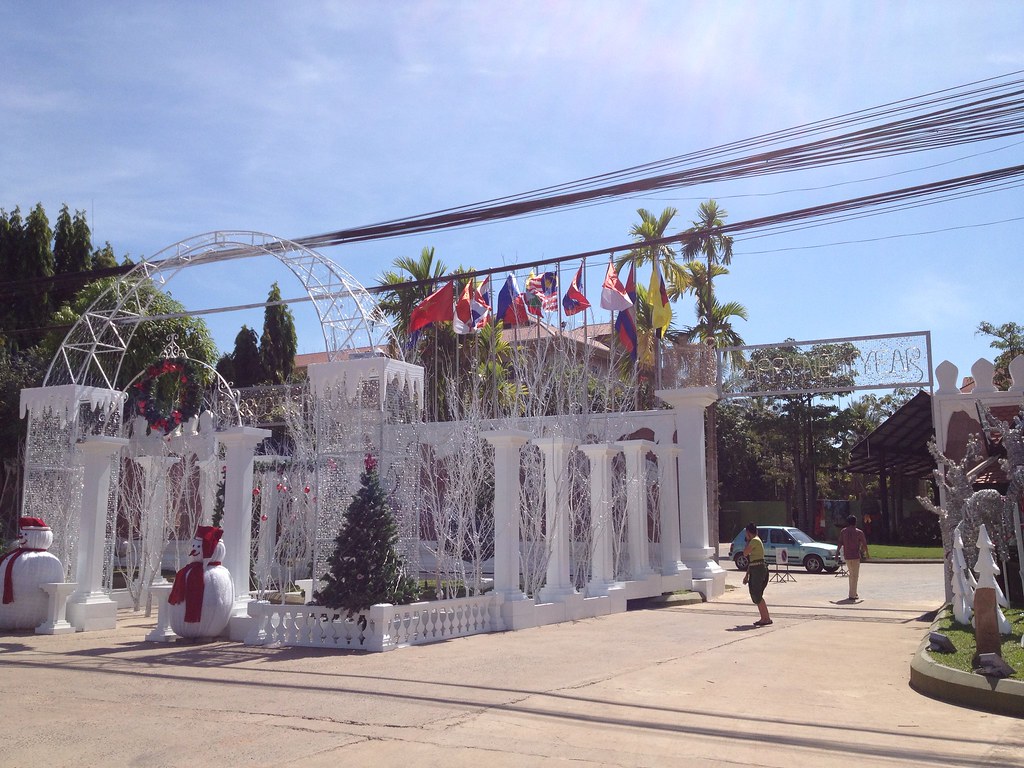
When I saw the entrance with music blasting out I taught this looks shabby
The hotel staff asked us to wait here whilst they checked us in
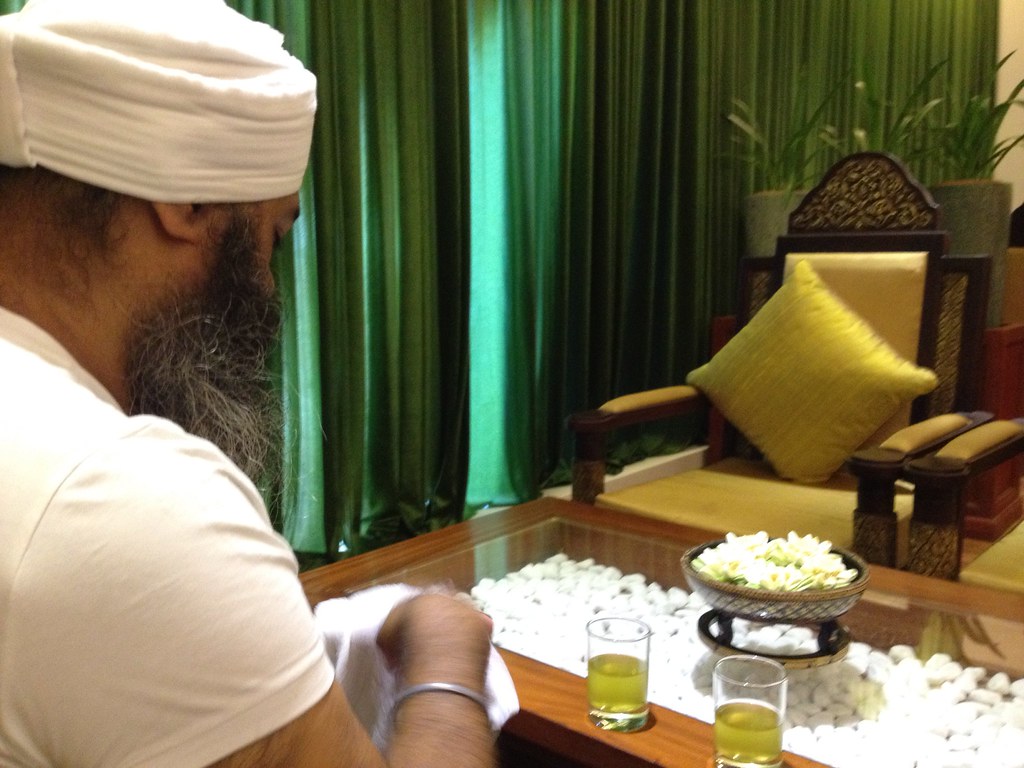
Complimentary drinks on arrival
Whilst they prepared our room, we had a complimentary breakfast. There was plenty of fruit, unfortunately it did not taste that fresh.
Half asleep but I can manage breakfast
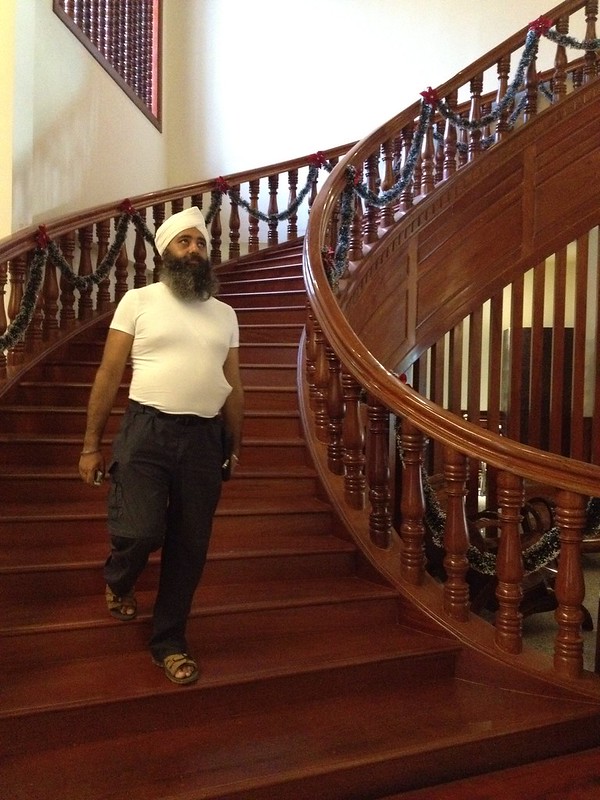
After breakfast we explored the hotel
Pool area
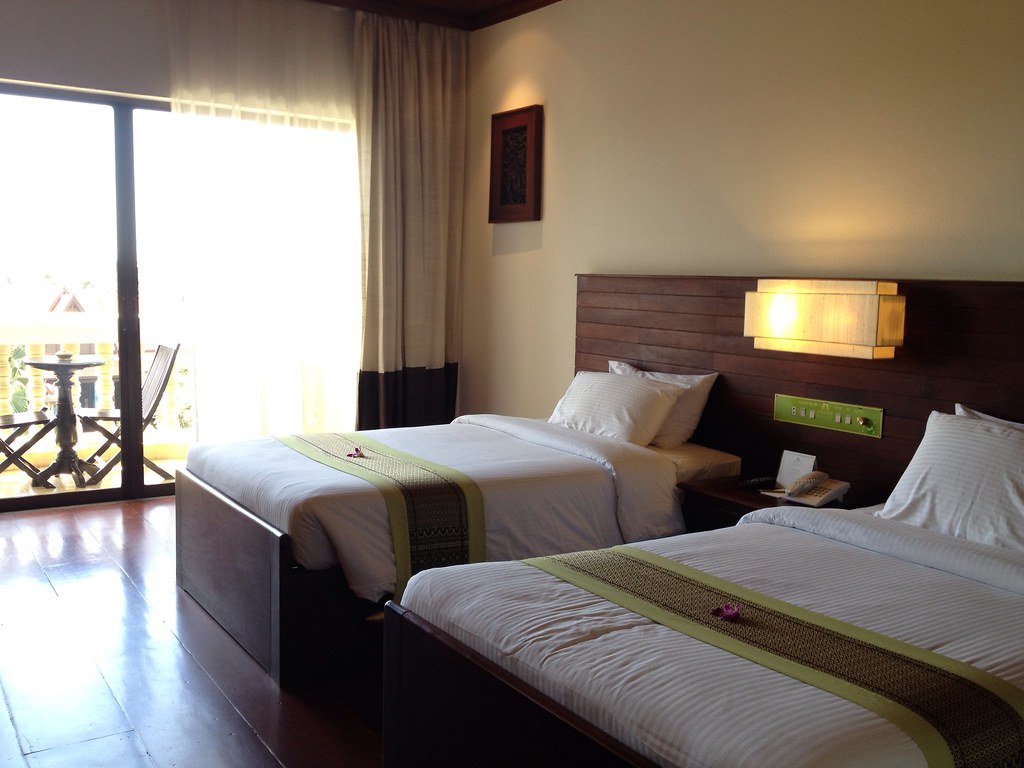
Our bedroom
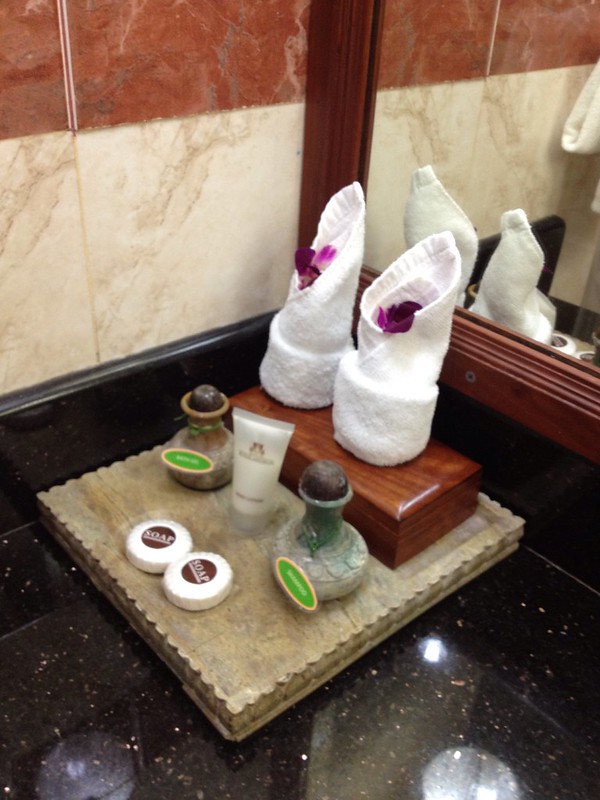
A neat touch
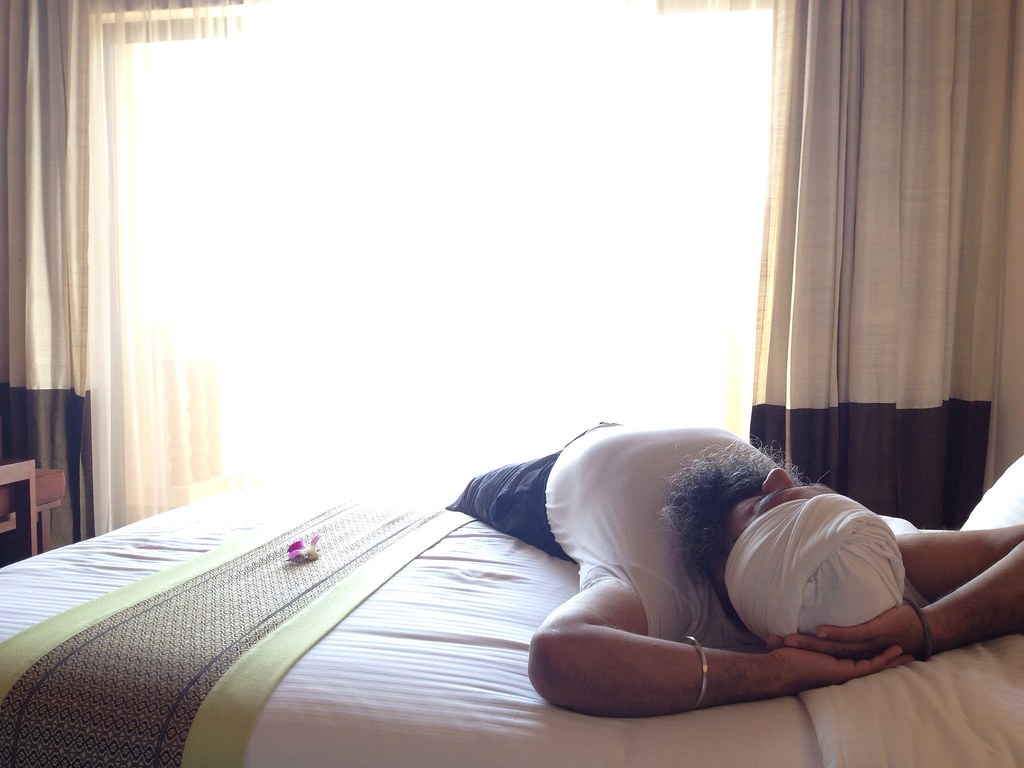
Shattered
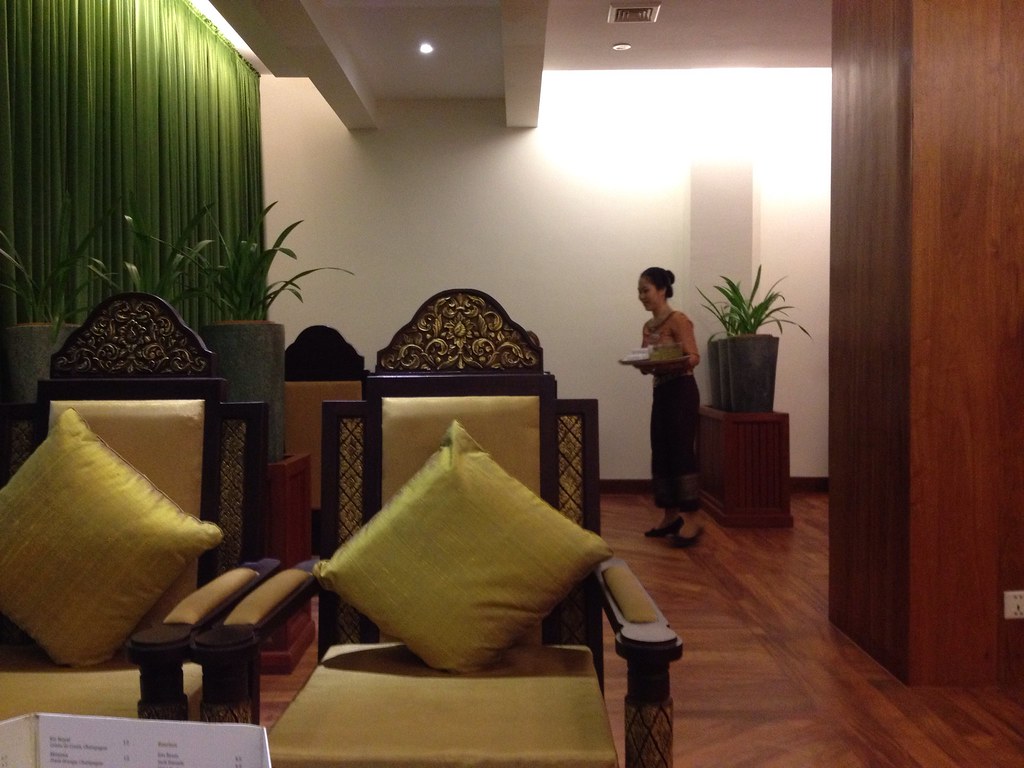
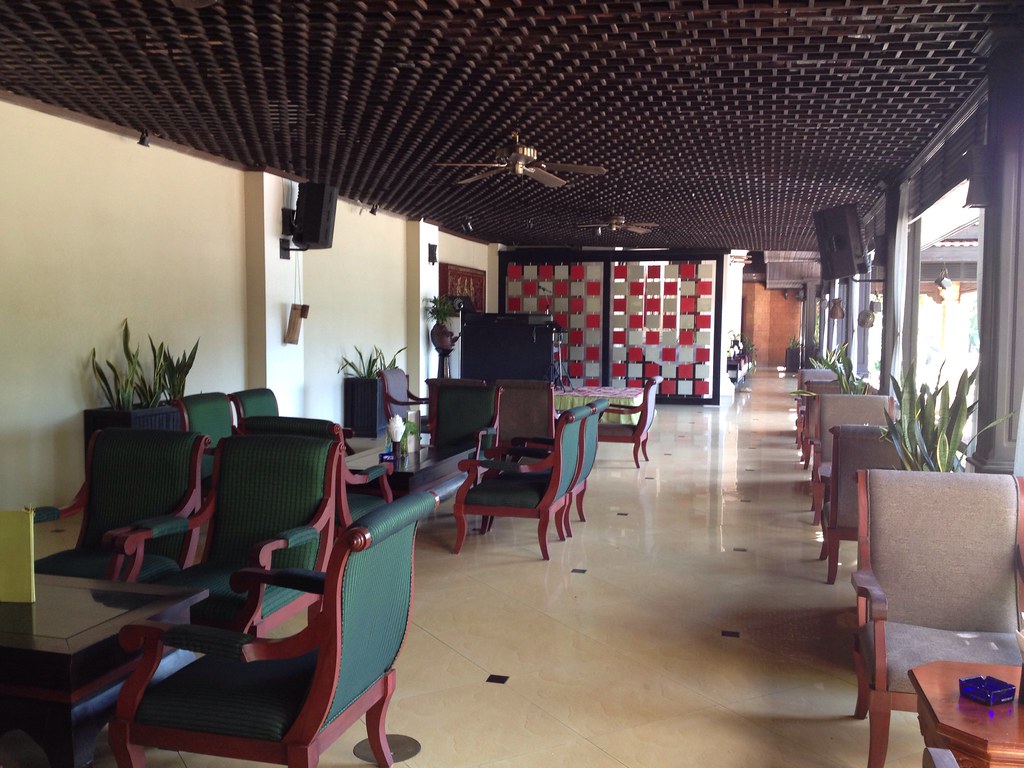
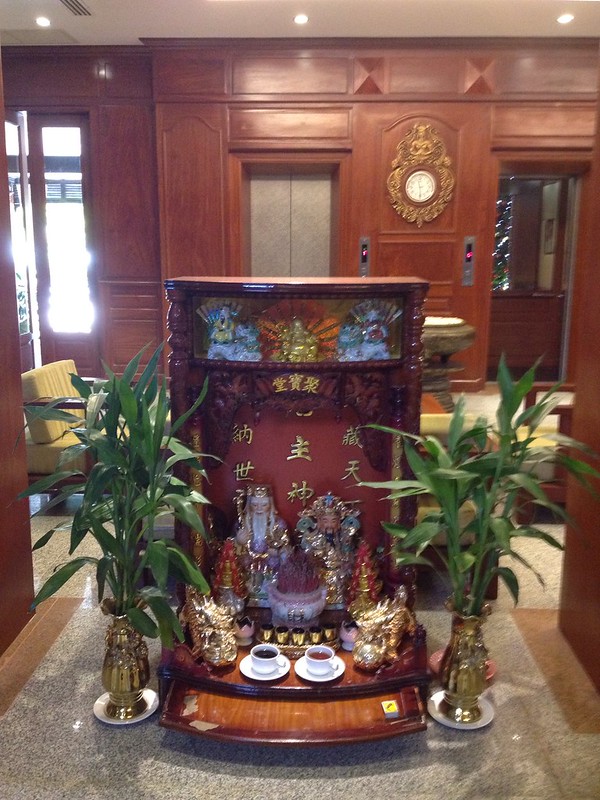
Hotel foyer
Hotel entrance
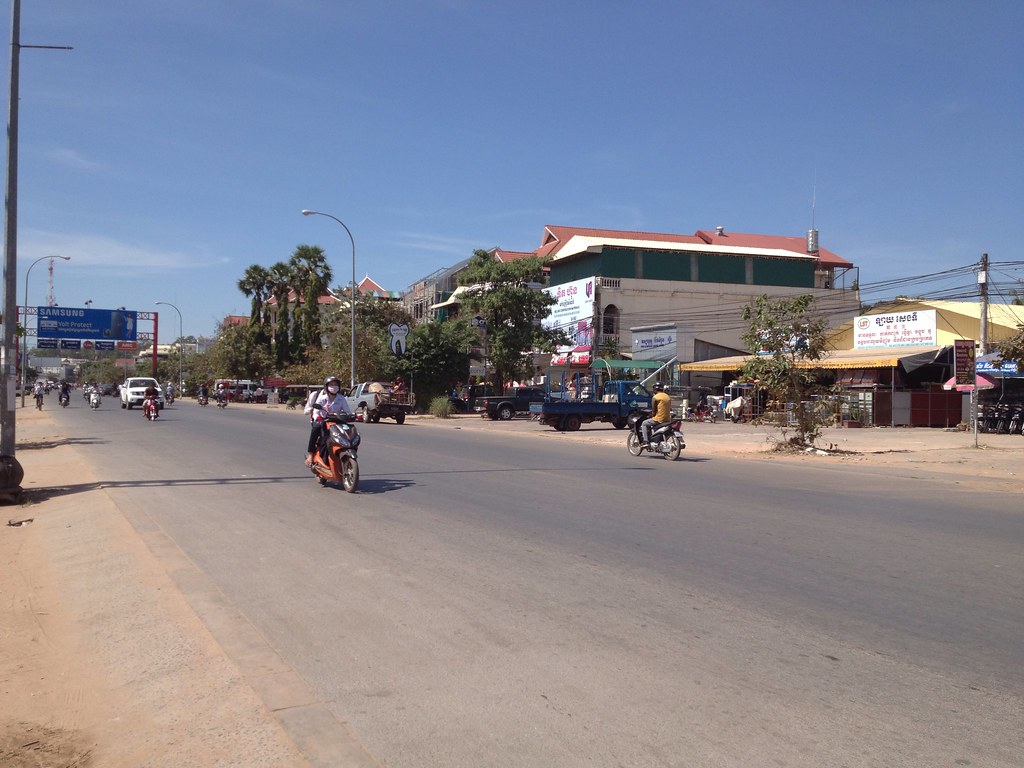
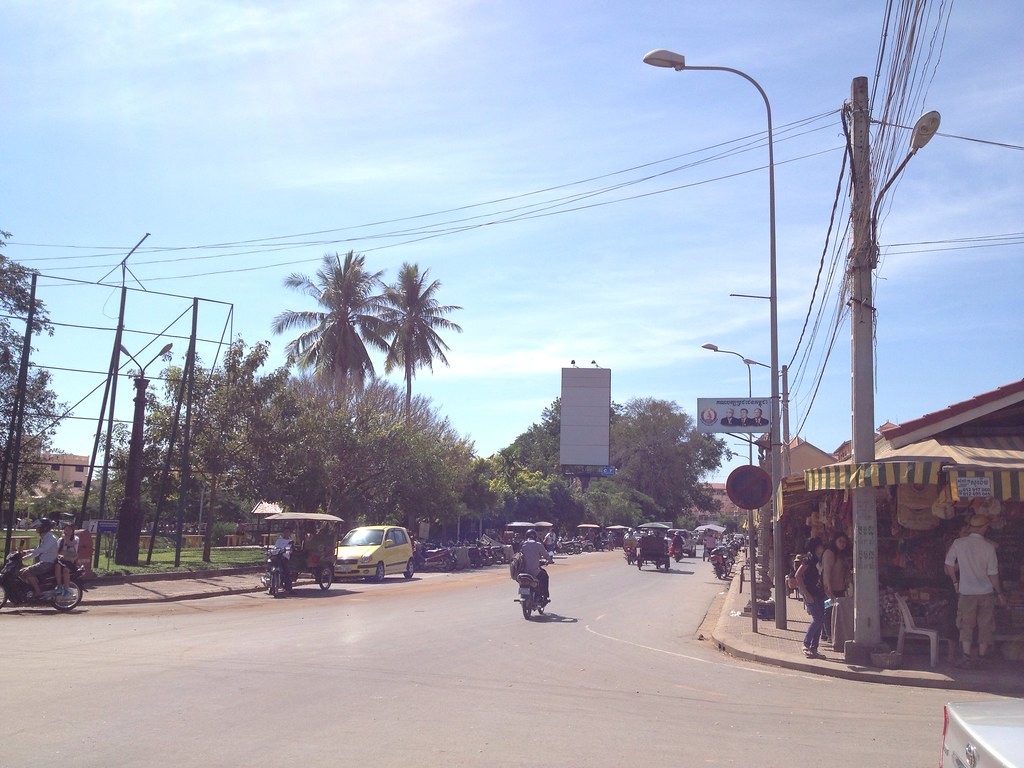
Walking to the market
Gas station
Tempted to jump in?
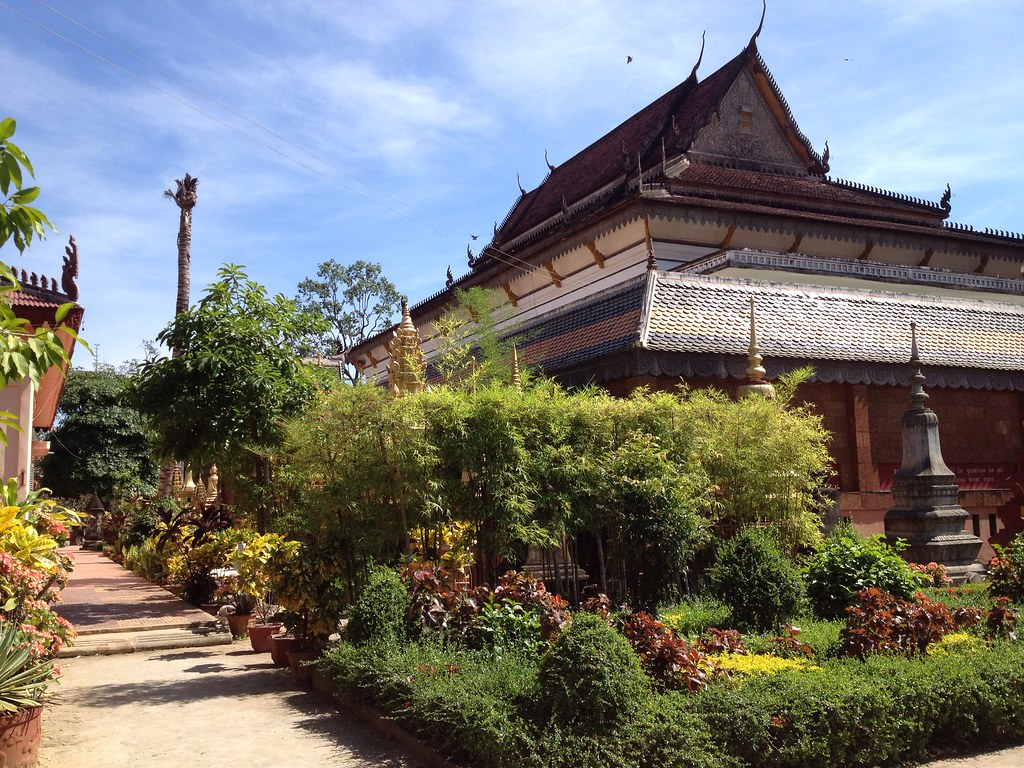
Monastery
The day was getting hotter
Alleyway
Pub street
Though Pub St is better known for its bars a handful of places are known for great food, many with seating upstairs so you can escape above the partying milieu on the street below. Crammed along The Alley is a wider selection of restaurants that offer a generally quieter and more intimate experience. The local restaurants lining Phsar Chas have extensive yet near identical menus of cheap fried rice and westernised approximations of Khmer dishes. At dusk the Kindergarten on the corner of Street 8 and 11 erupts into a a rabble of small BBQ stalls, billowing smoke, noise and the persistently entreating peddlers. The phnom pleurng here is the cheapest you will find.
Here we ate at
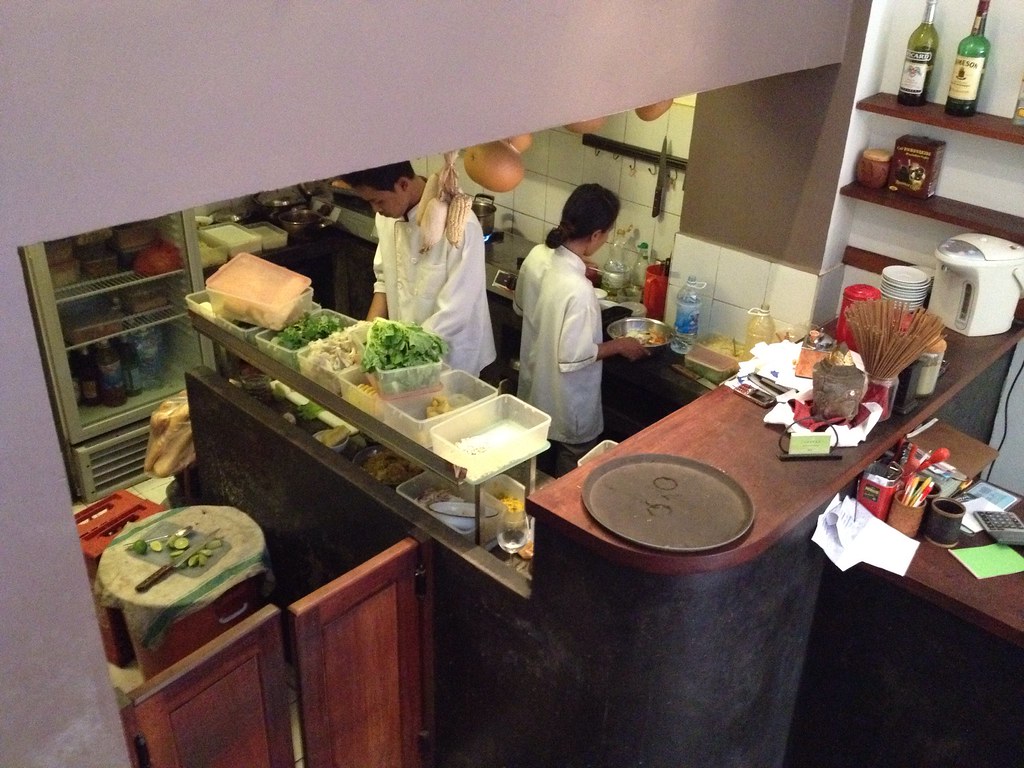
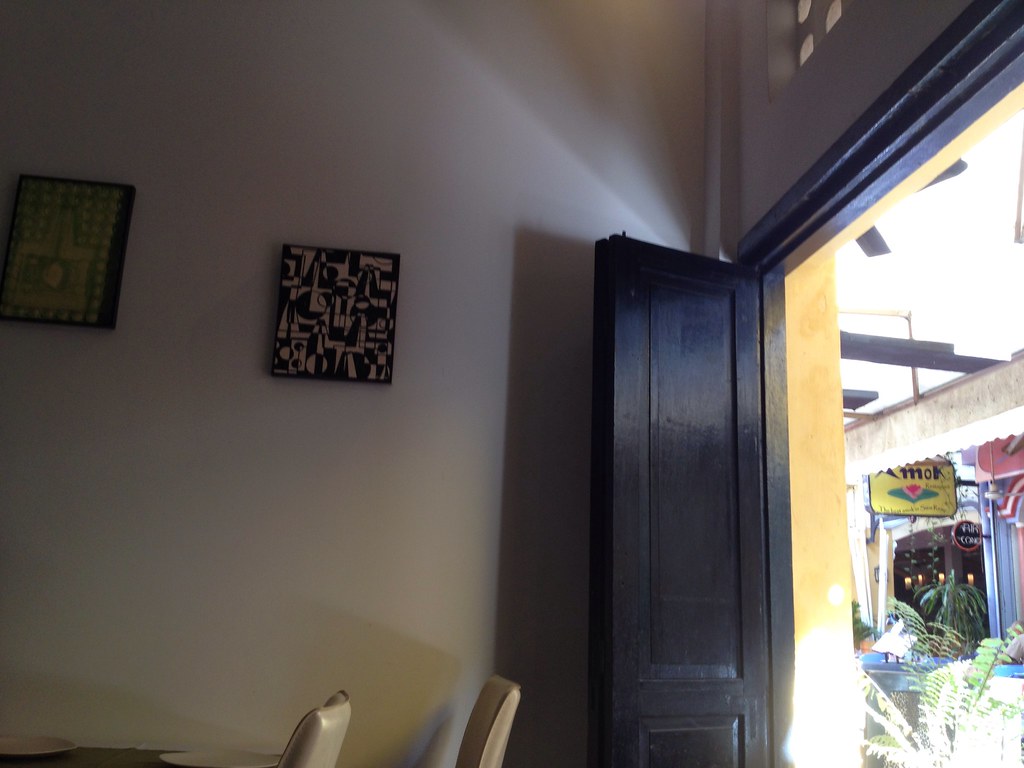
Chamkar Vegetarian Restaurant
The Passage
Old Market
Siem Reap
Cambodia
T: +855 92 733150
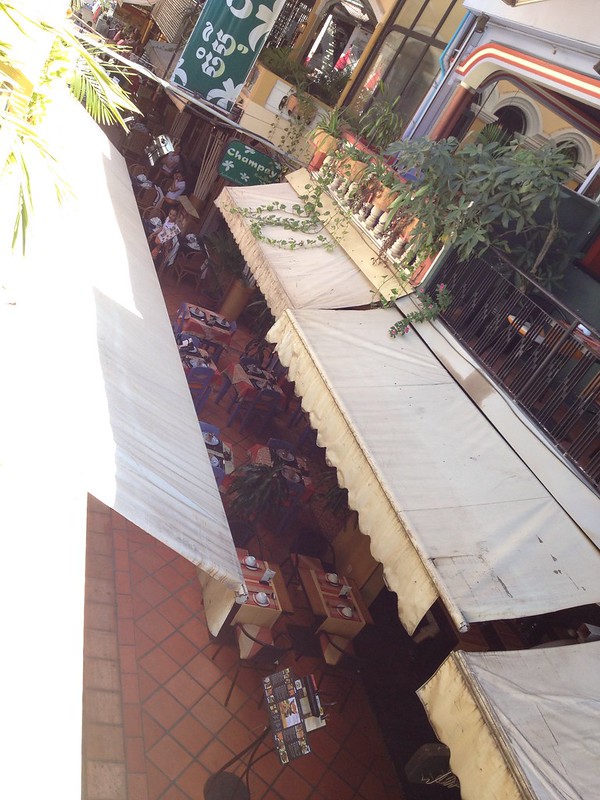
View from the restaurant balcony
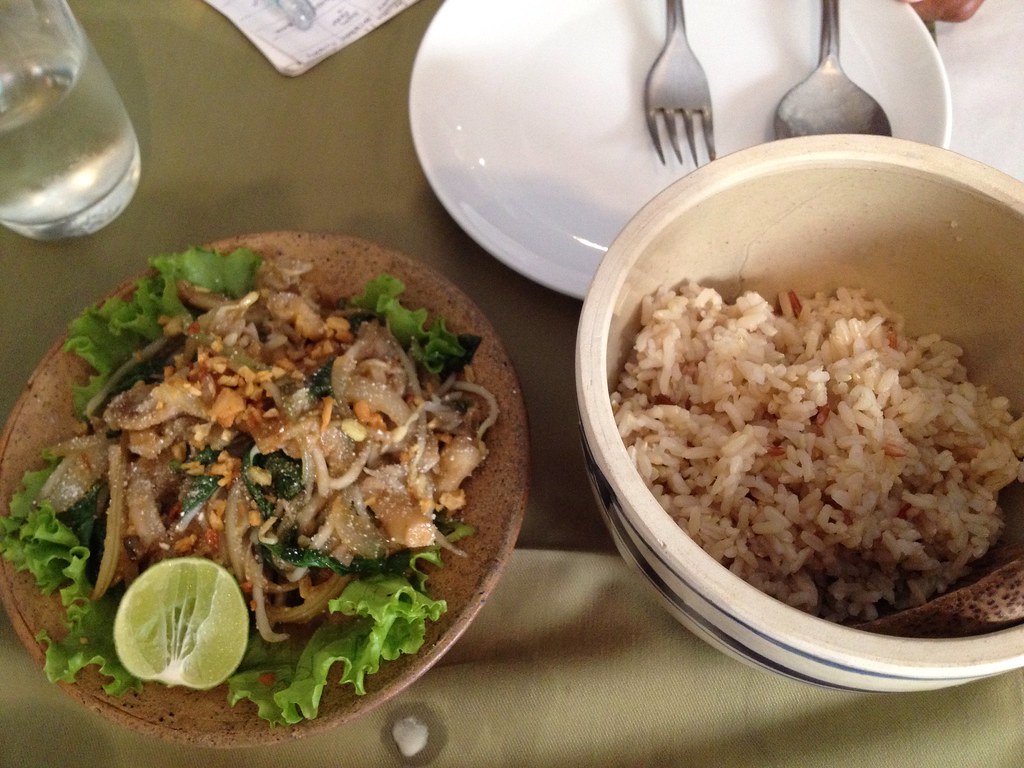
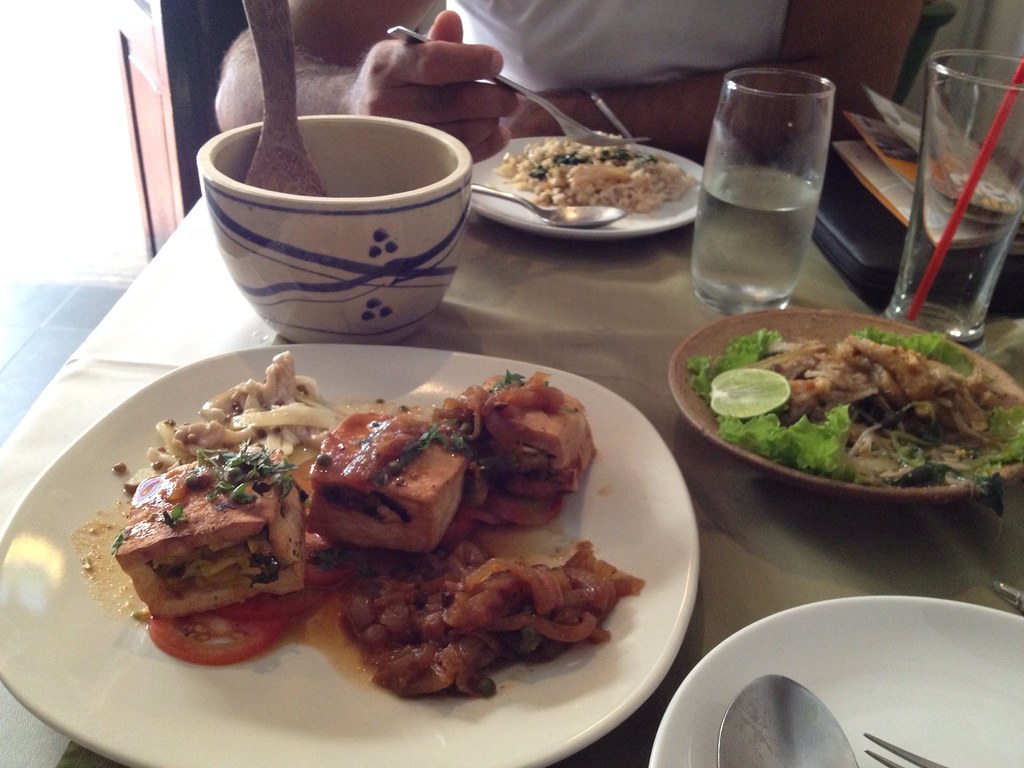
We were surprised to find such great tasting vegetarian food.
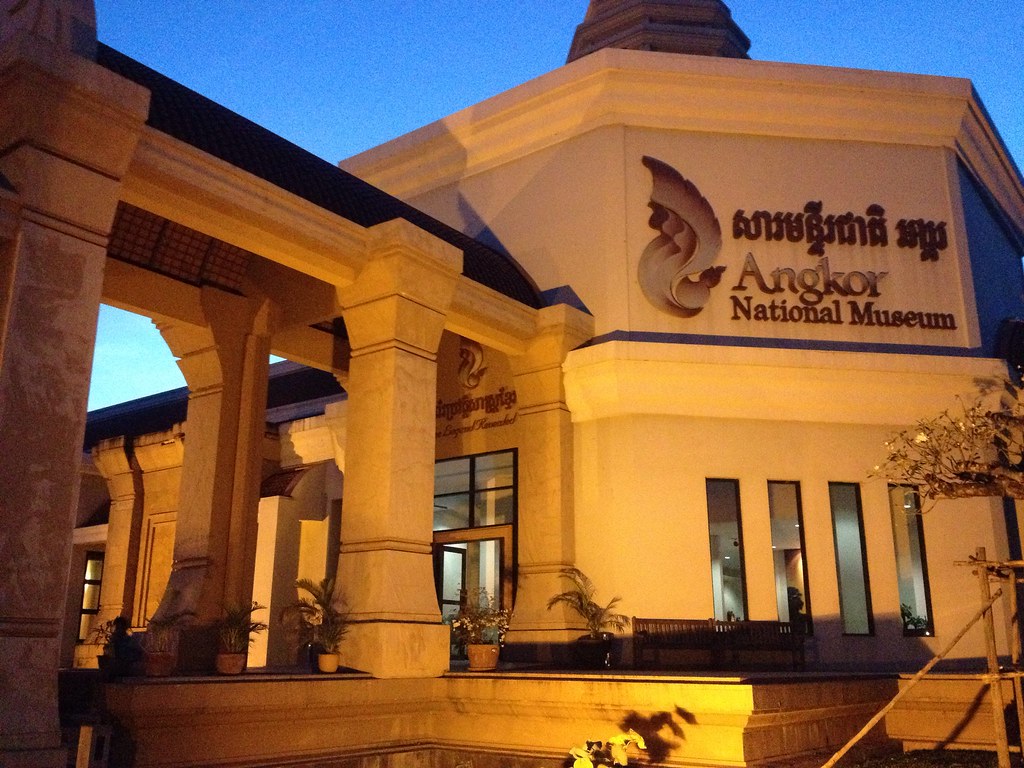
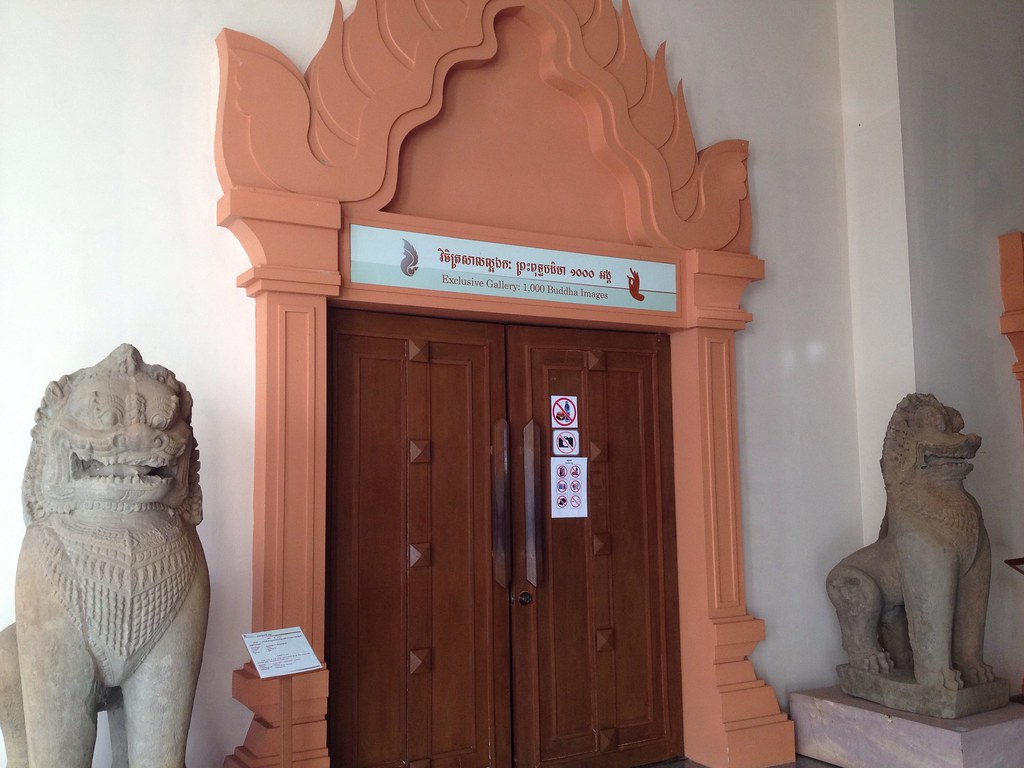
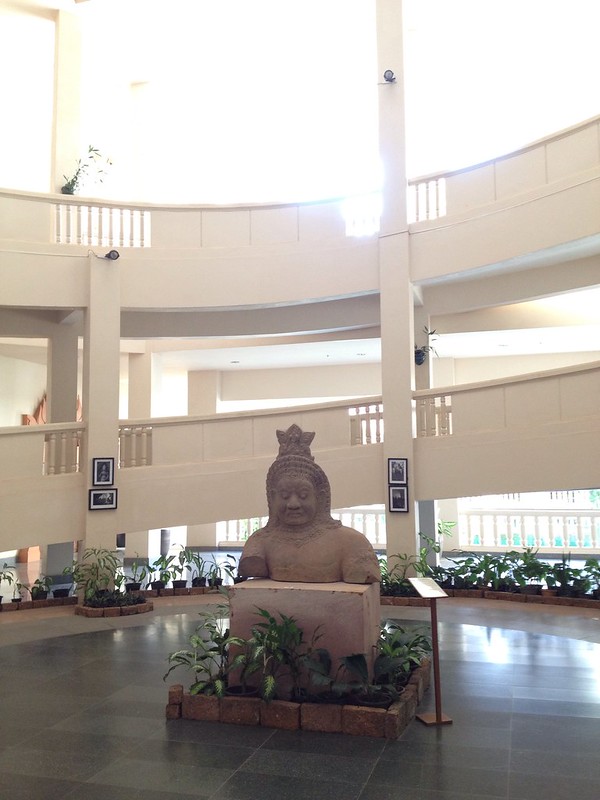
We then took a tuk tuk to Angkor National Museum
No. 968, Vithei Charles de Gaulle,
Khrum 6,
Phoum Salakanseng,
Khom Svaydangum,
Siem Reap District,
Siem Reap Province,
Cambodia
Opened on 12 November 2007, the Angkor National Museum offers visitors a better understanding of the area’s archaeological treasures. The Golden Era of the Khmer Kingdom is presented, including the use of state-of-the-art multimedia technology. The museum covers Khmer history, civilization, and cultural heritage in eight galleries.
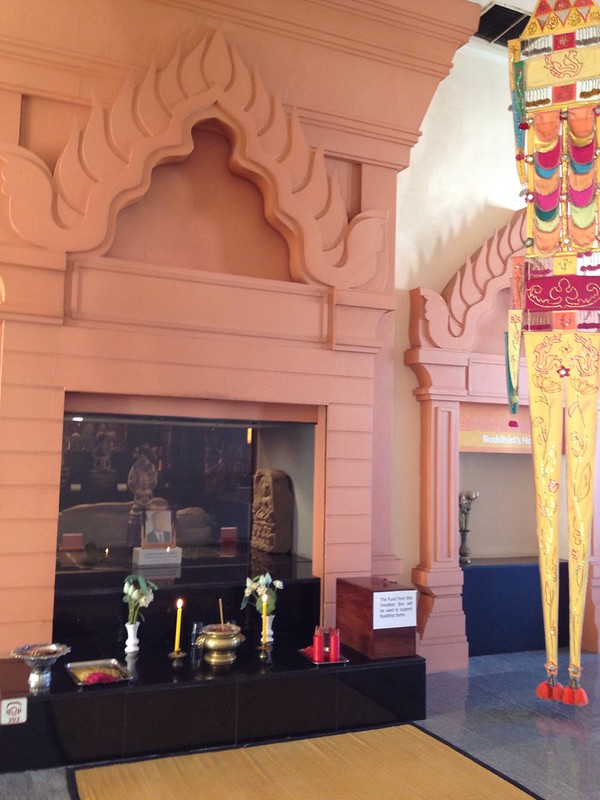
Cambodia mourns former King Sihanouk
One is not allowed to take a picture of the actual exhibits. The exhibitions are amazing are worth seeing. At the time of writing the entry fee was USD$12 per person.
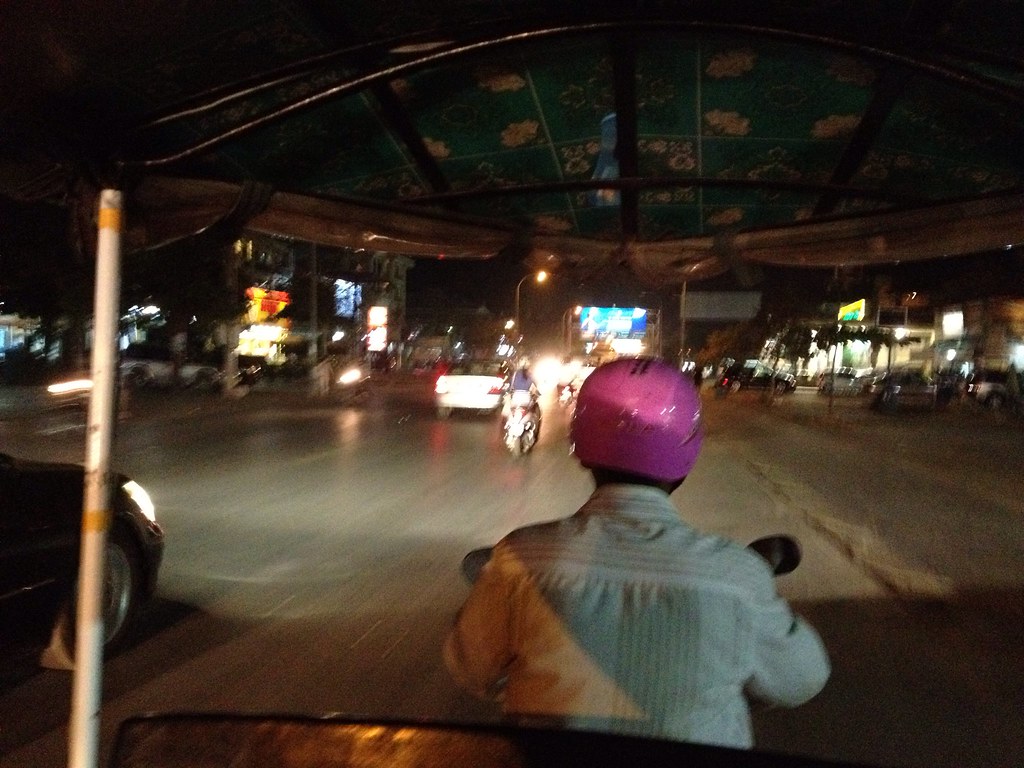
Afterwards we took a tuk tuk back to the hotel. With tuk tuk drivers you have to negotiate the charge.
This morning I did not get to sleep until 5am. As part of the kundalini yoga teacher training you have three ‘check in’ calls with your group. It discusses how you are doing after the teacher training. The teacher asked if I was grounded, I answered “it is 4am in Malaysia, I am definitely grounded!”
So as you can imagine I had a lie in, well apart from waking up at 10am to go and get breakfast. When it is free I make sure I get my monies worth!
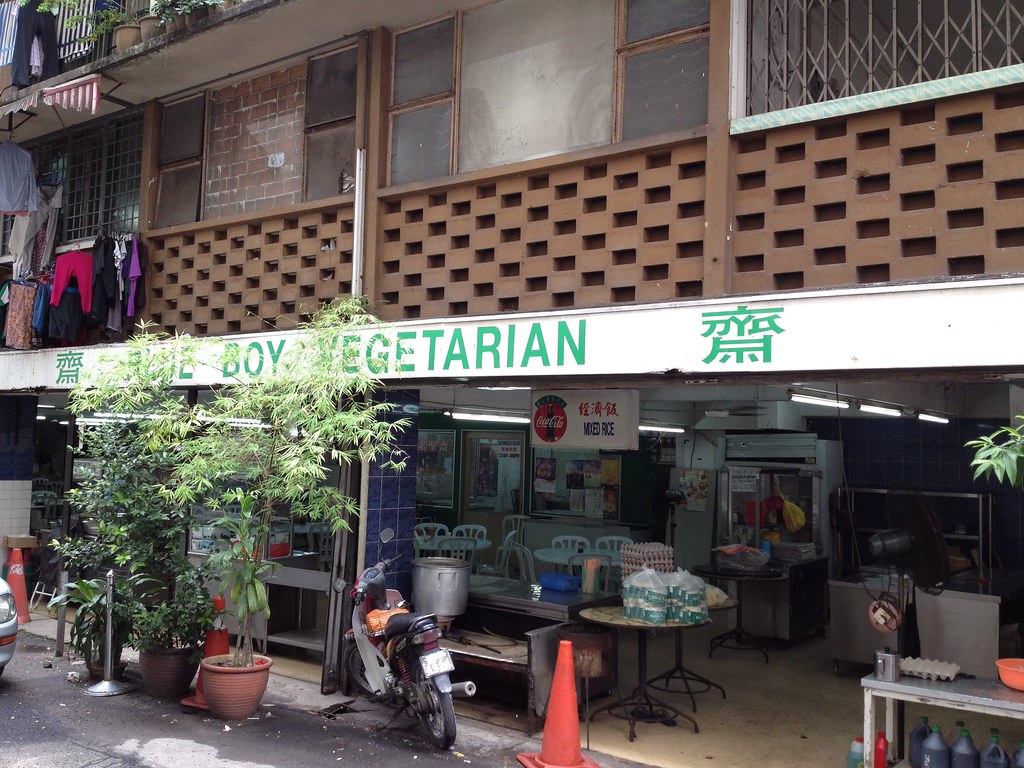
In the afternoon we went to Blue Boy Cafe
Blue Boy Vegetarian Food Centre
6001, Blue Boy Mansion,
Jalan Tong Shin,
55100, Kuala Lumpur,
Malaysia
T: +60 3-2144-9011
The restaurant did not seem that clean so we did not eat there.
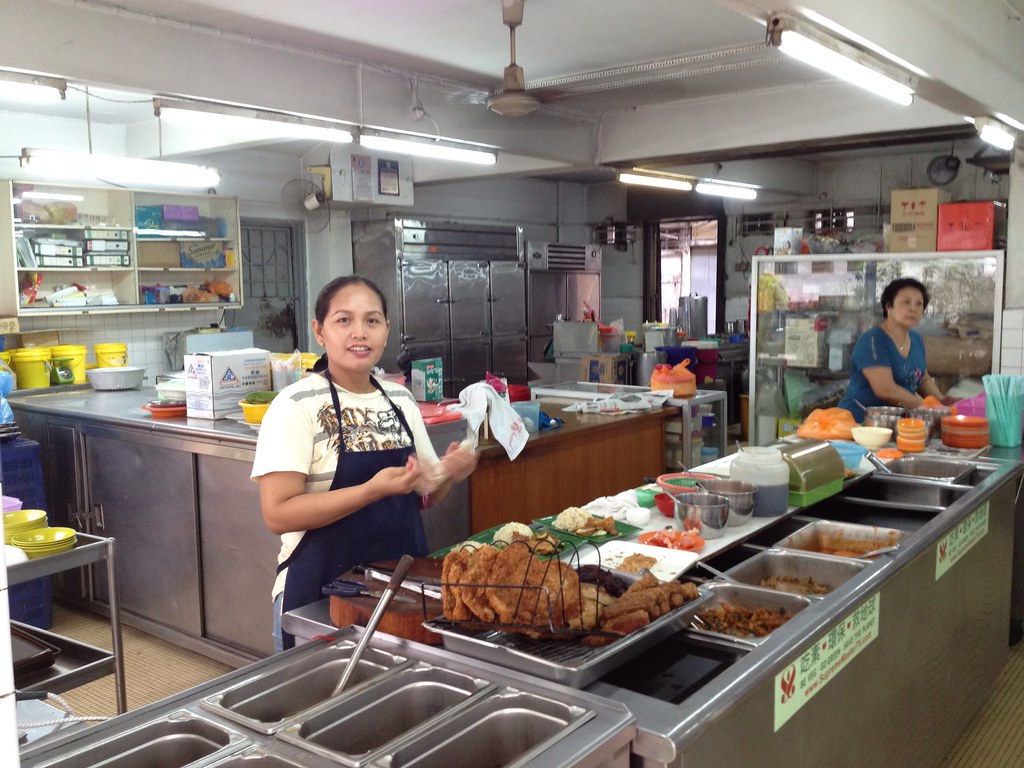
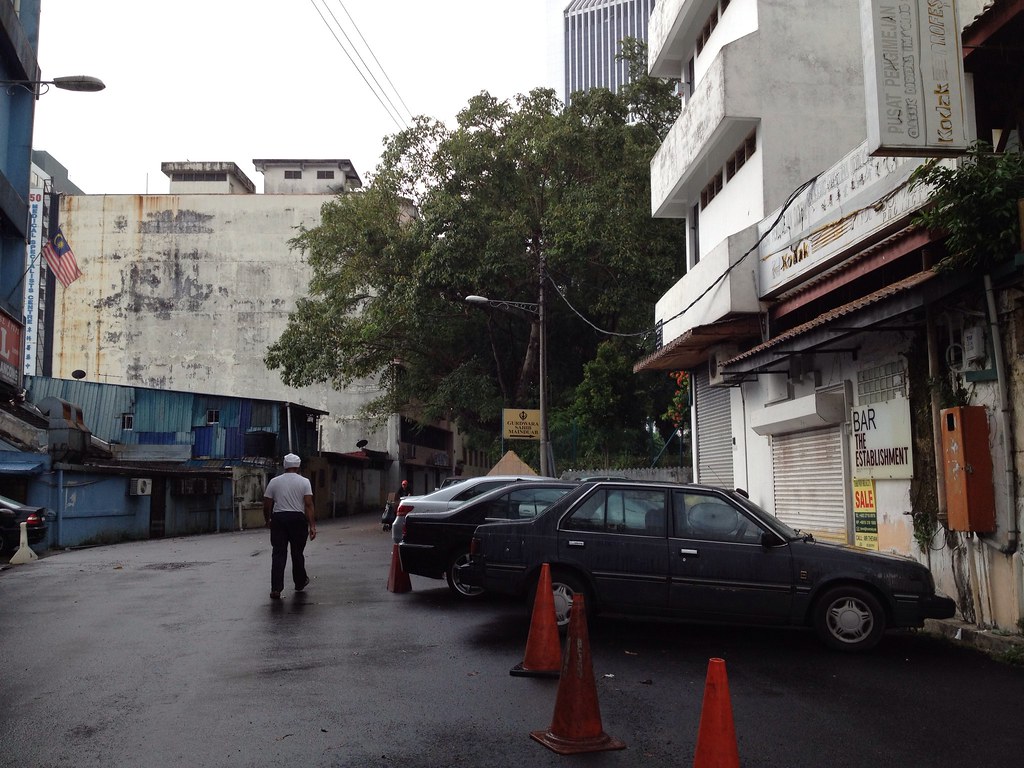
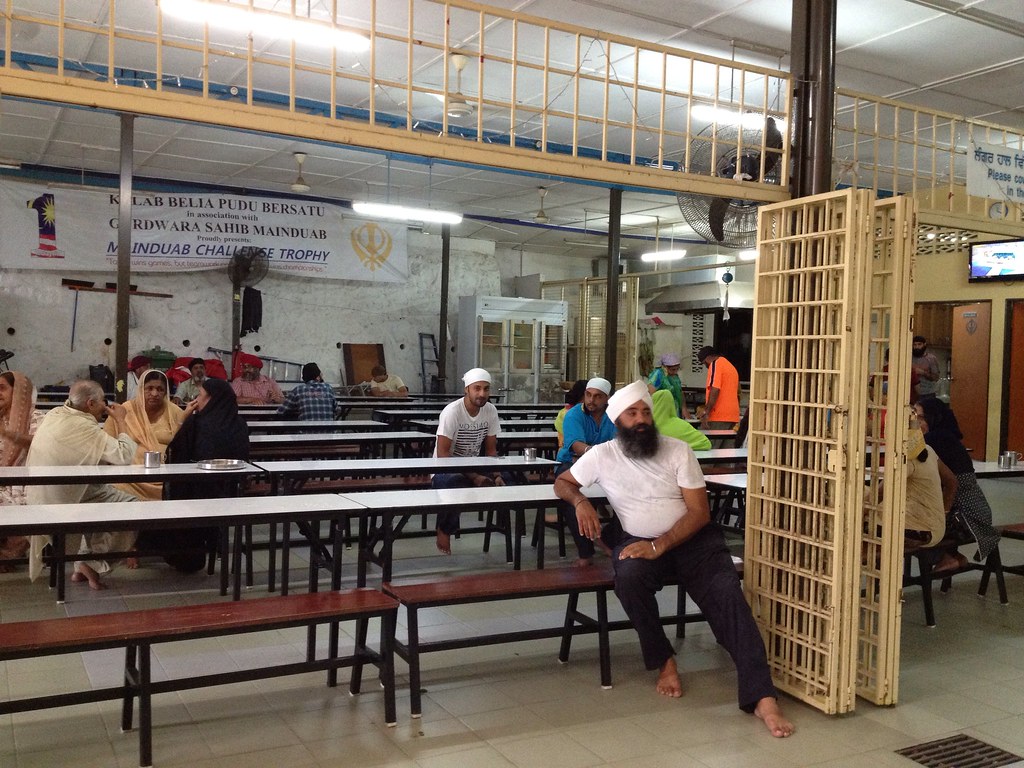
Afterwards, we walked to Mainduab Gurdwara. The address is in a previous post. I noticed a lot of Sikhs here with cut hair. Most of the time Sikhs with cut hair look like people from other religions and it is hard to tell them apart. Sikhs with cut hair always say Sikhi is in my heart that is what matters!! Seems like we are great at changing Sikhi to how it suits us.
Just to prove we walked!
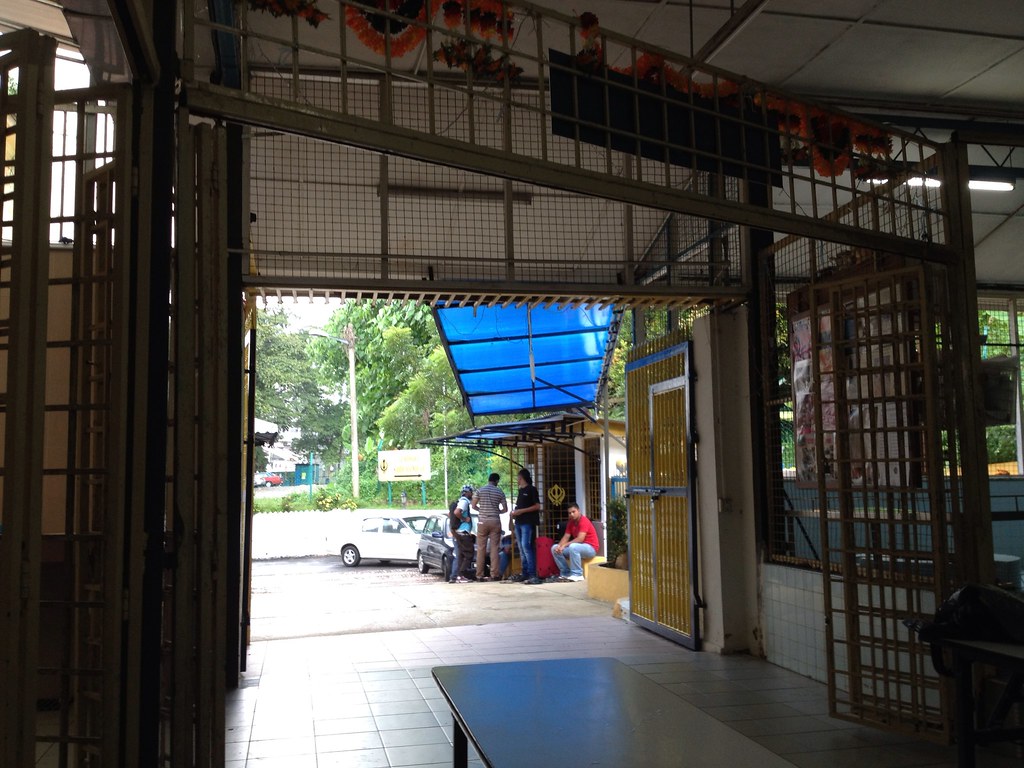
Looking outside from the lungar hall
Lungar hall
Darbar sahib
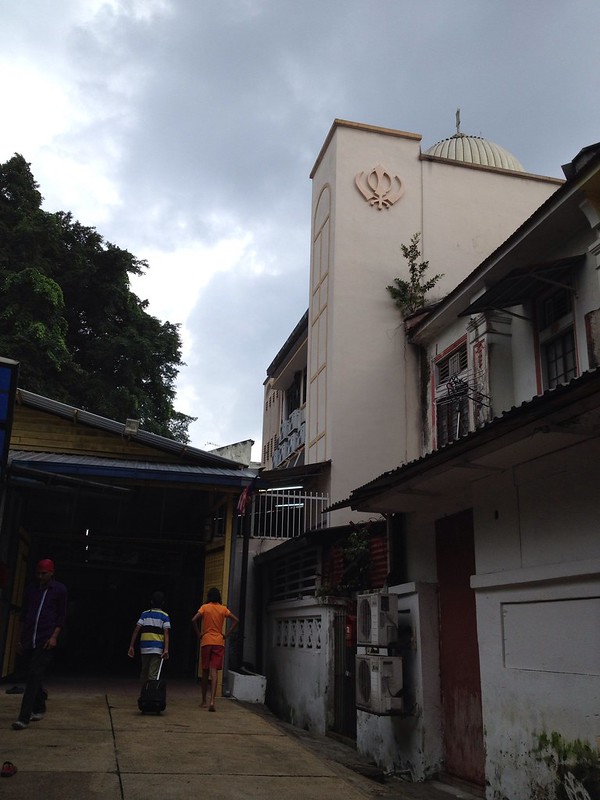
Entrance to the Gurdwara
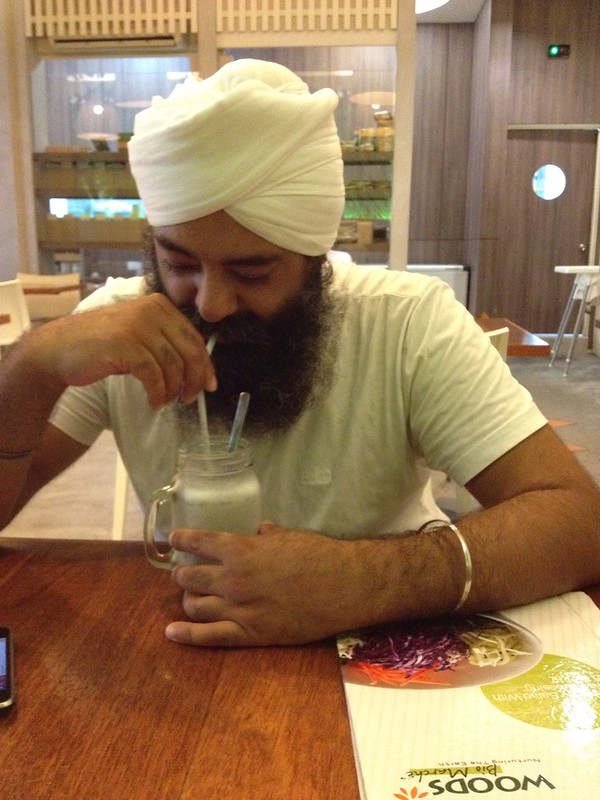
Afterwards we had a drink at Woods Bio Marche, again the address is in a previous post. By this time the heavens had opened up and the rain was getting heavy.
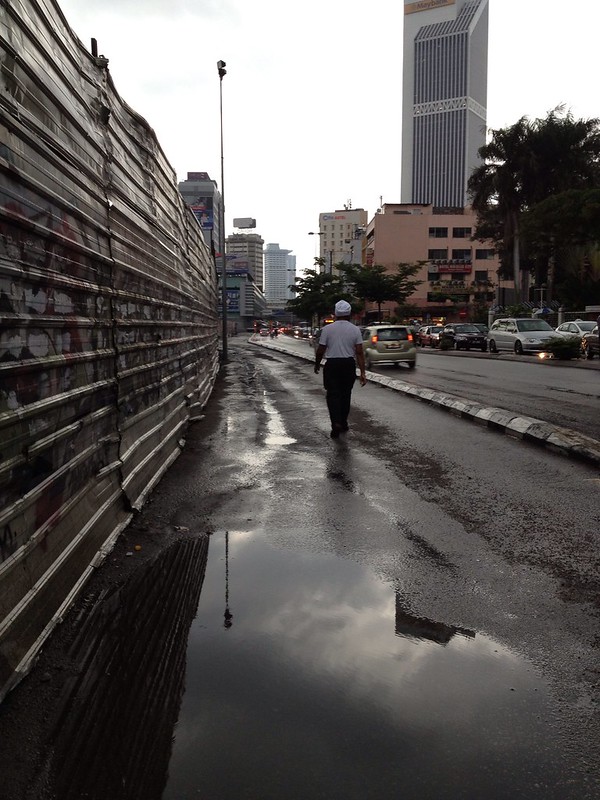
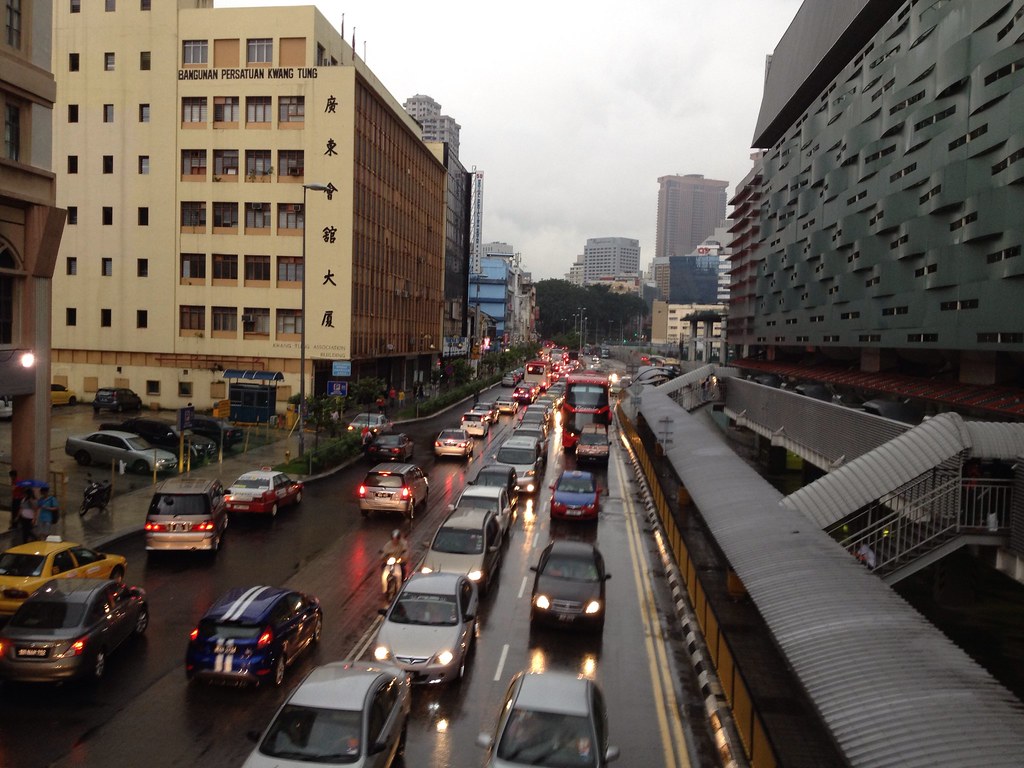
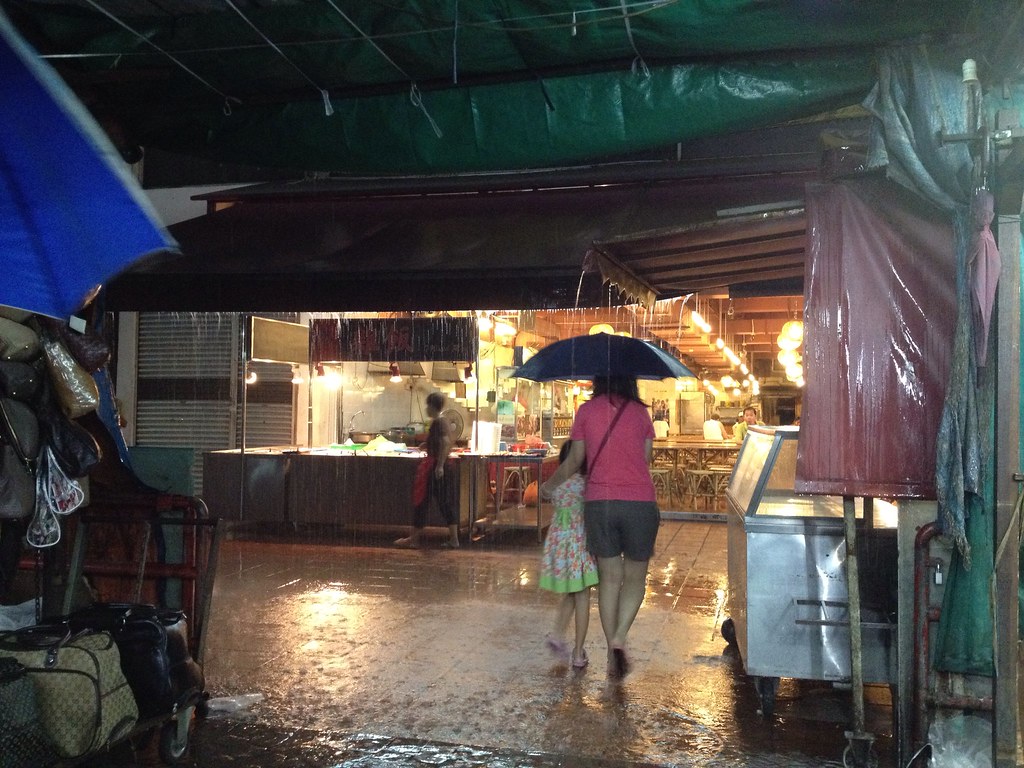
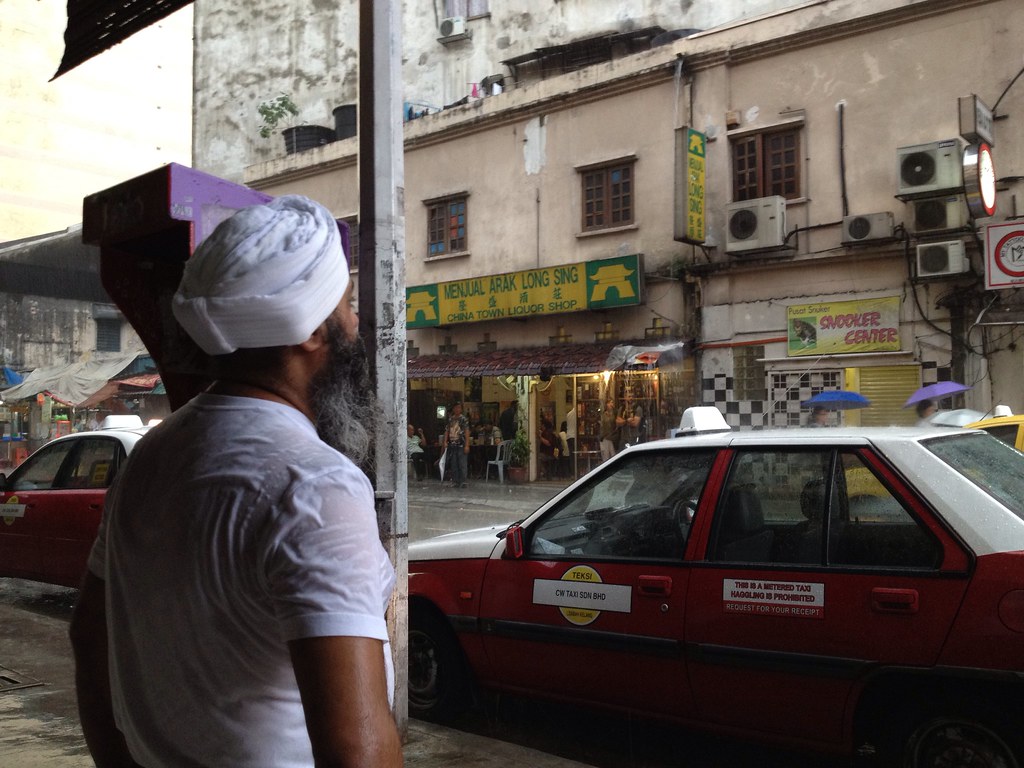
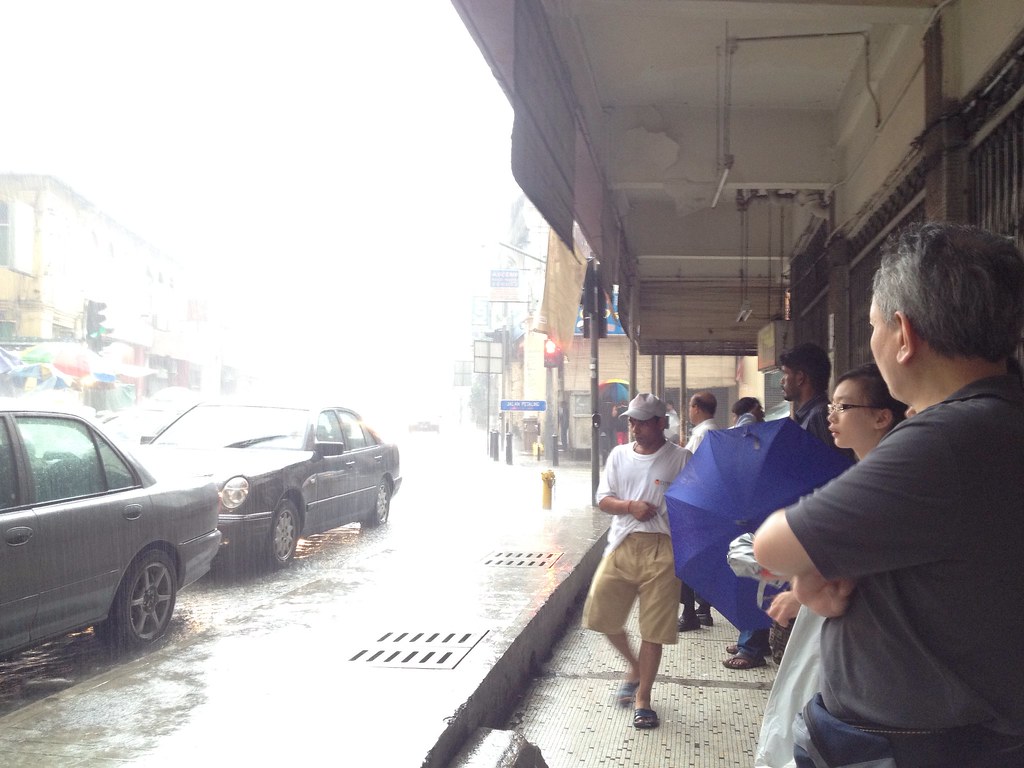
We walked to Petaling Street. At one stage the rain was very heavy, we took cover the side of a building. Once the rain turned into a drizzle we carried on walking.
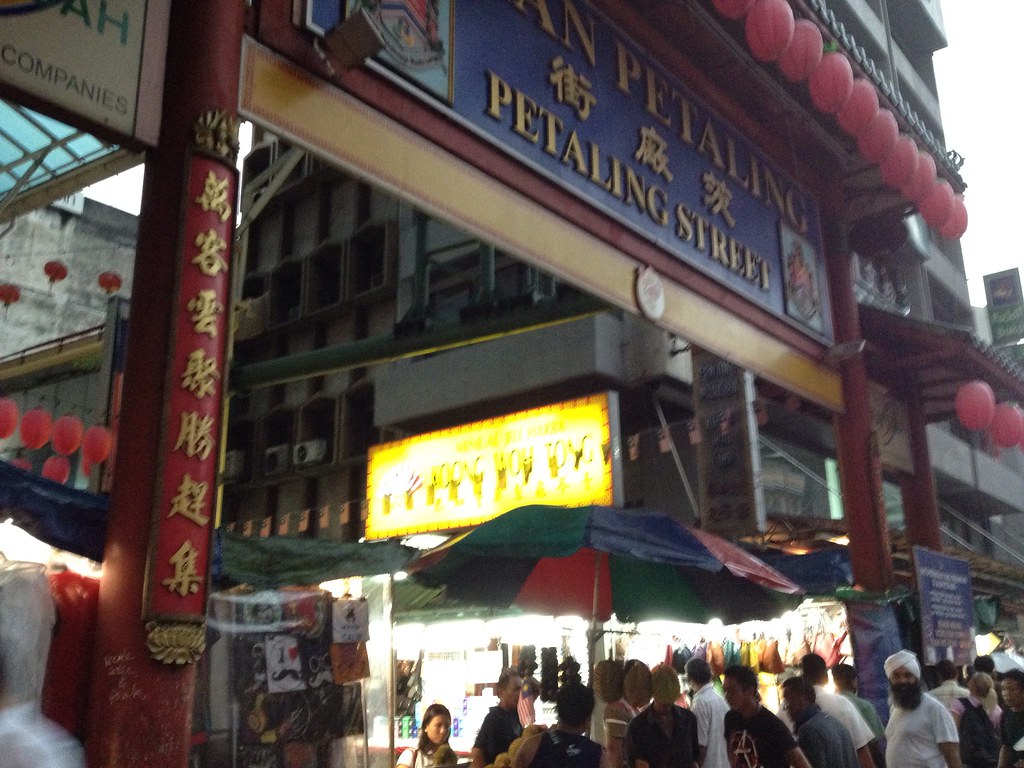
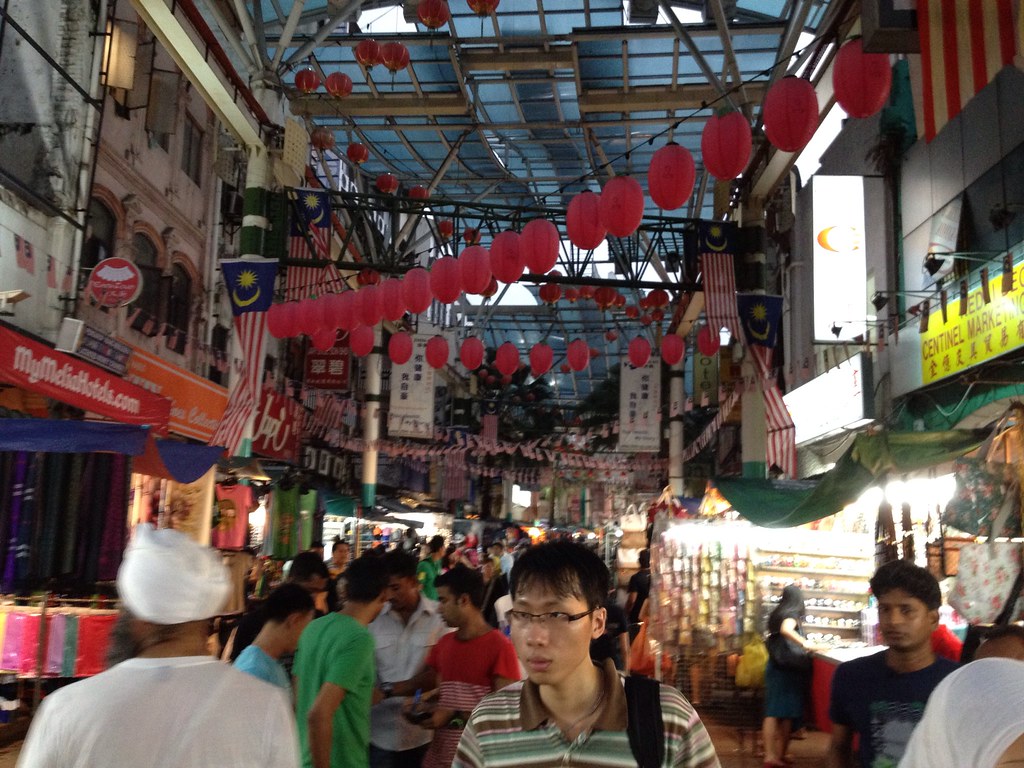
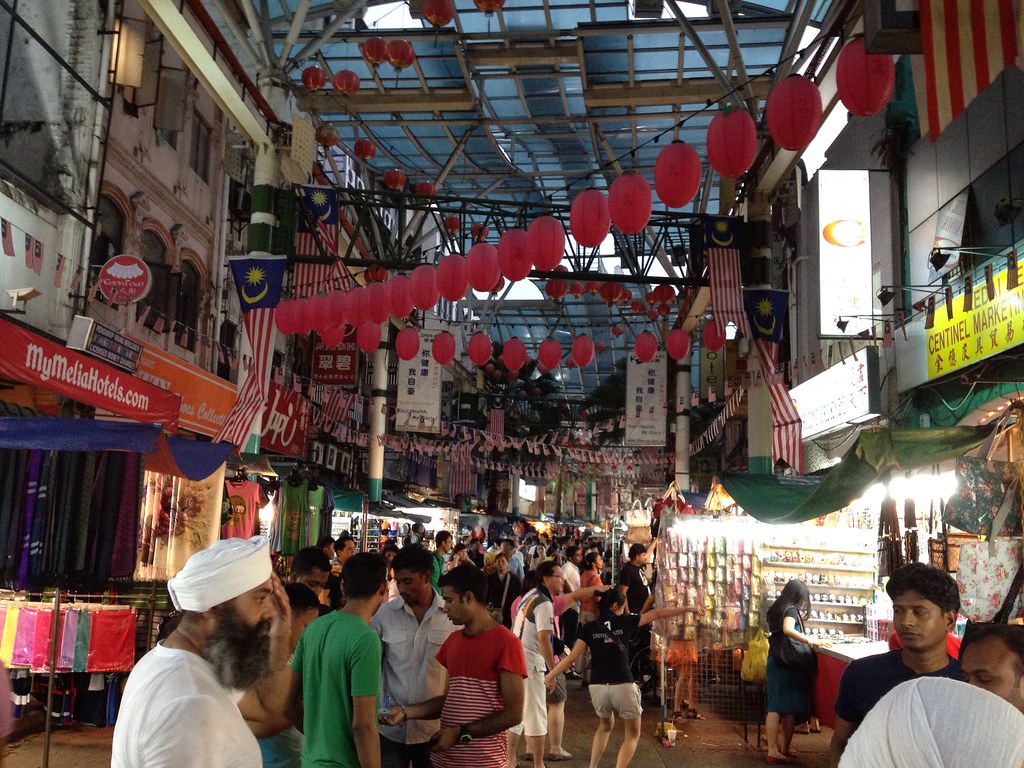
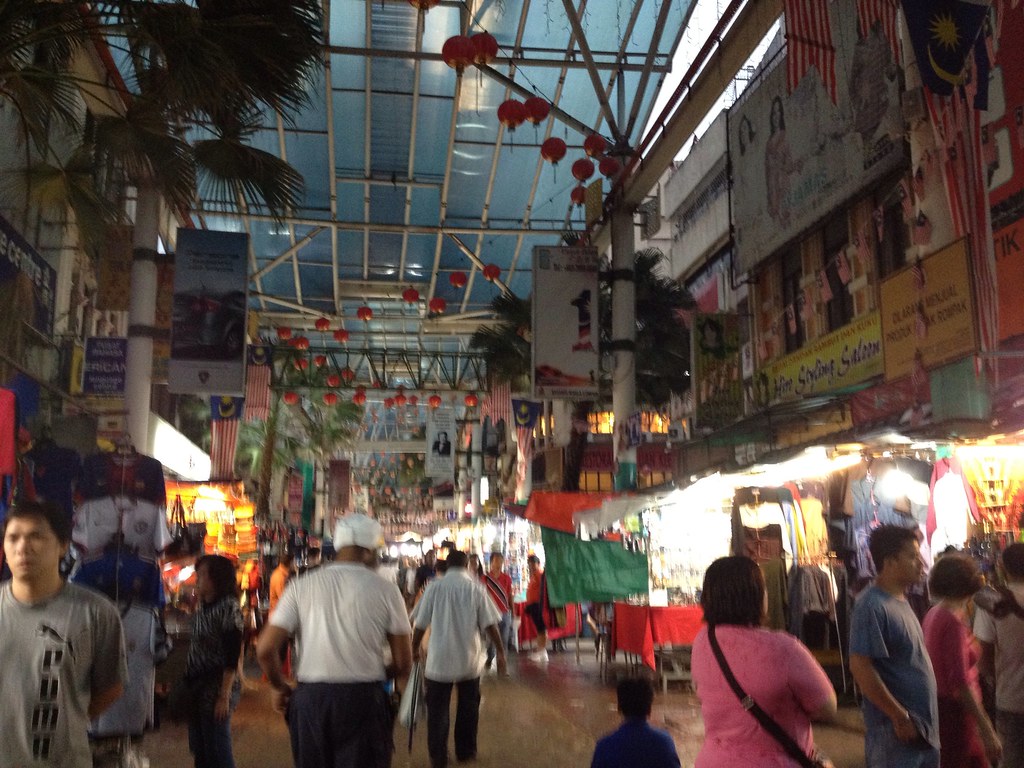
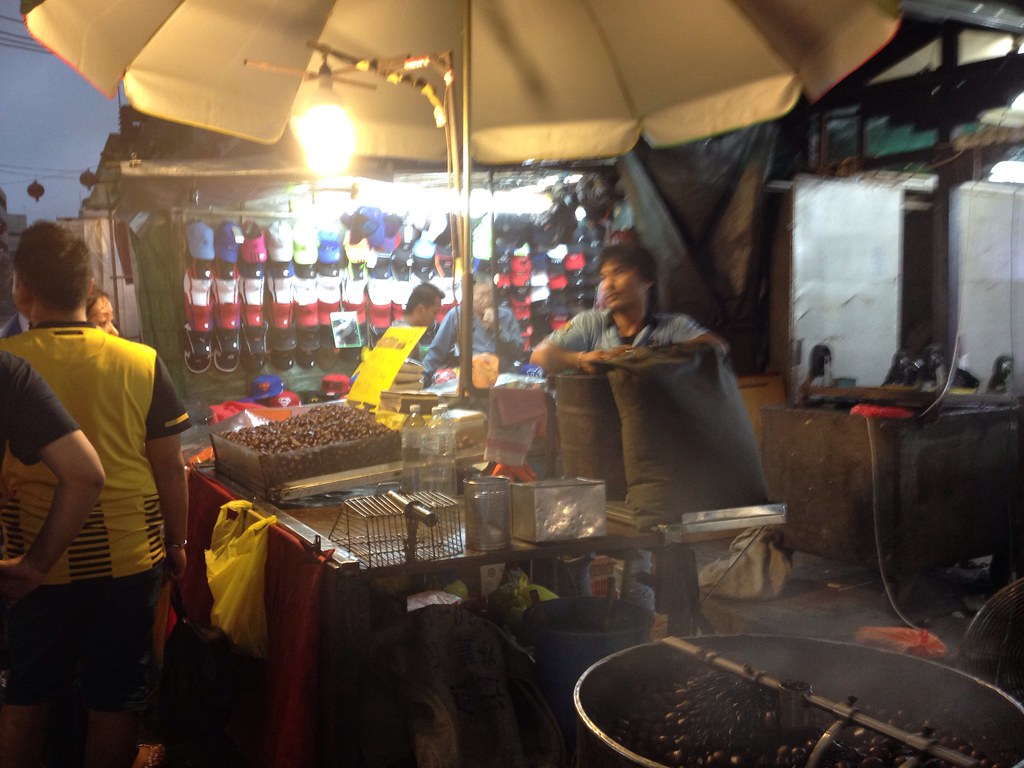
Petaling Street (Malay: Jalan Petaling, Simplified Chinese: 茨厂街, Traditional Chinese: 茨廠街, pinyin: Cíchǎng Jiē, Cantonese: Chee Cheong Kai) is a Chinatown located in Kuala Lumpur, Malaysia. It is infamous for pirated clothes and accessories along with bootleg DVDs and CDs. Petaling Street however does not exclusively offer pirated products. Haggling is a common sight here and the place is usually crowded with locals as well as tourists.
The area has dozens of restaurants and food stalls, serving local favourites such as Hokkien mee, ikan bakar (barbecued fish), asam laksa and curry noodles. Traders here are mainly Chinese but there are also Indian, Malay, and Bangladeshi traders.
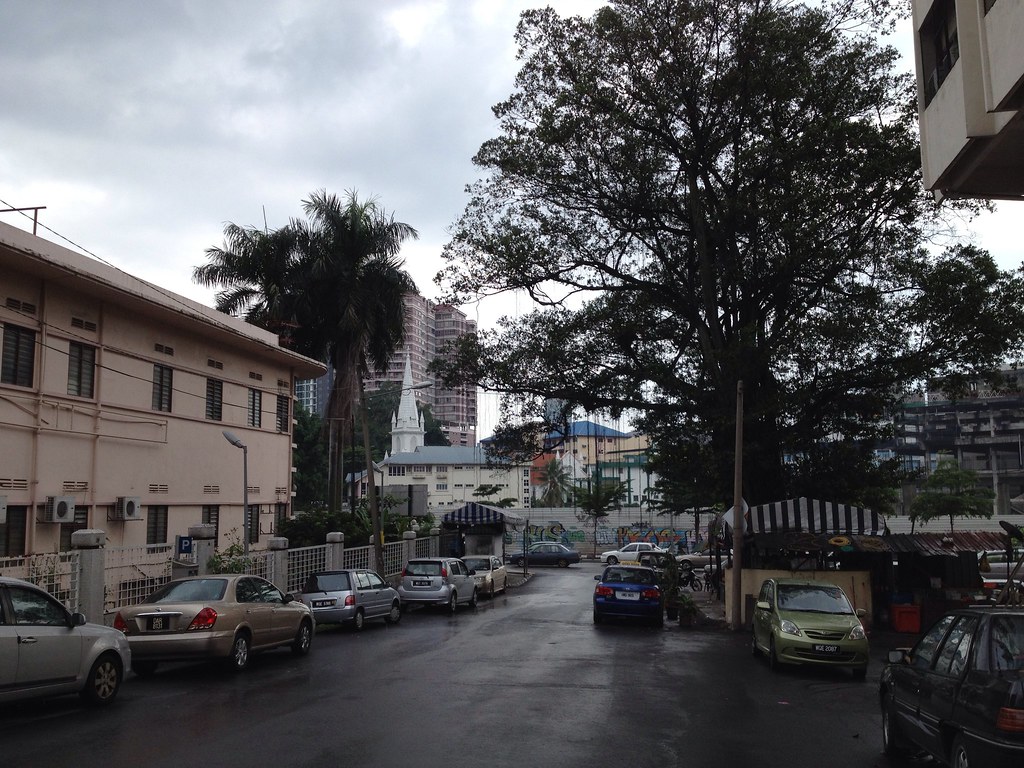
The walk towards Petaling Street
Petaling Street
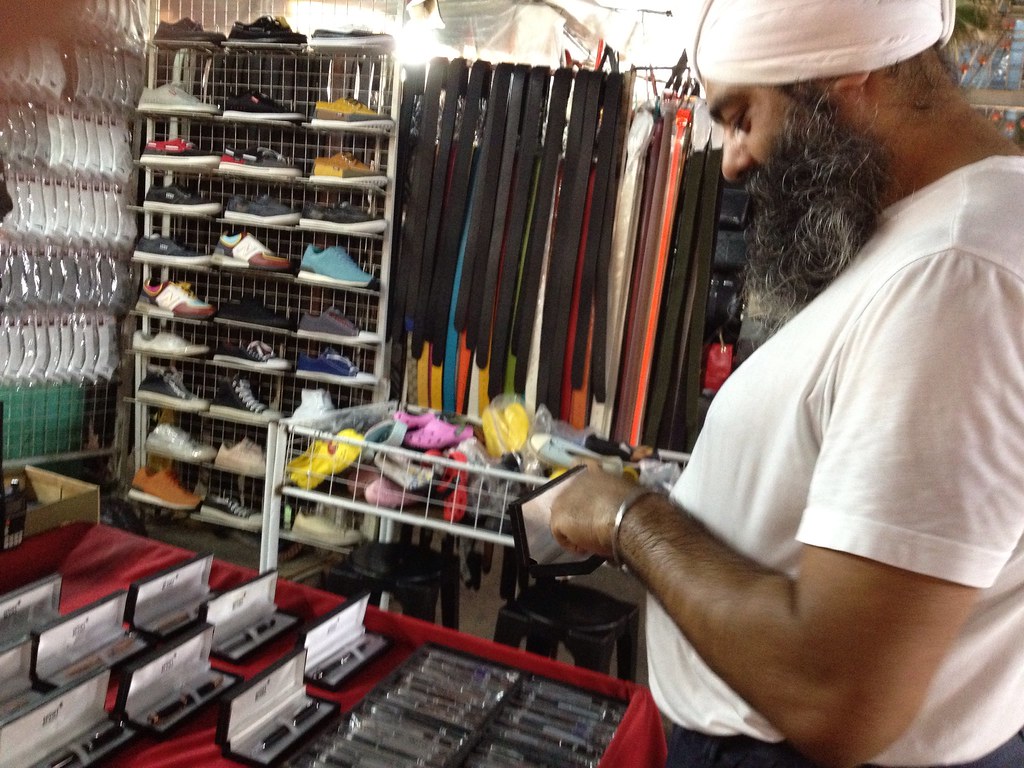
‘Genuine’ Mont Blanc pens
We walked through the sheltered street and arrived on the other side to see and feel the very heavy rain. We waited until it calmed down then tried to hail a taxi. They wanted RM20 to drop us off at the hotel. I said we would like to use the meter he said no. On the side of the taxi it says metered fair no haggling allowed!!
Everybody is waiting until the rain eases or stops
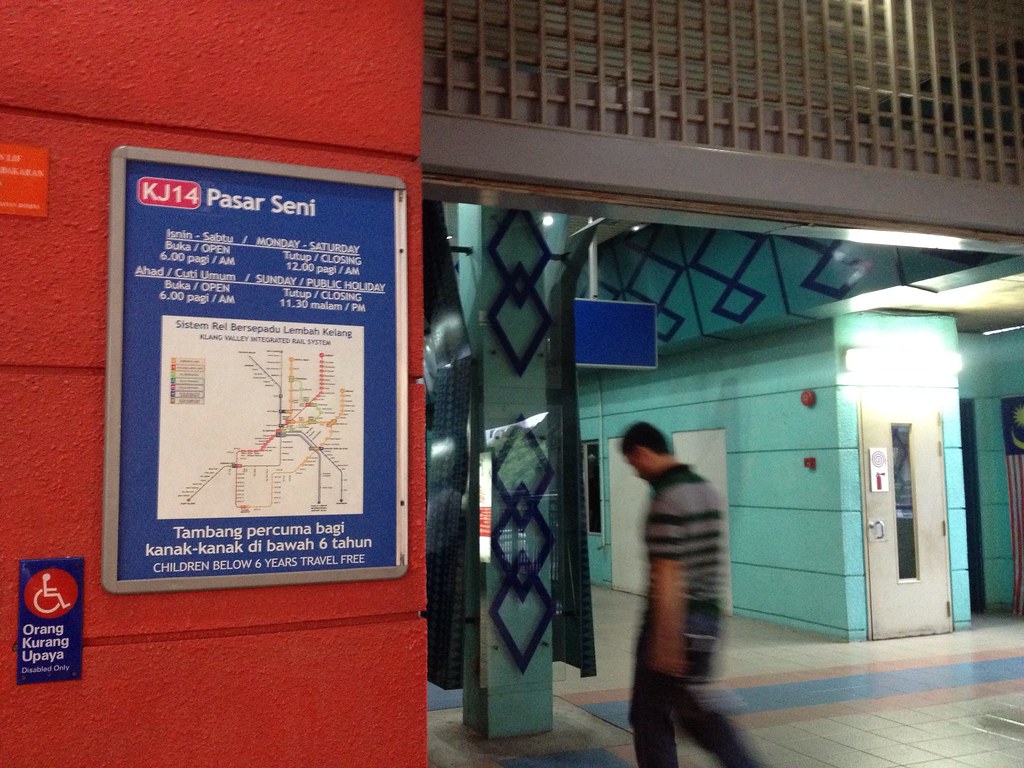
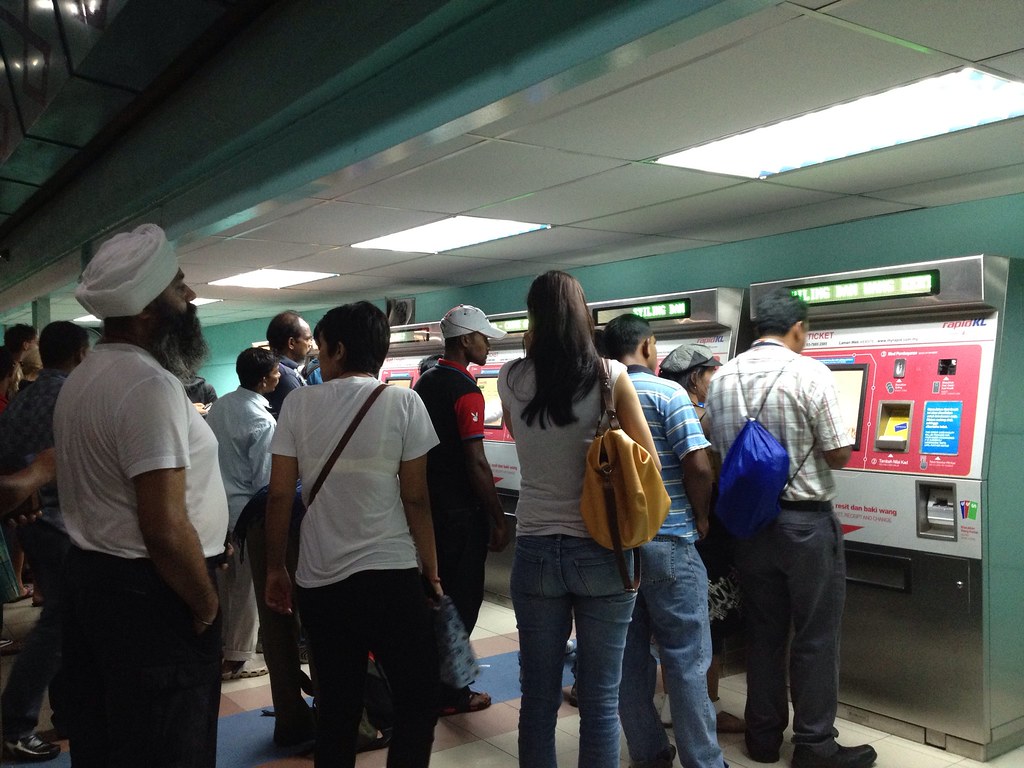
We carried on walking and saw the LRT which we caught to the hotel.
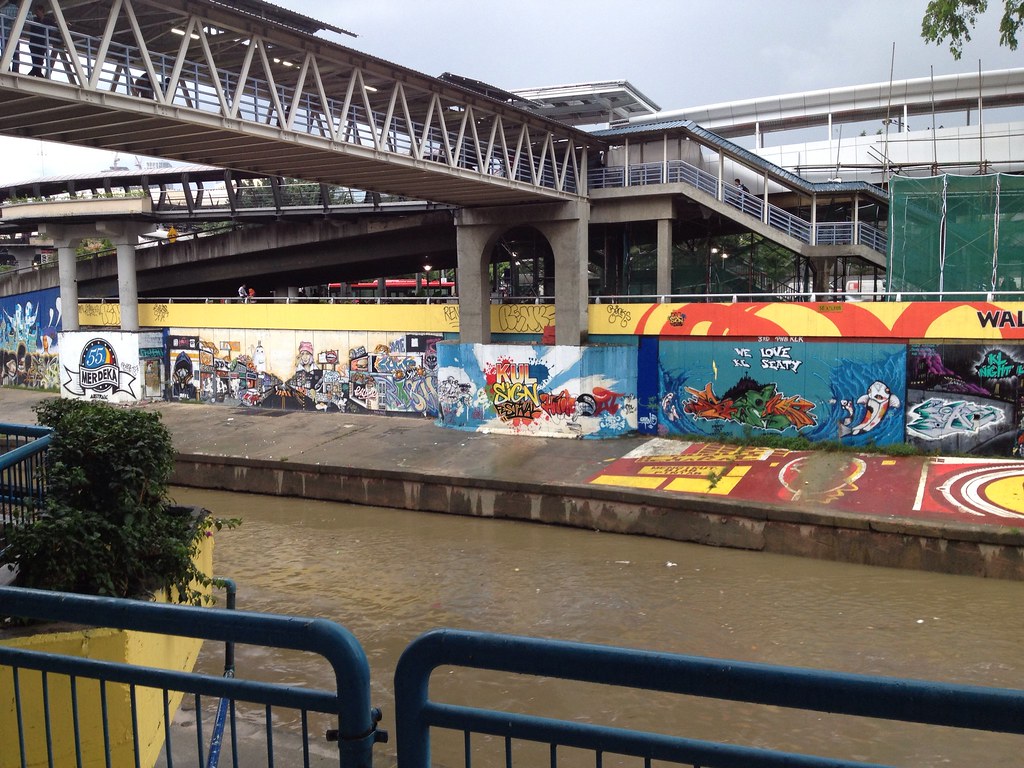
Sewerage is flushed directly into the water
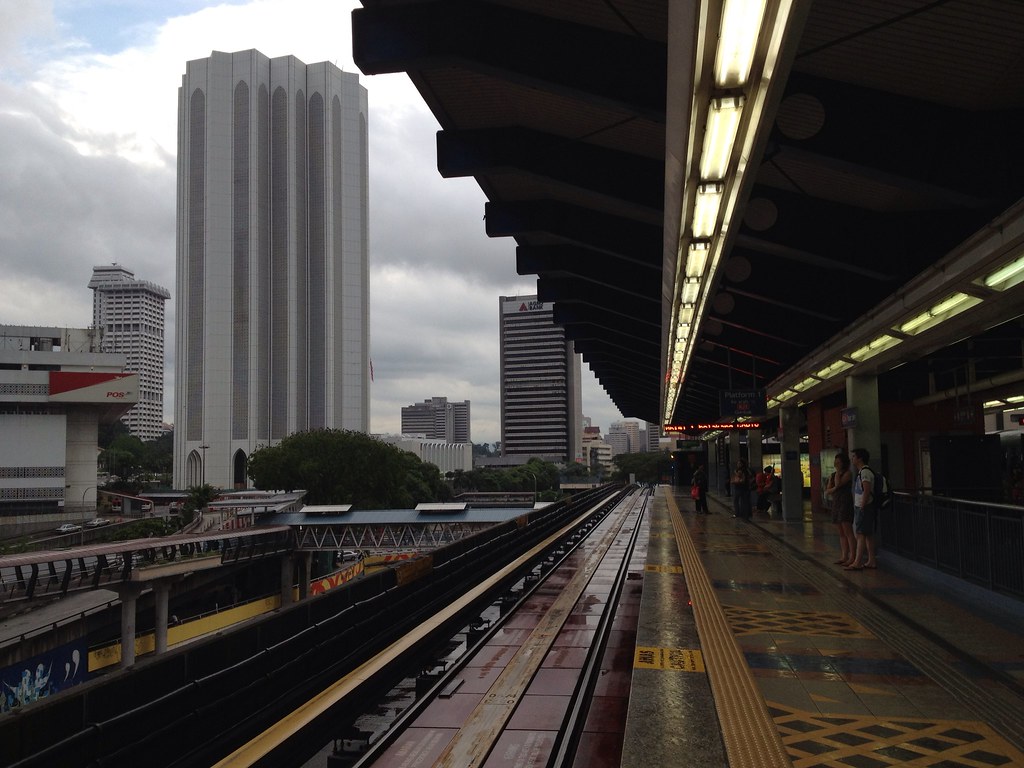
LRT
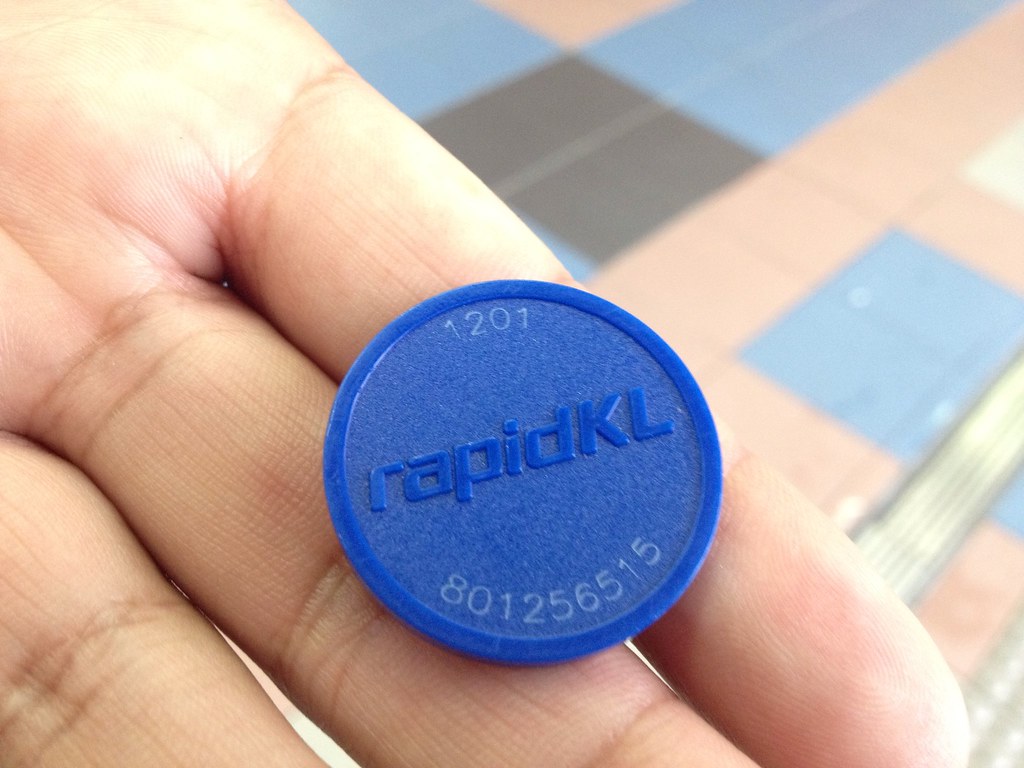
LRT ticket which is a plastic disc and gets reused
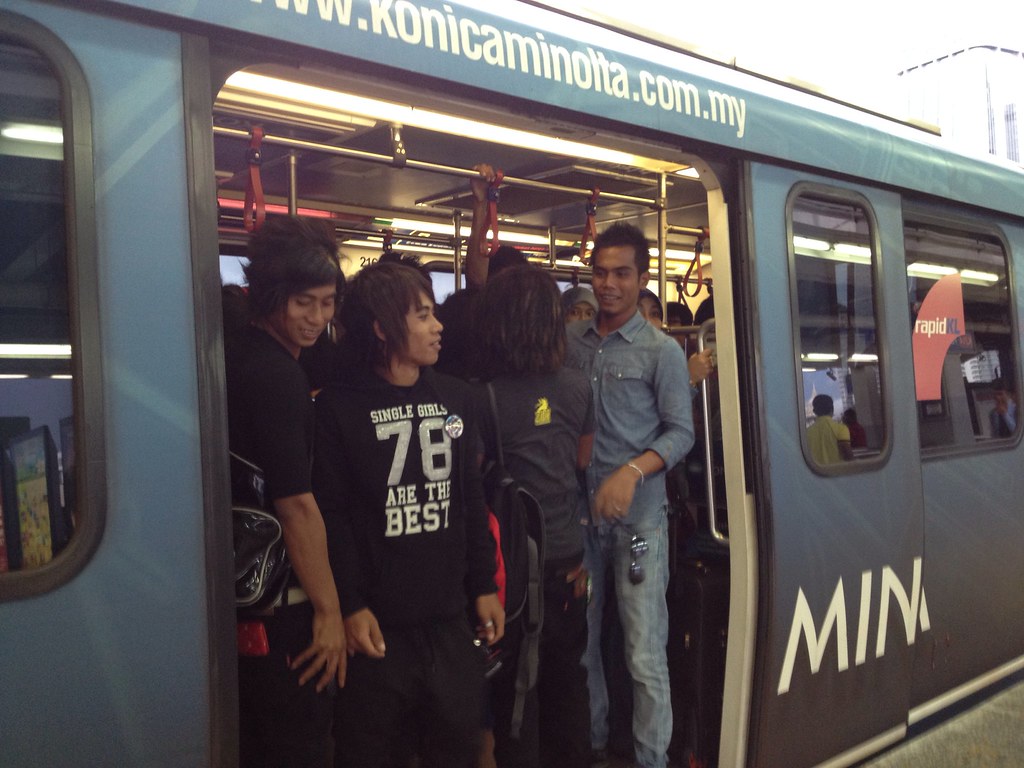
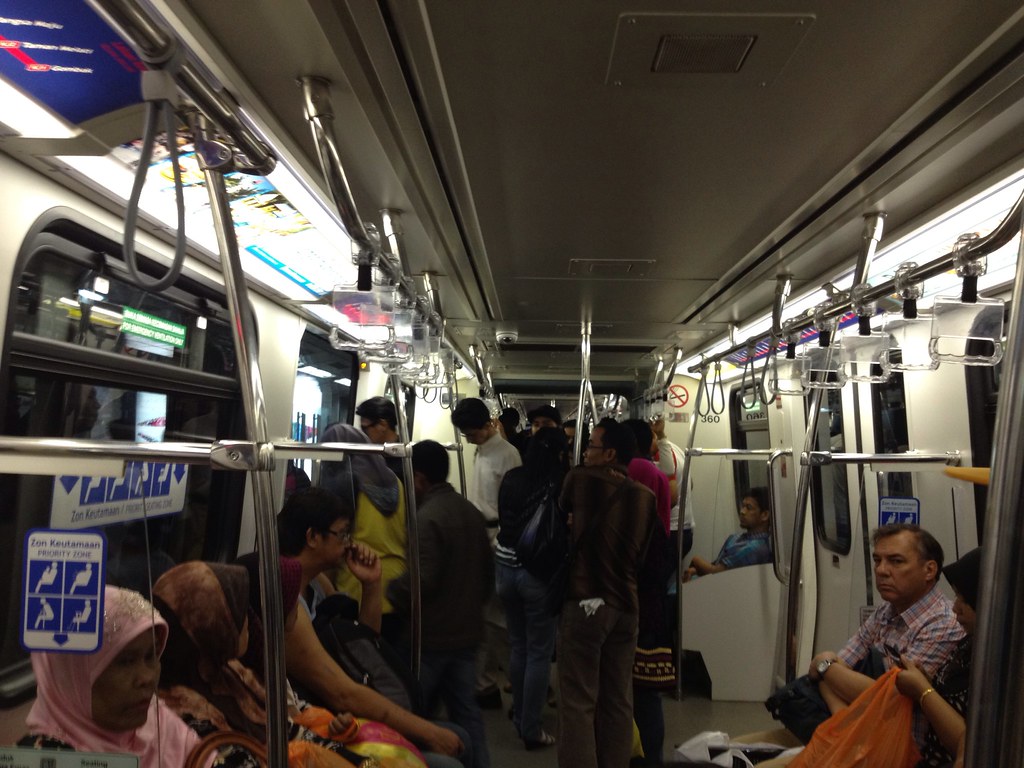
First train was packed, so we caught the next one
A much quieter train
Back at the hotel I noticed the clothes I sent to a third party laundry via concierge had not come back. I called concierge to chase this. A little while later they said that the laundry had a problem and will have my clothes washed by 11pm because they had this problem they will not charge me. I received the clothes later that night. We packed as we had a very early morning flight to Siam Reap, Cambodia.
Singapore is an amazing country, I am so tempted to move there and work for a couple of years. The people are very friendly and the technology is everywhere….probably one of the many reasons I like the country.
Some of the sangat at the gurdwaras have been very warm. Hopefully, I will be back in Singapore near the end of January 2013. Meeting and chatting to Andrew was great, he gave us very good information which I will be acting upon.
I did notice more in Singapore then anywhere else that people are stuck to their phones, iPads, tablets. In restaurant you would see a group of people just stuck to their phones, not even talking to each other. Then I thought about myself sometimes I do the same. It is very easy to get caught up with being engrossed in technology and not paying attention to what is around one.
Hi, thanks for visiting my blog, feel free and have a look around.Here is a bit about me, as you may or may not have guessed my name is Mandeep,I work to travel as opposed to work to pay bills and die!Every trip for me is an adventure, I have been very fortunate to stumble across amazing places and meet awesome people along the way.
Why gaygoat? When I first started this blog I was a vegetarian, so gaygoat – happy goat! Also you have to admit it is catchy and a URL you will not forget!
Get Regular Updates and Occasionals Special Offers
Join our mailing list to receive the latest news and updates from Gaygoat.com
Great, welcome aboard. Never miss another update I will keep you posted directly to your inbox,
Get Regular Updates and Occasionals Special Offers
Join our mailing list to receive the latest news and updates from Gaygoat.com
Welcome aboard, just one more step. Confirm your email address, don't forget to check you spam.
JOIN THE COMMUNITY
__________
Get regular updates sent directly to your inbox: latest blog posts, news, pictures and the occasional special offer.
I hate SPAM as much as you, and promise to always keep your details safe and never sell them on.
Thank you, just one more step. I have sent you an email to confirm your address. Click confirm and we're away... (don't forget to check you junk folder, sometimes messages end up in there!)
Subscribe for Regular Updates
Join my mailing list to receive the latest blog posts, offers and reviews to your inbox
You have Successfully Subscribed!
Pin It on Pinterest
Gaygoat use cookies to ensure that we give you the best experience on our website. If you continue to use this site we will assume that you are happy with it.





























Recent Comments