by Mandeep Gaygoat
After a good breakfast of fresh fruit, I spent a number of hours on the blog, takes a lot of time, uploading pictures to flickr then doing the write up. Hope you guys are enjoying it!
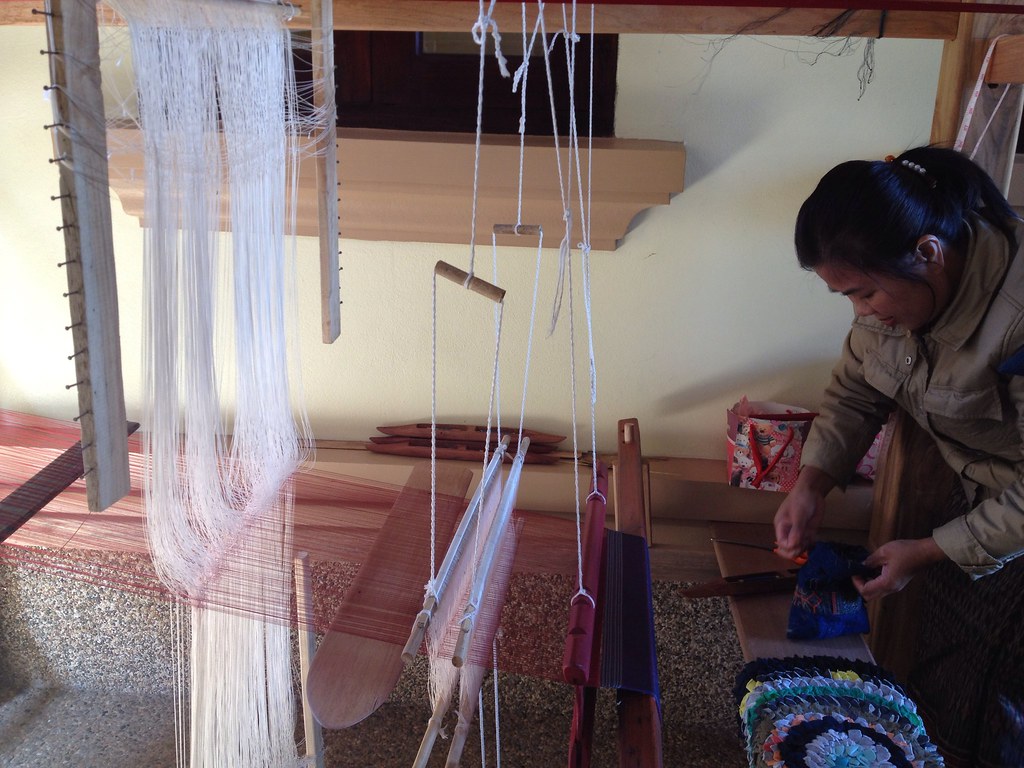
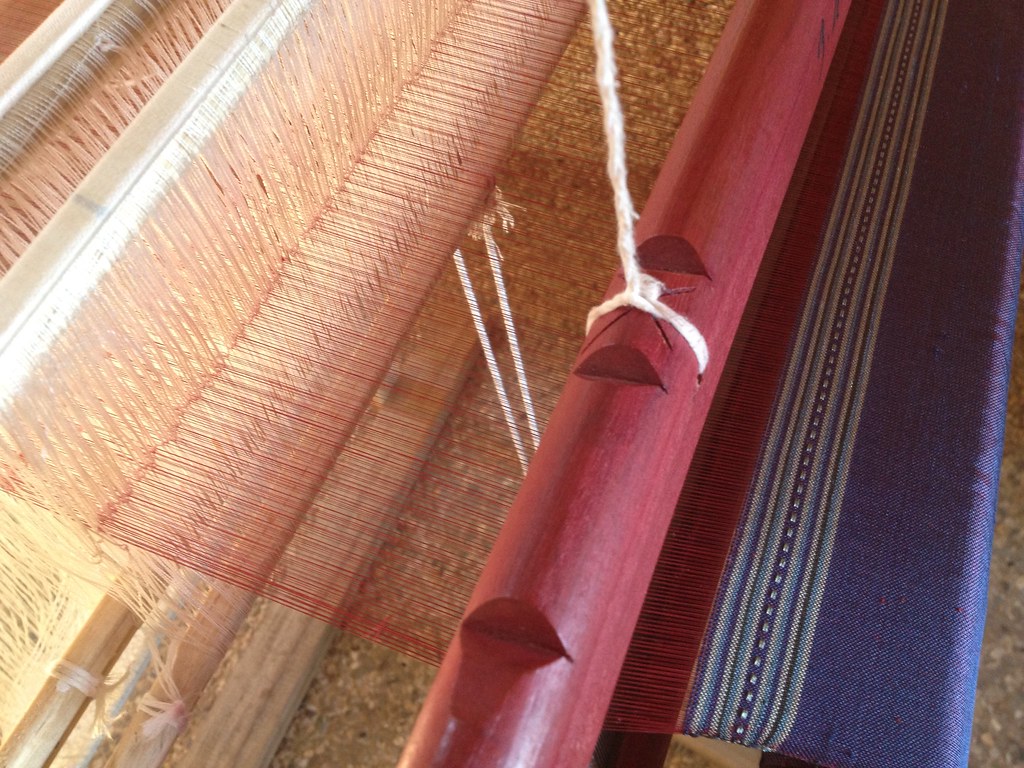
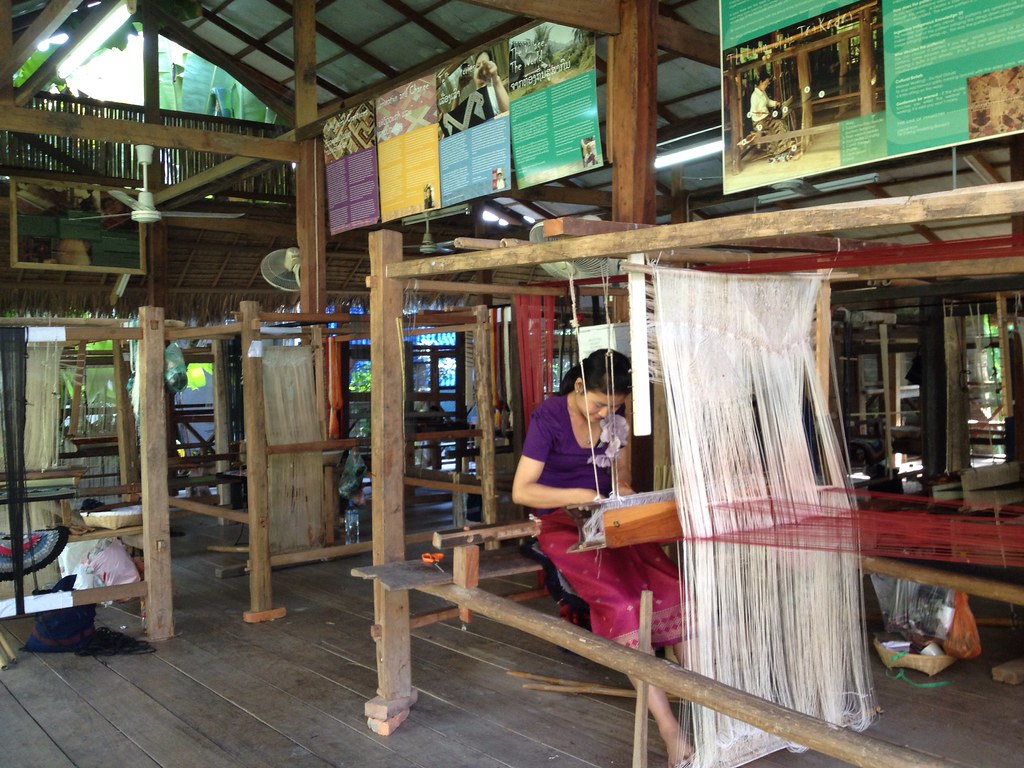
A lady weaving on the hotel grounds, this is to promote a local company called Living Craft Centre
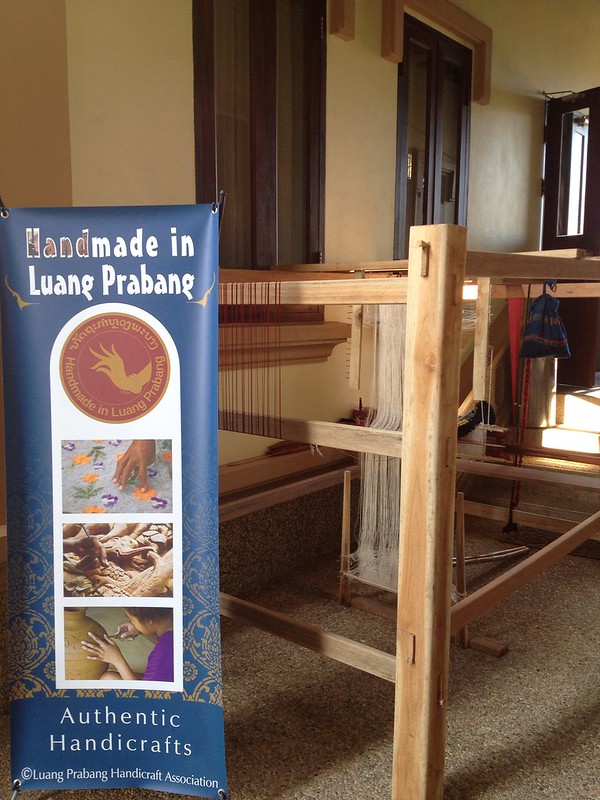
A closer shot
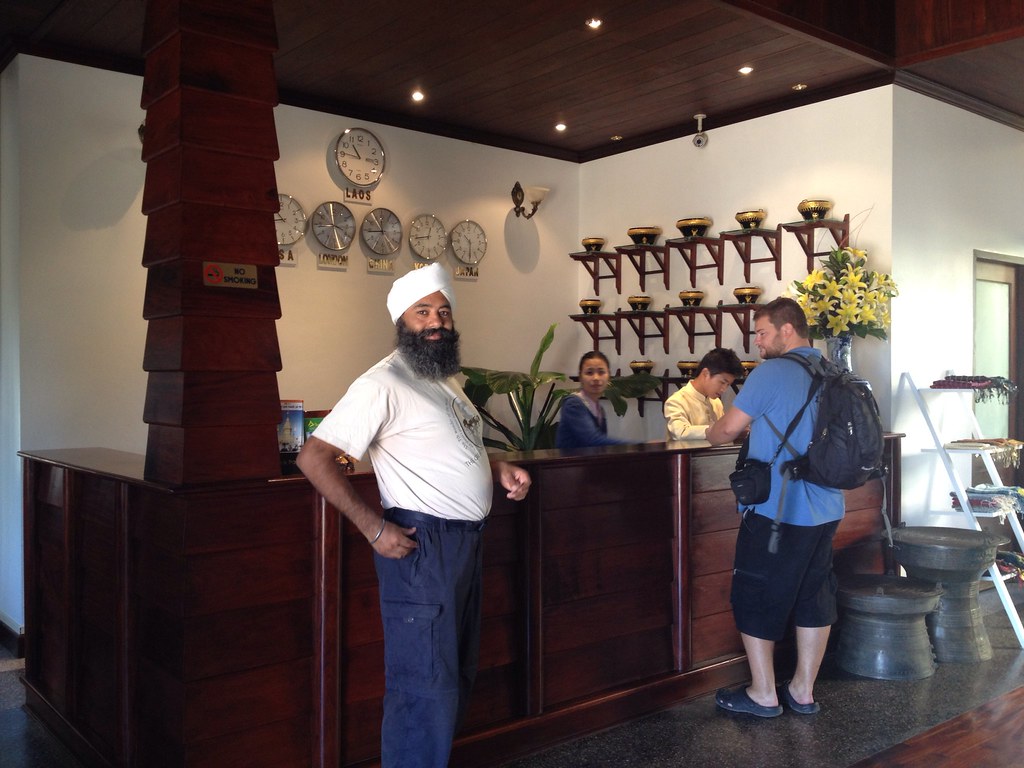
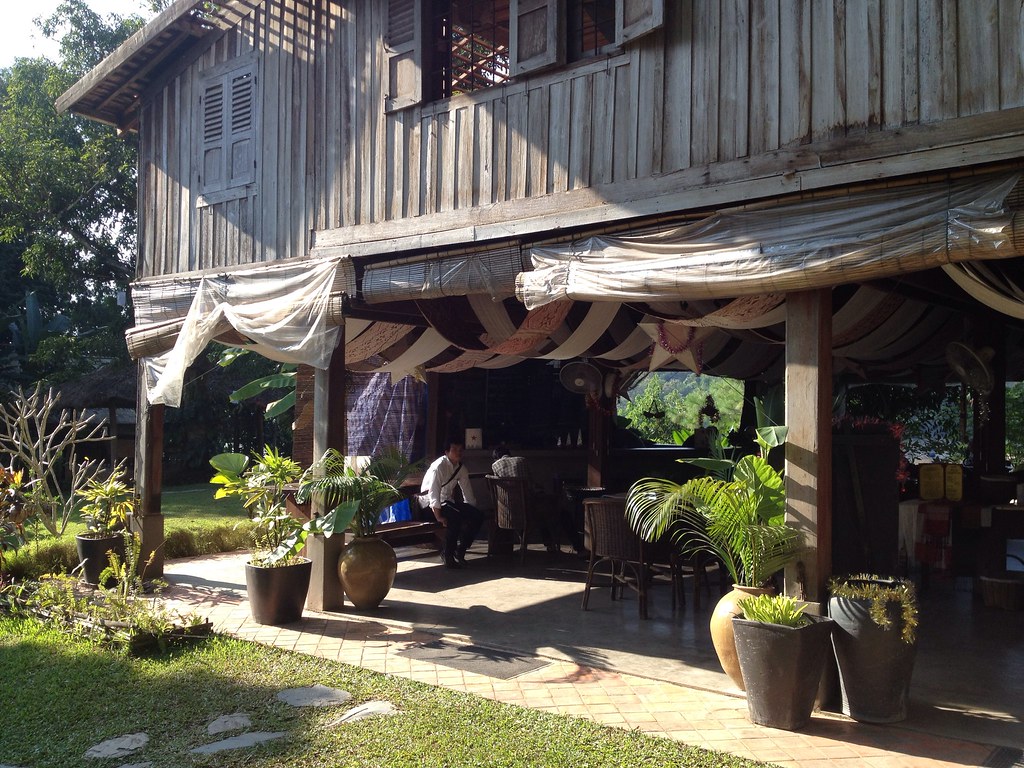
Pictures of the hotel

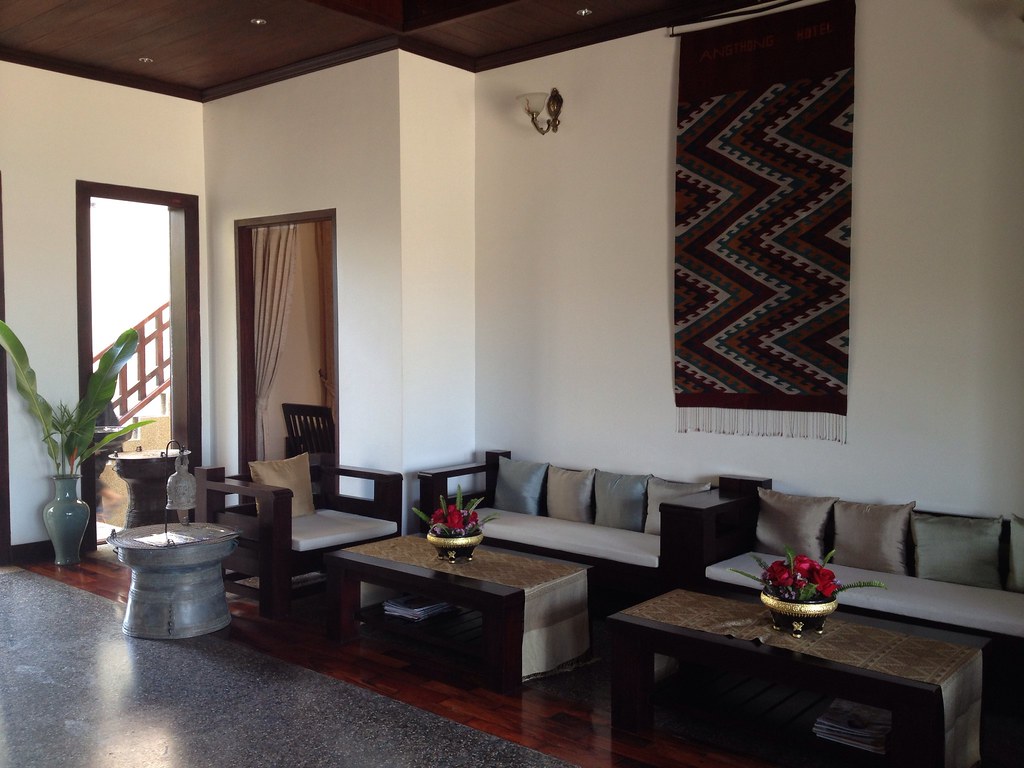
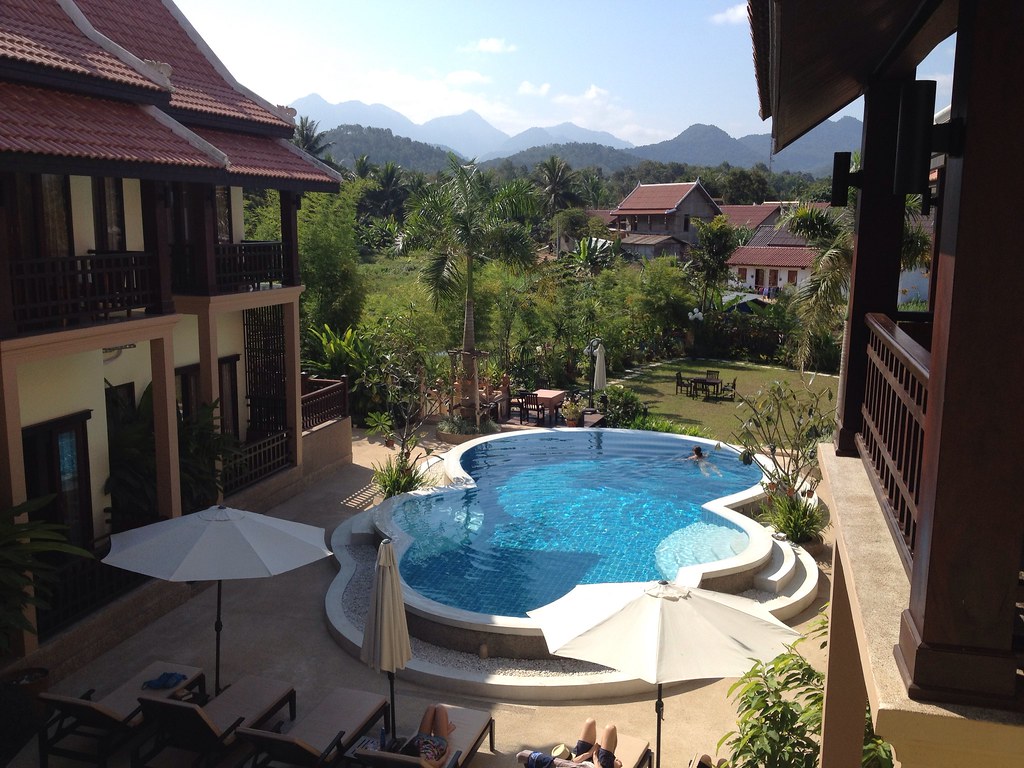
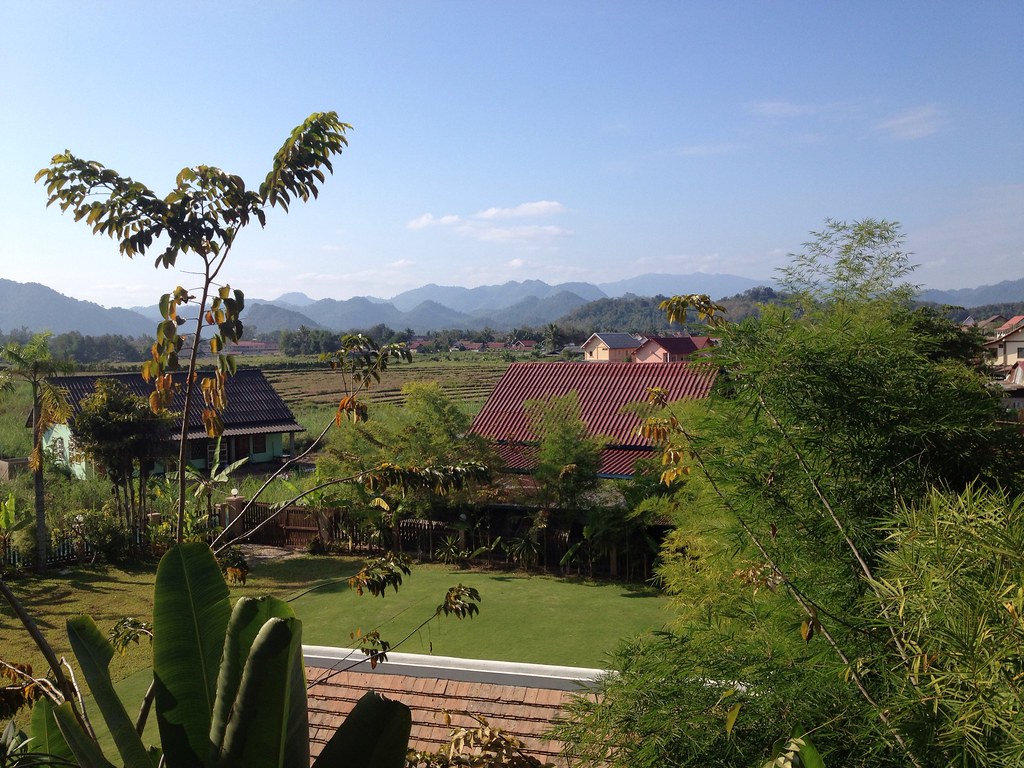
Hotel gardens and beyond
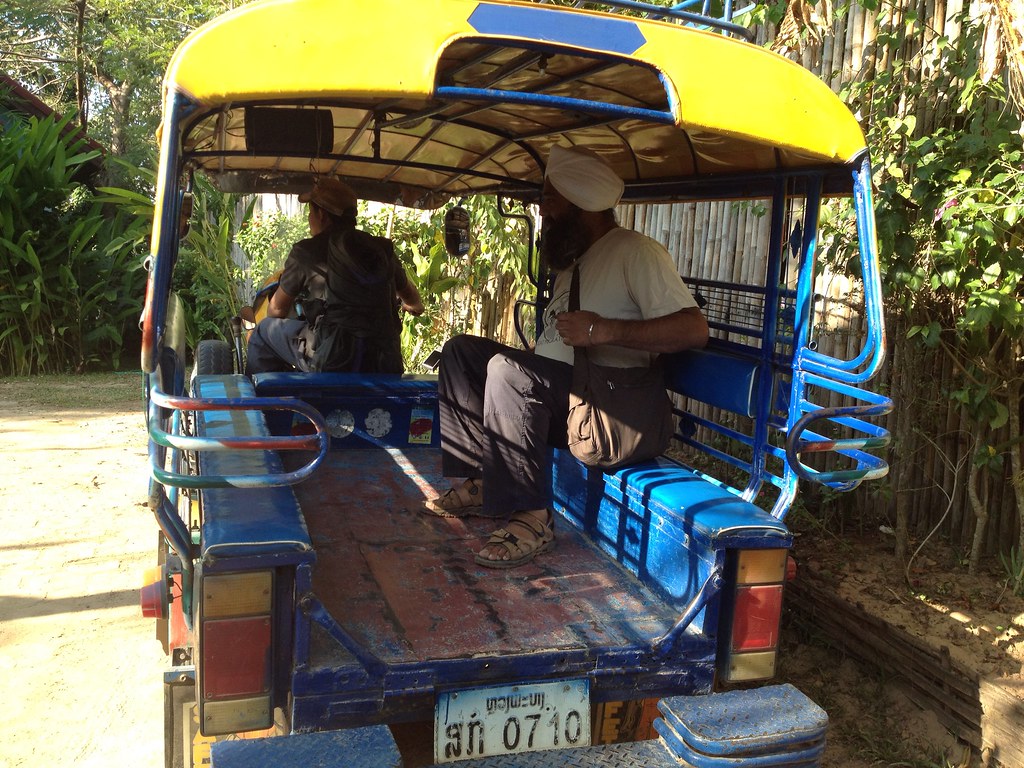
The hotel provides free one way transfers to the city centre by tuk tuk. We passed through the Living Crafts Centre, where you can see local weavers in action aswell as other crafts of the region. The tuk tuk waited for us whilst we had a look around, we then headed over to the city centre.
Living Crafts Centre
Information about the sources of various colour dyes

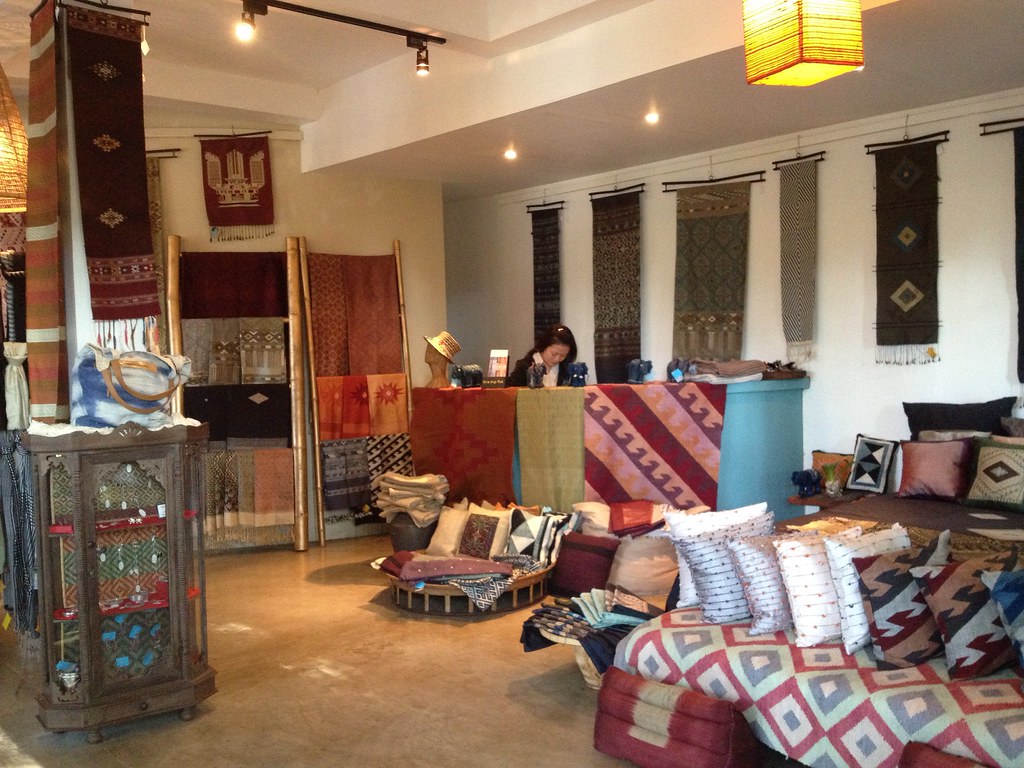
The shop

A lady using dyes to print the materials


Back on the tuk tuk
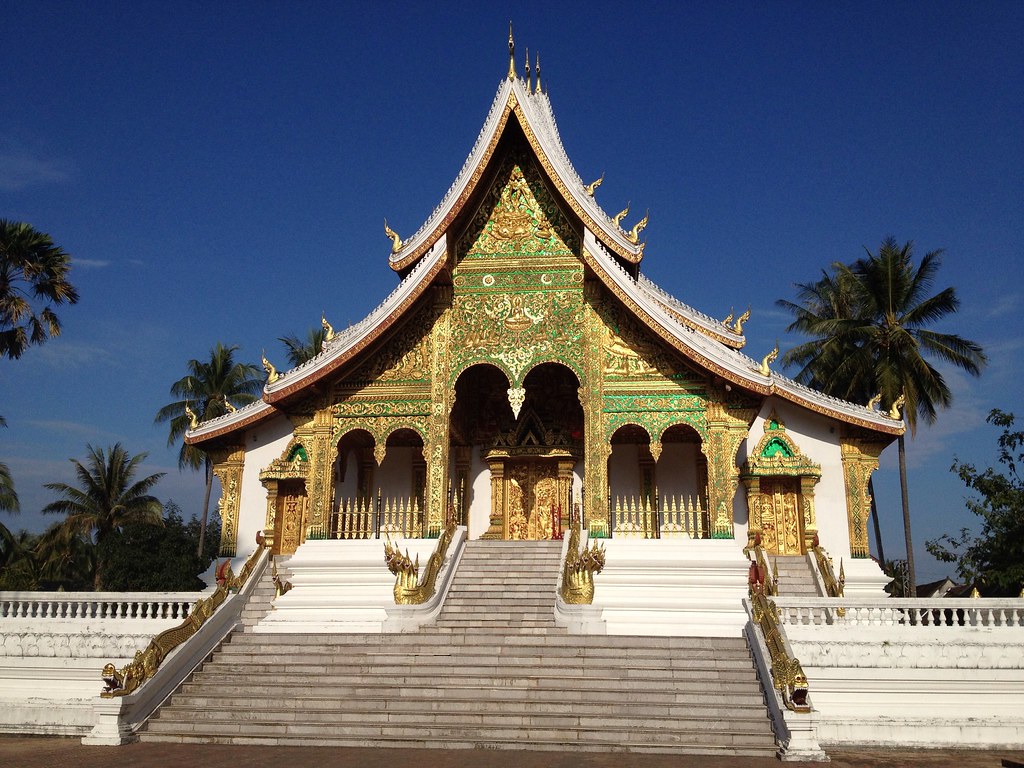
We saw an amazing temple in the middle of town. It is within the grounds of the Royal Palace museum.
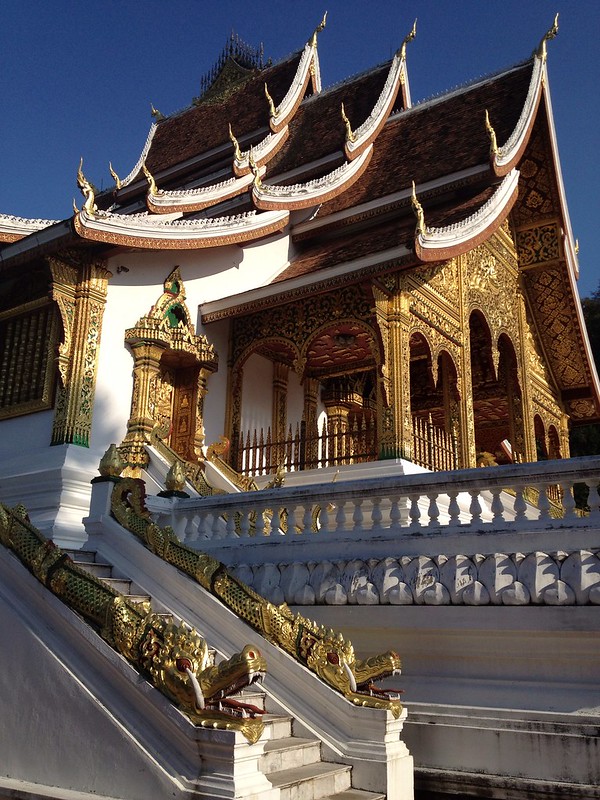
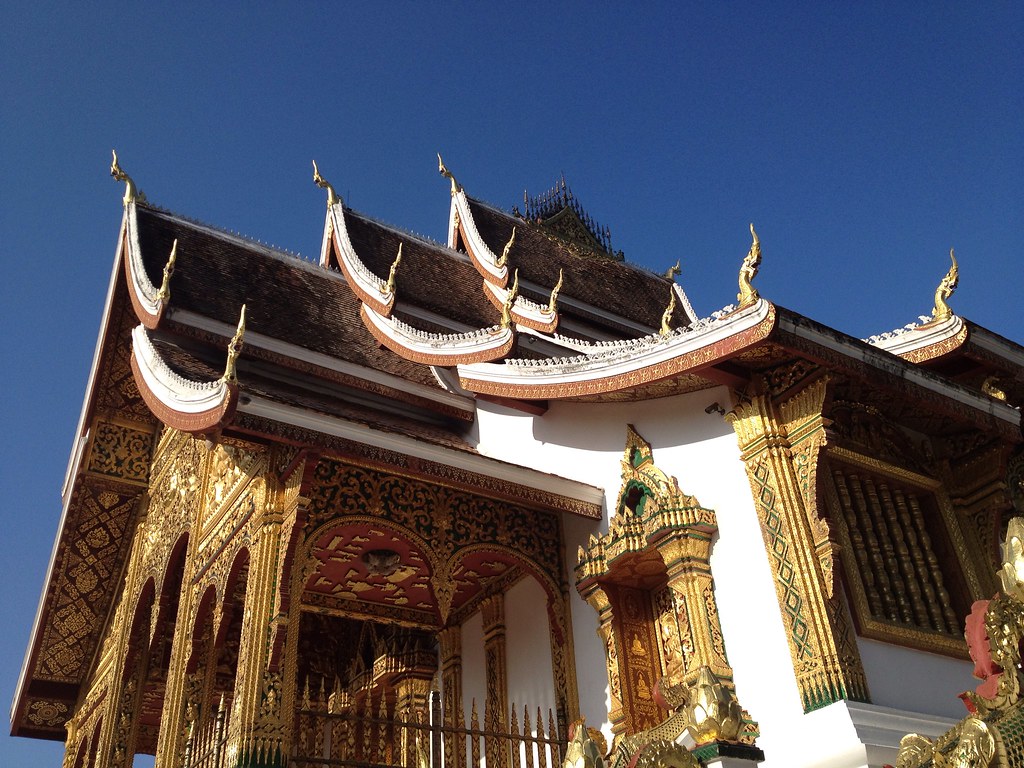
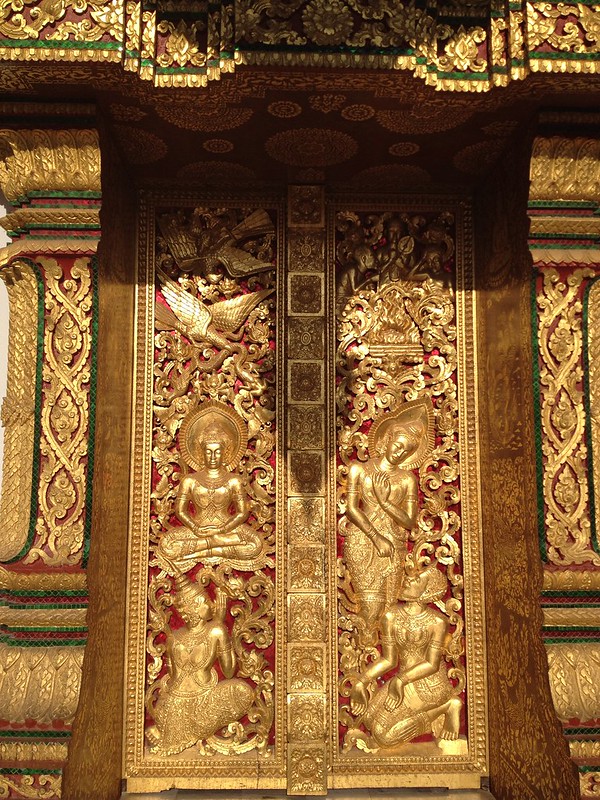
Walking on the Main Street

Afterwards, we had a walk past the shops, we stopped at one to pick up coco pops and ritz crackers, as we were both peckish!

Luang Prabang is an amazing city, clean, safe and the people are very friendly! The locals do not hassle you (a welcome change from our experiences the last few weeks) and the place also feels very authentic – the locals seem to be just getting on with their normal daily lives. Tempted to spend the next few weeks here. This place will change as tourism here is really starting to take off and major high speed train links from China will soon pass through Luang Prabang and Vientiane (2014) so now is a good time to visit before it changes and loses it’s charm.
As I was getting very hungry we stopped at
Tat Mor Restaurant
Sakkaline Road
Luang Prabang
Laos
I ordered fried rice
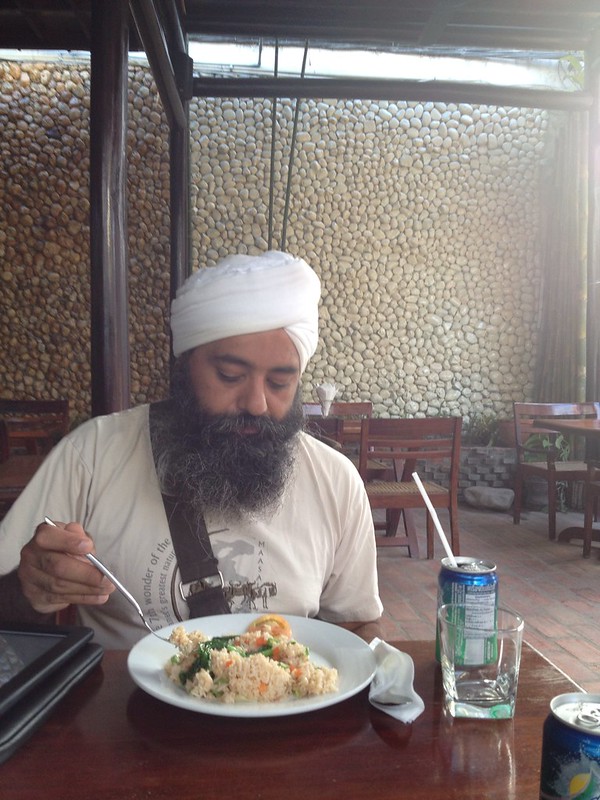
Sangeet decided to wait to eat as the night market was due to open in a couple of hours and there is a vegan food stall there.
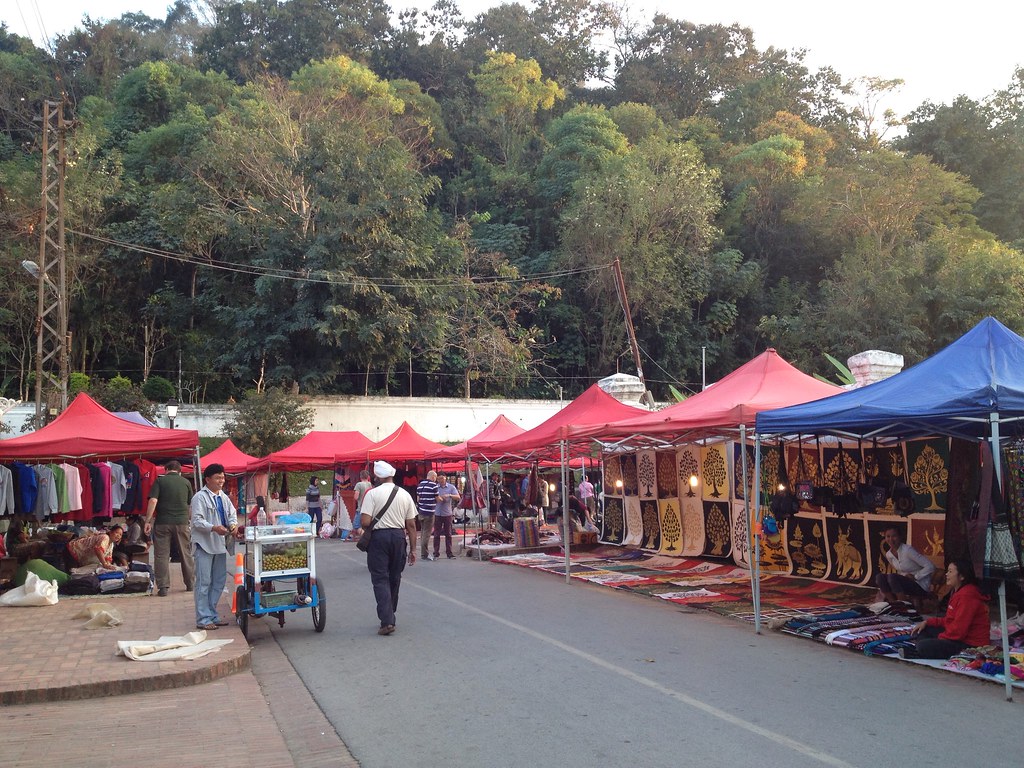
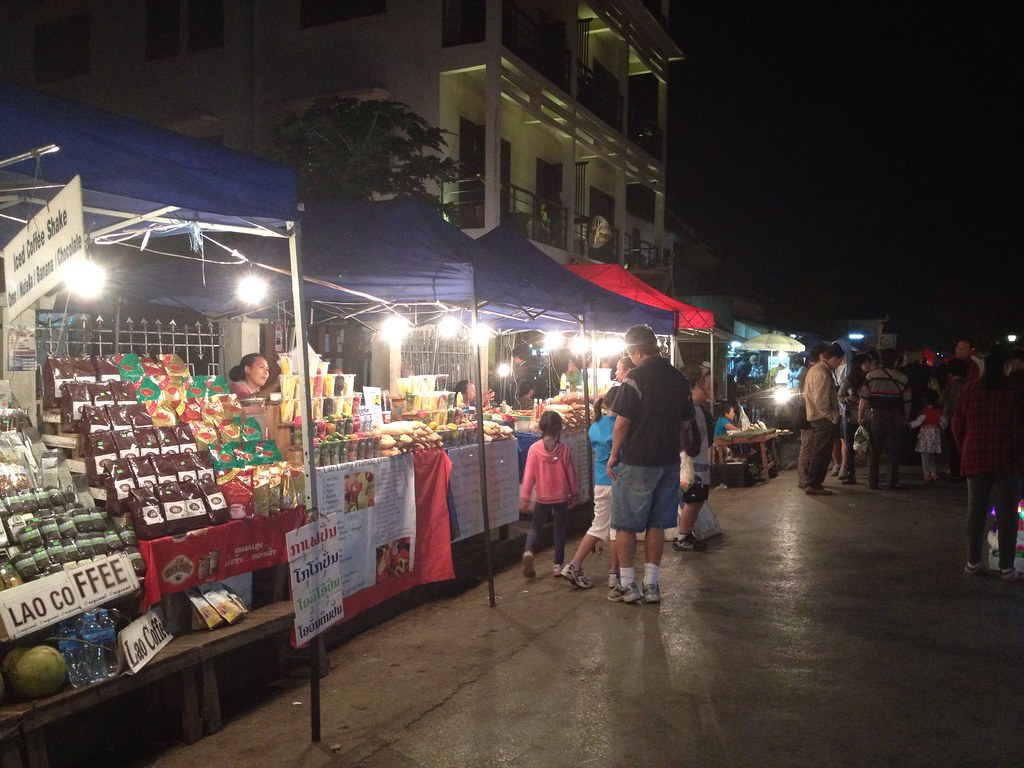
As we walked back from the restaurant the night market had started, about half a mile of stalls on the street, under cover. The shoppers will ask if you want to buy anything, if you say no they do not bother you again. Halfway through we found the stall that sells a vegan buffet for 10.000 Lao Kip about GBP£.80p! Sangeet ate there and we chatted to some other backpackers in the very social dining area. Later we bought a few gifts from the stalls then we headed back to the hotel in a tuk tuk.
The Ock Pop Tok shop

Night market

The 10,000 kip food stall

Luang Prabang, or Louangphrabang (literally: “Royal Buddha Image (in the Dispelling Fear mudra)”, is a city located in north central Laos, at the confluence of the Nam Khan river and Mekong River about 425 km north of Vientiane. It is the capital of Luang Prabang Province. The population of the city is about 50,000.
The city was formerly the capital of a kingdom of the same name. Until the communist takeover in 1975, it was the royal capital and seat of government of the Kingdom of Laos. It is a UNESCO World Heritage Site.
The main part of the city consists of four main roads located on a peninsula between the Nam Khan and Mekong rivers. The city is well known for its numerous Buddhist temples and monasteries. Every morning, hundreds of monks from the various monasteries walk through the streets collecting alms. One of the major landmarks in the city is a large steep hill on which sits Wat Chom Si.

by Mandeep Gaygoat
This morning we spent packing and a little time around the pool. Hotel provided a courtesy transfer to airport. It was sad saying goodbye to the hotel and Siem Reap. The hotel staff and service have been excellent. Definitely worth looking at Ebookers, hotels.com and Asia rooms, especially for late deals on hotels. This hotel cost us £35 a night for a five star hotel – cheaper than hostels we’ve stayed at! Sangeet really liked this place, especially the people who have been through so much, (The Khmer Rouge), literally translated as Red Khmers, was the name given to the followers of the Communist Party of Kampuchea in Cambodia. It was formed in 1968 as an offshoot of the Vietnam People’s Army from North Vietnam. It was the ruling party in Cambodia from 1975 to 1979, led by Pol Pot, Nuon Chea, Ieng Sary, Son Sen, and Khieu Samphan. Democratic Kampuchea was the name of the state as controlled by the government of the Khmer Rouge from 1975 to 1979.
This organization is remembered primarily for its policy of social engineering, which resulted in genocide. Its attempts at agricultural reform led to widespread famine, while its insistence on absolute self-sufficiency, even in the supply of medicine, led to the deaths of thousands from treatable diseases such as malaria. Arbitrary executions and torture carried out by its cadres against perceived subversive elements, or during purges of its own ranks between 1975 and 1978, are considered to have constituted genocide.
By 1979, the Khmer Rouge had fled the country, while the People’s Republic of Kampuchea was being established. The governments-in-exile (including the Khmer Rouge) still had a seat in the UN at this point but it was later taken away, in 1993, as the monarchy was restored and the country underwent a name change to the Kingdom of Cambodia. A year later thousands of Khmer Rouge guerrillas surrendered themselves in a government amnesty. In 1996, a new political party the Democratic National Union Movement was formed by Ieng Sary, who was granted amnesty for all of his roles as the deputy leader of the Khmer Rouge. The organisation itself was officially dissolved sometime in December 1999. Despite this the people are still so warm and upbeat. We flew through security, no pun intended!. Security was very apologetic about scanning turban. Nice quaint airport restaurant bar few souvenir shops
Check in at Siem Reap
Shops after security


MA60 aircraft landing was in VERY heavy winds. I enjoyed it. You could hear cups falling in back where the stewardess is located. We had a 25 minute stopover at Pakse airport in Laos. This is used for transfer airport. First port of call I would have thought they had customs or issued the visa here. Waited 25 minutes and back on flight to Luang Prabang


At Luang Prabang three queues one to hand in your visa on arrival application with passport, second to pay the visa amount varies country to country and pick up passport. Third to go through immigration. Picked up backpacks then took out some money from the ATM. 12,000 Lao Kip to UK£1

Outside was met by the hotel staff drove to hotel which took 15 minutes.
Any Thong Hotel damn predictive text! Ang Thong Hotel
Lao-Thai Friendship Road,
Ban Naxang
Luang Prabang
Lao
T: +856 71 919 999
F: +856 71 919 777
E: [email protected]
W: www.angthong-hotel.com
Rated a 3 star hotel which opened 8 months ago. The staff are very friendly and the hotel is clean.
We had a wander around the hotel. Before hitting the bed, actually if I said retiring for the night sounds good but just not me!
by Mandeep Gaygoat
Today we spent relaxing and spending time around the hotel. I popped out to the laundry for some more clothes to be washed. The weight of the clothes was less and cost me USD$1.50.
Saturday evening Sangeet booked flights to Laos and onwards to Bangkok and accommodation in Luang Prabang. I looked into Bangkok accommodation.
Saturday night I went to pick up the clothes they were not ready so had a wander around the area. I started thinking that for the first time I am now actually feeling tired of traveling. Sangeet has a nasty virus, I have diagnosed it as dengue fever….should pass in a few days! and my stomach has been playing up. Not nice being ill in the third world!
by Mandeep Gaygoat
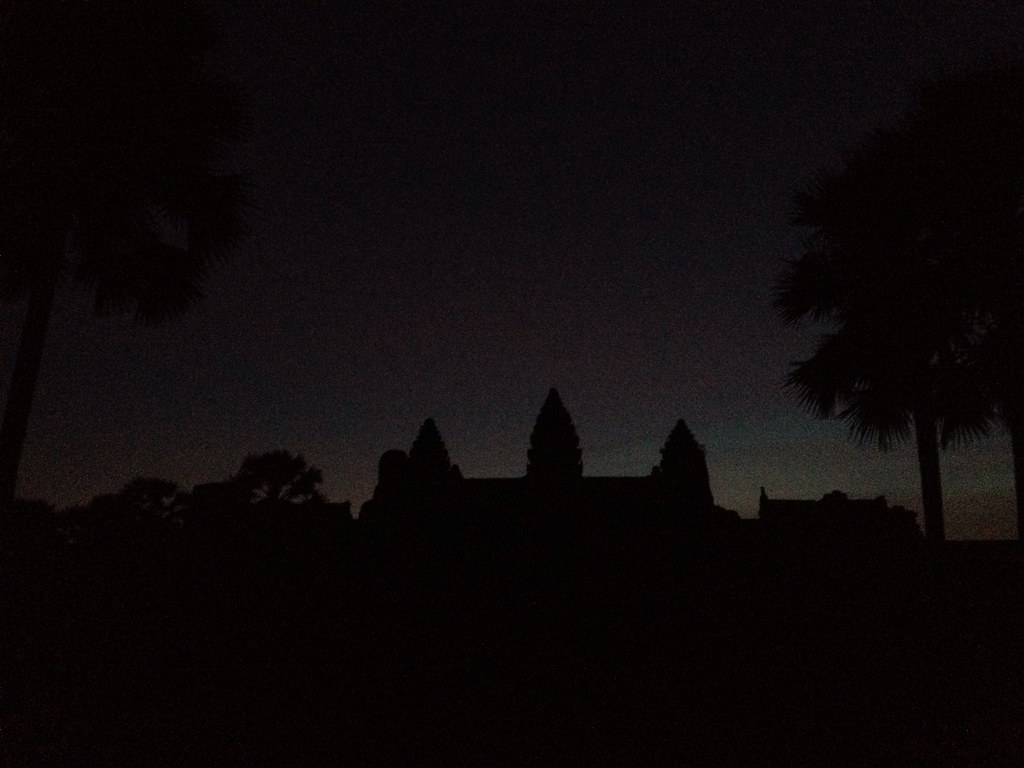
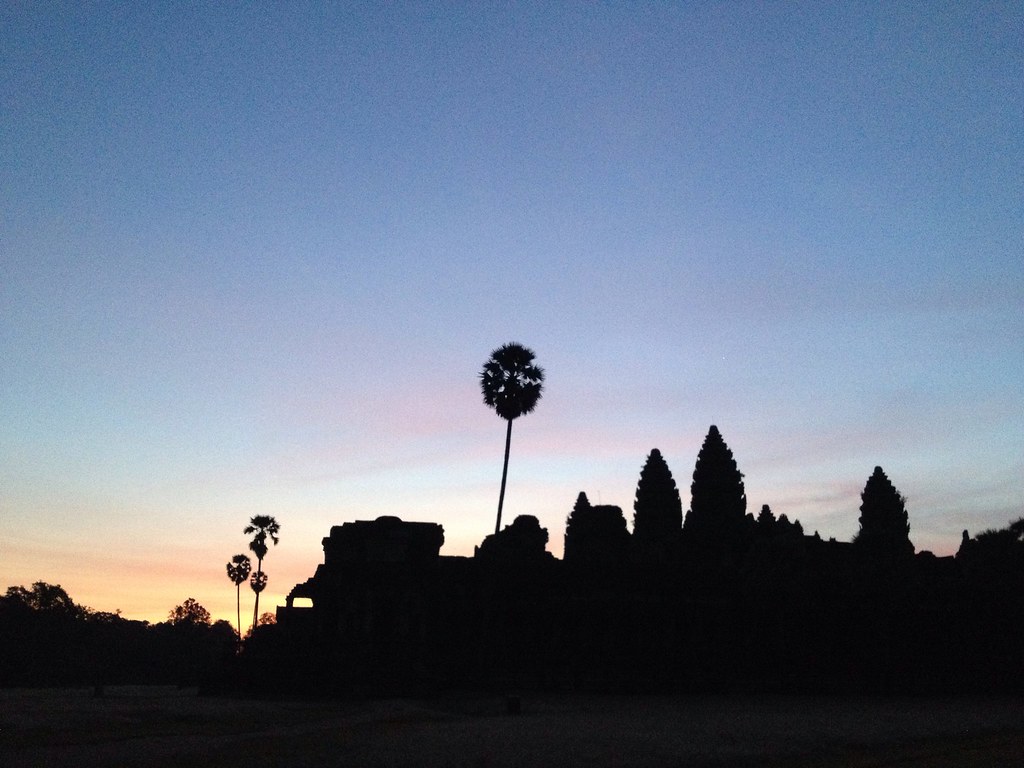
Today we had an early start (5am) as we wanted to see the sunrise over Angkor Wat. We arrived at the temple around 5:30, there are officials waiting to see your pass (the officials want to see your pass before every temple). Once they have seen the pass it feels like a mad dash for the tuk tuks to be the first to arrive at Angkor Wat. So now it is 5:45 we arrive at the entrance and the first thing you hear is “sir you want buy torch?” Can you believe this early in the morning they are still selling!! Not just the adults but the children as well!
Angkor Wat is the largest Hindu temple complex and the largest religious monument in the world. The temple was built by King Suryavarman II in the early 12th century in Yasodharapura the capital of the Khmer Empire, as his state temple and eventual mausoleum. Breaking from the Shaivism tradition of previous kings, Angkor Wat was instead dedicated to Vishnu. As the best-preserved temple at the site, it is the only one to have remained a significant religious centre since its foundation – first Hindu, dedicated to the god Vishnu, then Buddhist. The temple is at the top of the high classical style of Khmer architecture. It has become a symbol of Cambodia, appearing on its national flag, and it is the country’s prime attraction for visitors.Angkor Wat combines two basic plans of Khmer temple architecture: the temple mountain and the later galleried temple, based on early Dravidian Architecture, with key features such as the Jagati. It is designed to represent Mount Meru, home of the devas in Hindu mythology: within a moat and an outer wall 3.6 kilometres (2.2 mi) long are three rectangular galleries, each raised above the next. At the centre of the temple stands a quincunx of towers. Unlike most Angkorian temples, Angkor Wat is oriented to the west; scholars are divided as to the significance of this. The temple is admired for the grandeur and harmony of the architecture, its extensive bas-reliefs, and for the numerous devatas adorning its walls.The modern name, Angkor Wat, means “Temple City” or “City of Temples” in Khmer; Angkor, meaning “city” or “capital city”, is a vernacular form of the word nokor, which comes from the Sanskrit word nagara (नगर). Wat is the Khmer word for “temple grounds”, derived from the Pali word “vatta” (वत्त). Prior to this time the temple was known as Preah Pisnulok (Vara Vishnuloka in Sanskrit), after the posthumous title of its founder.

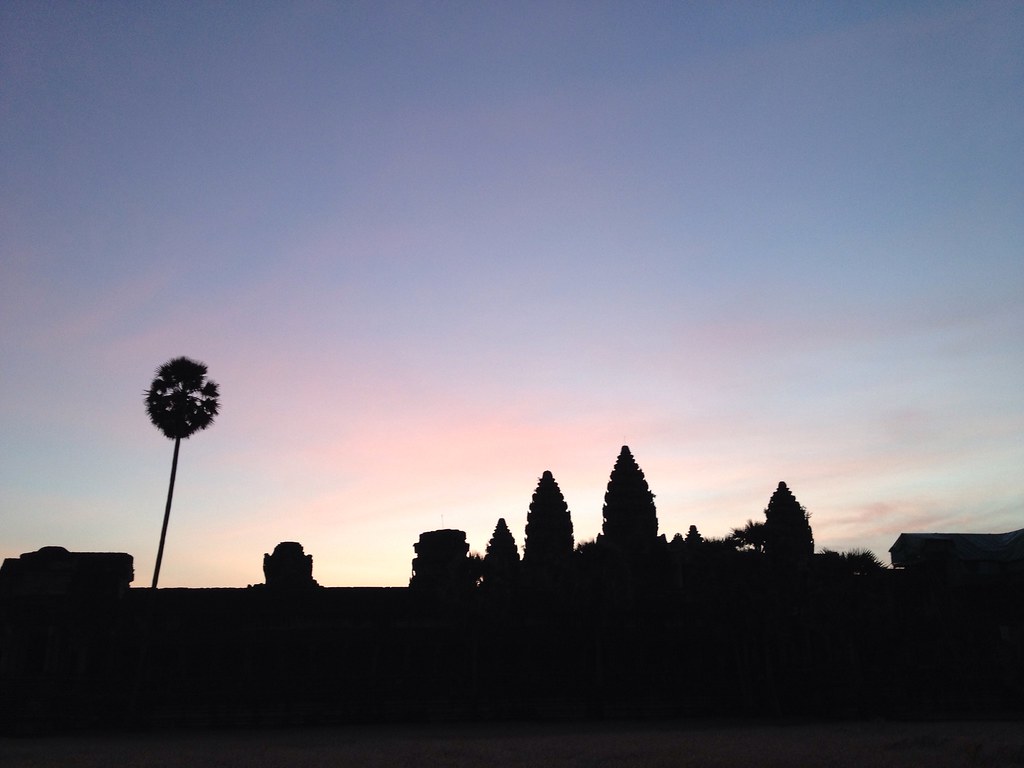
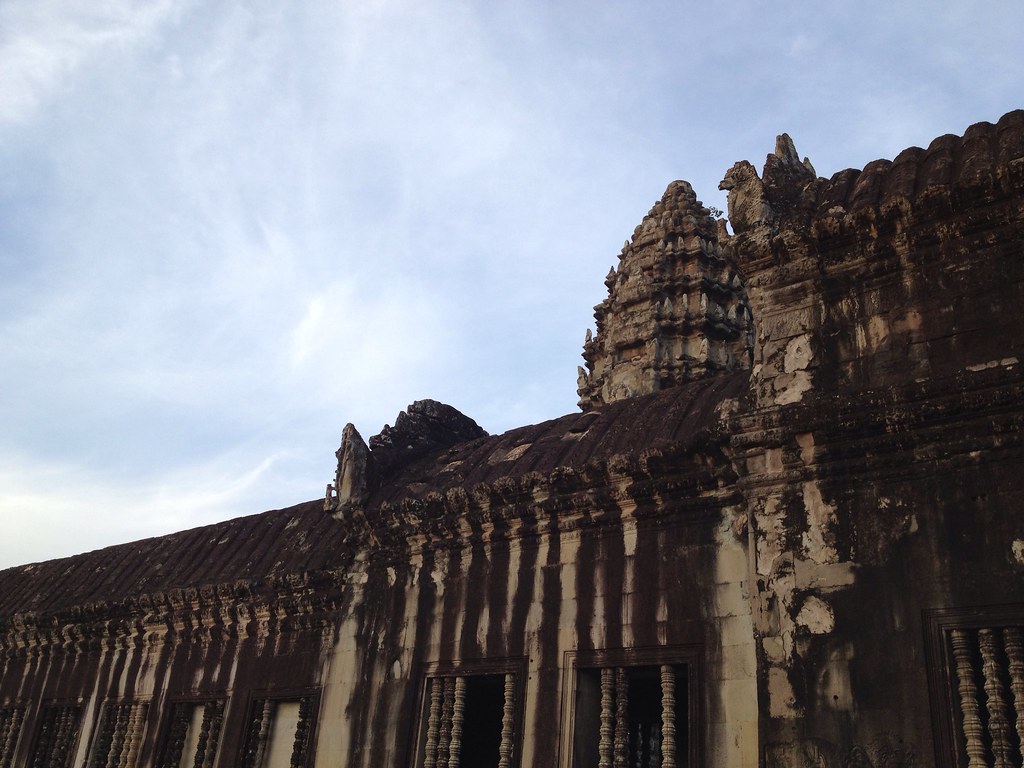
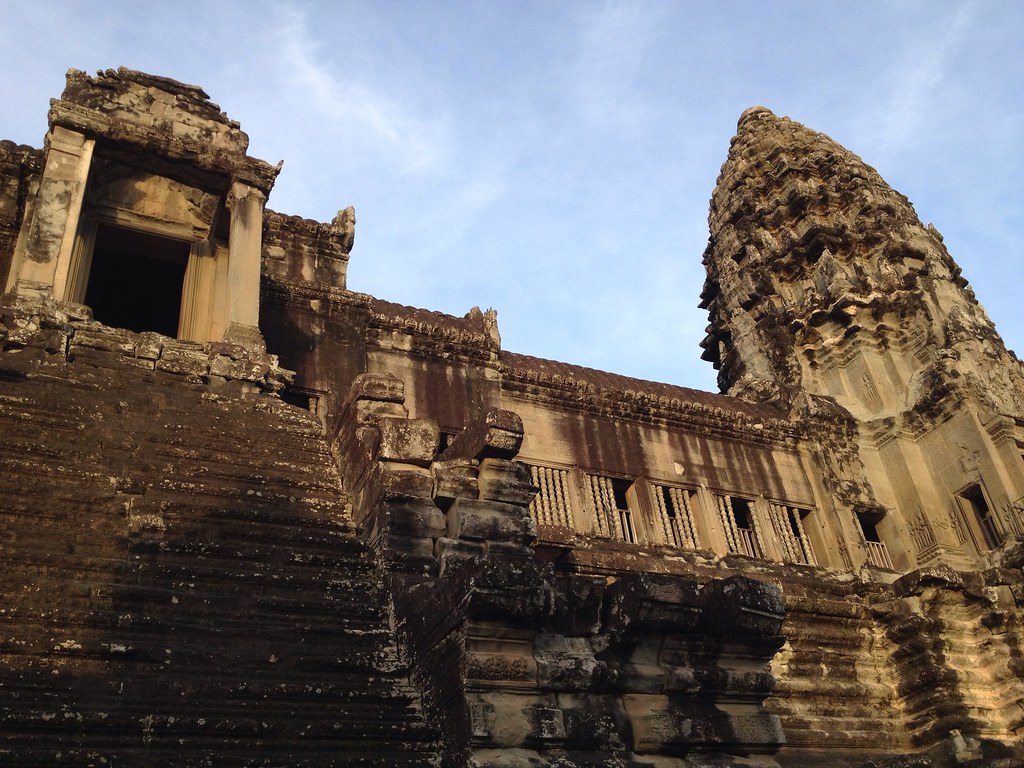
Before this sign appeared people were told that the temple was closed due to being a religious day for Buddha but for USD$5.00 you can have a police escort to see the temple! There were no police in sight!!
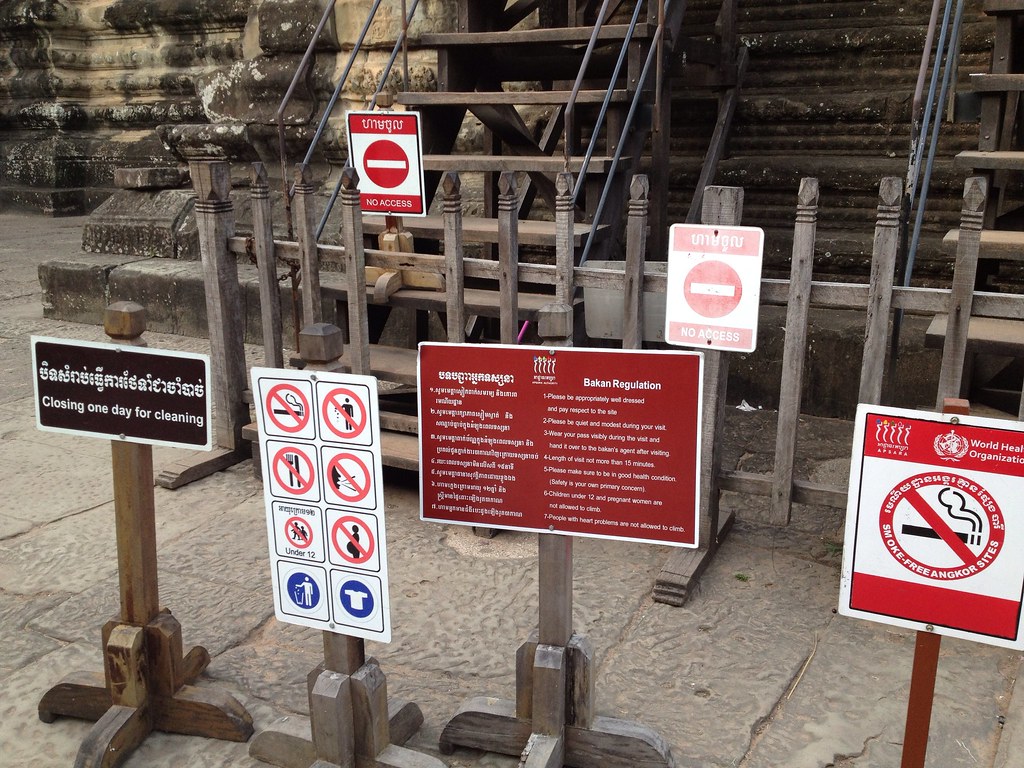
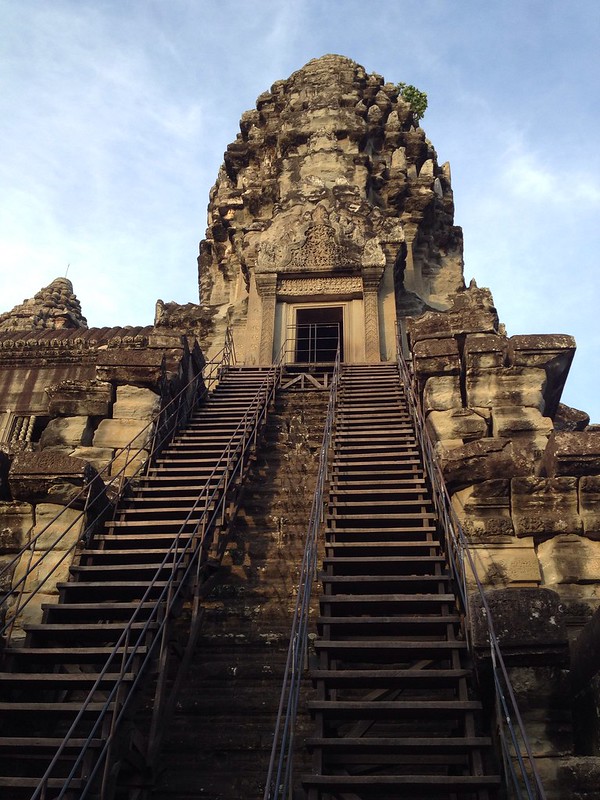
Section which is closed for today
http://www.flickr.com/photos/gaygoat/8296263754/
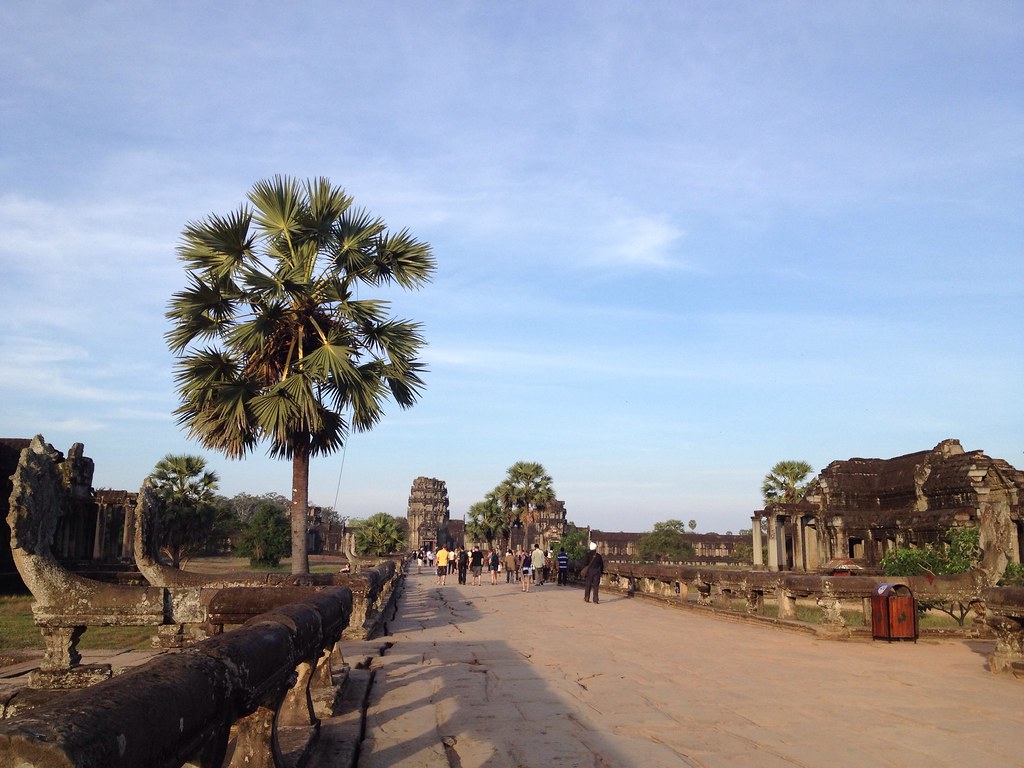
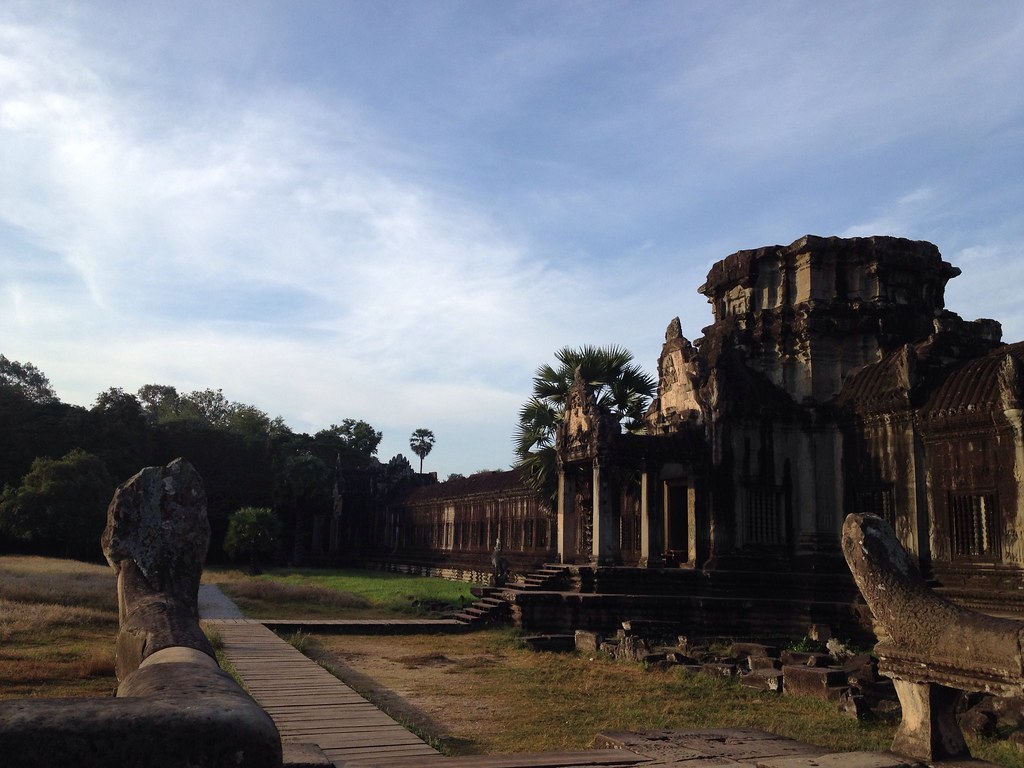

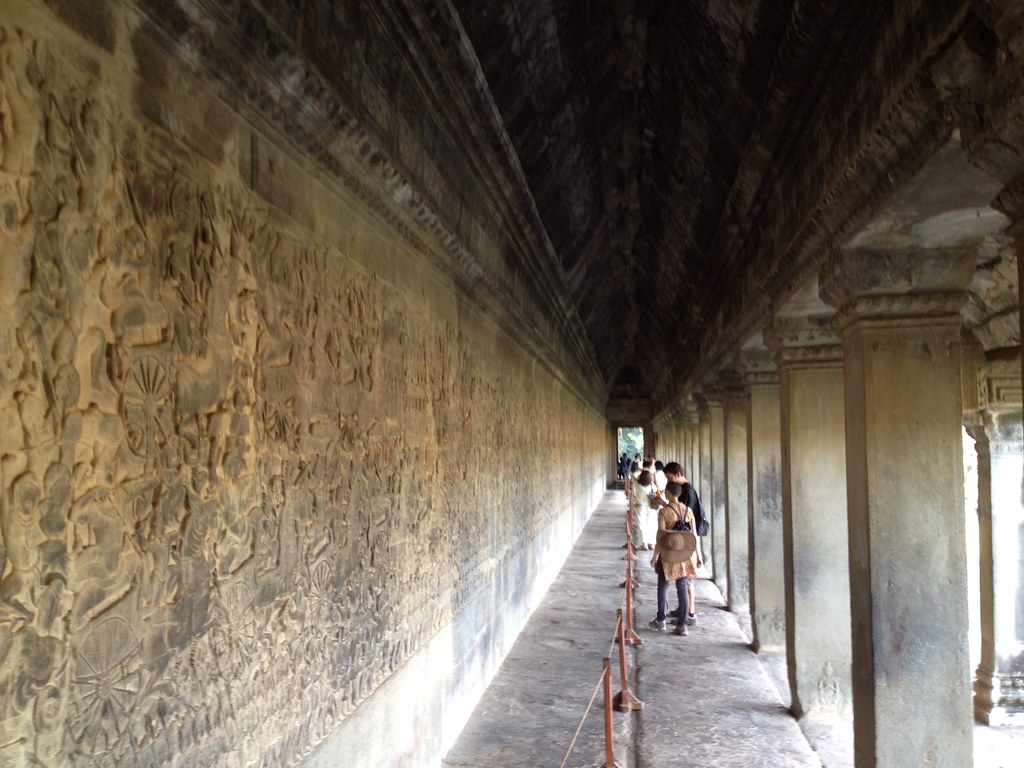
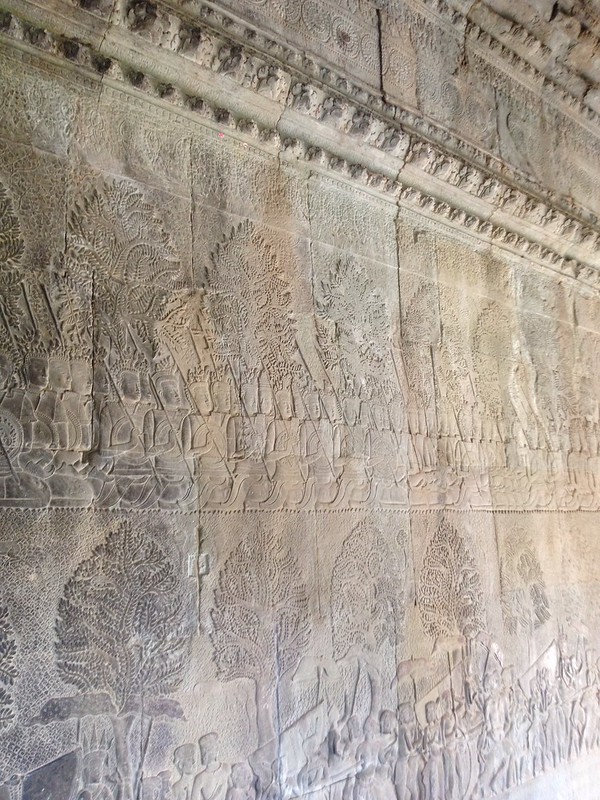
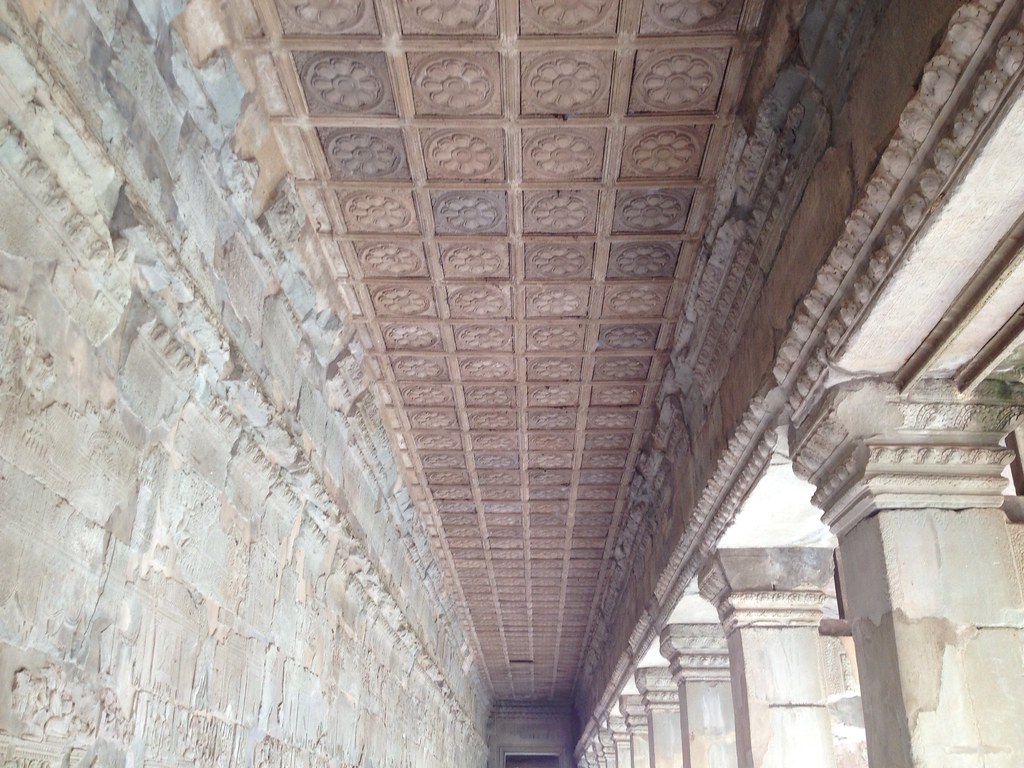
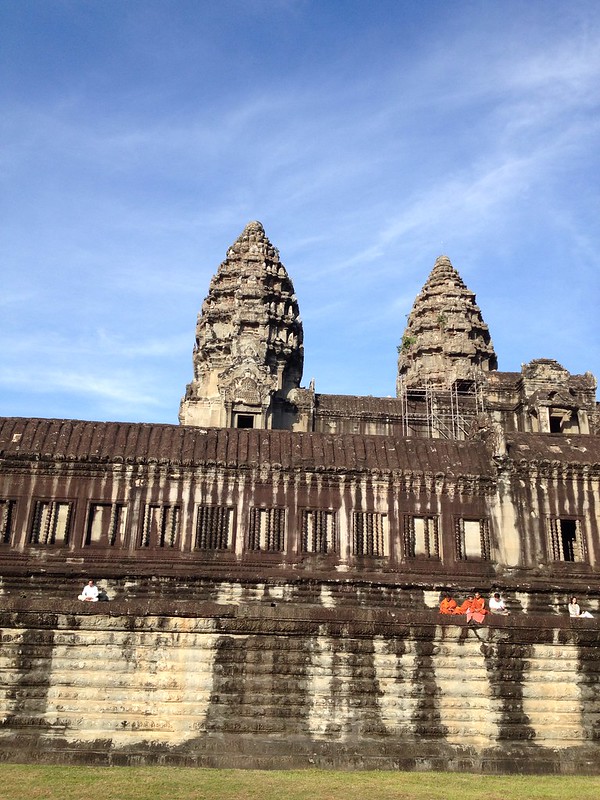
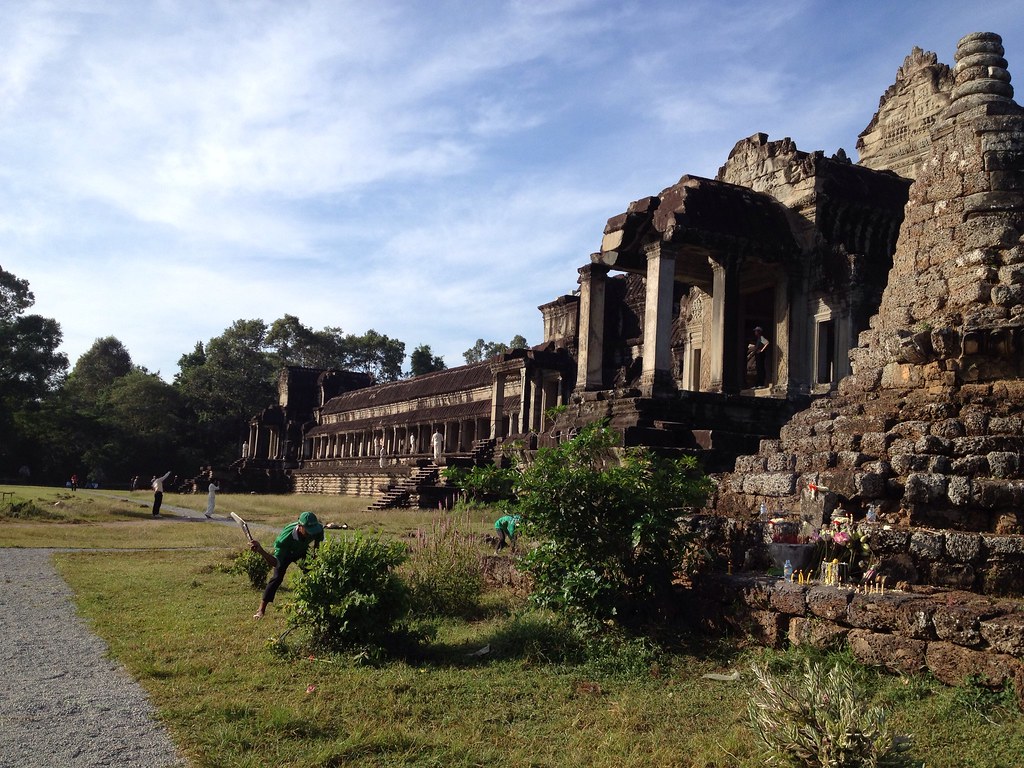
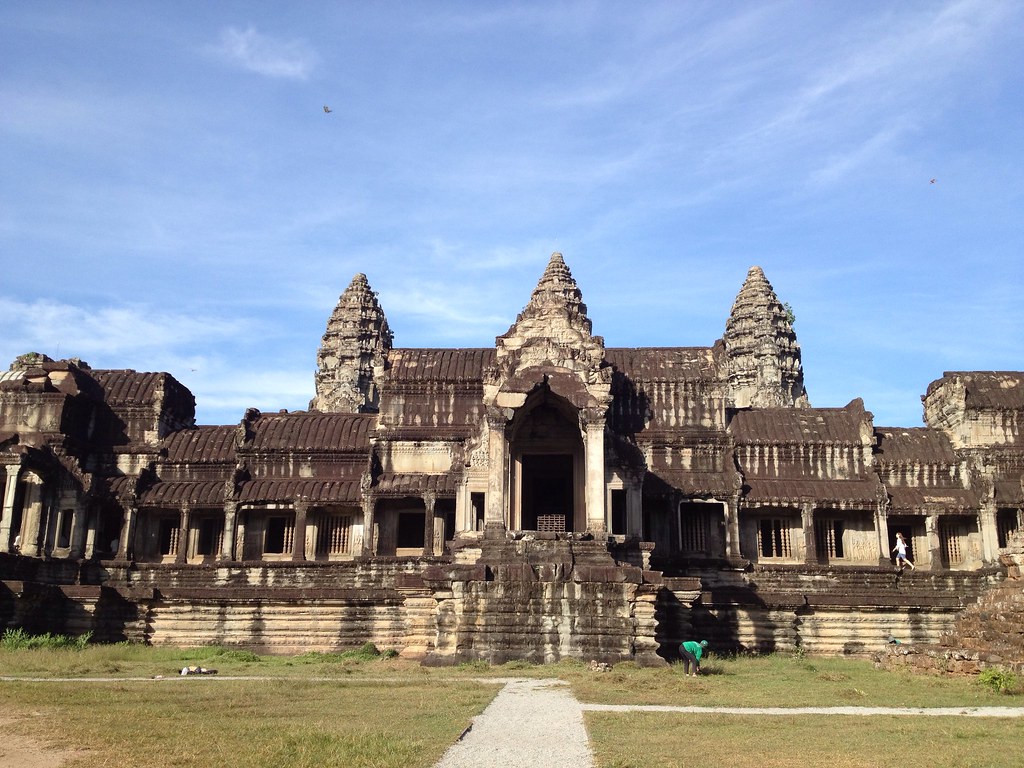
http://www.flickr.com/photos/gaygoat/8294797460/
Angkor Thom ( literally: “Great City”), located in present day Cambodia, was the last and most enduring capital city of the Khmer empire. It was established in the late twelfth century by king Jayavarman VII. It covers an area of 9 km², within which are located several monuments from earlier eras as well as those established by Jayavarman and his successors. At the centre of the city is Jayavarman’s state temple, the Bayon, with the other major sites clustered around the Victory Square immediately to the north.Angkor Thom was established as the capital of Jayavarman VII’s empire, and was the centre of his massive building programme. One inscription found in the city refers to Jayavarman as the groom and the city as his bride. (Higham, 121)Angkor Thom seems not to be the first Khmer capital on the site, however. Yasodharapura, dating from three centuries earlier, was centred slightly further northwest, and Angkor Thom overlapped parts of it. The most notable earlier temples within the city are the former state temple of Baphuon, and Phimeanakas, which was incorporated into the Royal Palace. The Khmers did not draw any clear distinctions between Angkor Thom and Yashodharapura: even in the fourteenth century an inscription used the earlier name. (Higham 138) The name of Angkor Thom — great city — was in use from the 16th century. Faces on Prasat Bayon. The last temple known to have been constructed in Angkor Thom was Mangalartha, which was dedicated in 1295. Thereafter the existing structures continued to be modified from time to time, but any new creations were in perishable materials and have not survived. In the following centuries Angkor Thom remained the capital of a kingdom in decline until it was abandoned some time prior to 1609, when an early western visitor wrote of an uninhabited city, “as fantastic as the Atlantis of Plato” which some thought to have been built by the Roman emperor Trajan. (Higham 140) It is believed to have sustained a population of 80,000-150,000 people.
On the days you see the sunrise you can ask the hotel to pack you breakfast. This is usually complimentary.
Gursewa with his small breakfast!
http://www.flickr.com/photos/gaygoat/8294797456/
Angkor Thom
http://www.flickr.com/photos/gaygoat/8293741451/
http://www.flickr.com/photos/gaygoat/8294795940/
http://www.flickr.com/photos/gaygoat/8293739215/
http://www.flickr.com/photos/gaygoat/8294792992/
http://www.flickr.com/photos/gaygoat/8293735795/
http://www.flickr.com/photos/gaygoat/8293735699/
http://www.flickr.com/photos/gaygoat/8293733457/
http://www.flickr.com/photos/gaygoat/8293732597/
http://www.flickr.com/photos/gaygoat/8293729943/
http://www.flickr.com/photos/gaygoat/8294782750/
http://www.flickr.com/photos/gaygoat/8293726857/
http://www.flickr.com/photos/gaygoat/8293726235/
You can have your picture taken with this group…..for a price!
http://www.flickr.com/photos/gaygoat/8293725369/
http://www.flickr.com/photos/gaygoat/8294777262/
Even after I diagnosed Sangeet with dengue fever she was a trooper and made it the top of the temple, whist I sat at the bottom!

Fancy a elephant ride?
http://www.flickr.com/photos/gaygoat/8293721909/
http://www.flickr.com/photos/gaygoat/8294775048/
http://www.flickr.com/photos/gaygoat/8294773588/
http://www.flickr.com/photos/gaygoat/8293714403/
http://www.flickr.com/photos/gaygoat/8294764362/
http://www.flickr.com/photos/gaygoat/8294759902/
Between us we had four cameras the batteries had died on all four!
Bakong is the first temple mountain of sandstone constructed by rulers of the Khmer empire at Angkor near modern Siem Reap in Cambodia. In the final decades of the 9th century AD, it served as the official state temple of King Indravarman I in the ancient city of Hariharalaya, located in an area that today is called Roluos.In 802 AD, the first king of Angkor Jayavarman II declared the sovereignty of Cambodia. After ups and downs, he established his capital at Hariharalaya. Few decades later, his successors constructed Bakong in stages[1] as the first temple mountain of sandstone at Angkor.[2] The inscription on its stele (classified K.826) says that in 881 King Indravarman I dedicated the temple to the god Shiva and consecrated its central religious image, a lingam whose name Sri Indresvara was a combination of the king’s own and the suffix “-esvara” which stood for Shiva (“Iśvara”).[3] According to George Coedes, the devarāja cult consisted in the idea of divine kingship as a legitimacy of royal power, but later authors stated that it doesn’t necessarily involve the cult of physical persona of the ruler himself.[4]Bakong enjoyed its status as the state temple of Angkor for only a few years, but later additions from the 12th or 13th centuries testify that it was not abandoned. Toward the end of the 9th century, Indravarman’s son and successor Yasovarman I moved the capital from Hariharalaya to the area north of Siem Reap now known as Angkor, where he founded the new city of Yasodharapura around a new temple mountain called Bakheng.
Bakong is definitely amazing, very quite and not to be missed
(Taken with the ipad)


From the road to the top takes about twenty minutes.
Plenty of cob webs along the edge of the path


The temples have been amazing and worth seeing, I would recommend perhaps taking a car instead of a tuk tuk. A tuk tuk tires you out as it does not give you any rest from the heat whereas a car’s air conditioning will give you some relief…..not much. Also maybe worth taking a days rest between each temple trip just so you appreciate and are refreshed for every day trip to the temples. We saw the smaller temples first so we appreciated each one the final day we built up to the big temples of Angkor Wat and Angkor Thom. In my opionon if we did it the other way around, we would not have appreciated the smaller temples. If you are thinking about a guide, please use a reliable company somebody who is fluent in your language and knows their history of the temples. We overheard some guides giving incorrect information.
As we had an early start we had finished viewing the temple by 3:30 we headed back to Peace Cafe to celebrate Gursewa turning 40 today.

Saying bye to our tuk tuk driver


Sangeet had somehow found a birthday card also arranged for the cake to have a candle!


HAPPY BIRTHDAY GURSEWA HOPE YOU HAD A FANTASTIC DAY!
In the evening I went to the laundry for the usual washing of clothes. Here you hand in the clothes and pick it up later. I chose the three hour express service which cost USD $3.00. You can tell when I need to visit the laundry especially when I am wearing a long sleeve black top in 32 degrees C and 80% humidity!
We extended the stay until Sunday which we booked through asiarooms.com they gave us a great deal.
by Mandeep Gaygoat
After another good breakfast we set off in a different tuk tuk to visit some more temples.
Banteay Srei or Banteay Srey is a 10th century Cambodian temple dedicated to the Hindu god Shiva. Located in the area of Angkor in Cambodia. It lies near the hill of Phnom Dei, 25 km (16 mi) north-east of the main group of temples that once belonged to the medieval capitals of Yasodharapura and Angkor Thom.Banteay Srei is built largely of red sandstone, a medium that lends itself to the elaborate decorative wall carvings which are still observable today. The buildings themselves are miniature in scale, unusually so when measured by the standards of Angkorian construction. These factors have made the temple extremely popular with tourists, and have led to its being widely praised as a “precious gem”, or the “jewel of Khmer art.”
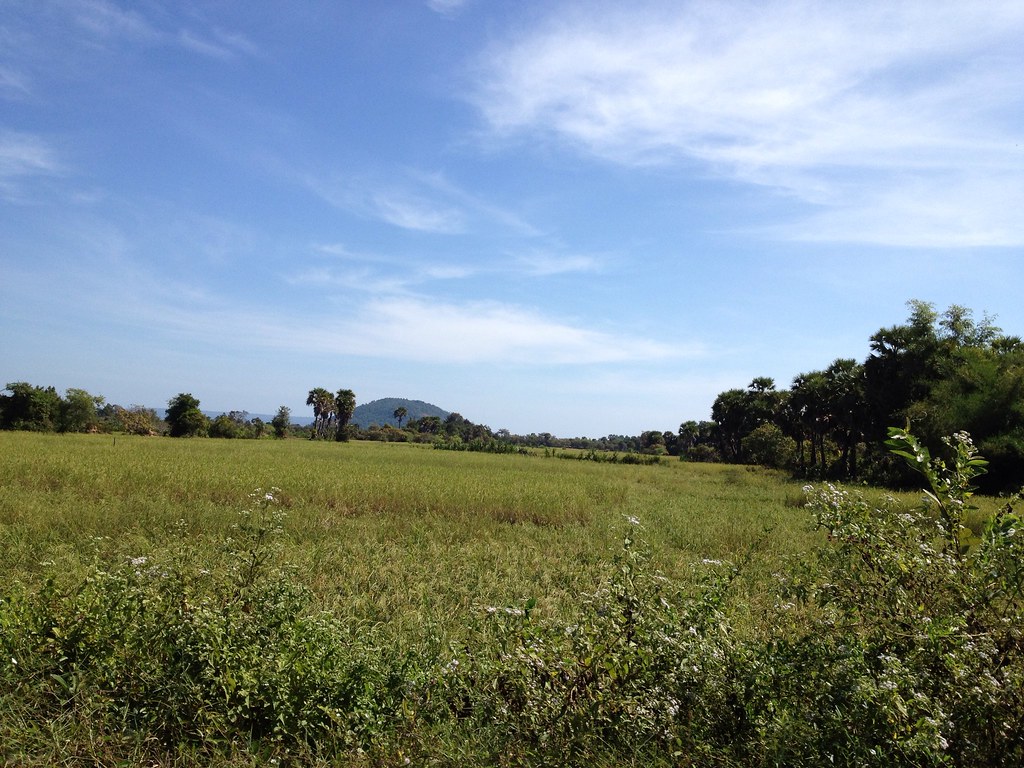
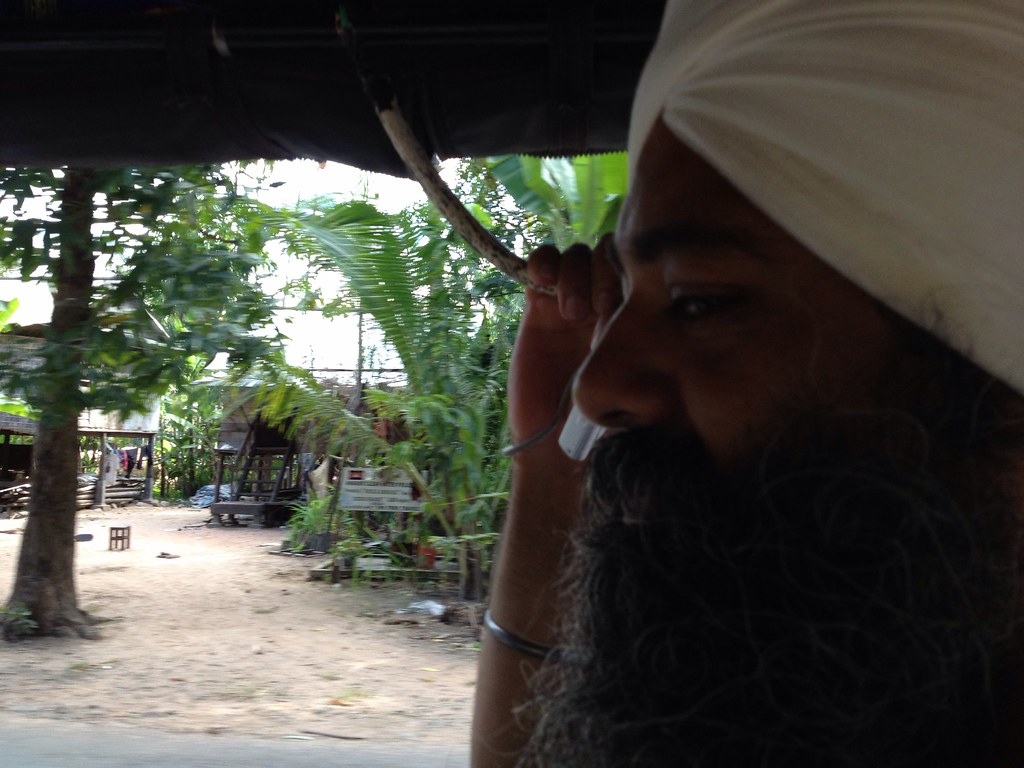
On the way
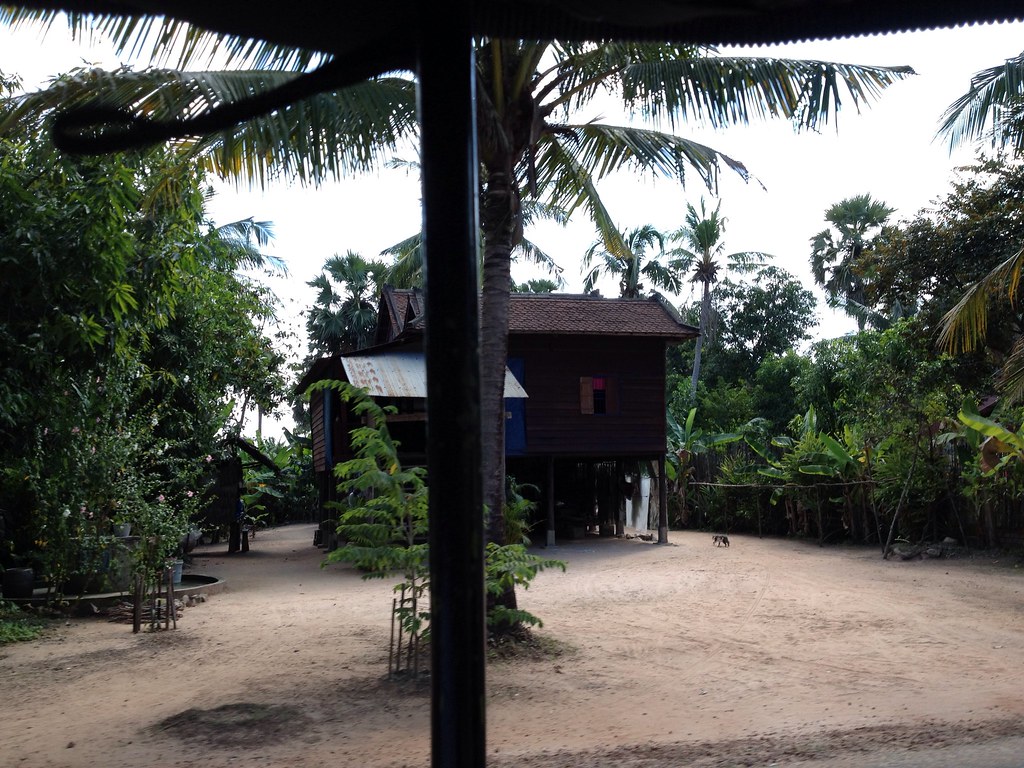
Houses on stilts

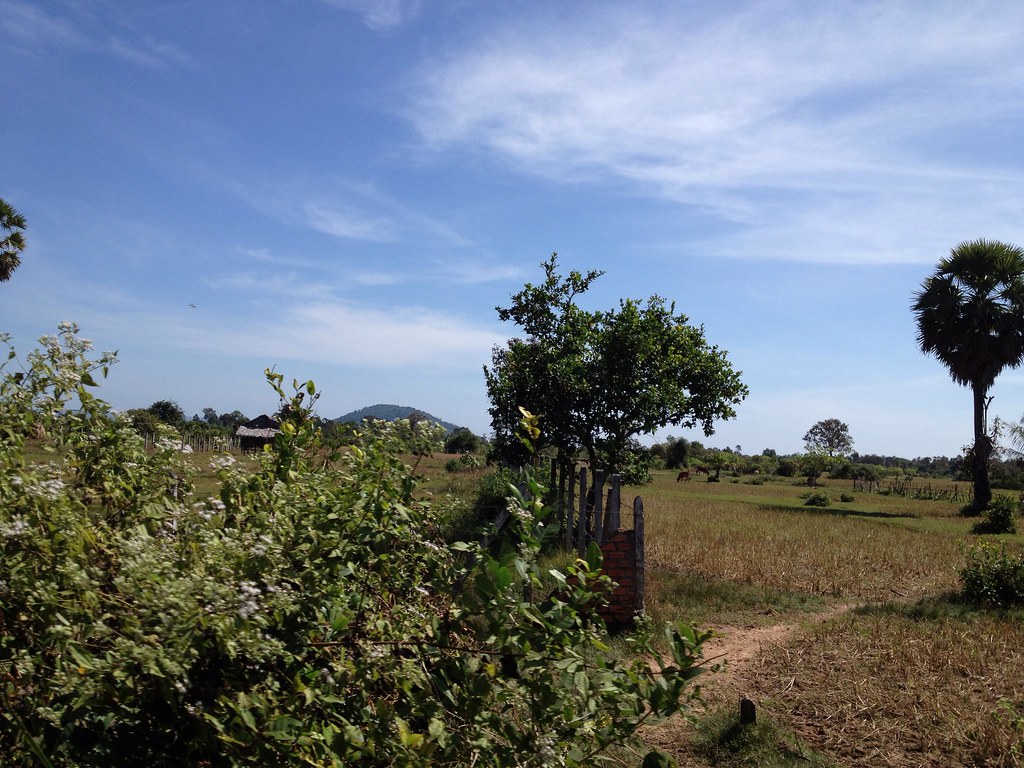
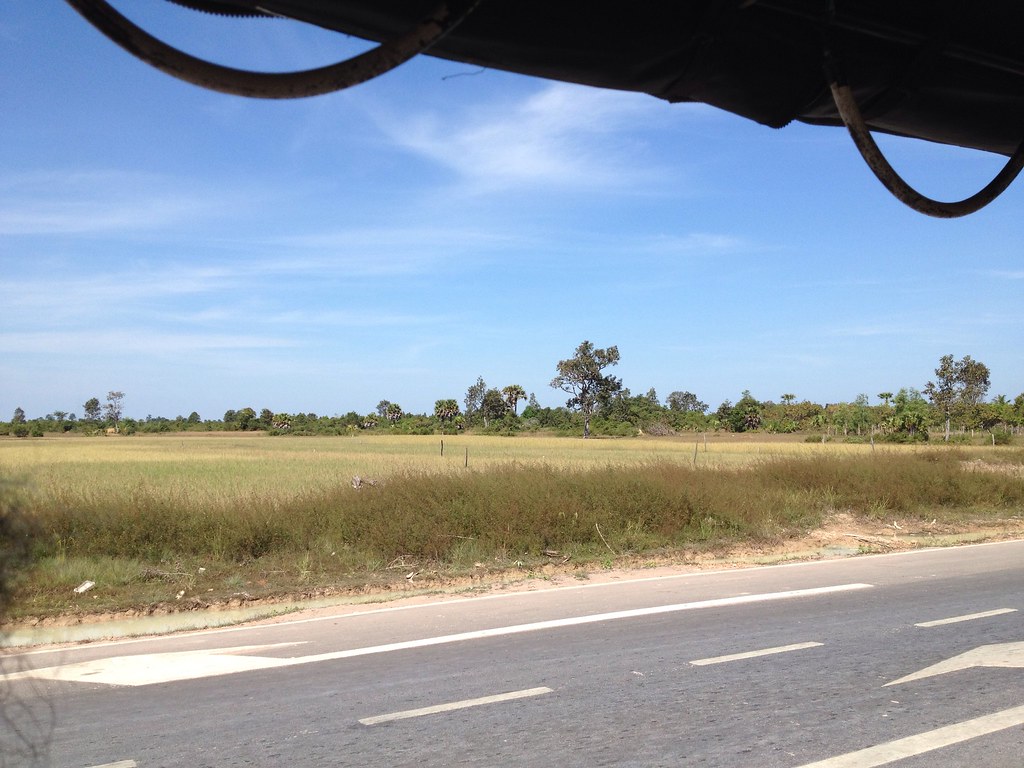
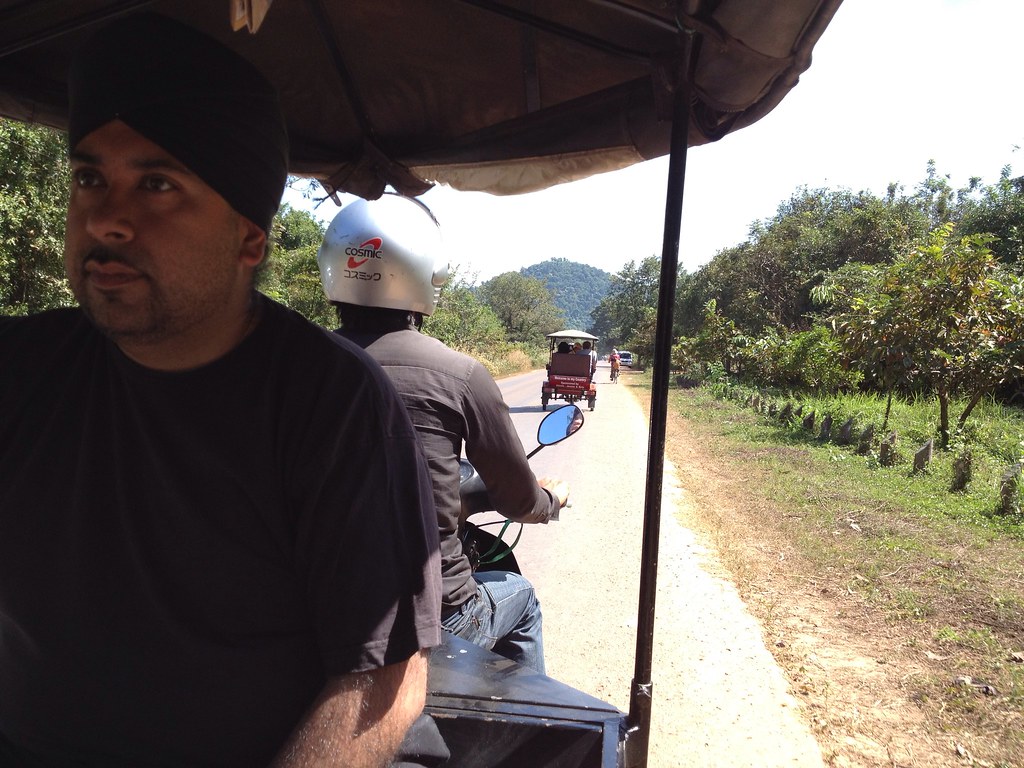
After 90 minutes in a tuk tuk we finally arrived at Banteay Srei
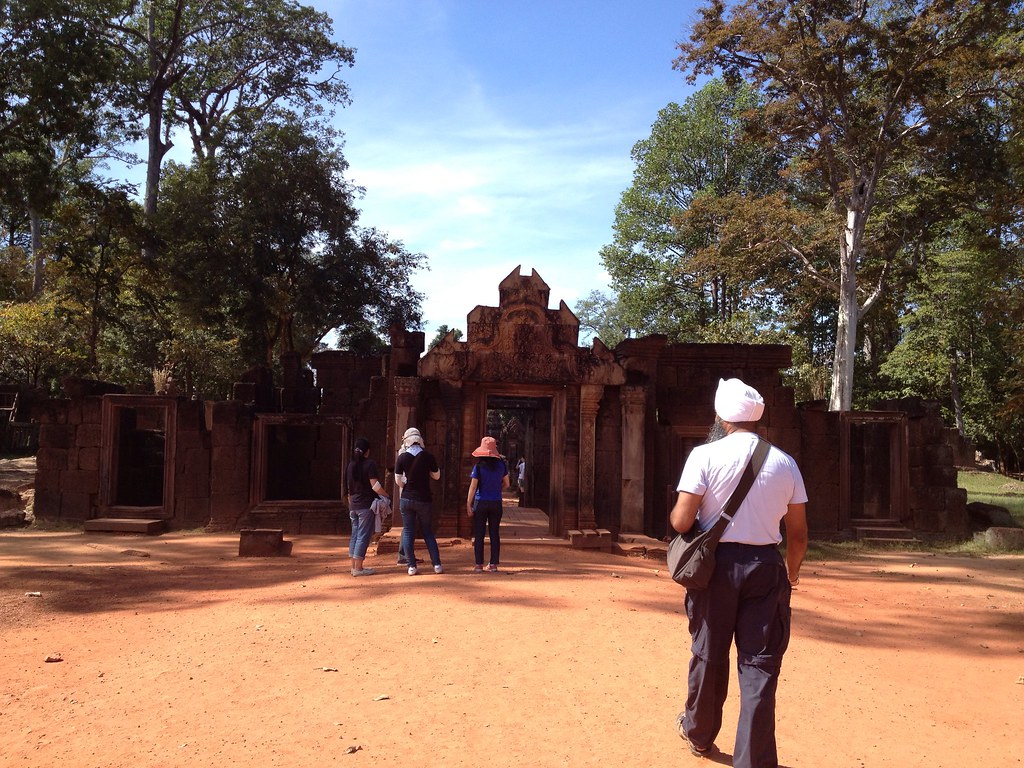
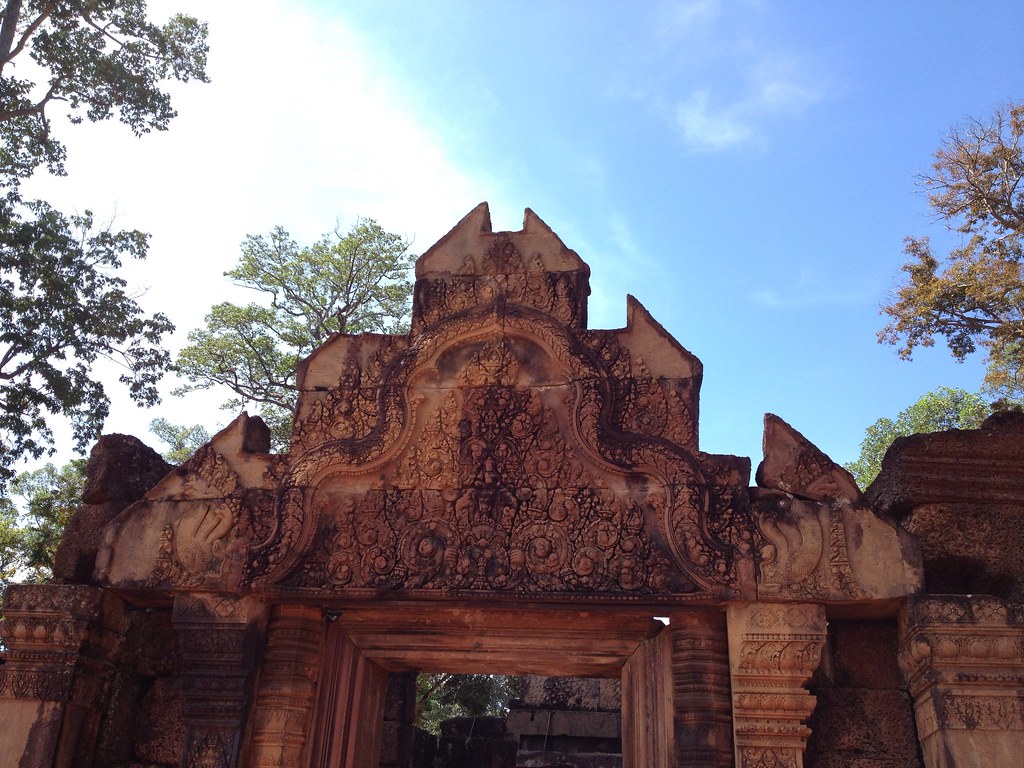
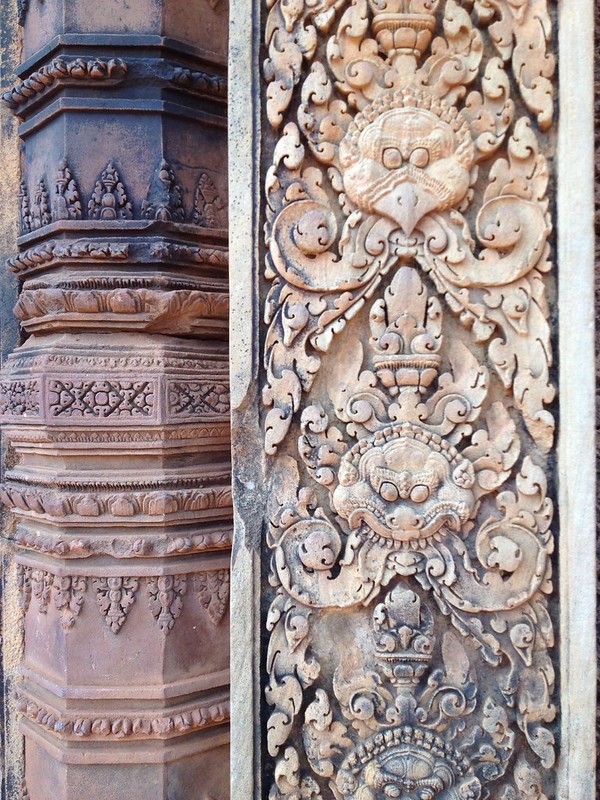
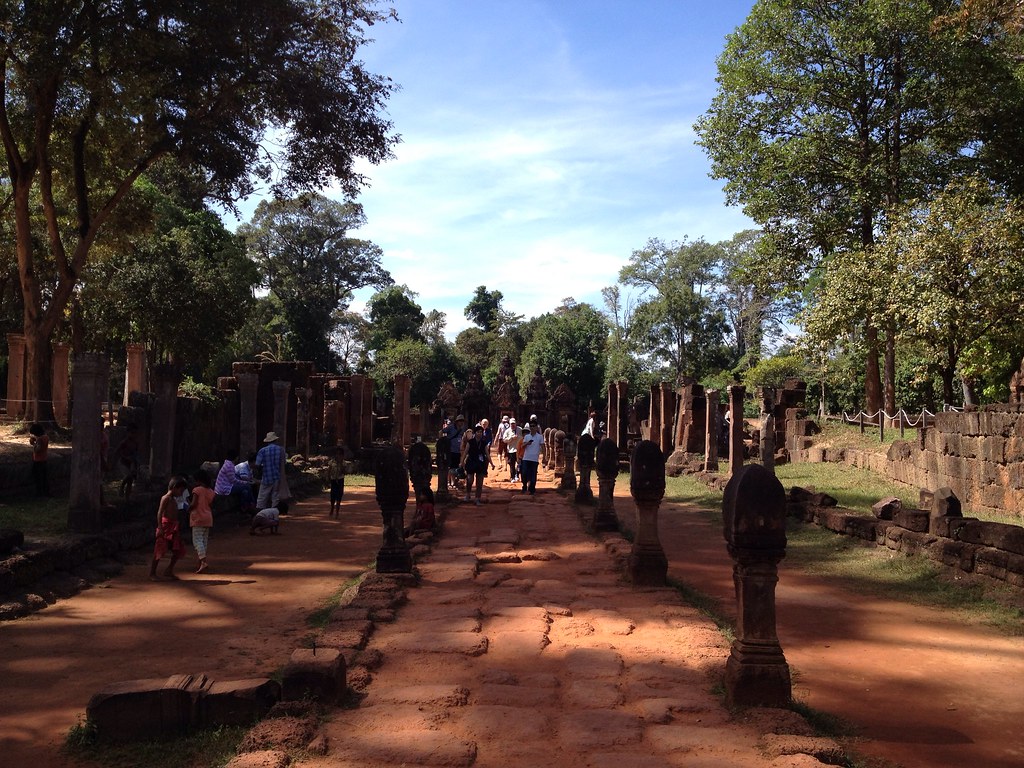
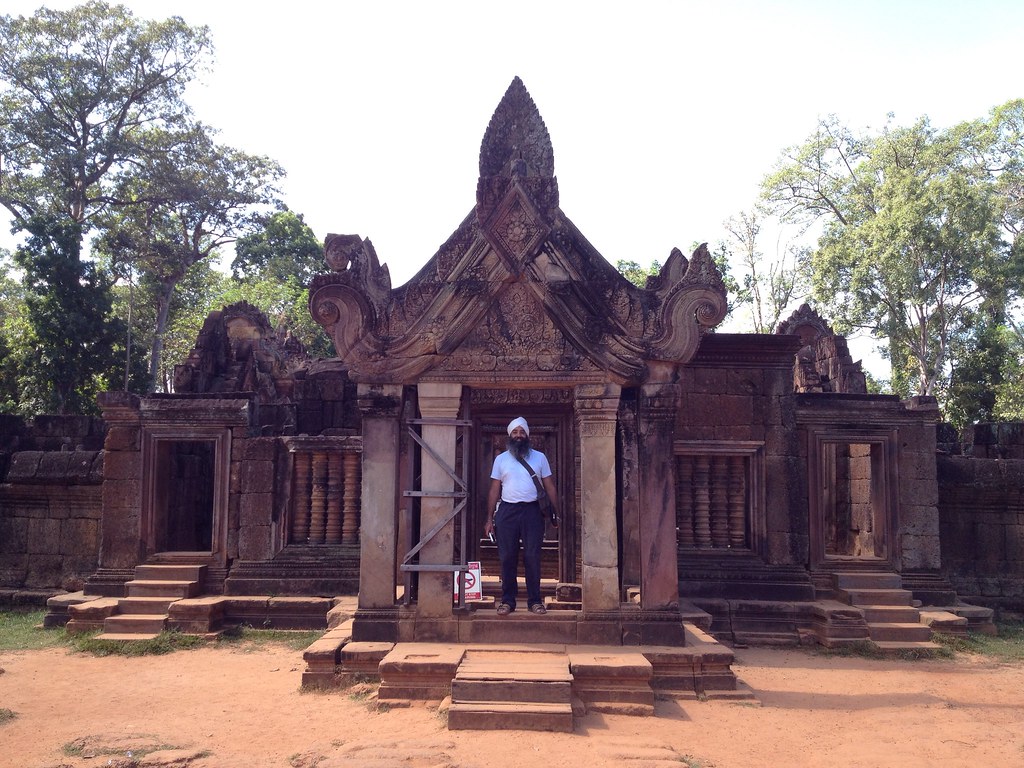
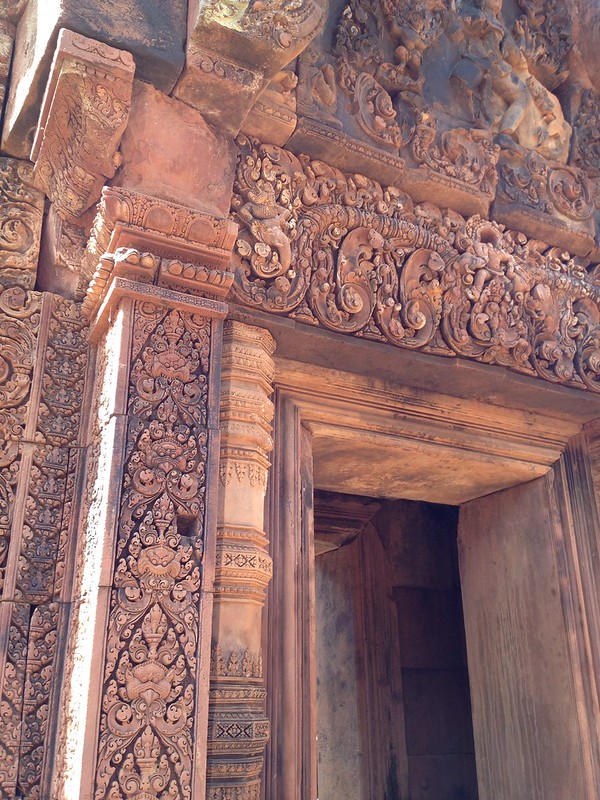
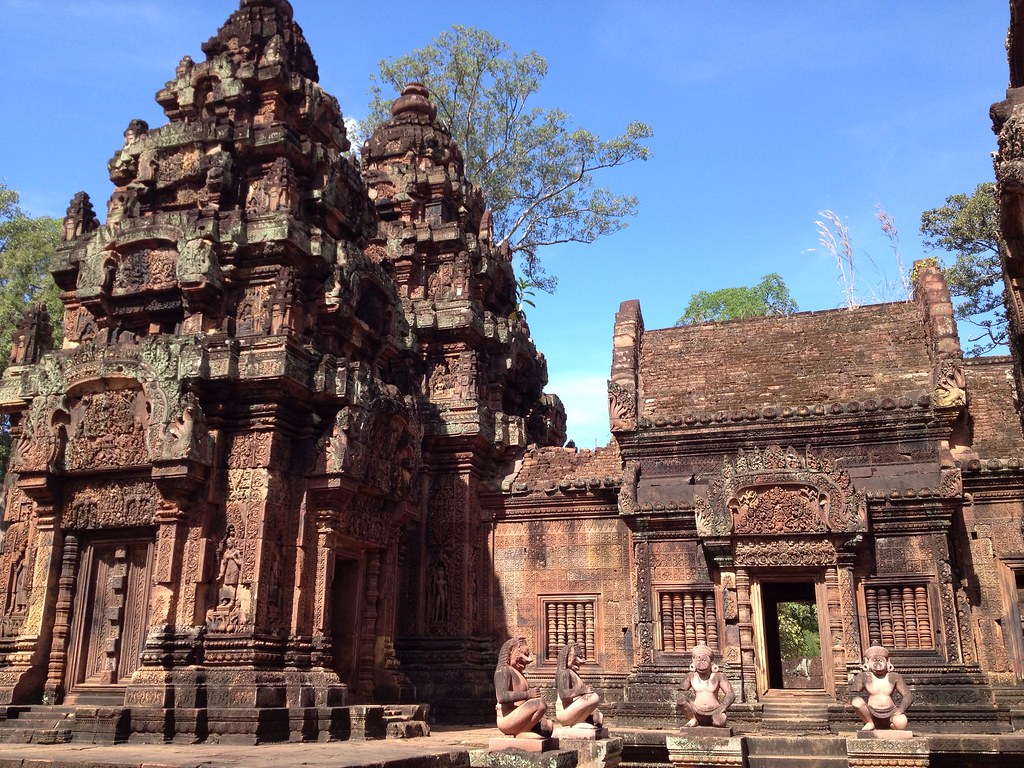
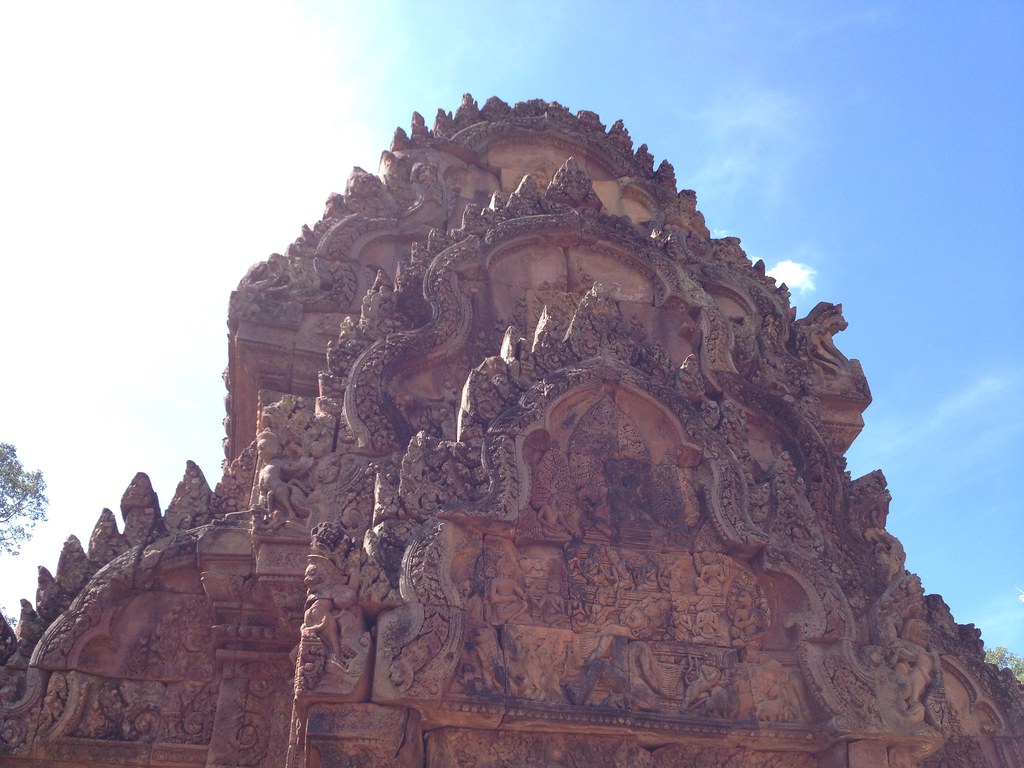
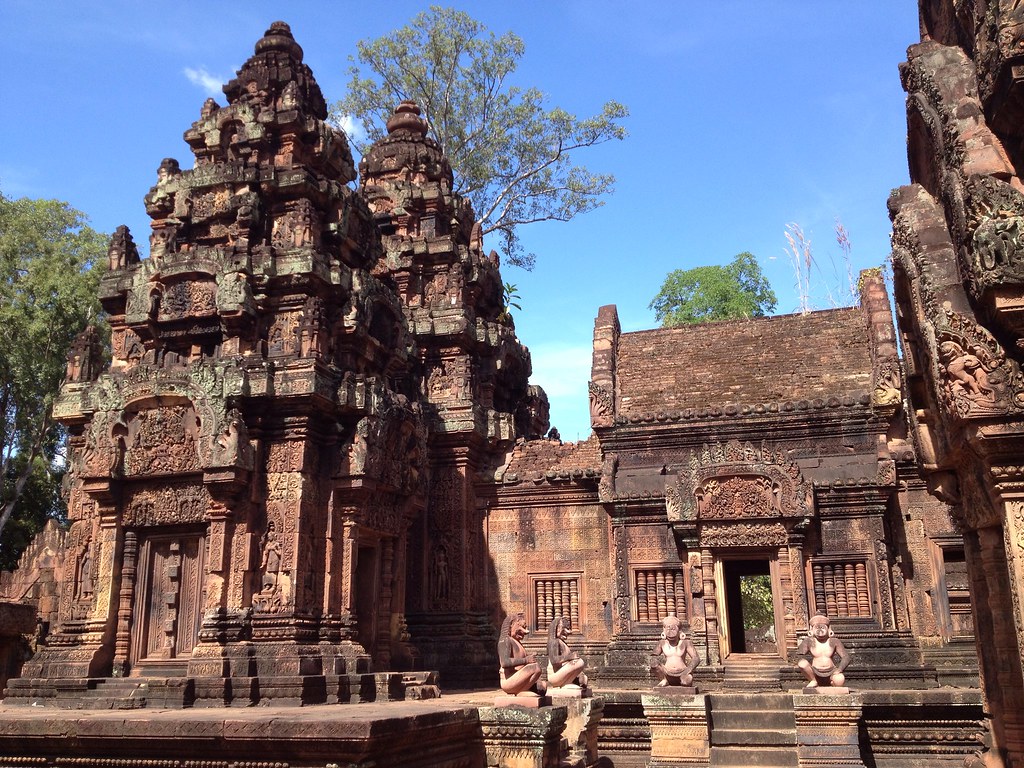

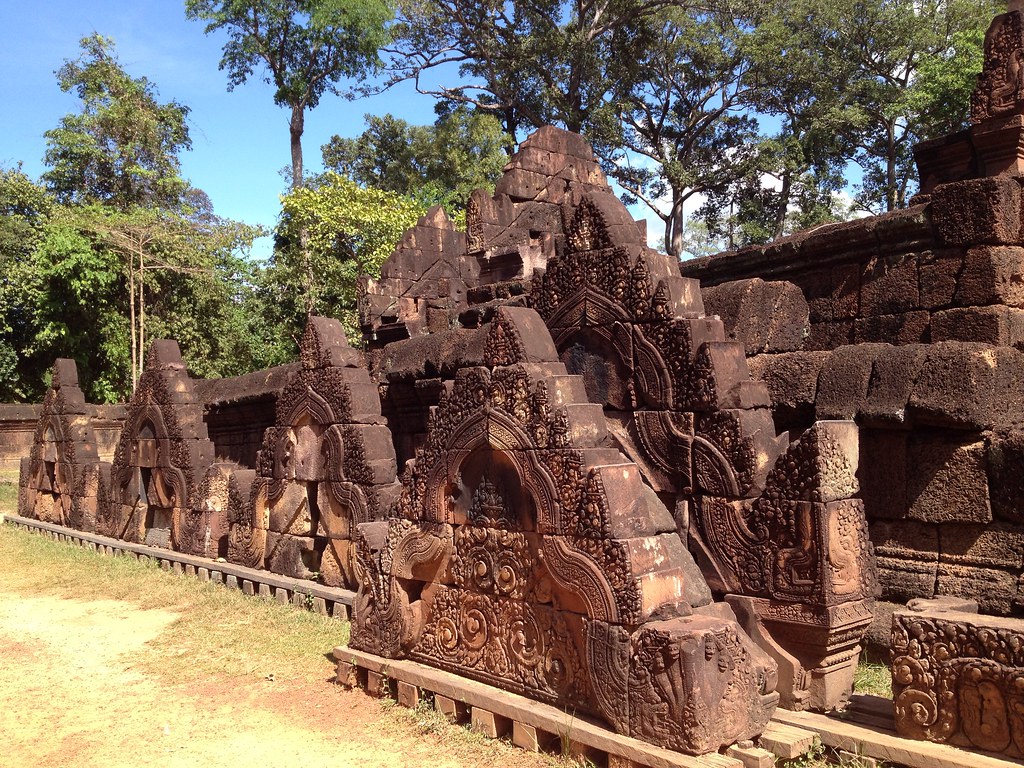
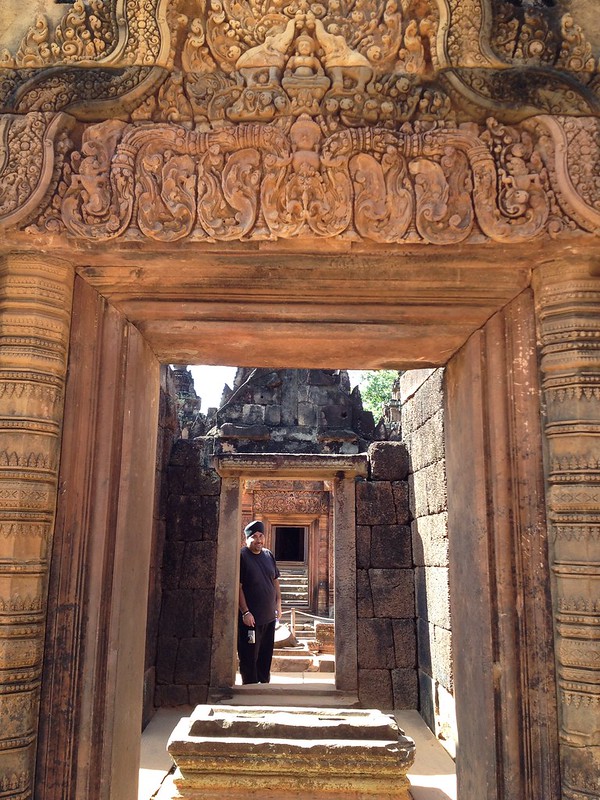
After visiting the temple we stopped off at the restaurant for coconut water.
To the next temple

Another house on stilts
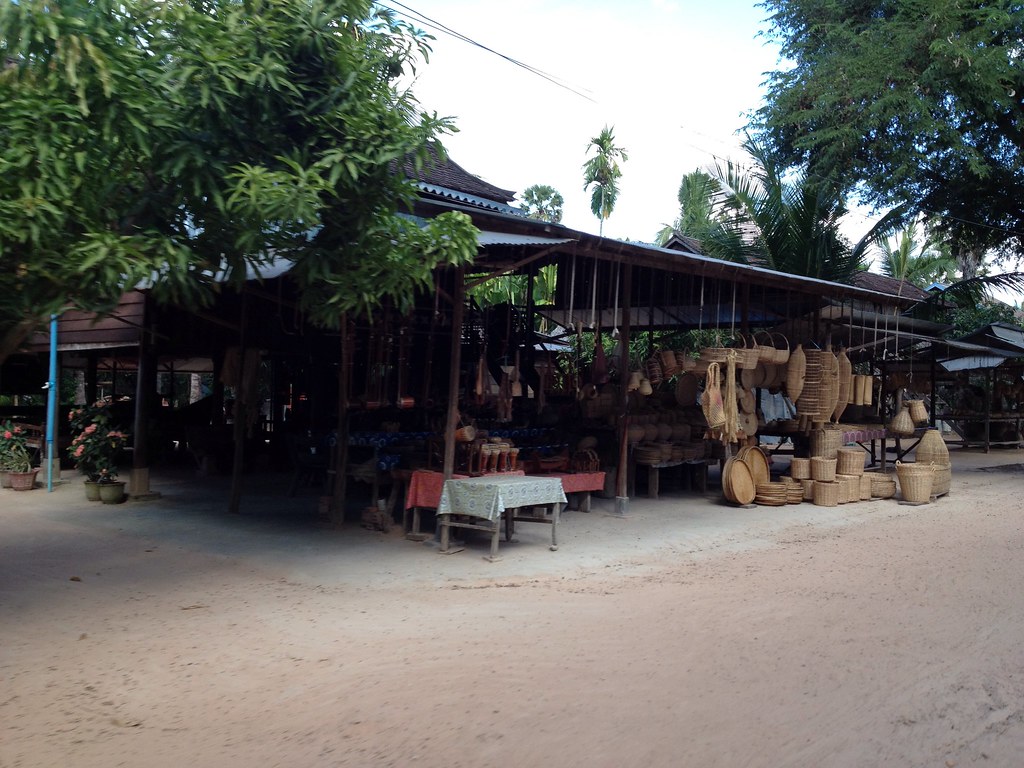
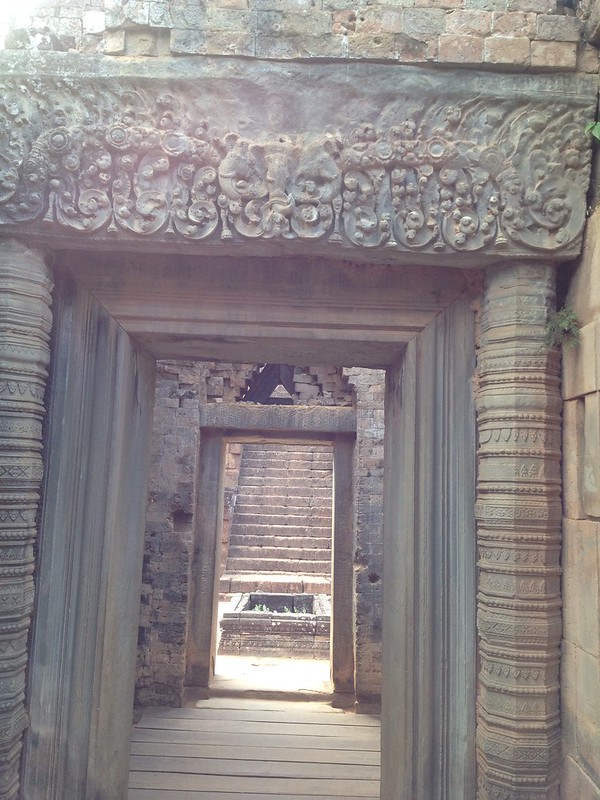
Pre Rup is a temple at Angkor, Cambodia, built as the state temple of Khmer king Rajendravarman and dedicated in 961 or early 962. It is a temple mountain of combined brick, laterite and sandstone construction.
The temple’s name is a comparatively modern one meaning “turn the body”. This reflects the common belief among Cambodians that funerals were conducted at the temple, with the ashes of the body being ritually rotated in different directions as the service progressed
The entrance
Steep climb
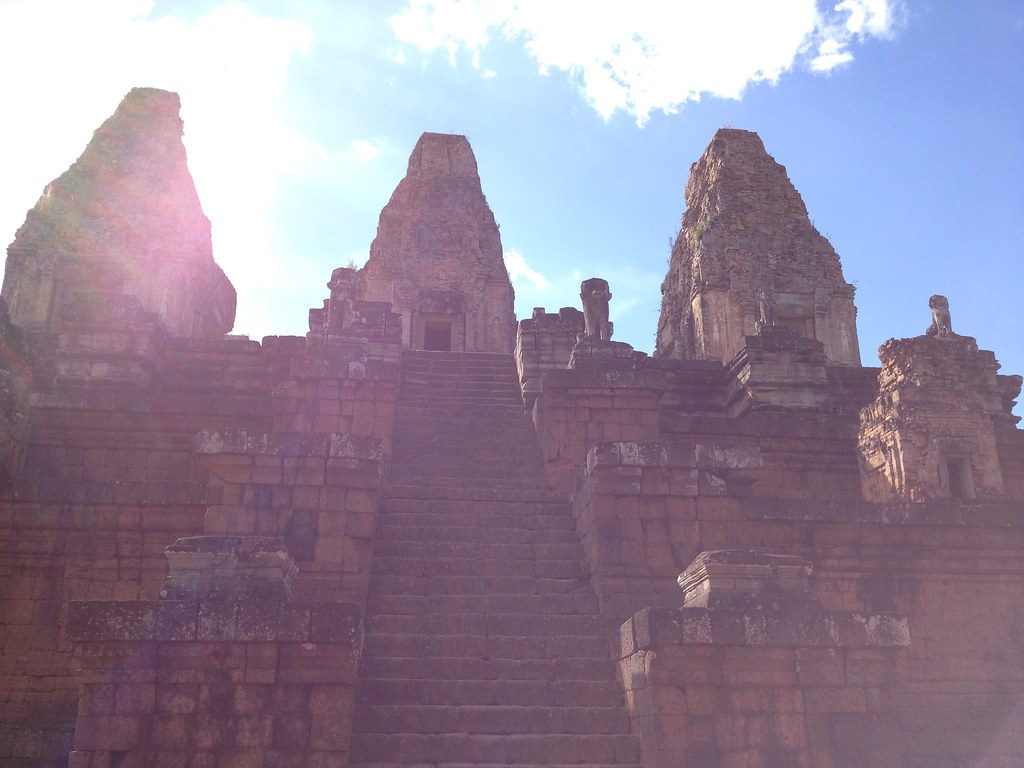
Here goes!

Views from the top
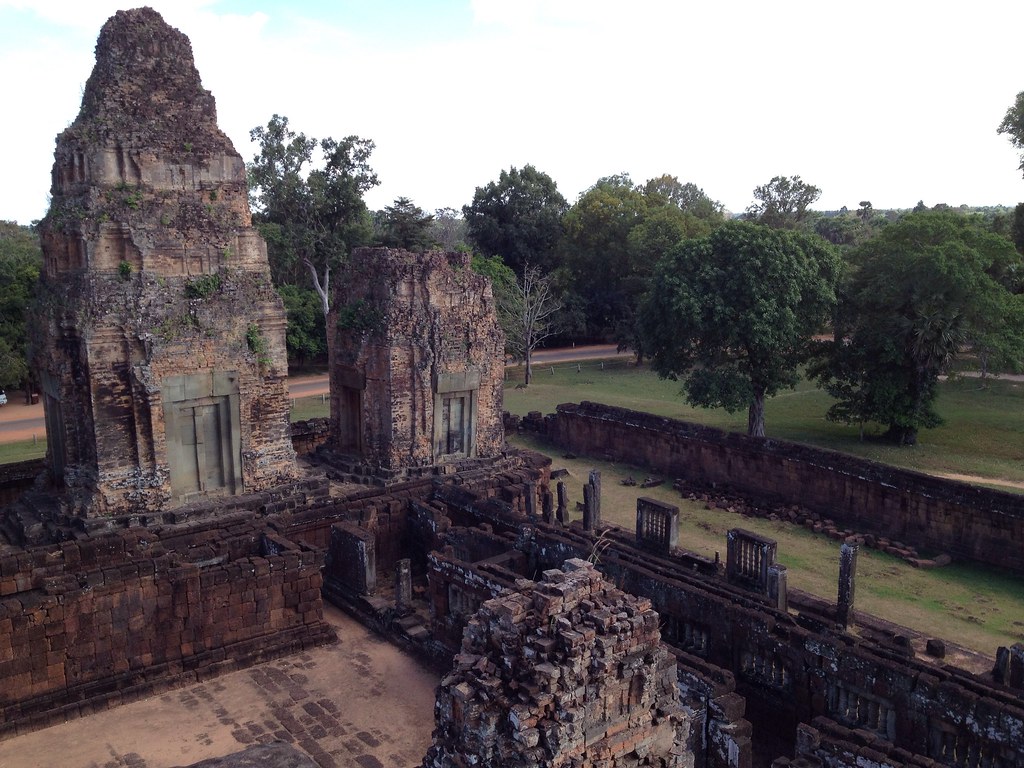
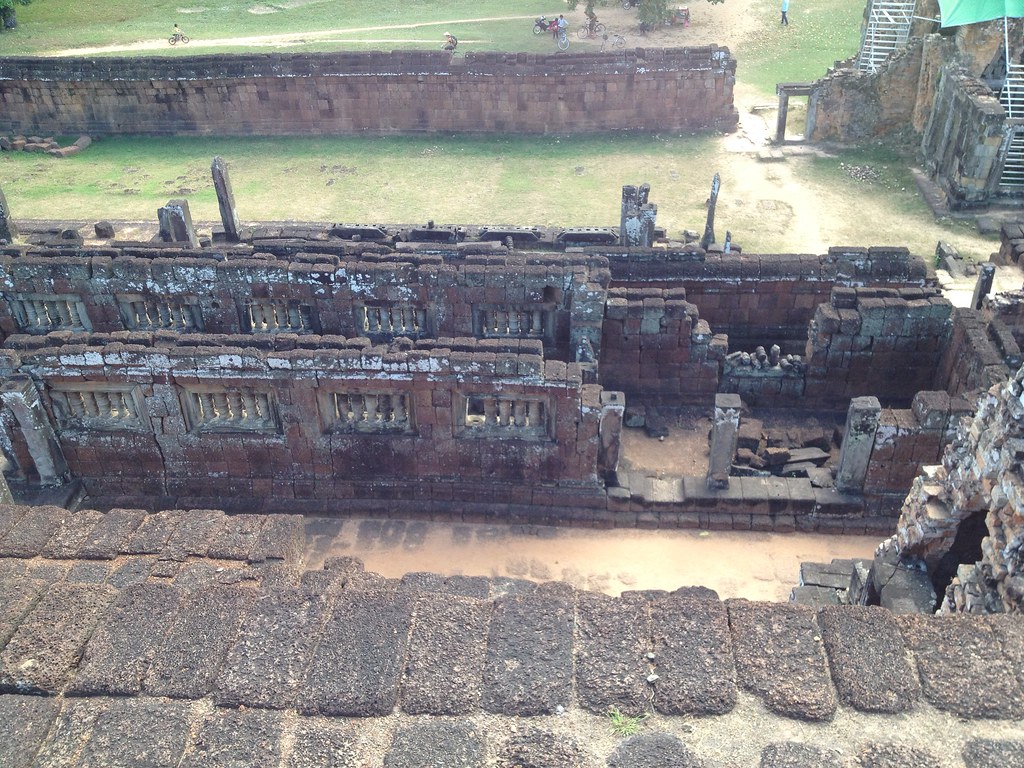
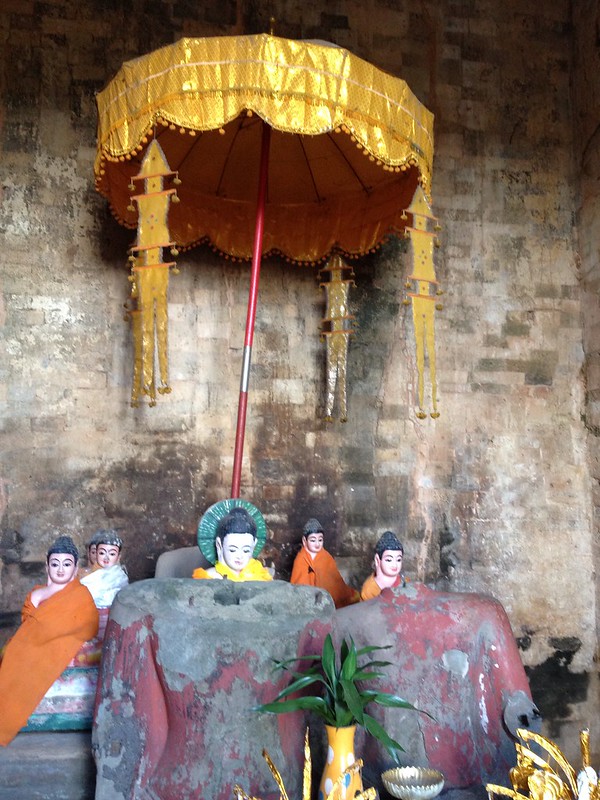
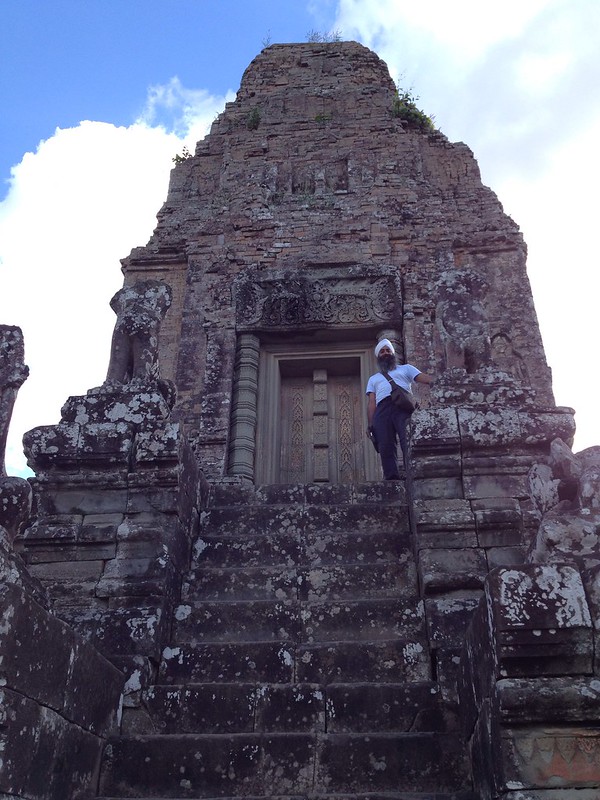
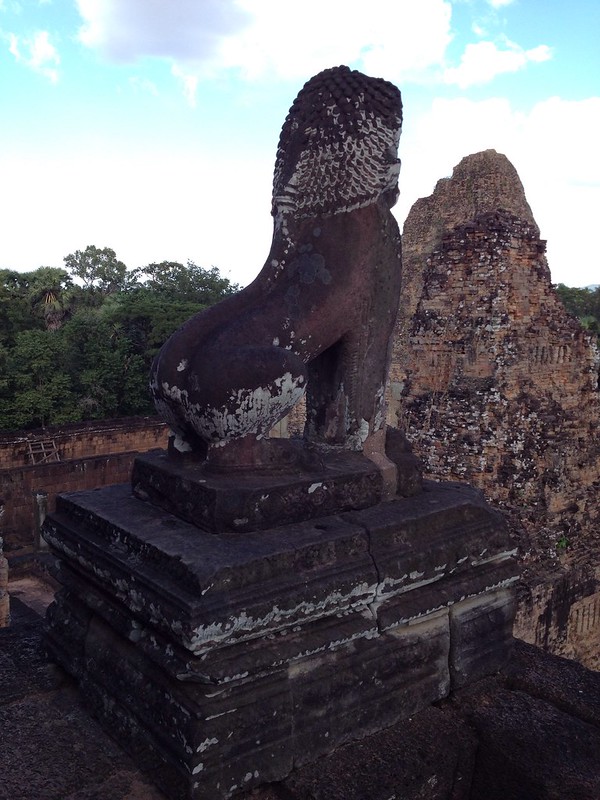
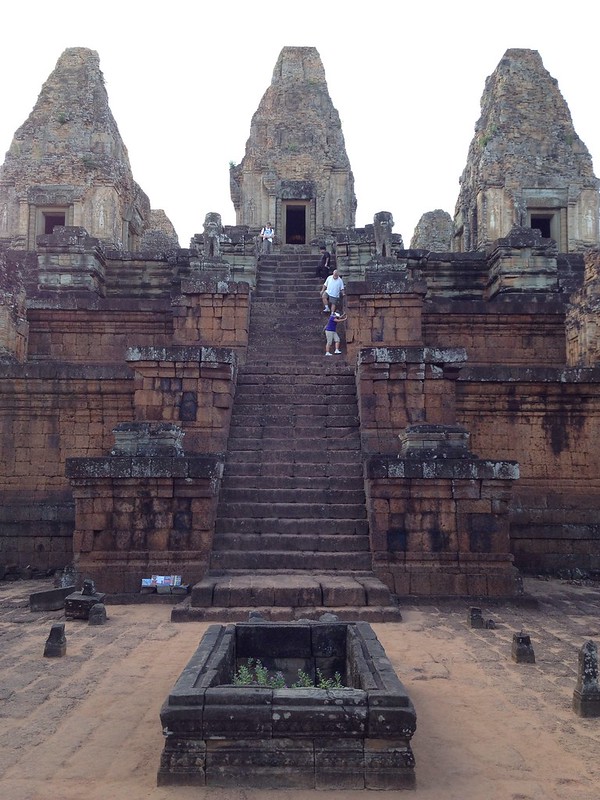

The sales children!
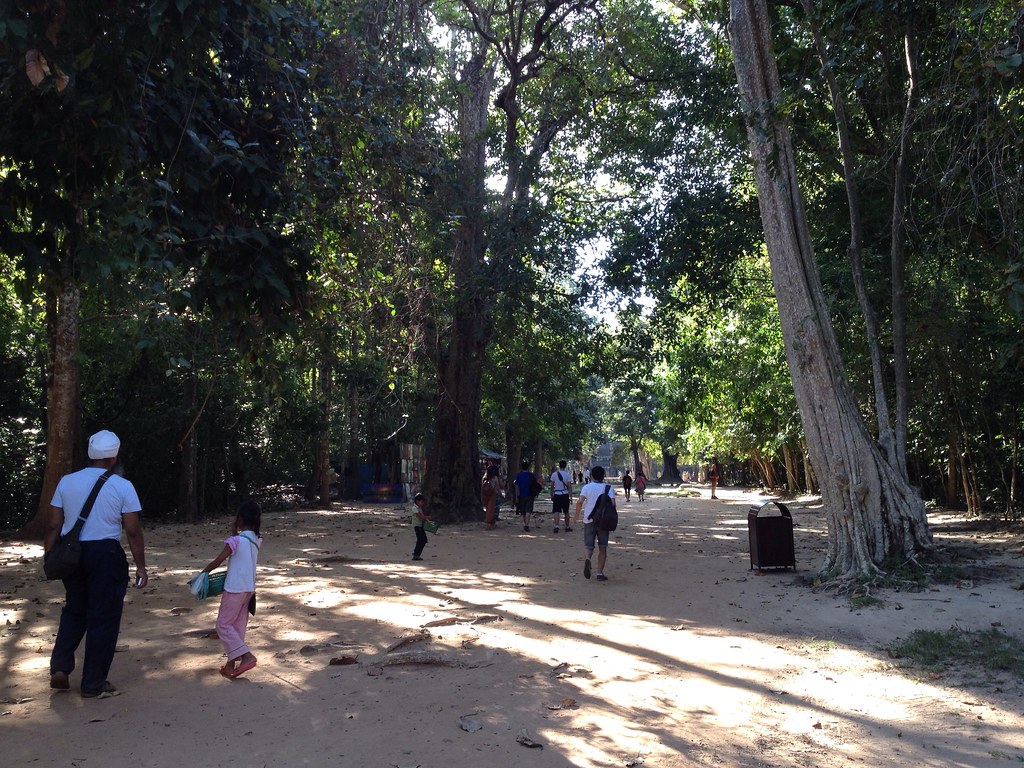
Banteay Kdei, meaning “A Citadel of Chambers”, also known as “Citadel of Monks’ cells”, is a Buddhist temple in Angkor, Cambodia. It is located southeast of Ta Prohm and east of Angkor Thom. Built in the mid 12th to early 13th centuries AD during the reign of Jayavarman VII (who was posthumously given the title “Maha paramasangata pada”), it is in the Bayon architectural style, similar in plan to Ta Prohm and Preah Khan, but less complex and smaller. Its structures are contained within two successive enclosure walls, and consist of two concentric galleries from which emerge towers, preceded to the east by a cloister.
This Buddhist monastic complex is currently dilapidated due to faulty construction and poor quality of sandstone used in its buildings, and is now undergoing renovation. Banteay Kdei had been occupied by monks at various intervals over the centuries till 1960s.
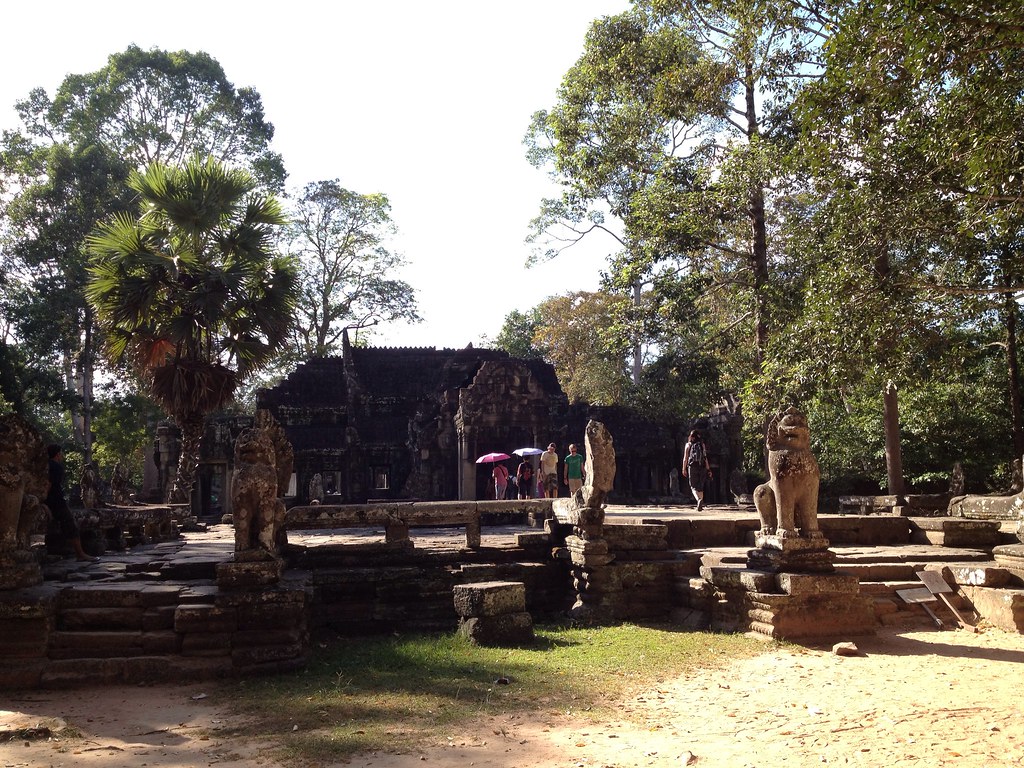
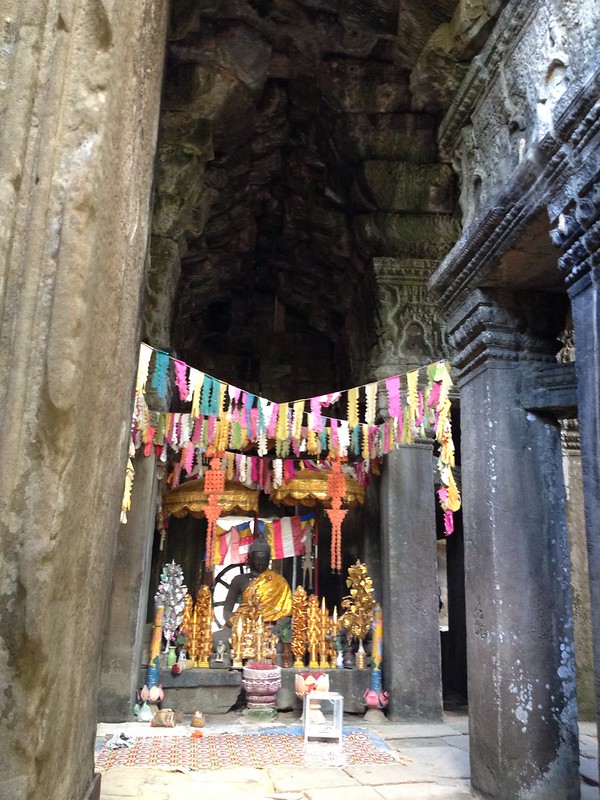
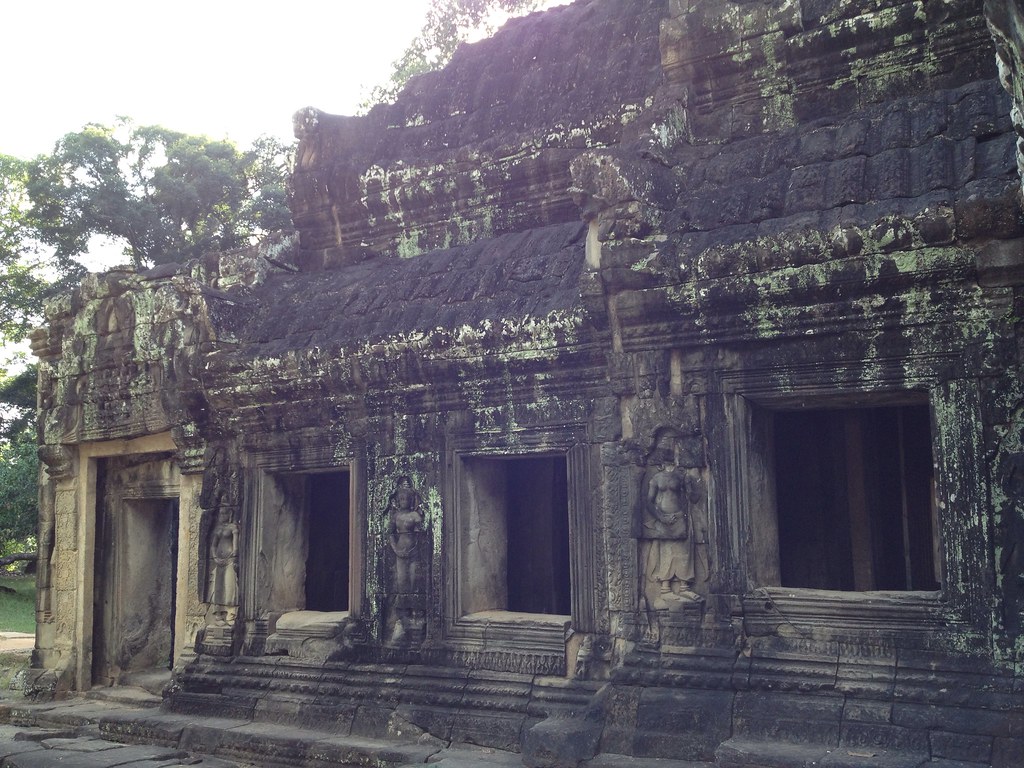
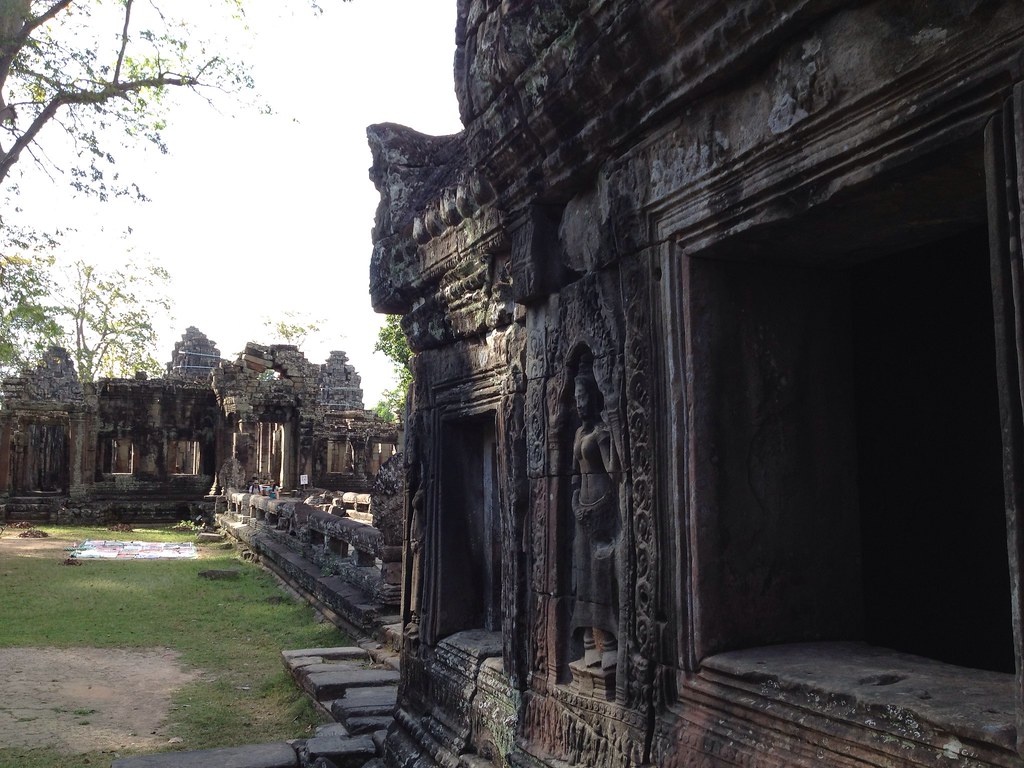
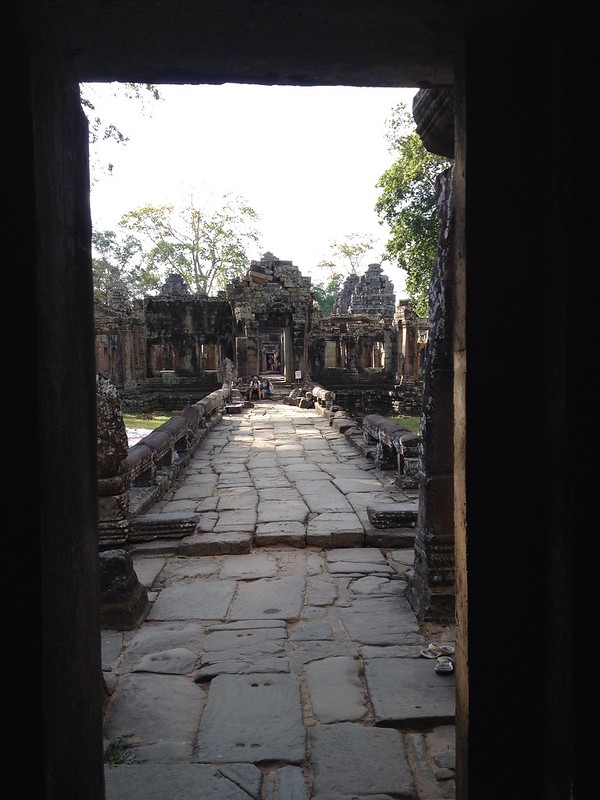
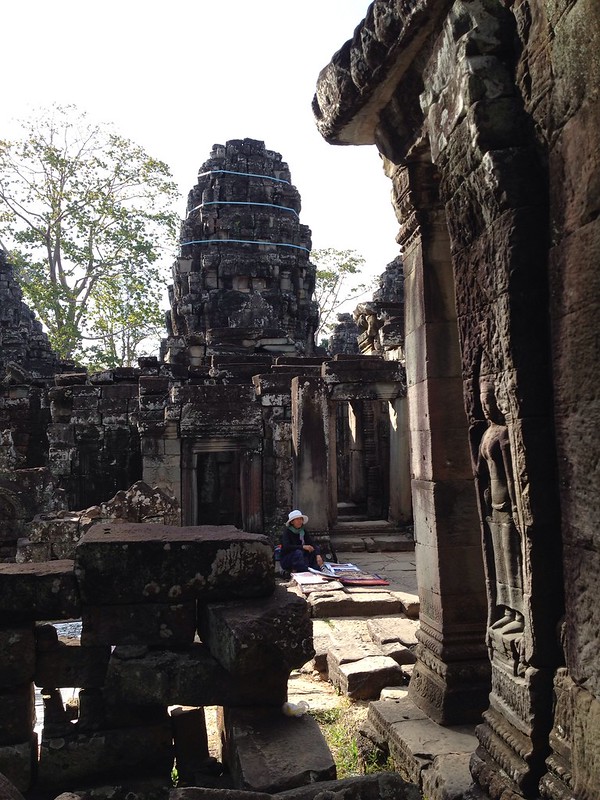

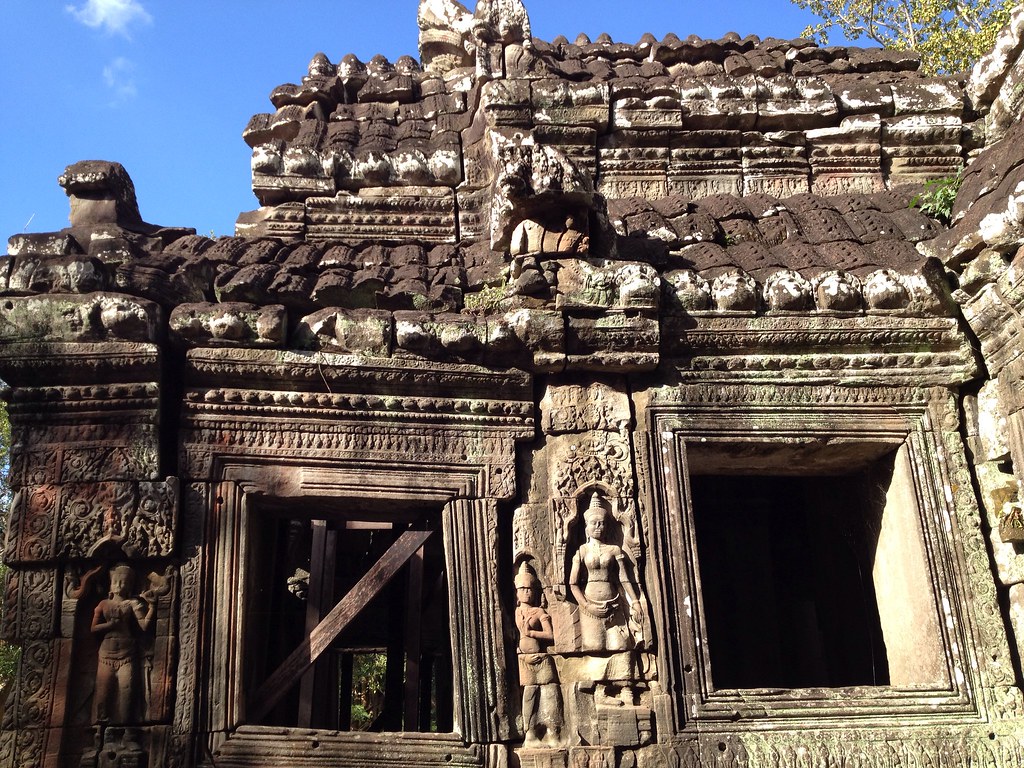
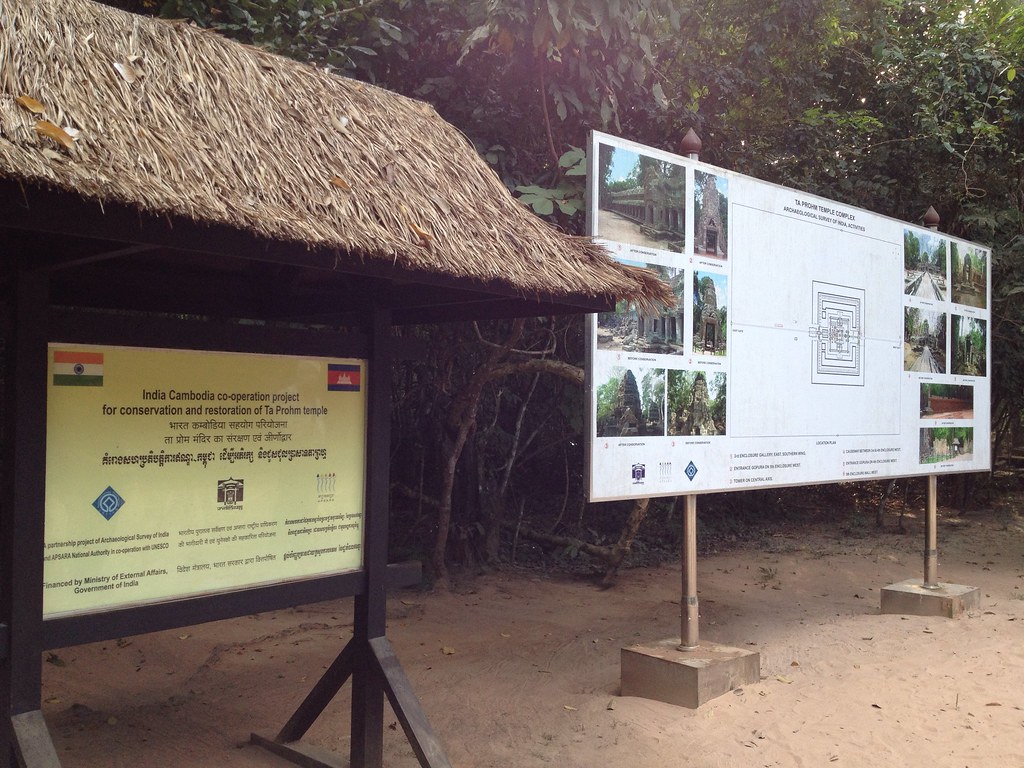
Ta Prohm is the modern name of a temple at Angkor, Siem Reap Province, Cambodia, built in the Bayon style largely in the late 12th and early 13th centuries and originally called Rajavihara Located approximately one kilometre east of Angkor Thom and on the southern edge of the East Baray, it was founded by the Khmer King Jayavarman VII as a Mahayana Buddhist monastery and university. Unlike most Angkorian temples, Ta Prohm has been left in much the same condition in which it was found: the photogenic and atmospheric combination of trees growing out of the ruins and the jungle surroundings have made it one of Angkor’s most popular temples with visitors.UNESCO inscribed Ta Prohm on the World Heritage List in 1992. Today, it is one of the most visited complexes in Cambodia’s Angkor region. The conservation and restoration of Ta Prohm is a partnership project of the Archaeological Survey of India and the APSARA (Authority for the Protection and Management of Angkor and the Region of Siem Reap).
At the entrance to most temples they have information on the temple and who is restoring it
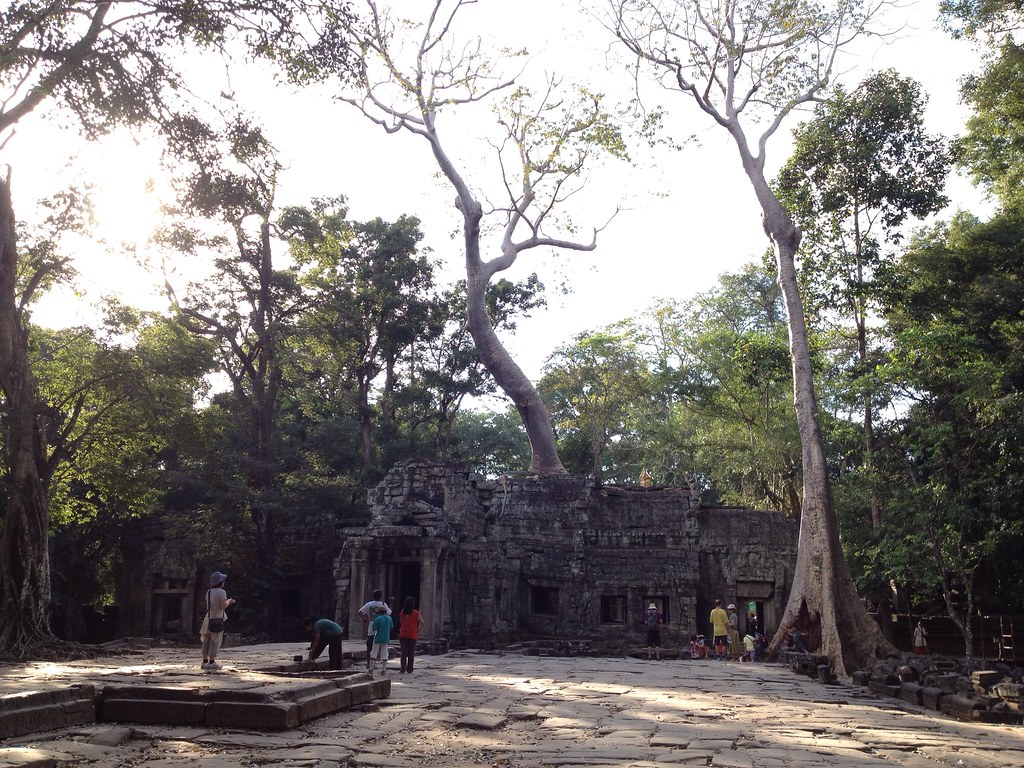

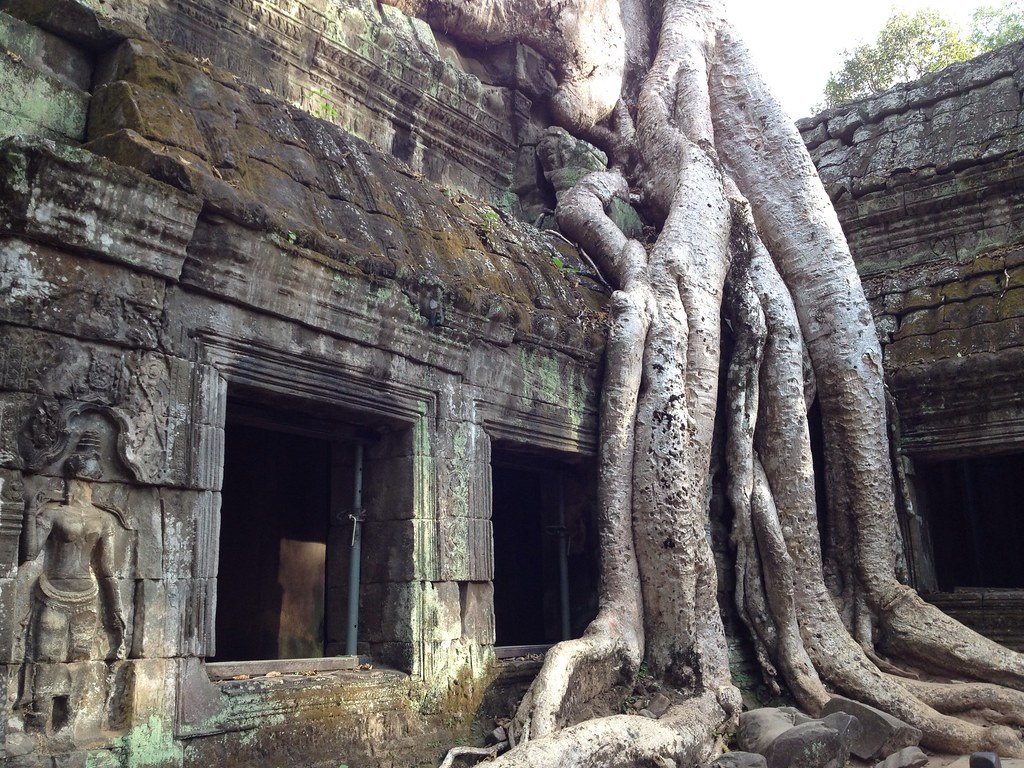
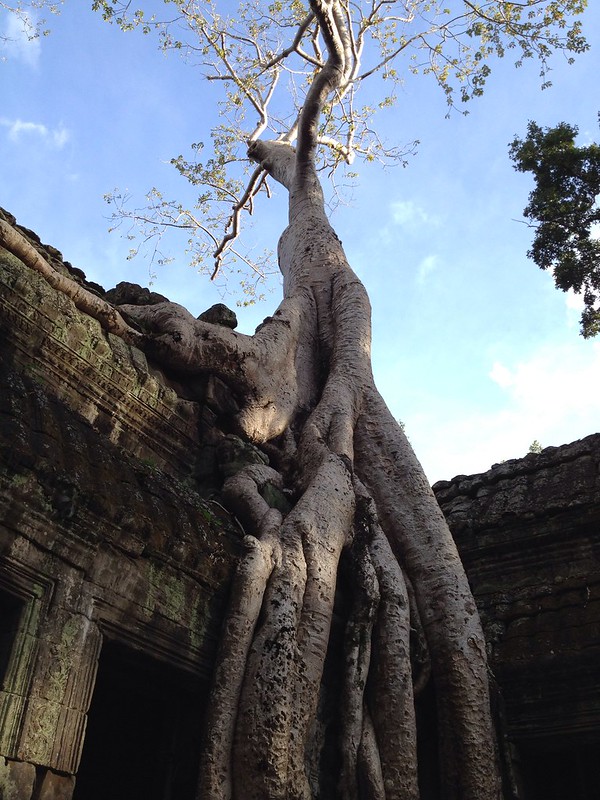
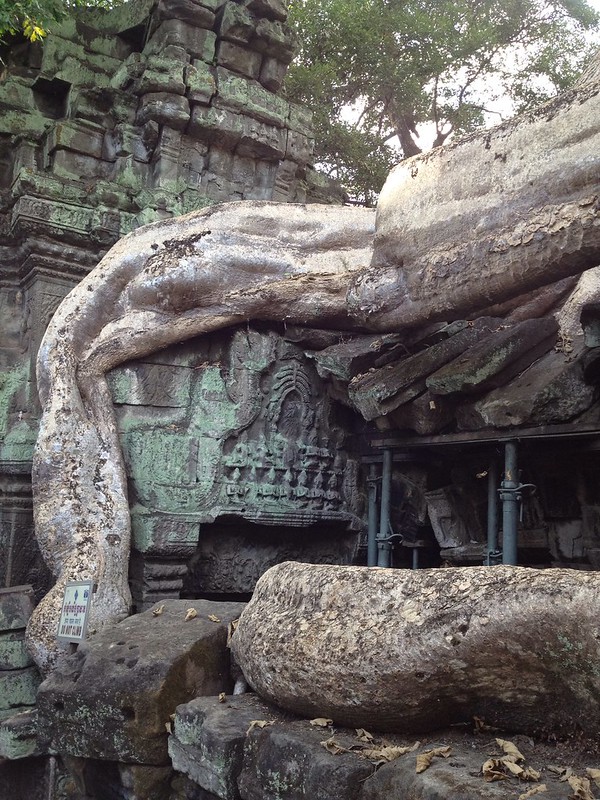
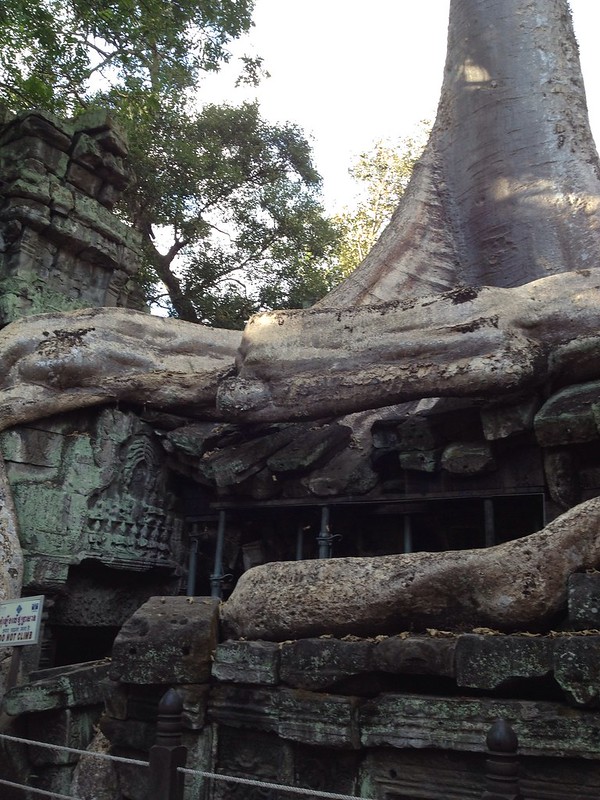
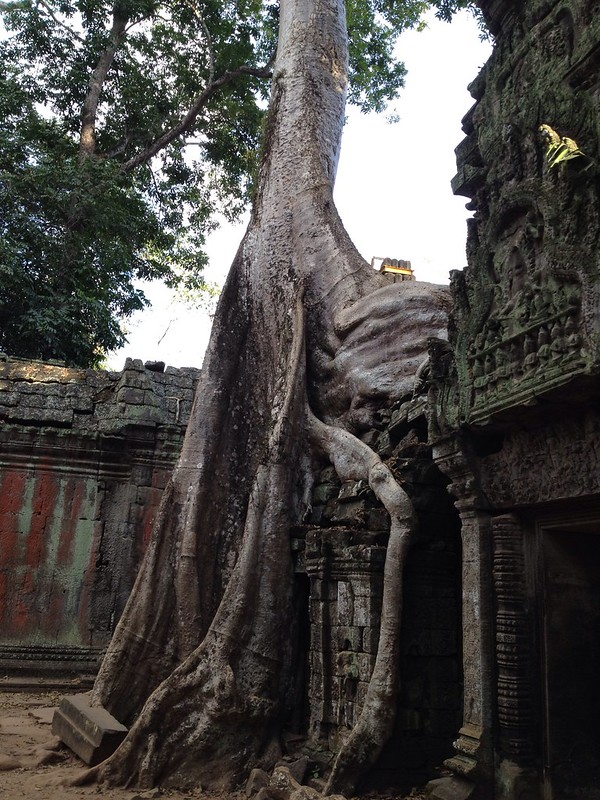
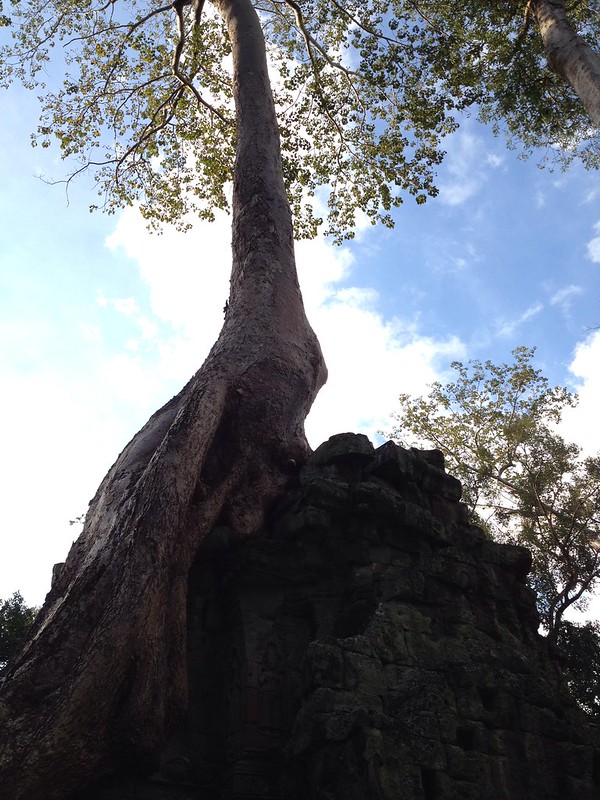
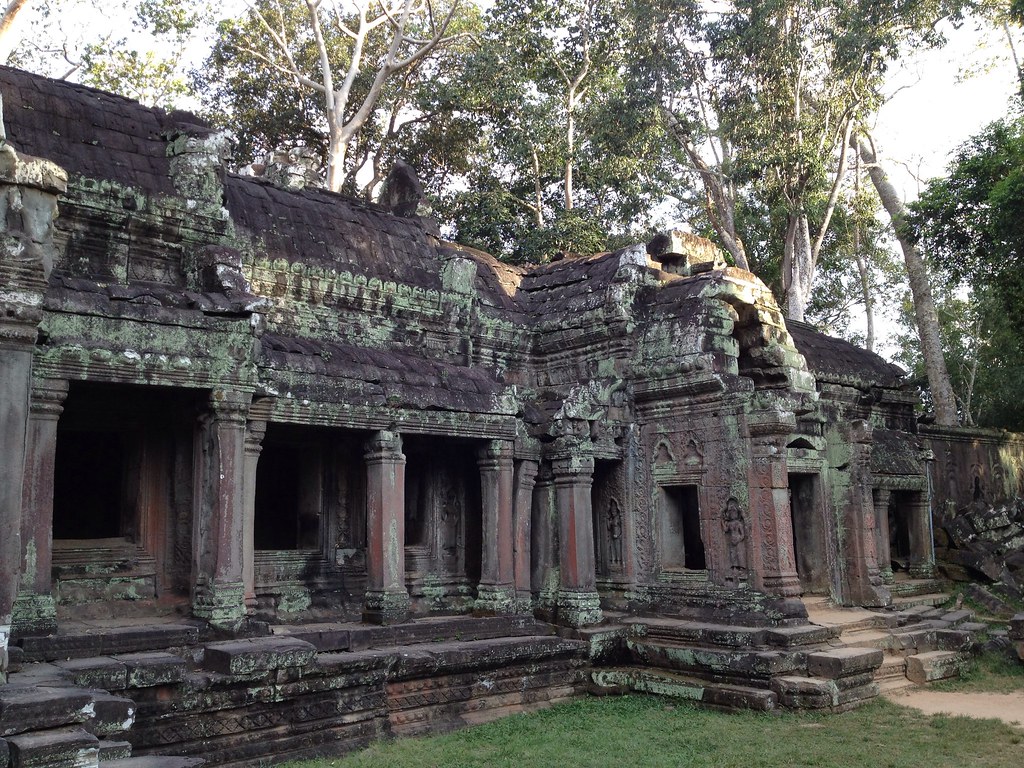

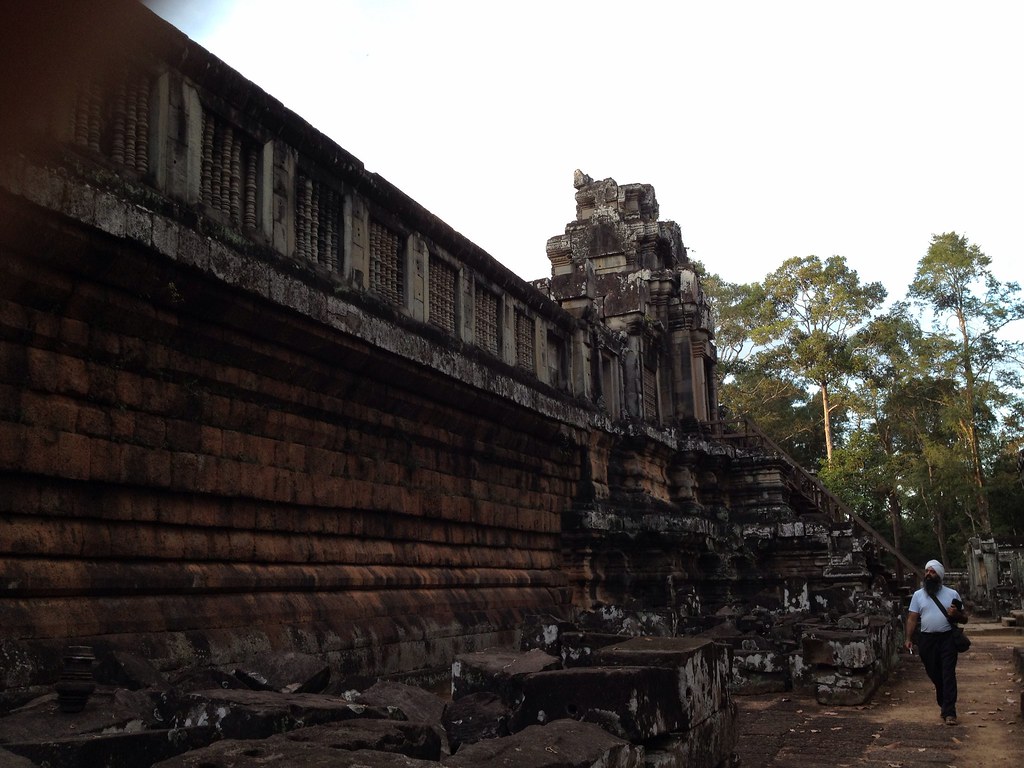
Ta Keo possibly the first to be built entirely of sandstone by Khmers.
Ta Keo had to be the state temple of Jayavarman V, son of Rajendravarman, who had built Pre Rup. Like Pre Rup, it has five sanctuary towers arranged in a quincunx, built on the uppermost level of five-tier pyramid consisting of overlapping terraces (a step pyramid), surrounded by moat, as a symbolic depiction of Mount Meru. Its particularly massive appearance is due to the absence of external decorations, as carving had just begun when the works stopped, besides an elaborate use of perspective effects. It is considered an example of the so-called Khleang style.
The main axis of the temple is E-W and a causeway 500 meters long connects its eastern entrance to a landing stage on the Eastern Baray, with which Ta Keo was in tightly relationship. The outer banks of the surrounding moats, now vanished, measure 255 m by 195 m.
The first terrace is 122 m by 106 m, its wall of sandstone on laterite basis constitutes the outer enclosure. Along the east side there are two long galleries, whose roofs were probably in wood and tiles. They were illuminated by balustraded windows.
The second terrace is 5.5 m higher. Each of the first two terraces has a gopura at the four cardinal points. Each gopura has three independent passages and a central tower with diminishing tiers.
A continuous gallery (1.4 m width) constitutes the inner enclosure of the second terrace. It has windows only towards the interior and measures 80 m by 75 m. It’s really interesting, because it has no door and seems to be purely decorative, and is the first example of Khmer gallery (together with Phimeanakas). Before Ta Keo (e.g. in Pre Rup) there were long buildings that followed the length of enclosures with some discontinuity. However it hasn’t a stone vault, probably its roof was made of wood and tiles too.
Along the eastern side of the second terrace in the corners there are two buildings that are the shorter version of the long galleries of the first terrace. More towards the central axis there are two little sandstone “libraries”, opening to the west, with false windows on upper storeys.
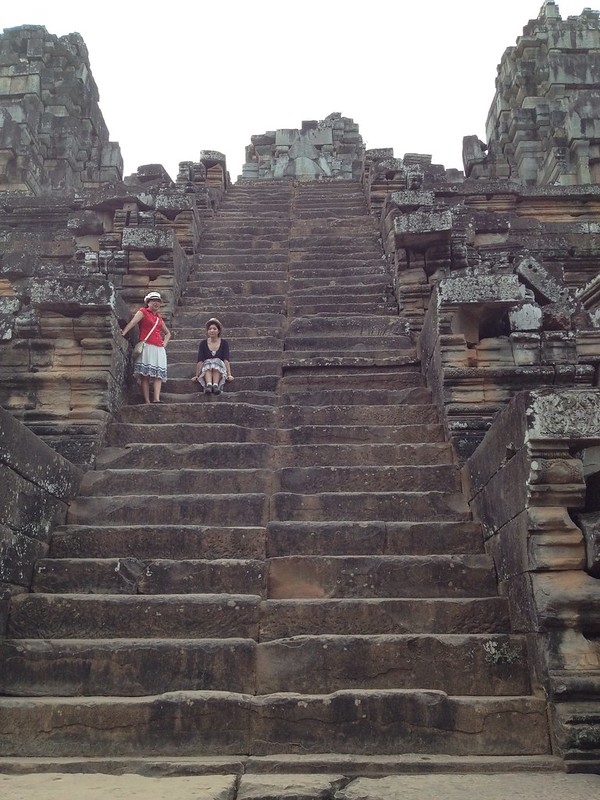
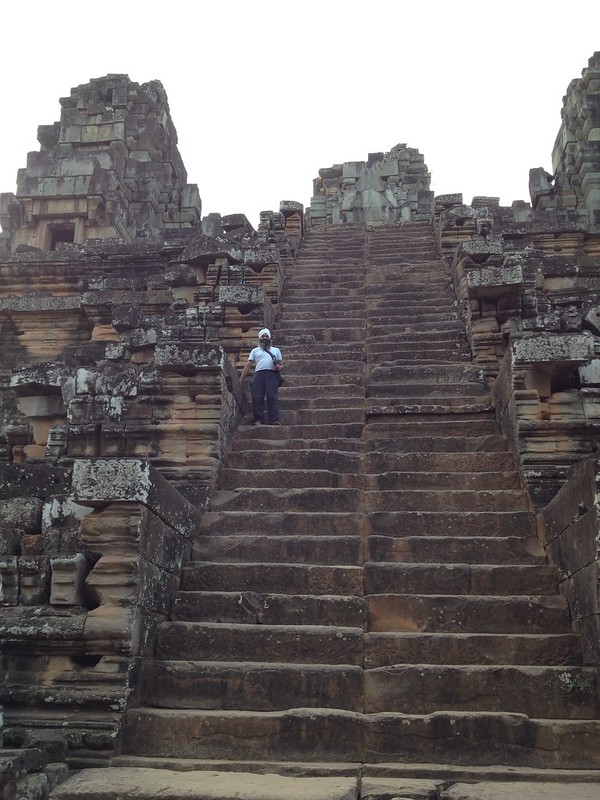
The final pyramid rises 14 m in three narrow steps from the second terrace. Its base is 60 m square, the summit is 47 m square and stands 21.5 m above the ground. The four stairways that lead on the summit are continuous and very steep. At the foot of the eastern one there is a statue of a kneeling Nandi, which confirms that Ta Keo was a Shivaite temple. The absence of any decoration makes the final pyramid really massive. However on the east face some damaged carvings of floral patterns are still visible.
The four corner towers on the summit stand on 0.8 m high basements and open to the four cardinal points with protruding vestibules. In the central tower, which dominates the others from its basement 4 meters high, the vestibules are doubled. Fragments of lingas and several statues were found in the sanctuary chambers (some 4 meters wide) and around the towers. The central tower reaches a height of 45 meters.
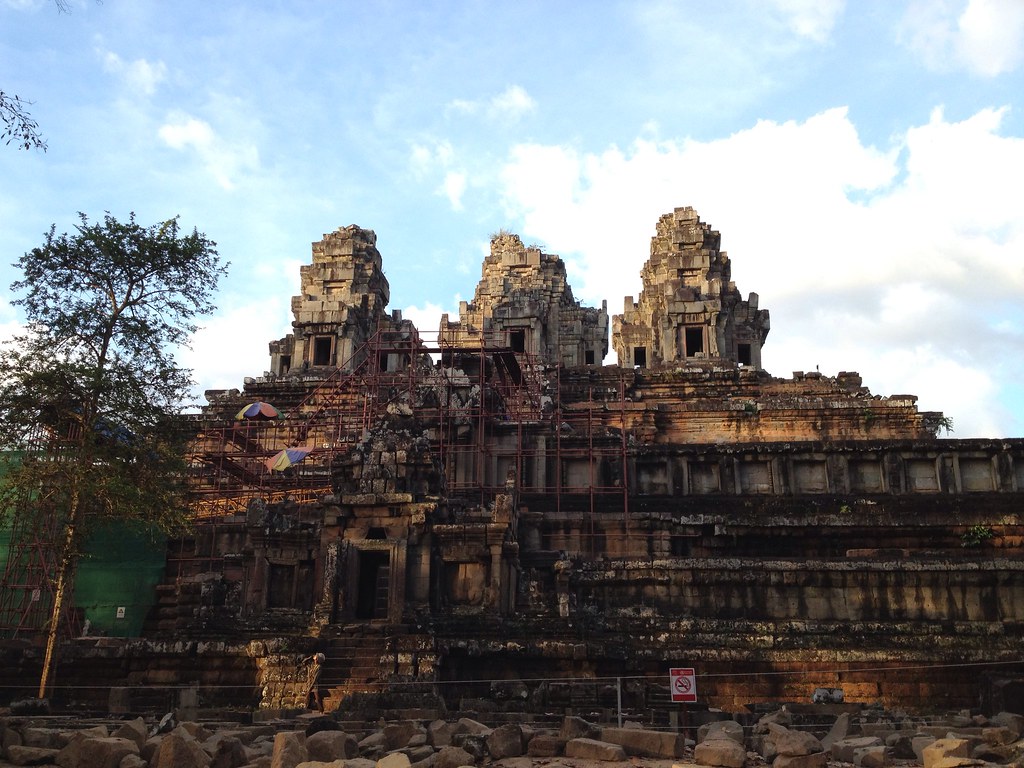
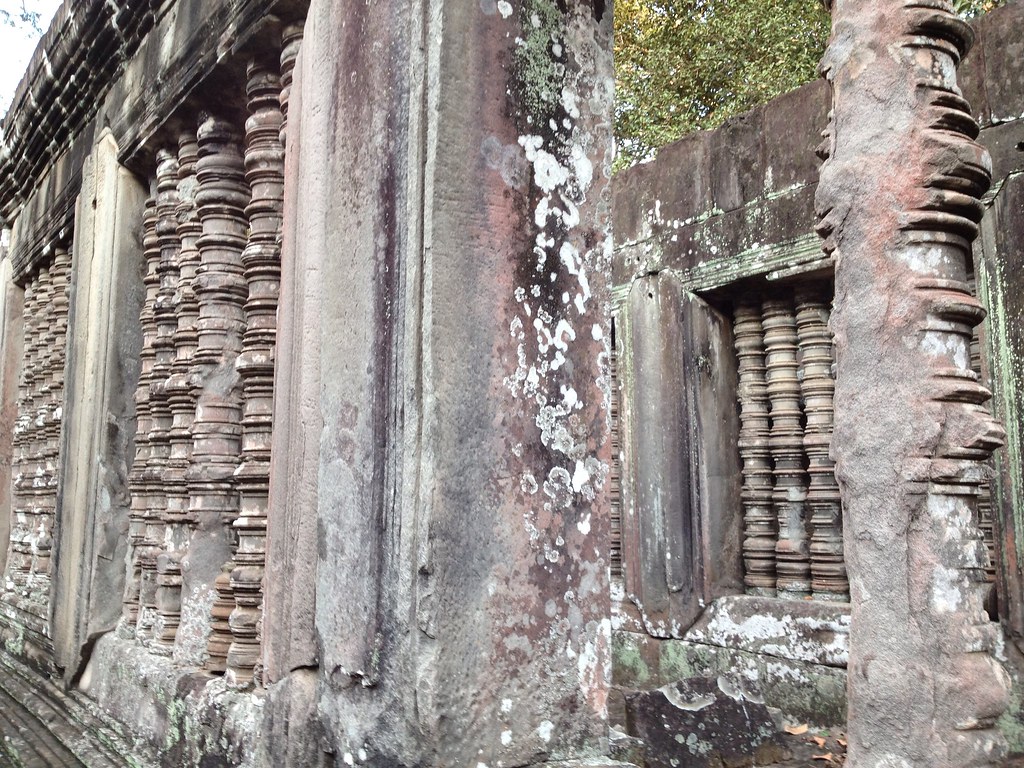
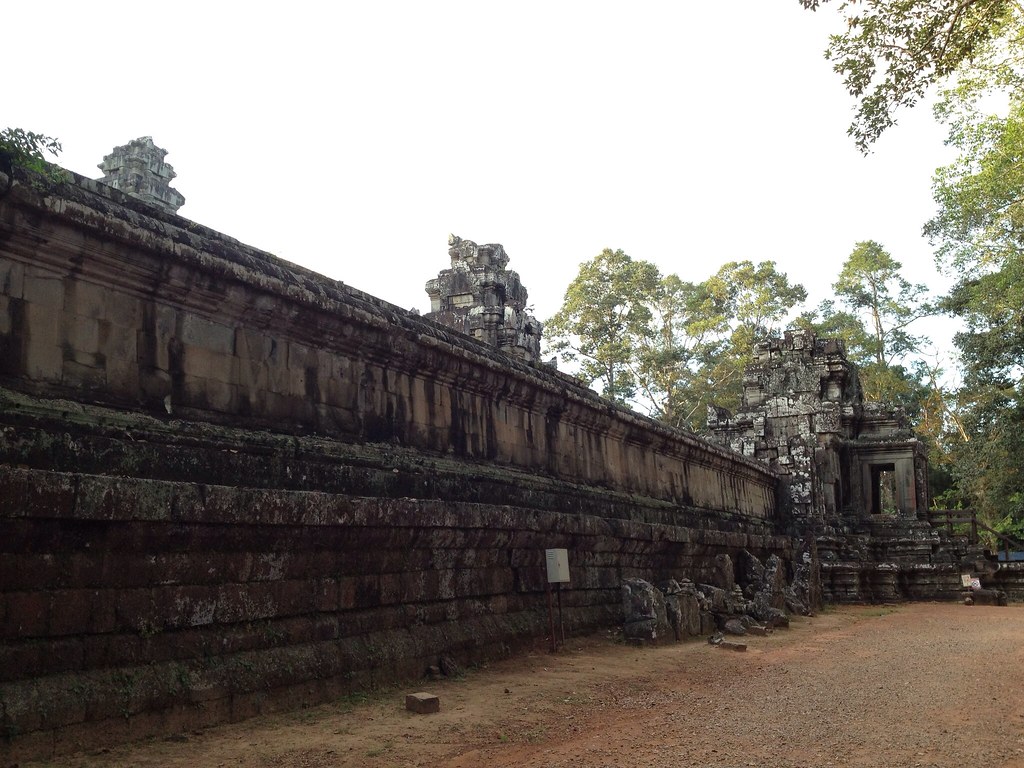

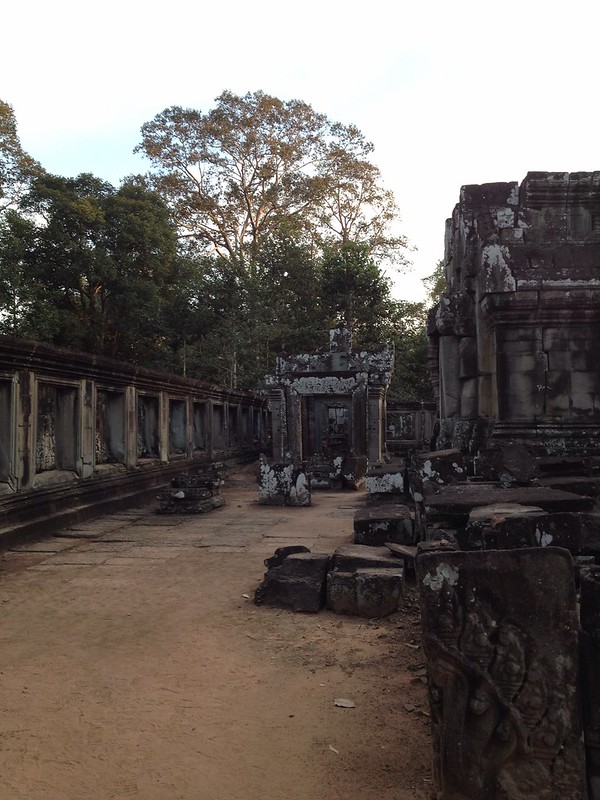
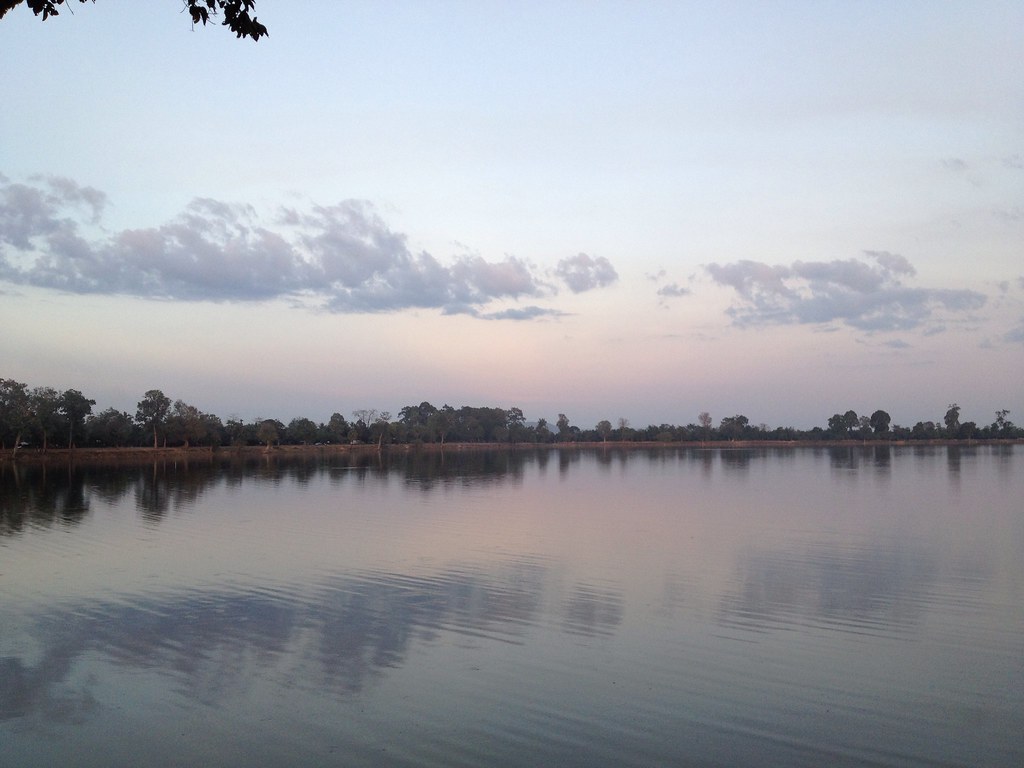
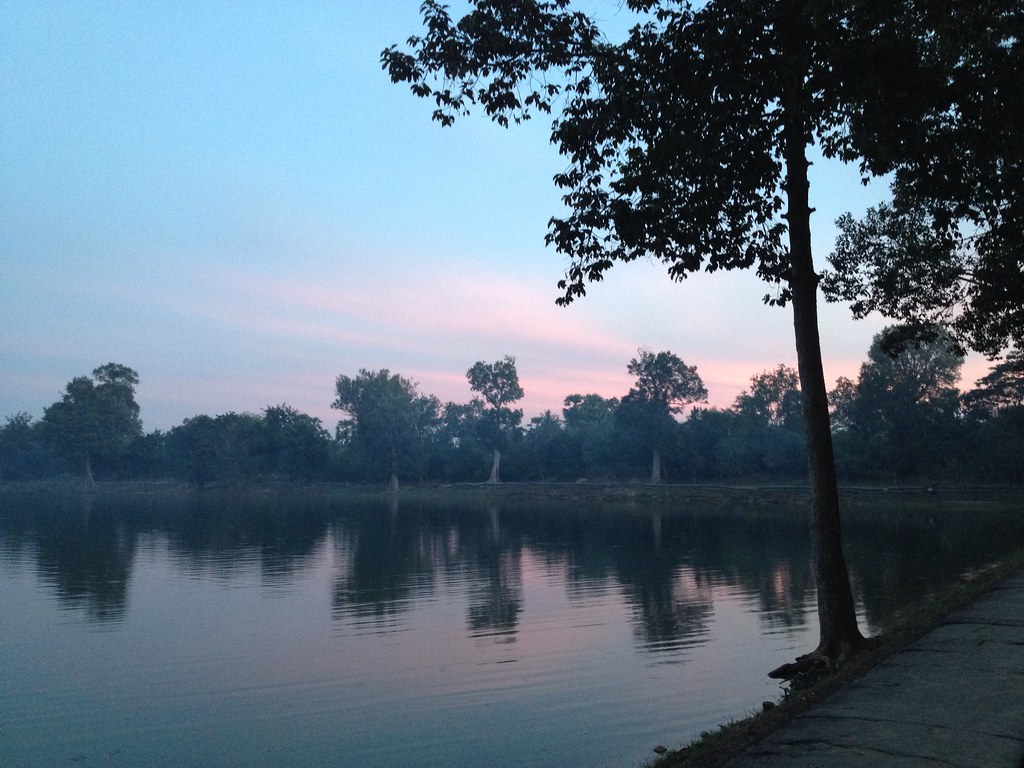
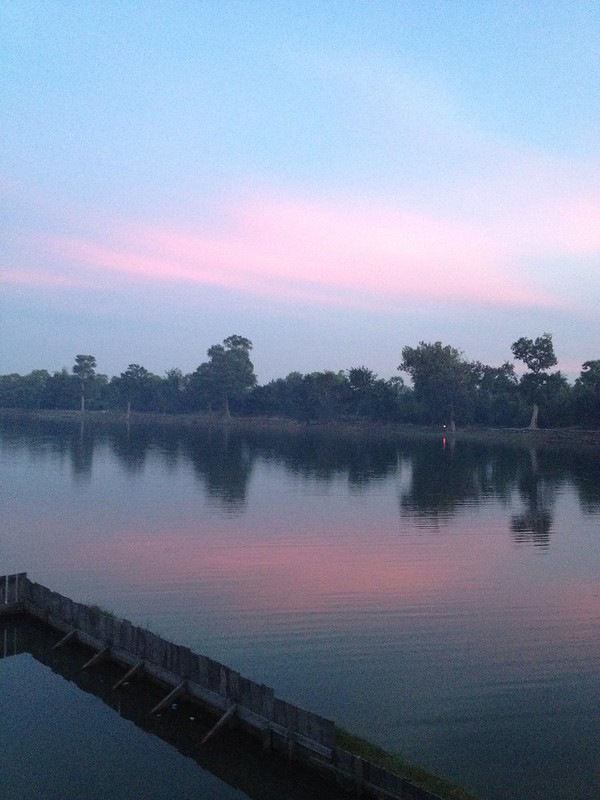
Srah Srang is a baray at Angkor, Cambodia, located south of the East Baray and east of Banteay Kdei.
It was dug in the mid-10th century, by initiative of Kavindrarimathana, Buddhist minister of Rajendravarman II. It was later modified around the year 1200 by Jayavarman VII, who also added the laterite landing-stage at its western side, probably because the East Baray had been overwhelmed by sediment and had begun malfunctioning. French archeological expeditions have found a necropolis close to it.
At present Srah Srang measures 700 by 350 m and is still partially flooded. As other barays, maybe there was a temple standing on an artificial island in the middle of it, as suggested by finding of a basement. The landing-stage, opposite the entrance to Banteay Kdei, is a popular site for viewing the sunrise. It is cruciform, flanked by nāga balaustrades which end with the upright head of a serpent, mounted by a garuda with its wings unfurled. The steps that lead down to the water are flanked by two guardian lions.
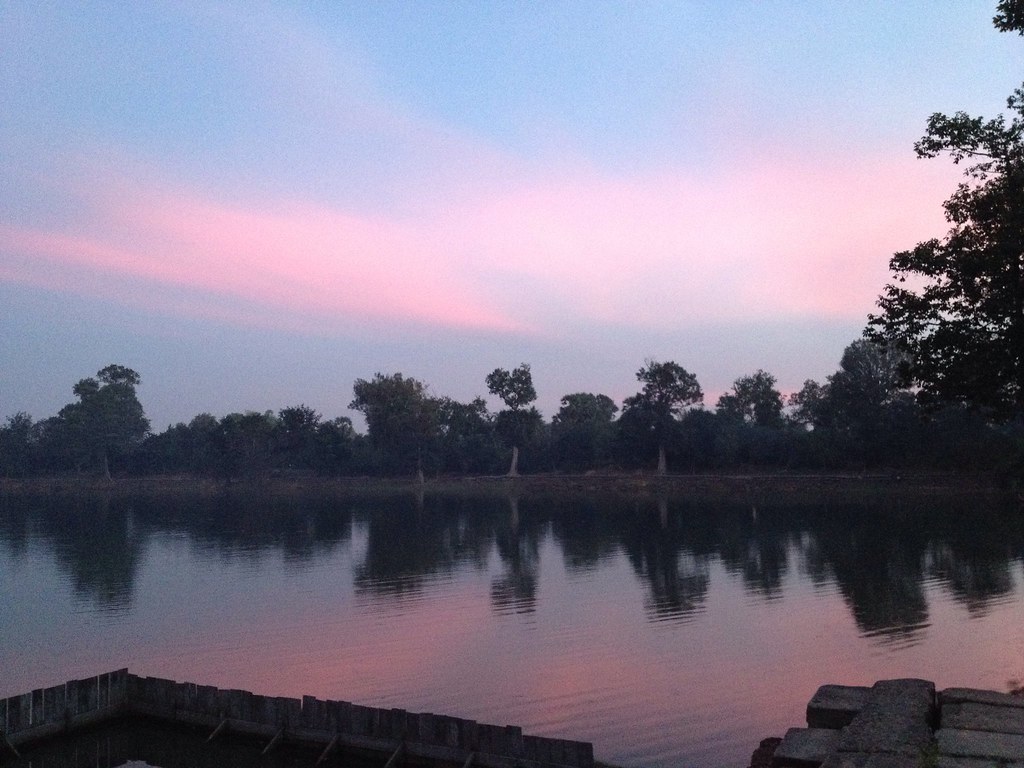
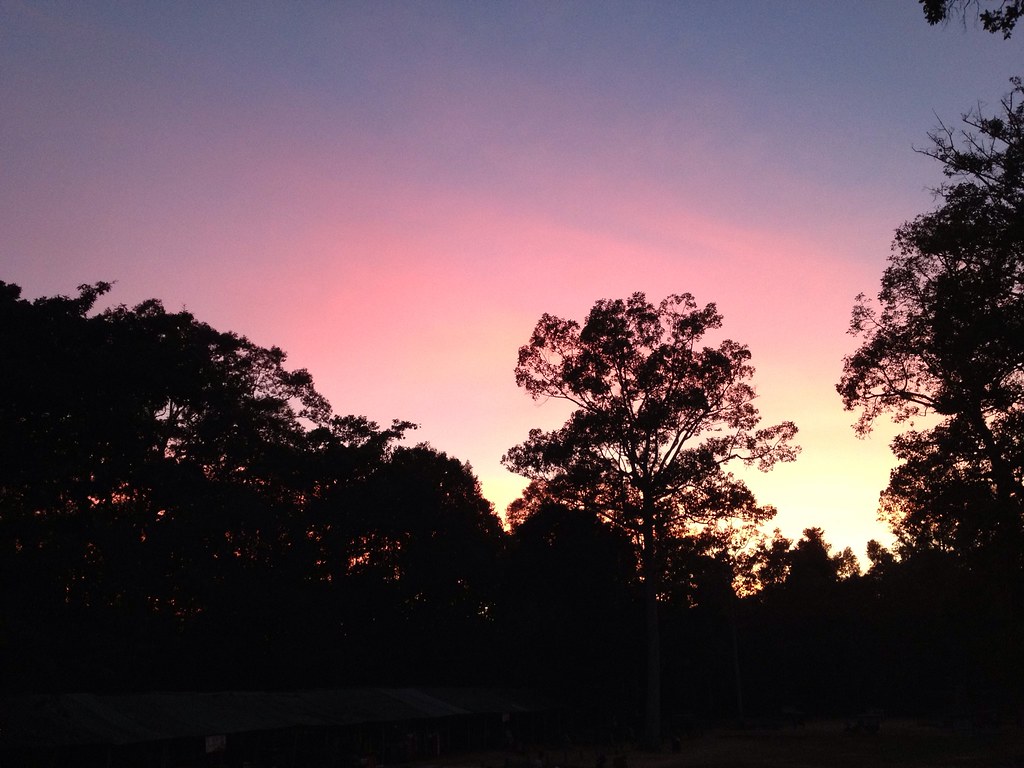
For the evening dinner we ate at Peace Cafe (address in a previous post) the food was bland, just what I needed. This restarant is very nice the drinks smoothies are worth trying. Another shattering day. The heats gets to you!
Hotel entrance




Recent Comments