Today we hired a scooter from Peter. it cost 250 baht, as we were already staying there they did not ask for a deposit or passport. We made our way to Bosang and then on to find the Indian Consulate of Chiang Mai:
Indian Consulate of Chiang Mai
33/1 Thung Hotel Road
Wat Kate, Muang
Chiang Mai 50000
Open Mon – Fri 9am to 12pm
How to get to there:
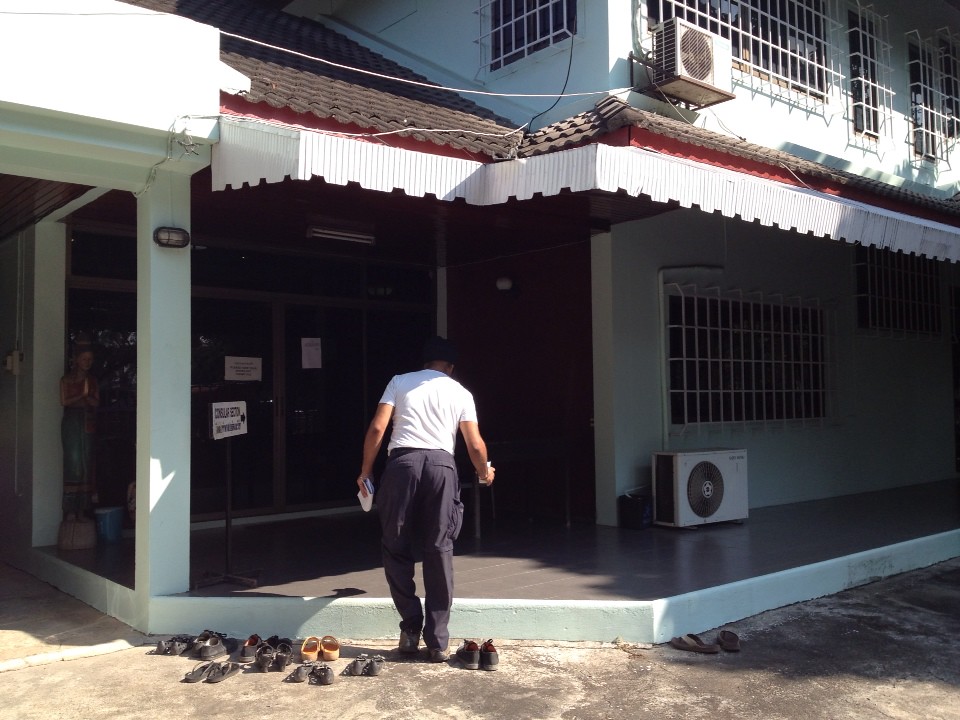
You can take a Songthaw or TukTuk from anywhere in Chiang Mai. If the driver does not know exactly where the consulate is, he might know Thung Hotel Road at least, and you can look out for the white sign with plain black letters. If not, ask him to bring you to the railway station – it should only be a fifteen-minute walk from there. Alternatively, you can rent a bicycle and cycle from the Old City in 25 minutes, or walk in about an hour.
The Indian visa application is fairly straight forward. The form has to be completed online in advance at
http://indianvisaonline.gov.in/visa/
On the top of the electronic form you choose where you would like to present the visa application ‘Indian Mission’, once completed you are given a time and date for an appointment at the chosen consulate after which you print out two copies, take these along with your passport, a photocopy of your passport, photocopy of the departure card and immigration stamp of Thailand and a completed reference form available on the Indian high commission website to your appointment together with two passport sized photos and the visa fee (charges vary and are related to what passport you hold, whether it is a business or personal trip and the duration off the trip) we paid 2170 Thai baht. The longest visa you can get at Chiang Mai is 3 months. For a 6 month visa an application in Bangkok would be necessary. So, the following need to be taken to the consulate ;
Passport
Two passport photos
X 2 copies of visa application form
x 2 photocopies of passport, Thai visa / immigration stamp and departure card
Reference form
Visa fee
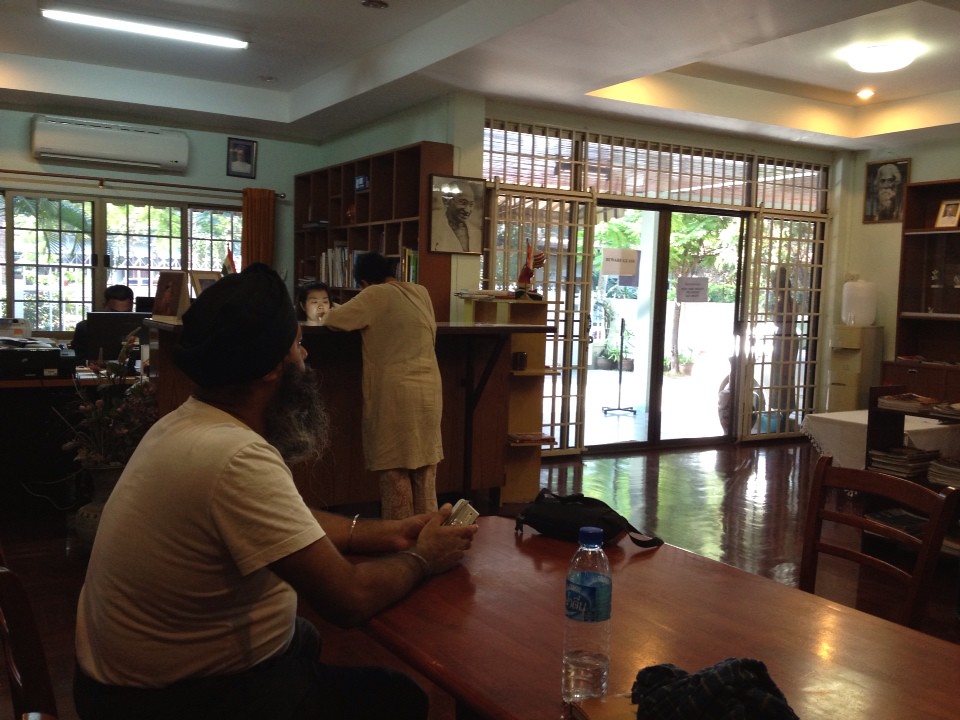
At the ‘interview’ which basically means handing your form to the receptionist and her looking through them we waited about 30 minutes for the lady to call us, take our money and tell us to come back a week later. She could have been quicker but I think she wanted to show us she was very busy. Also whilst we were waiting we could hear an Indian official just continuously shouting on the phone. Annoying Indian just wanting to show his status by shouting. The whole process was quite relaxed and easy.
Where we booked a day at the Elephant Nature Reserve.
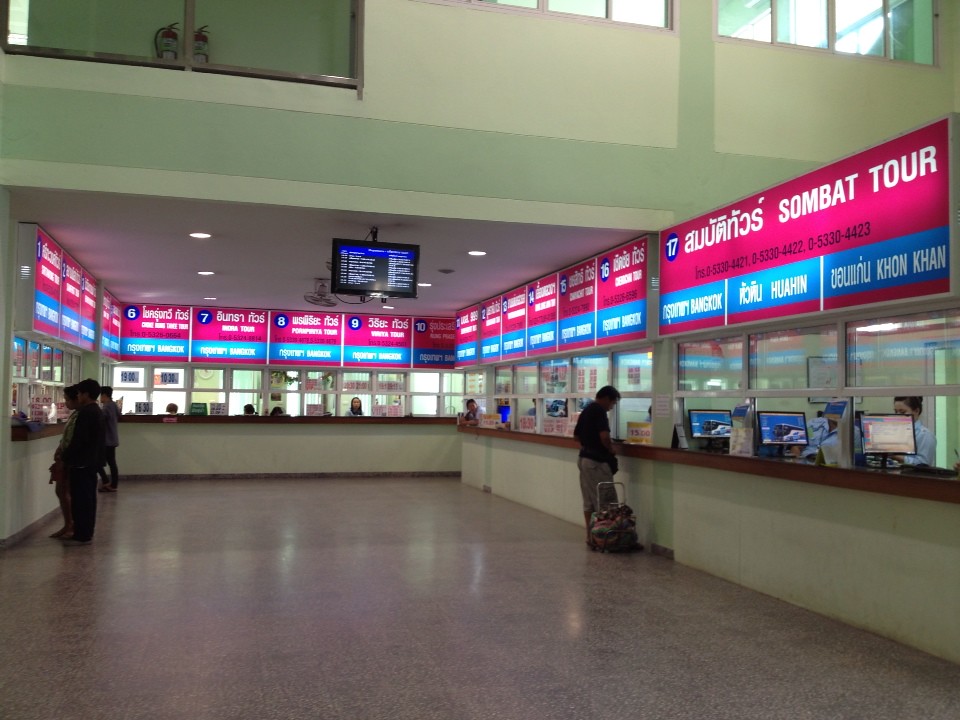
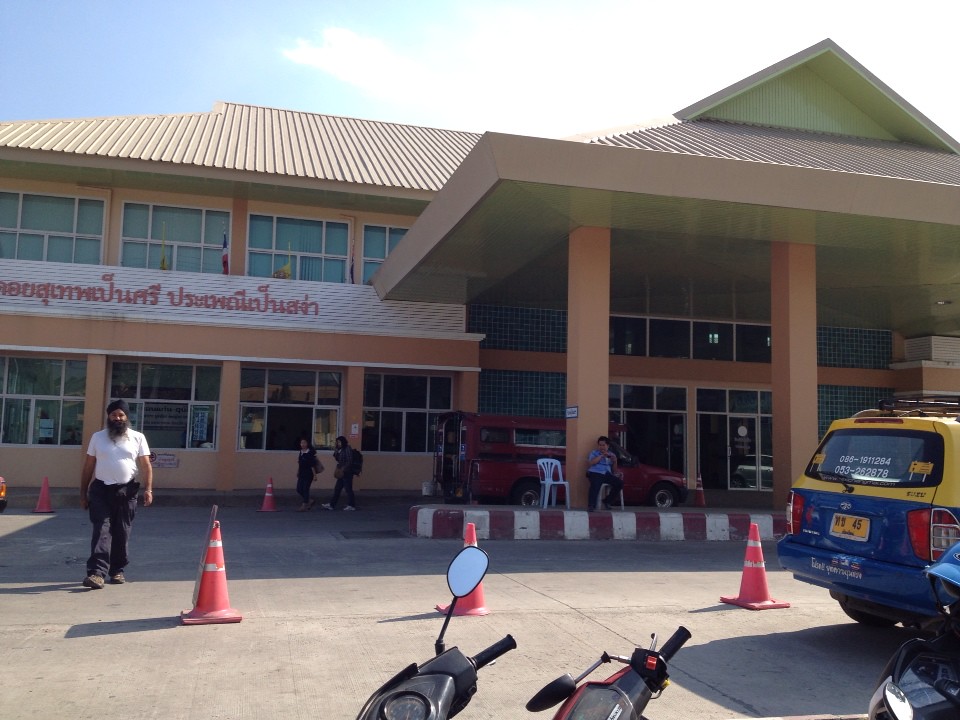
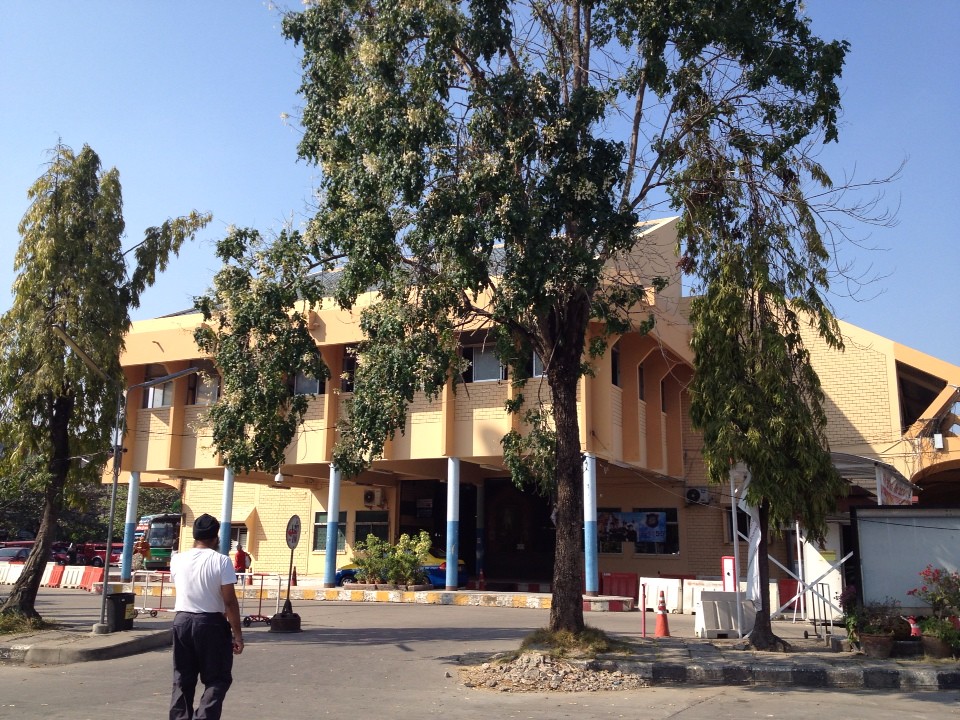
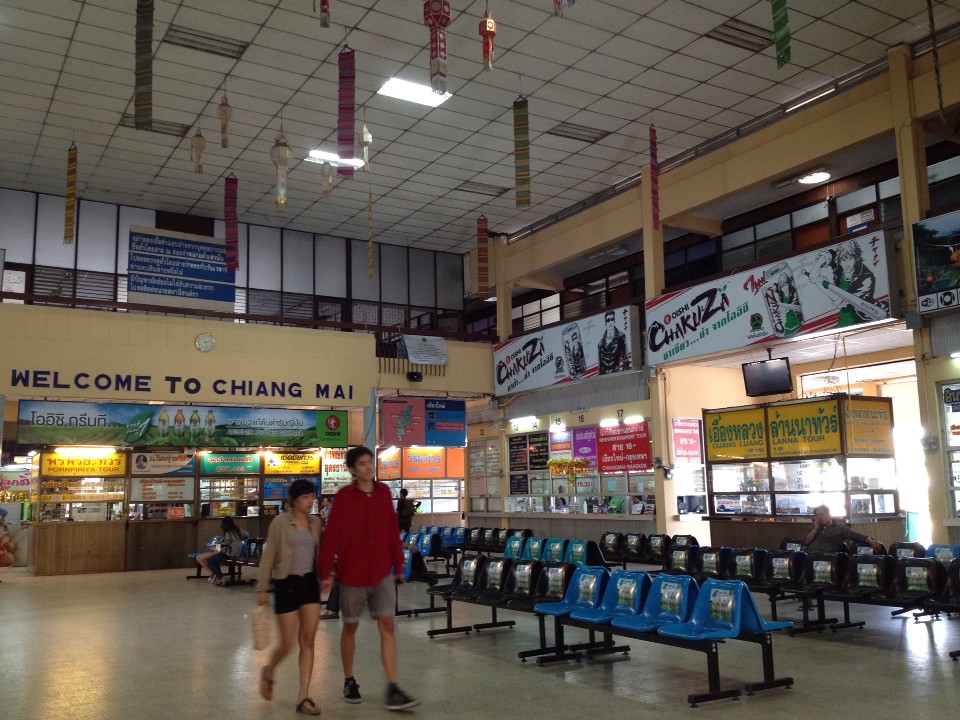
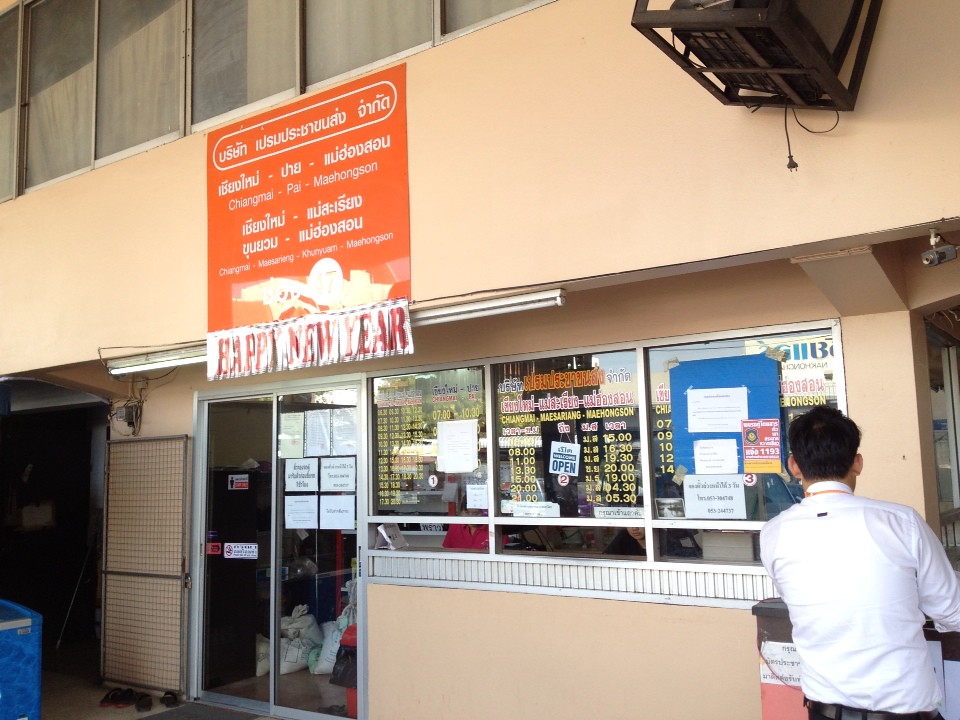
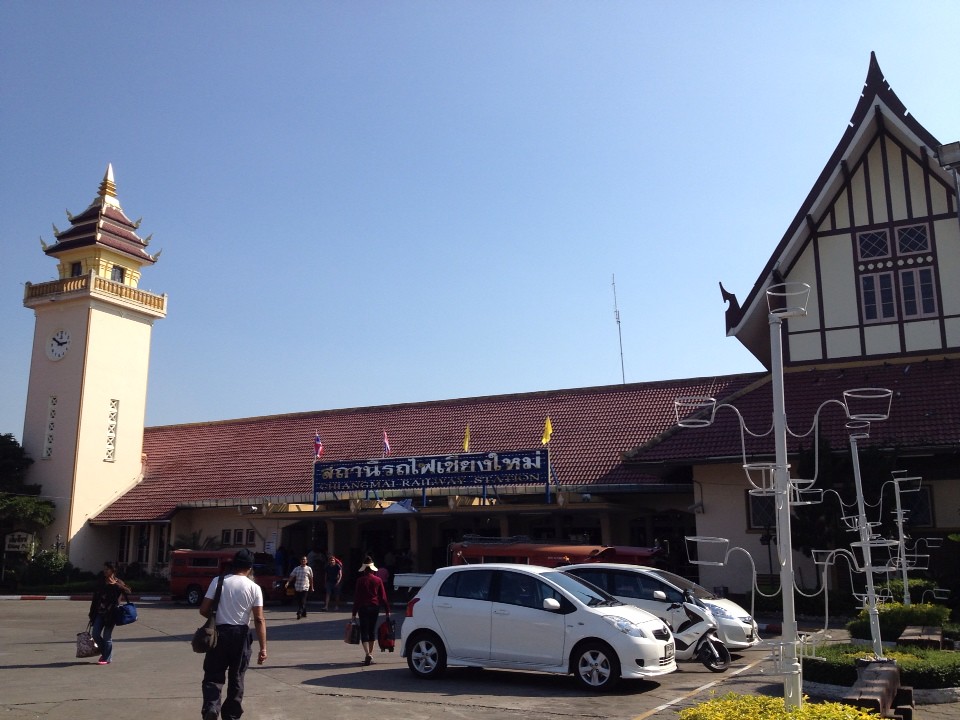
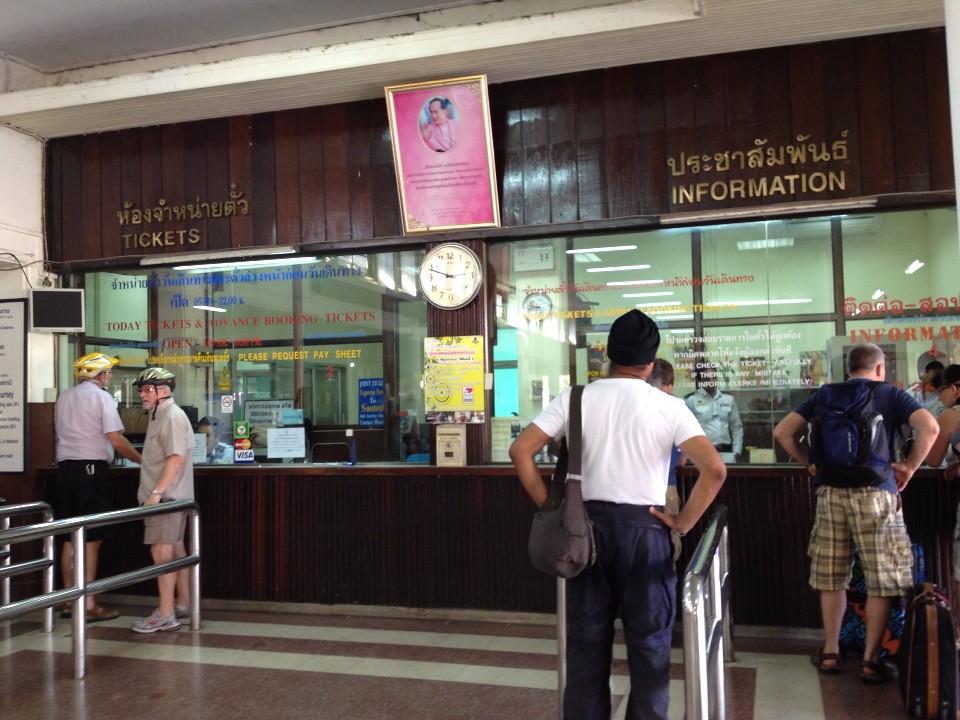
Later, we rode to the bus station where we booked tickets for Pai, going tomorrow. There are various operators going to different destinations, it can get rather confusing especially when most signs are written in Thai. Luckily the operators are very helpful and can direct one to the correct operator. Later we visited the train station and made enquiries about trains to Bangkok.
Bus terminal
Inside there was a information booth, where the lady old us which bus terminal we should buy the ticket from
Walking towards the correct terminal
The train station
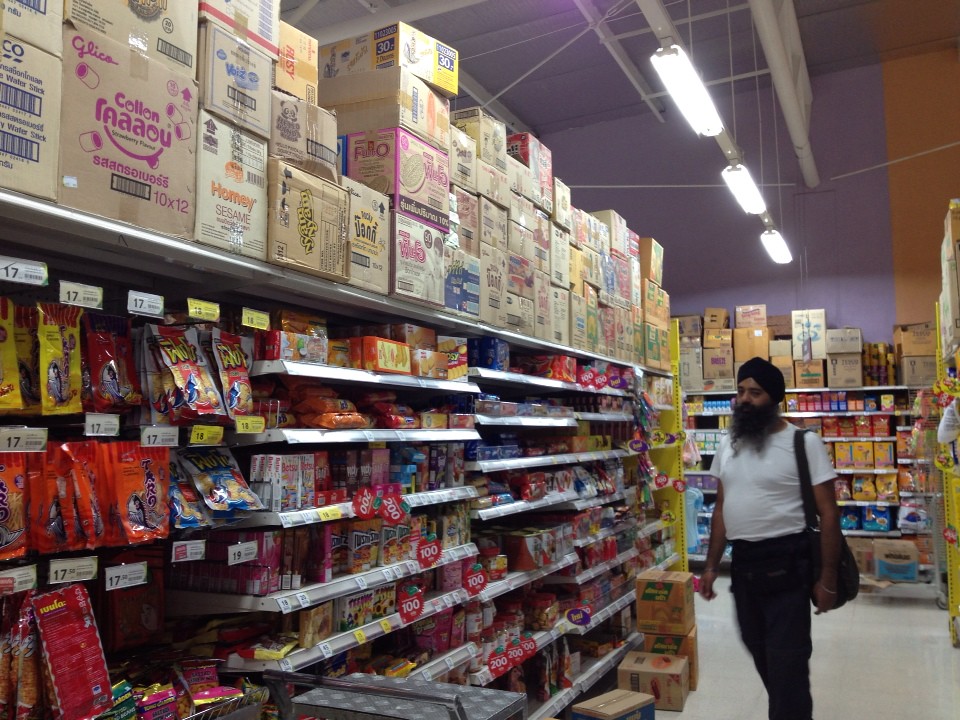
On the way back to Secret Garden we stopped at Tesco Lotus where we tried to find some vegetarian snacks.
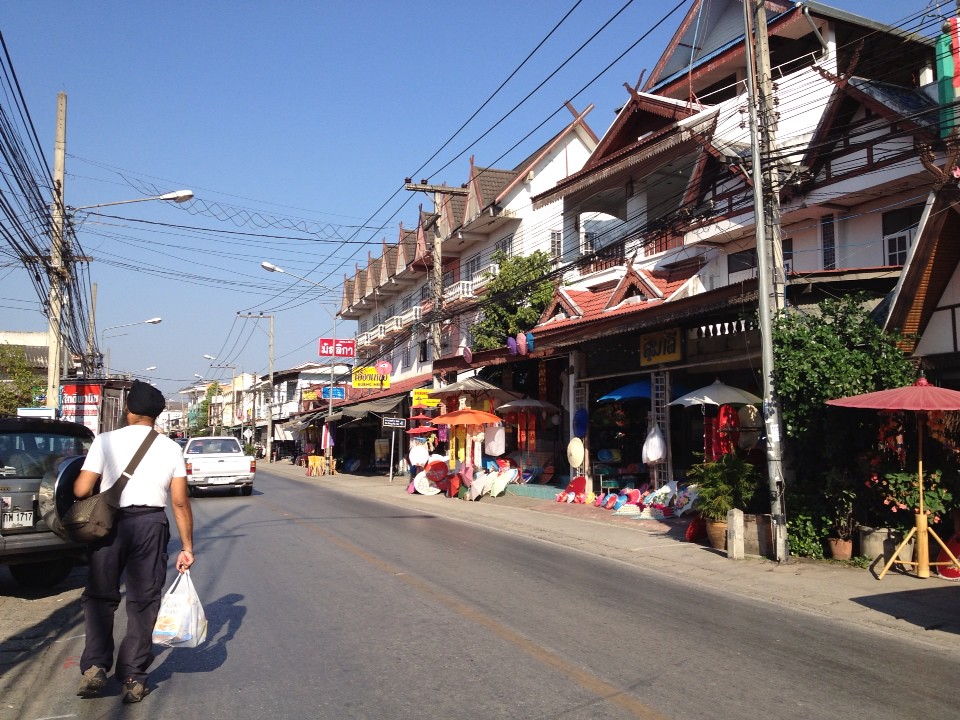
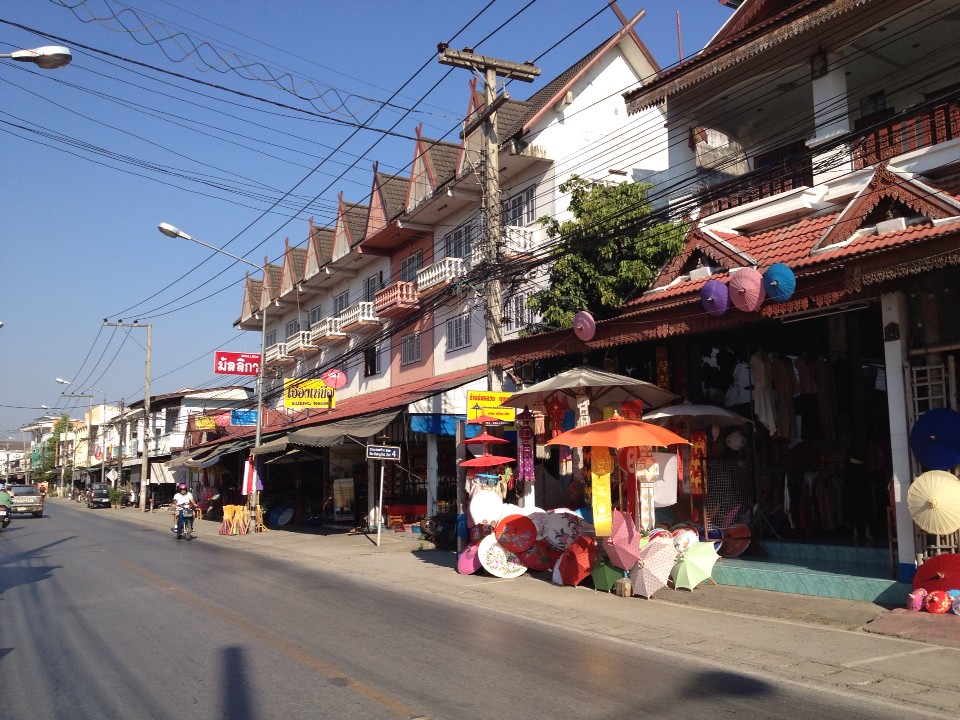
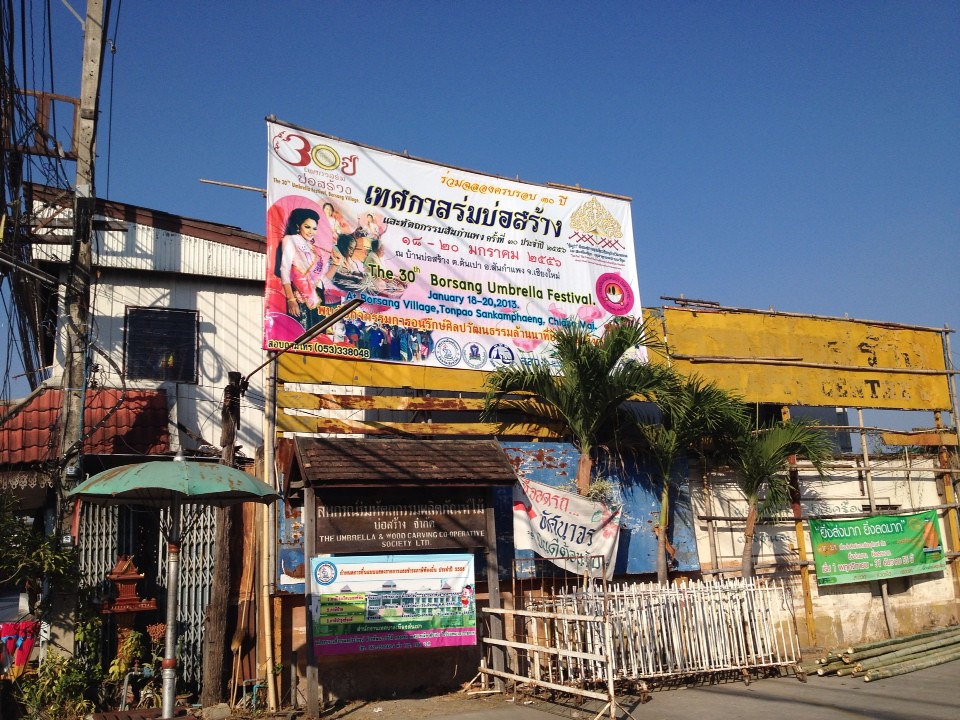
Having a wander at Bosang
Then back to Secret Garden to relax use the wifi and have some soft drinks. We said goodbye to the amazing staff at Secret Garden and got the courtesy bus to
Baan Chonpakorn
122 Charoenrat Road
T Watket
A. Muang
Chiang Mai 50100
Thailand
T: +66 53 2401612
E: [email protected]
W: www.baanchonpakorn.com
In the end we got the room for just over £17 per night!
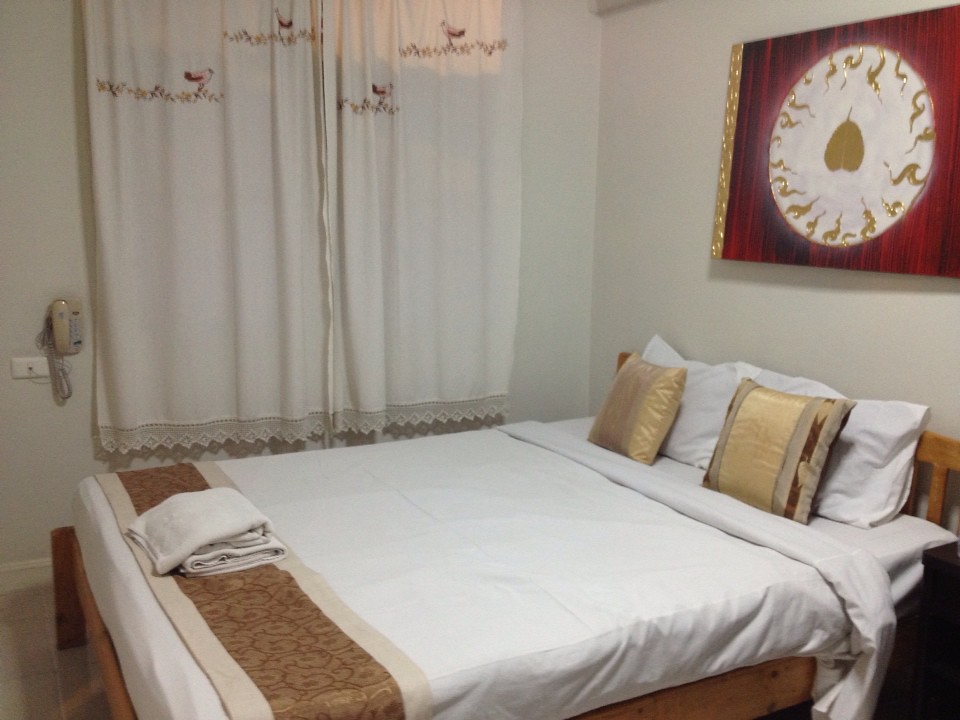
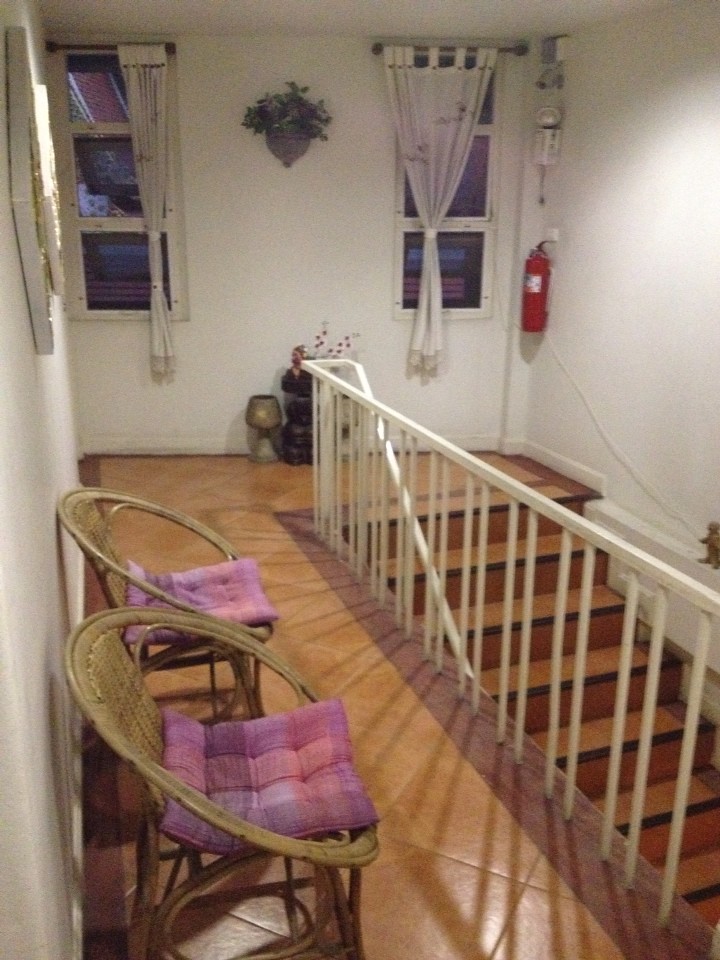
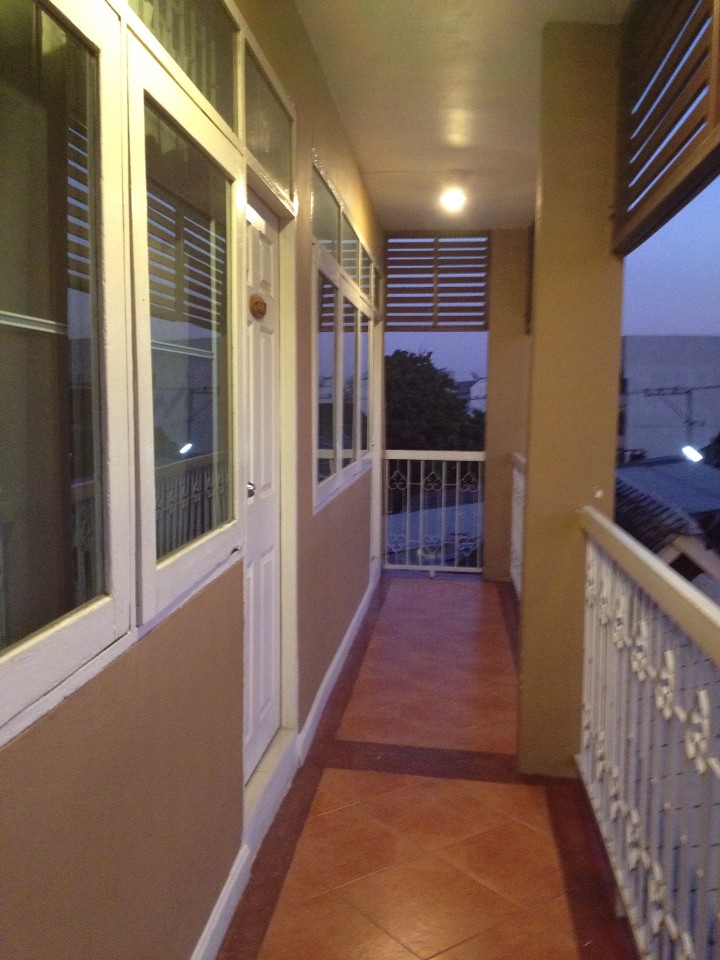
Room and hotel
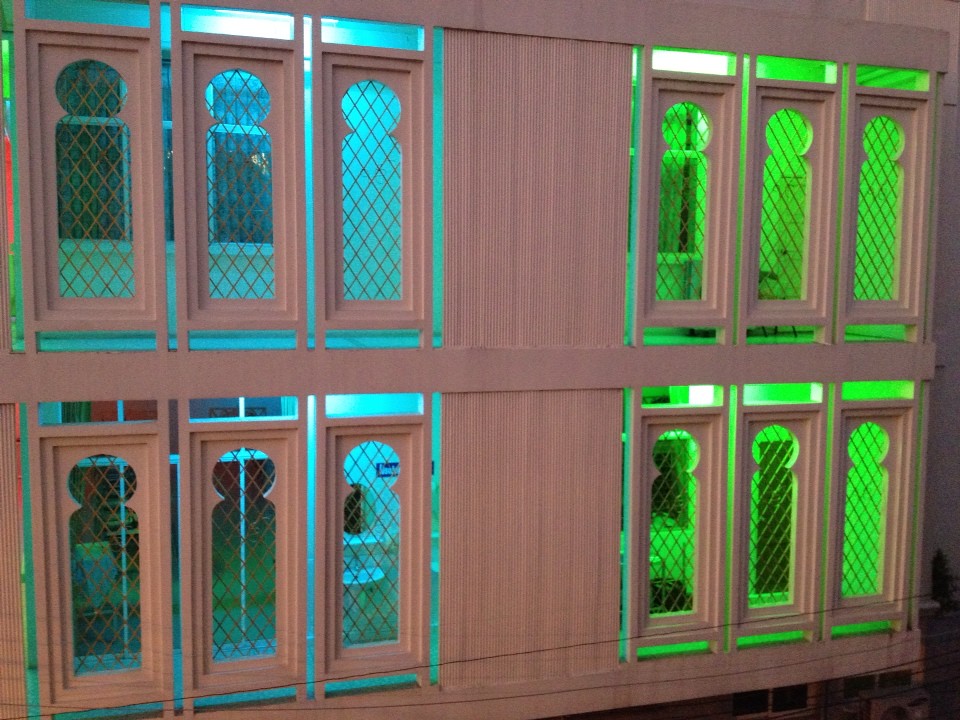
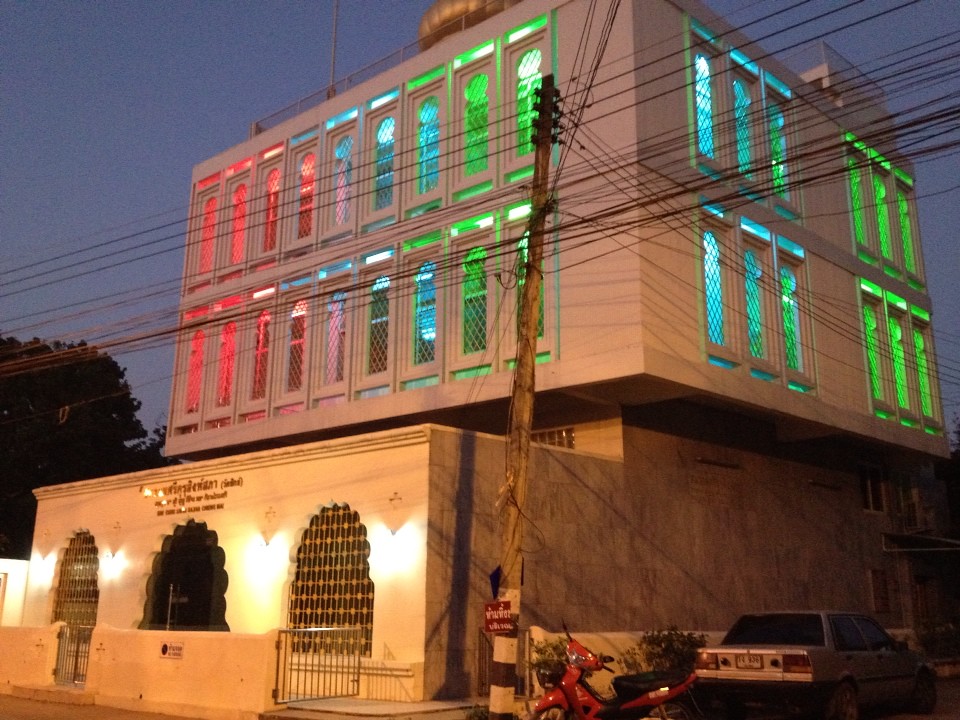
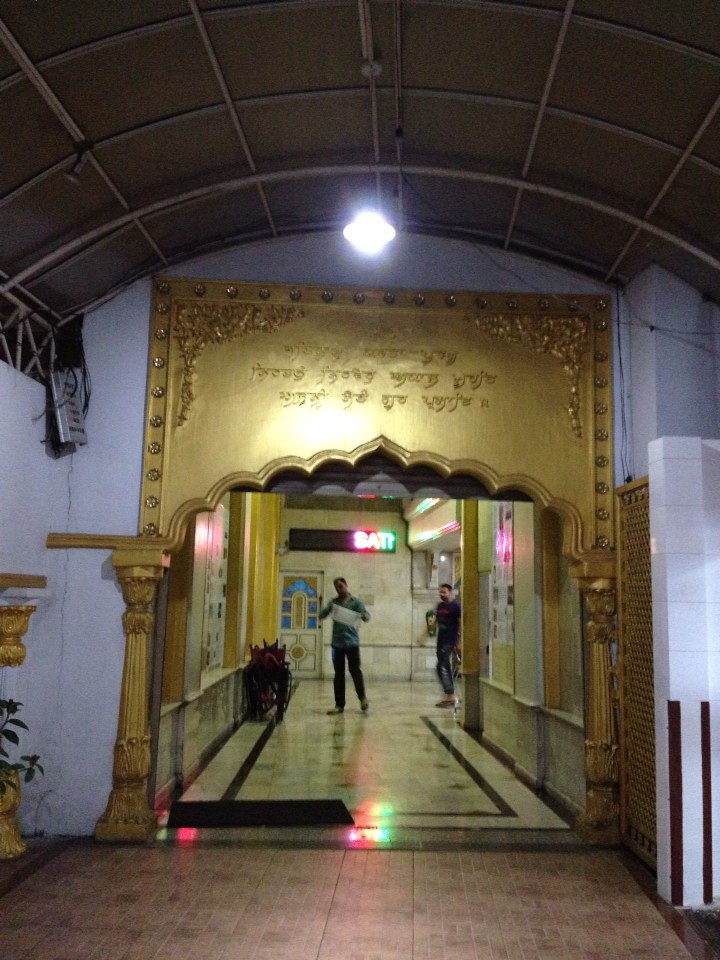
The hotel is next door to the Gurdwara, here is the Gurdwara lit up at night
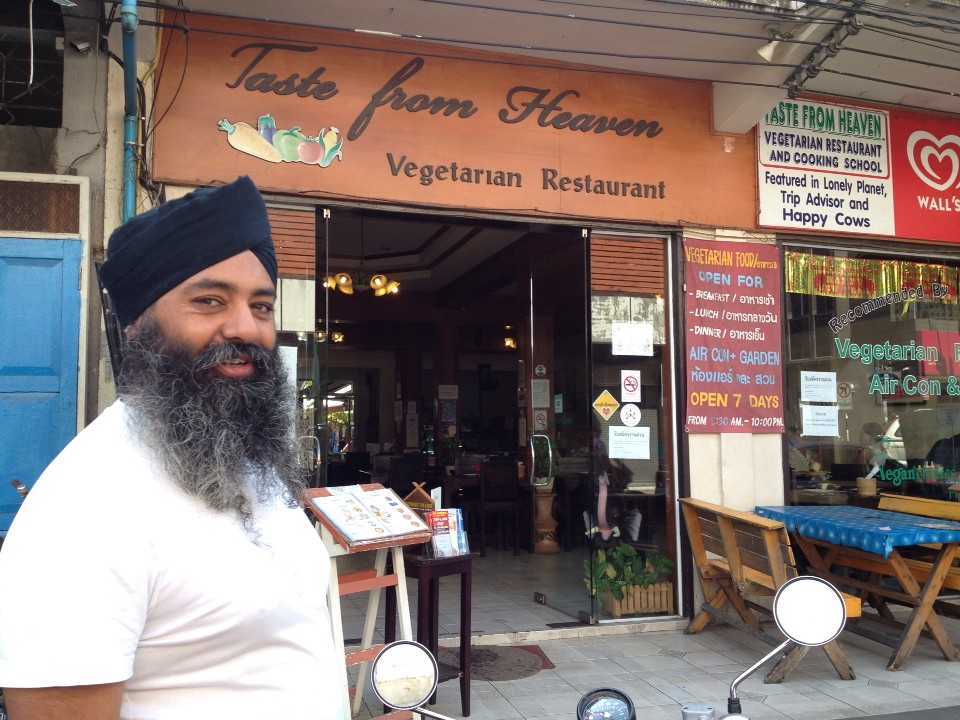
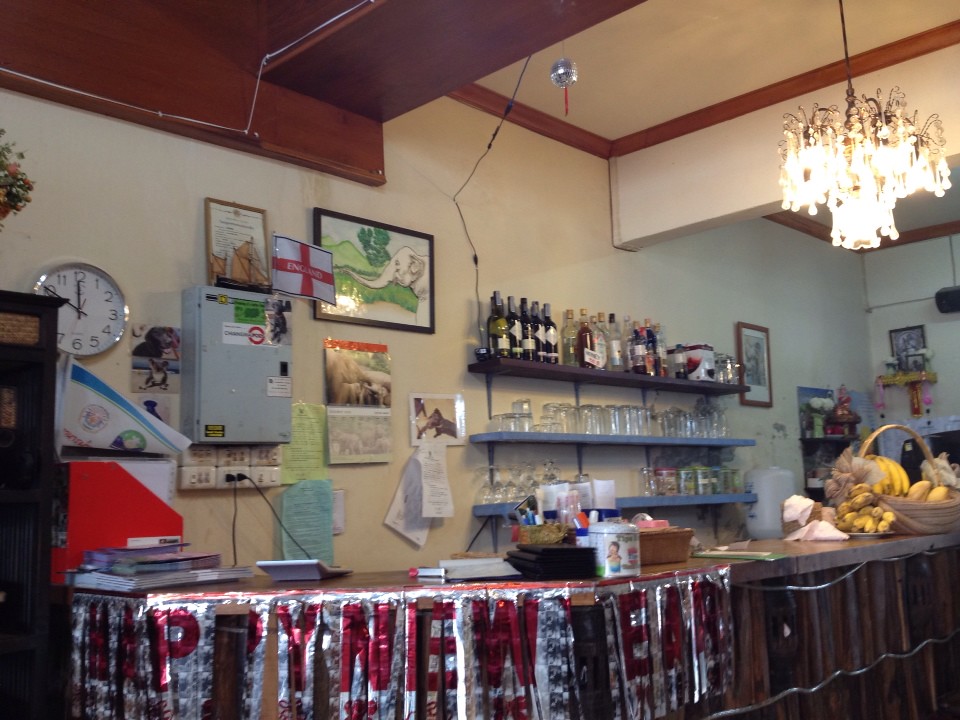
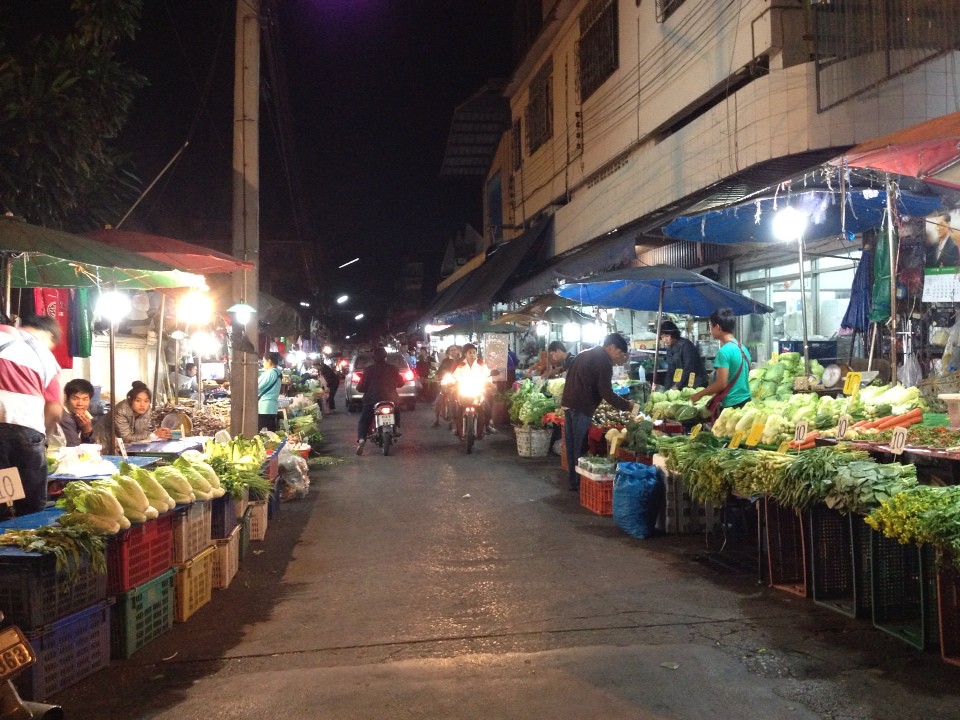
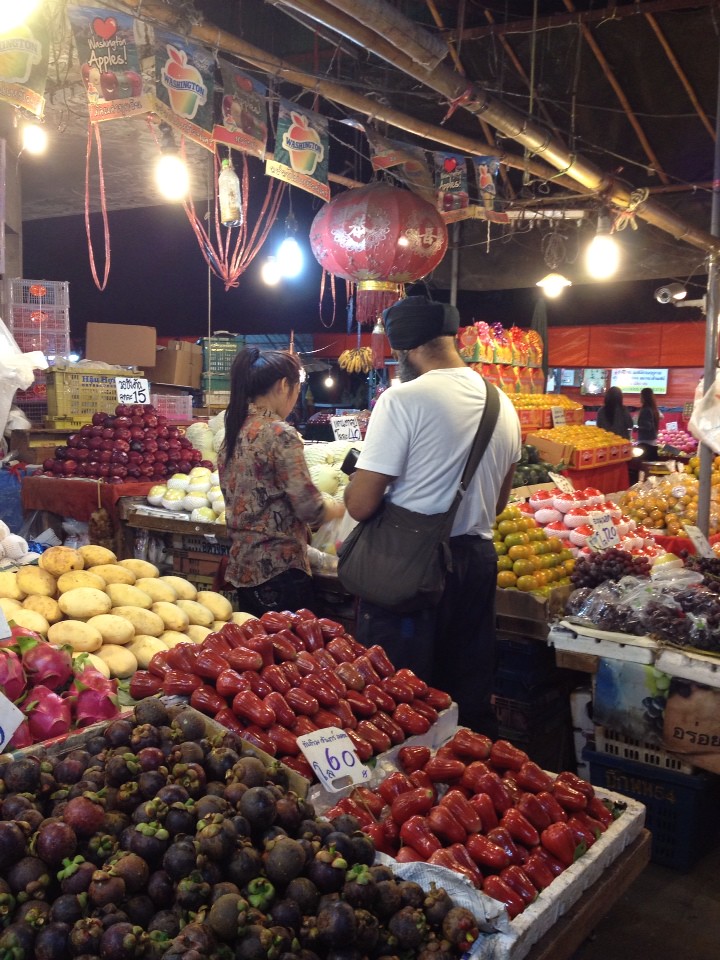
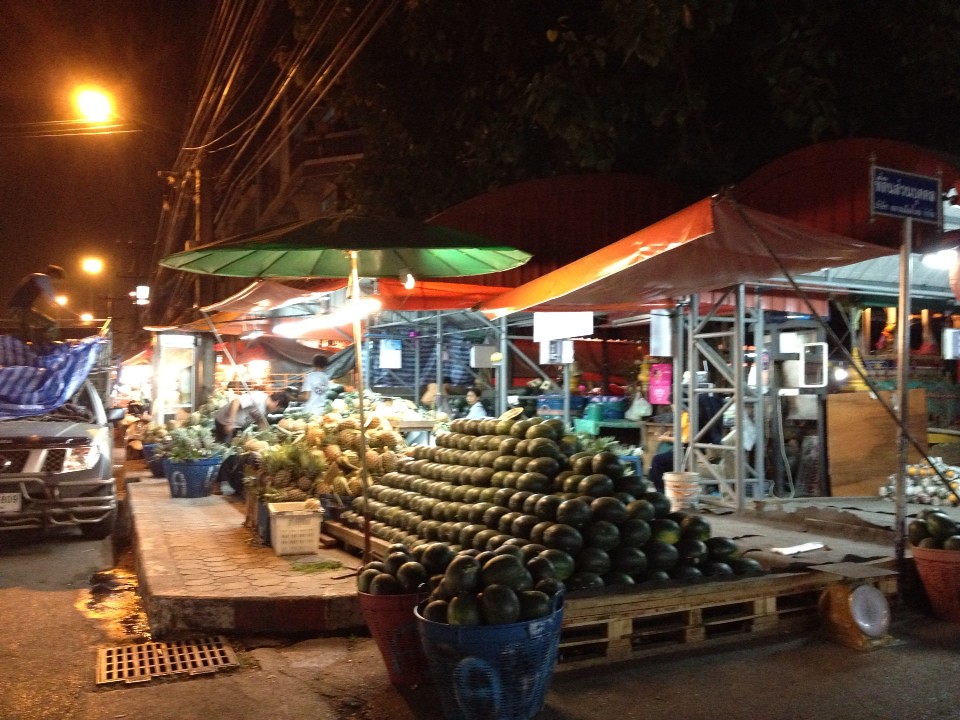
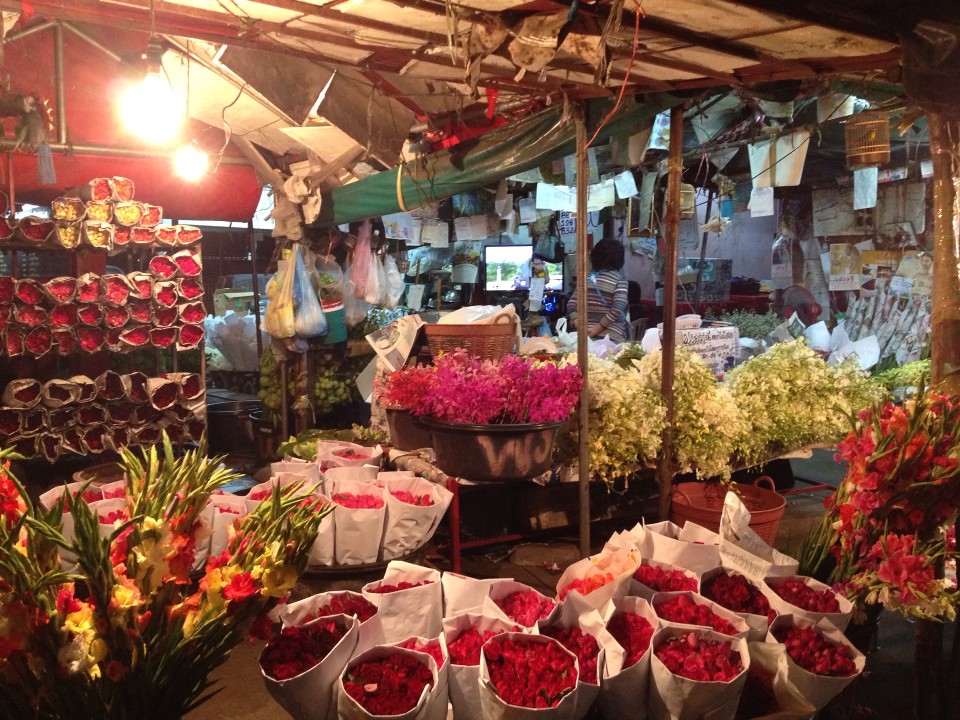
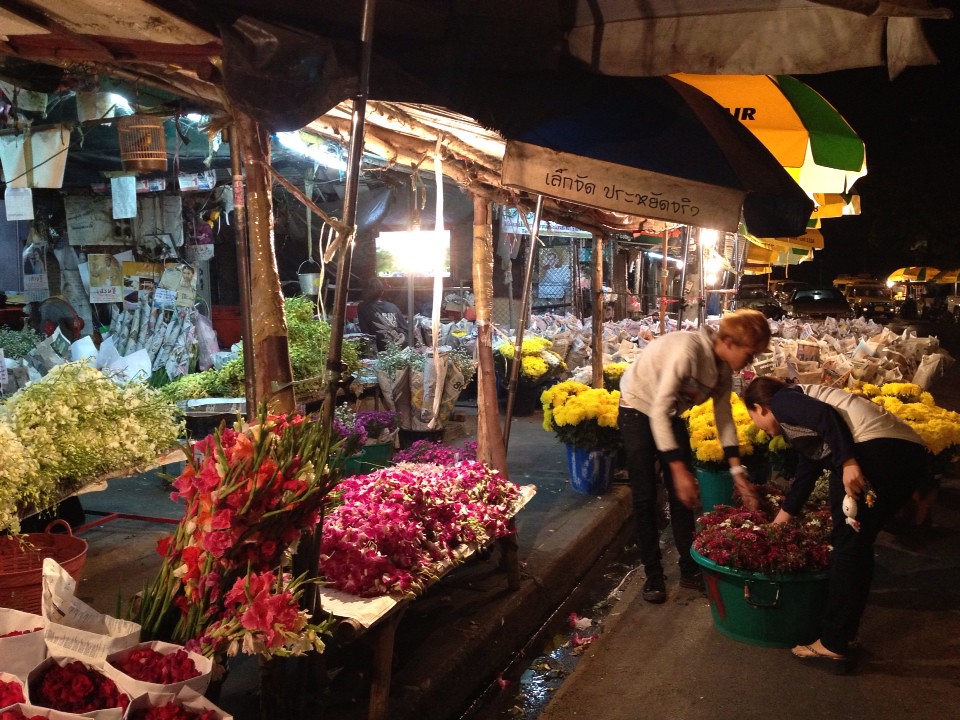
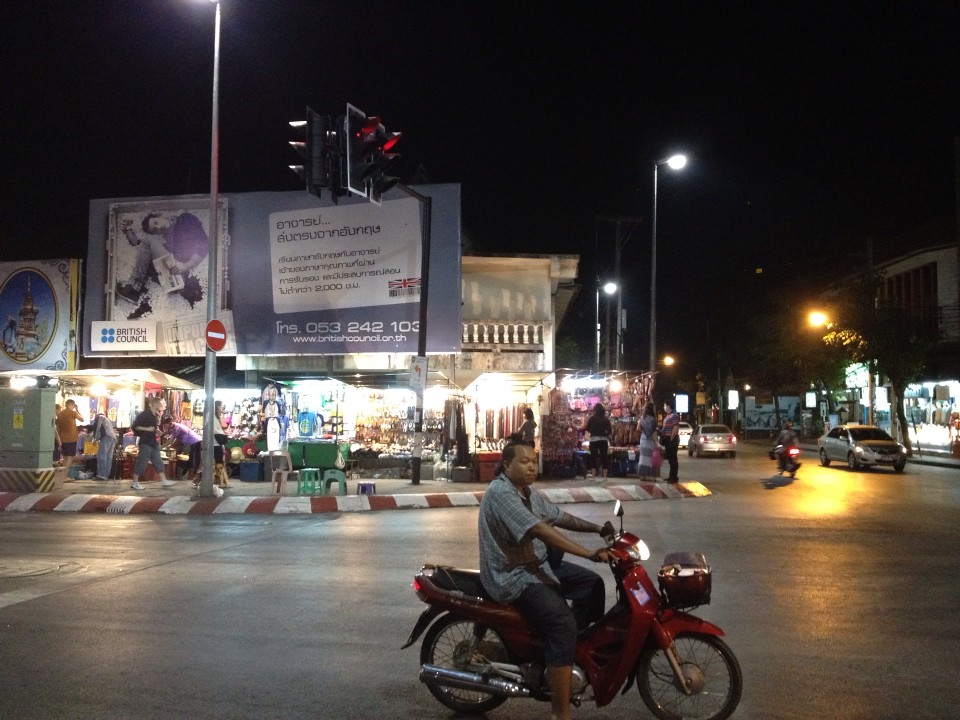
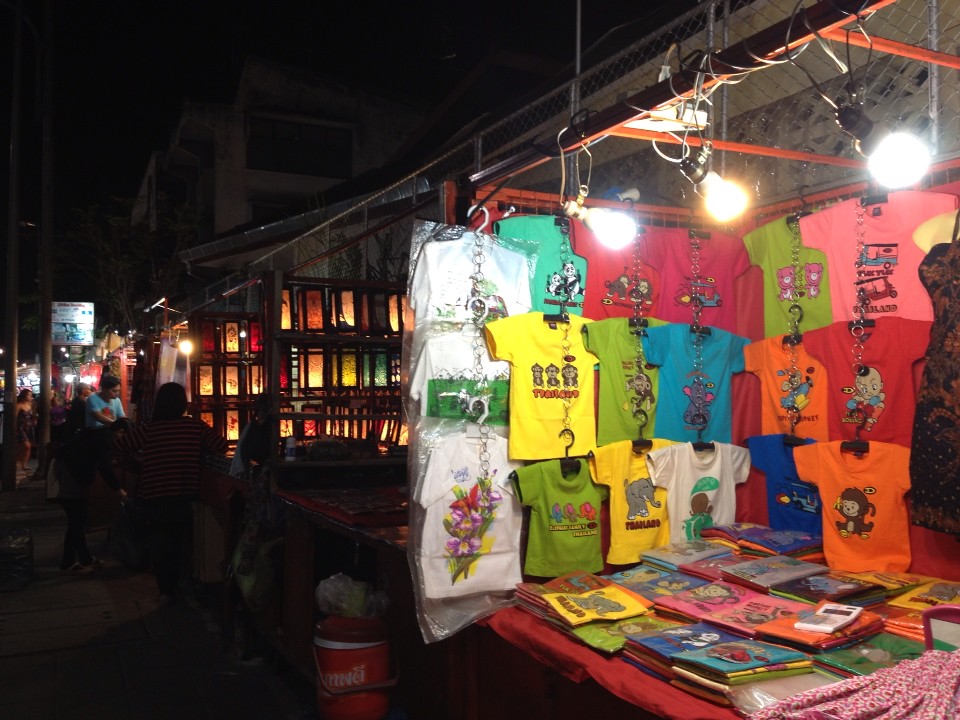
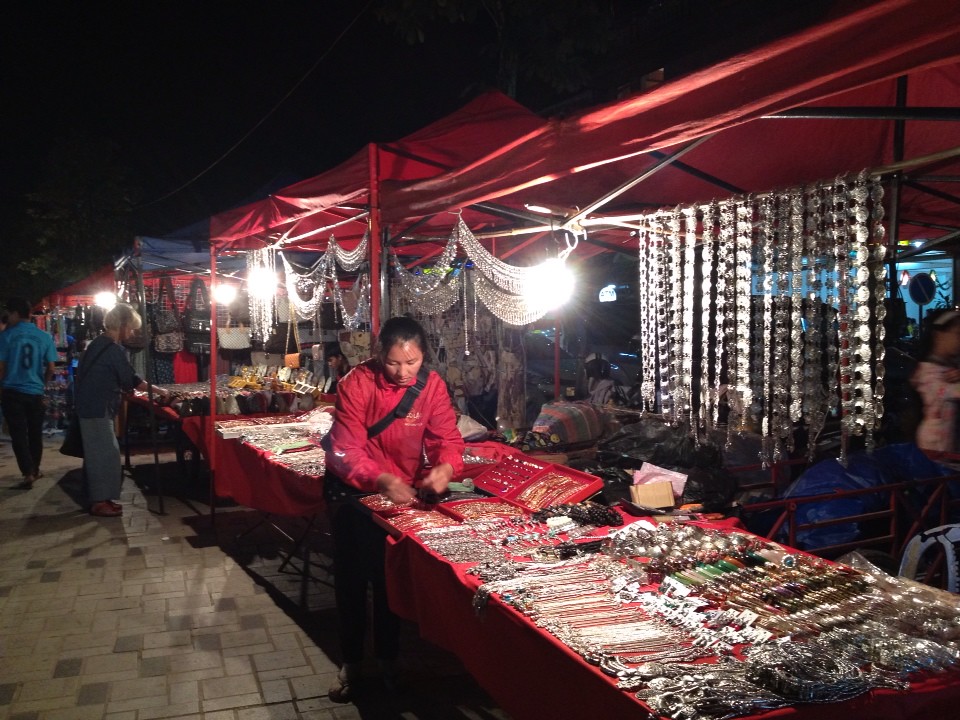
Now as I was running of my favourite ritz lemon crackers we headed to Tesco Lotus, I had forgotten how far it was. On the way we came across vicious dogs and people performing Thai karaoke, not sure which was worse the dogs or the people singing! On the way back we headed down the west bank through local fruit markets (not a tourist in sight!) where we bought satsumas and mangosteens. We walked through various other markets including the beautiful flower market. Then we went down Tae Pae Road, popped in to Taste Like Heaven for drinks and food and then went to search for the night bazaar. Well stocked and lively but not as lively as the Sunday Night ‘Walking Street’ market. After a LOT of walking, headed back to Baan Chonpakorn.
Today we checked out of the hotel and flew with Airasia to Chiang Mae. We ordered a taxi which cost 453 baht (around £10), not a bad price for a 45 minute journey.
Relaxing at the airport before the flight
Check in and security was straight forward and the flight took an hour
At Chiang Mae
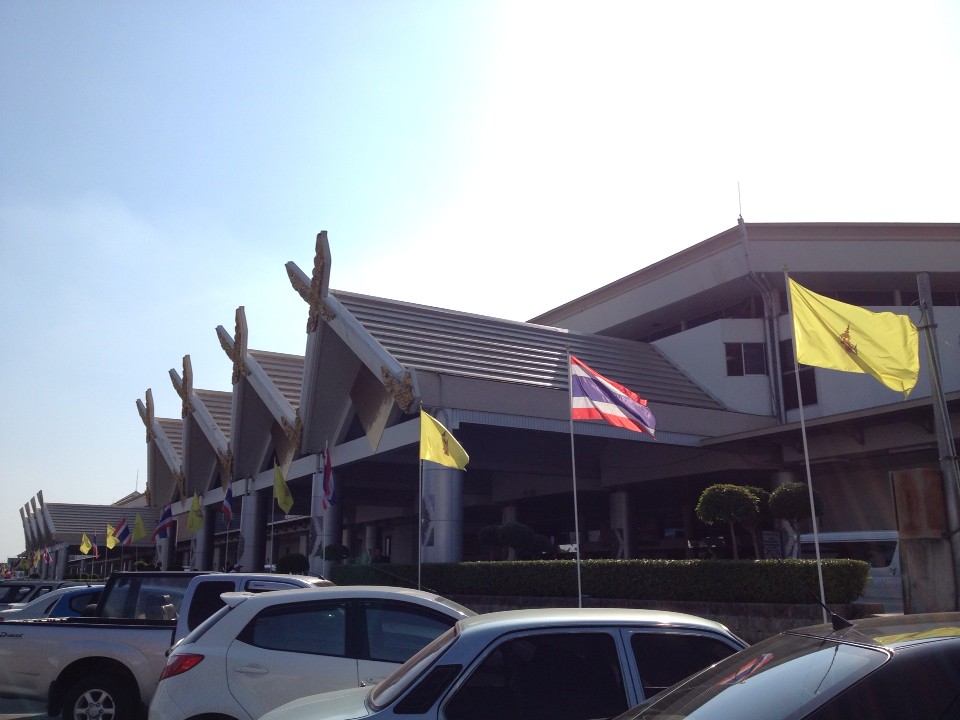
Outside Chiang Mae airport
The place we are staying at sent a courtesy bus to pick us up
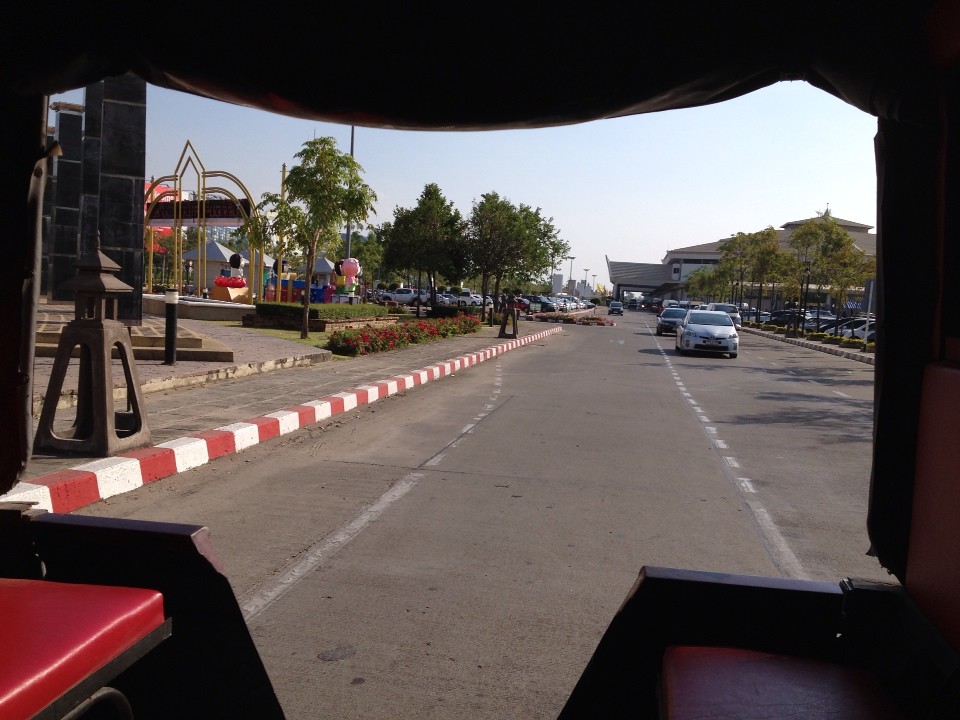
On the way
Arriving at the hotel
Secret Garden – Bungalows & Cooking
54/1 Moo 5, T. Mae Kue, A. Doi Saket
Chiang Mai 50220, Thailand
T: + 66 53 339 502
F: + 66 53 338 901
Skype: borsang
E: [email protected]
We were expecting Chiang Mae to be cooler then 31 degrees C it has been in Bangkok. I was pleased to say it was the same temperature. Sangeet was looking forward to cooler temperatures!
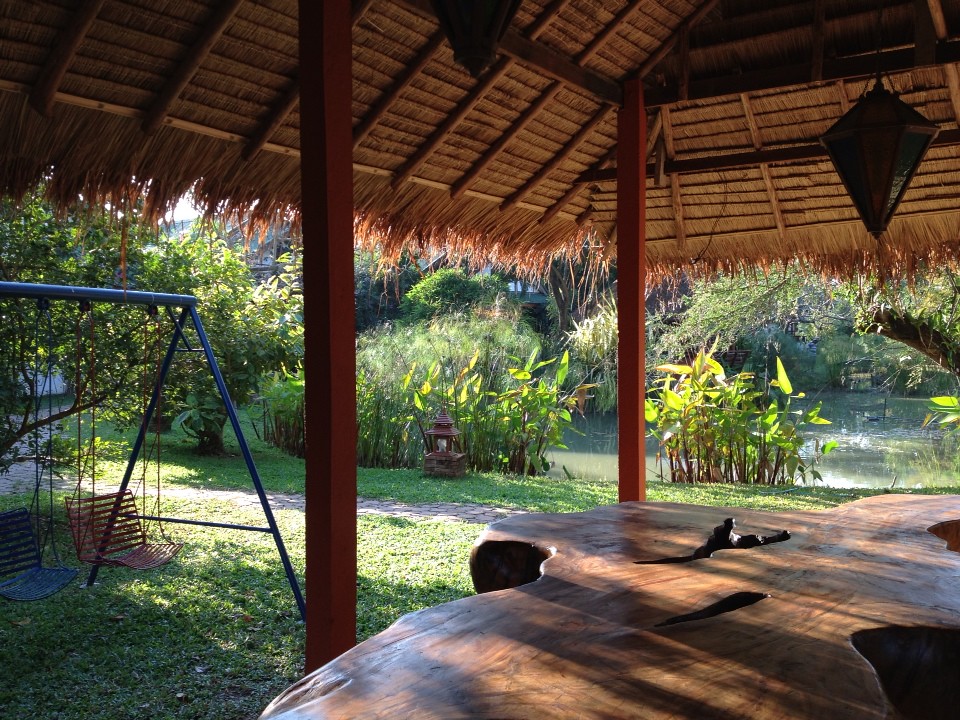
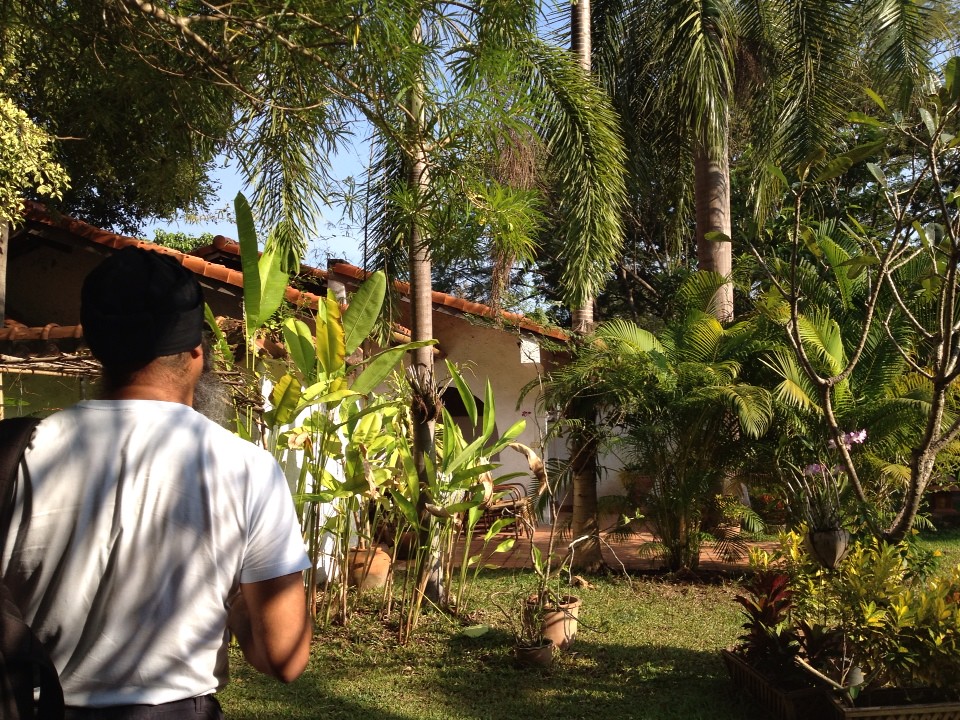
The hotel is around 25 minutes (12km) away from a Chiang Mae, in a small village called Doing Saket. Bo Sang, a larger village is close by. We arrived at the Secret Garden a little before 4pm. The place is tucked away in a very quiet area, mainly farmland and local residences.
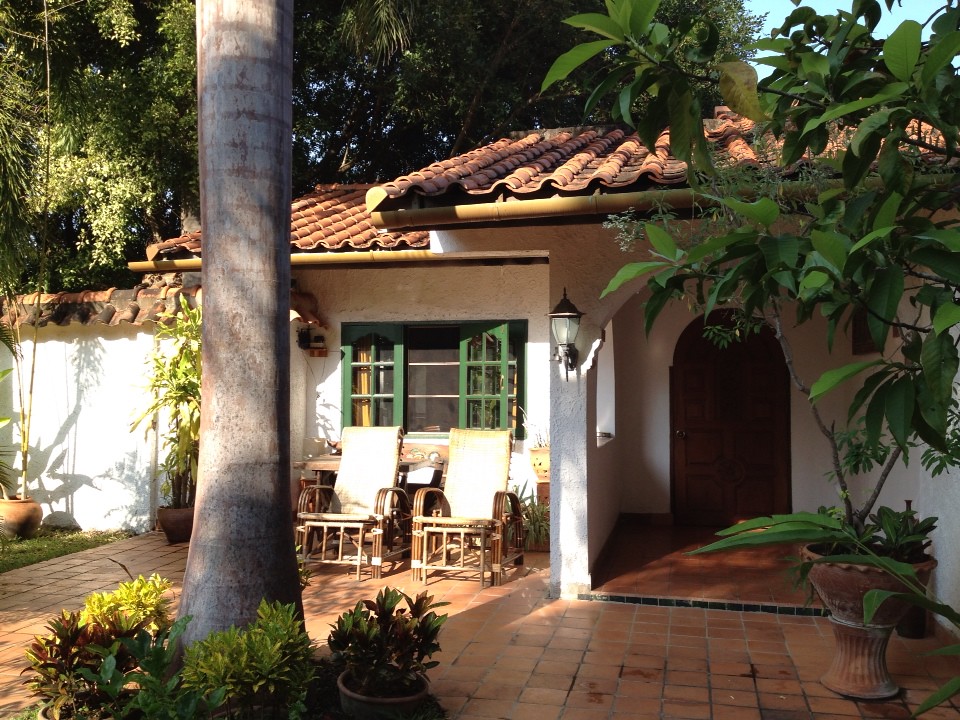
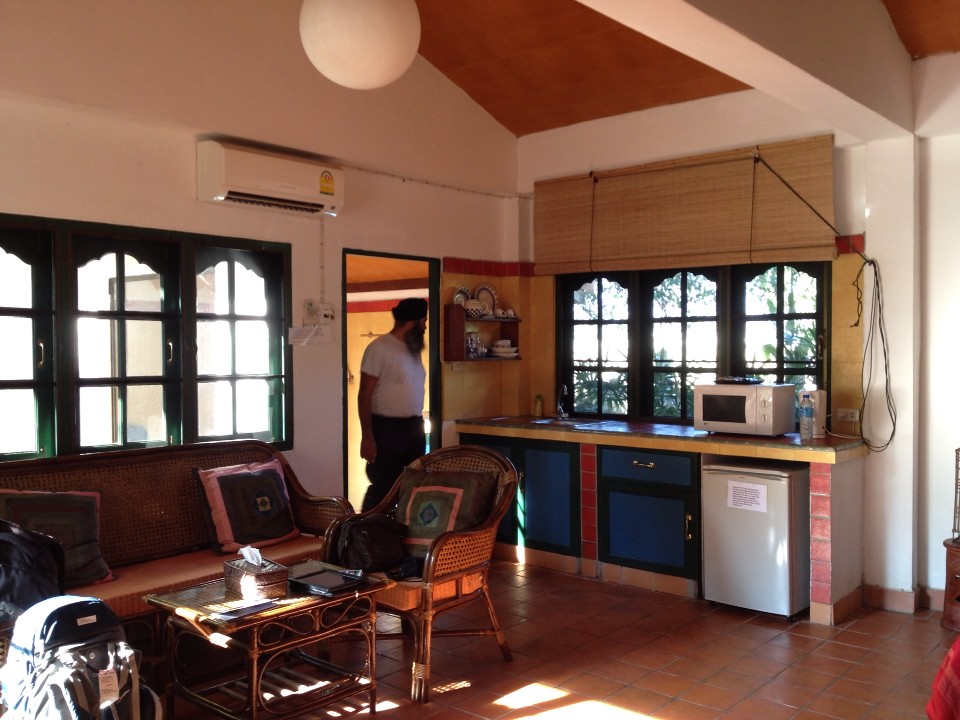
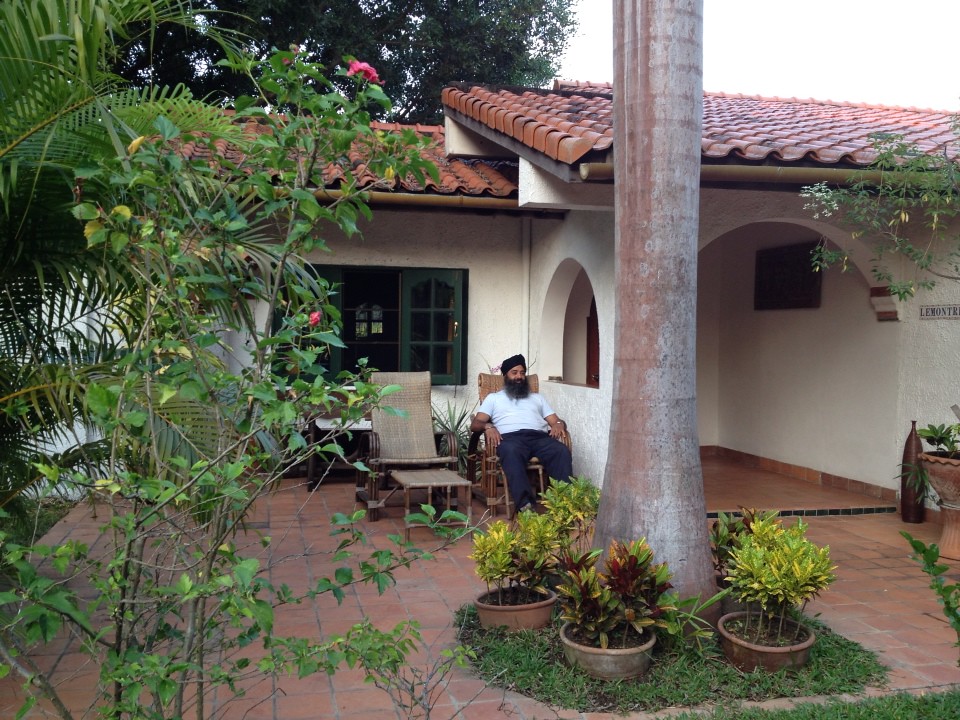
Our bungalow
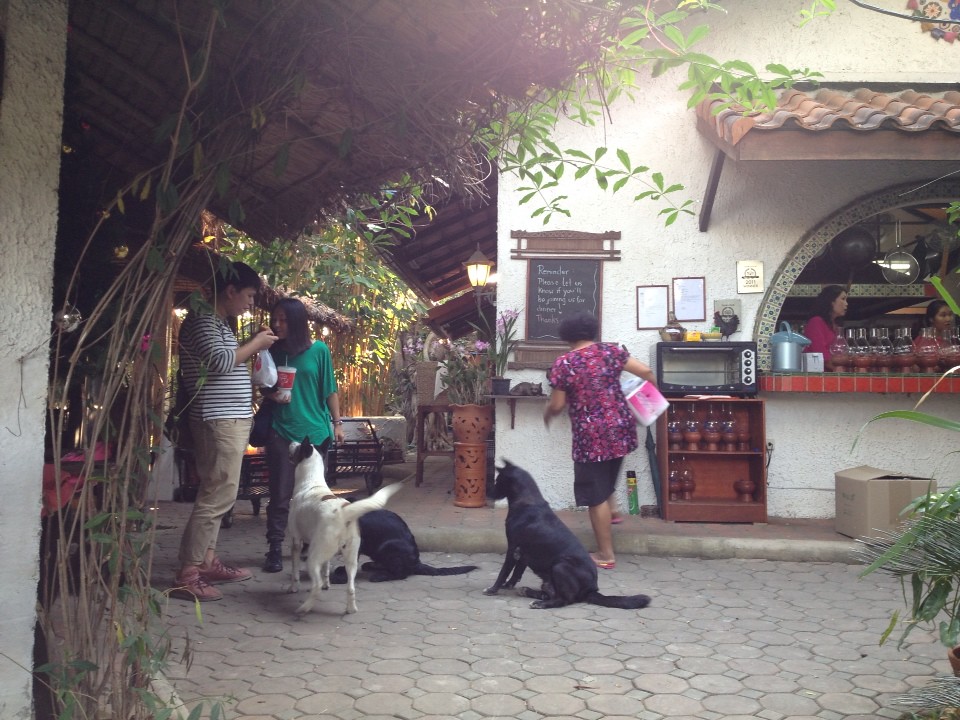
The resort is a family business, Peter and Pai have done a fantastic job of building the guesthouse from what used to be rice fields. They show so much kindness and a lot of passion for the business.
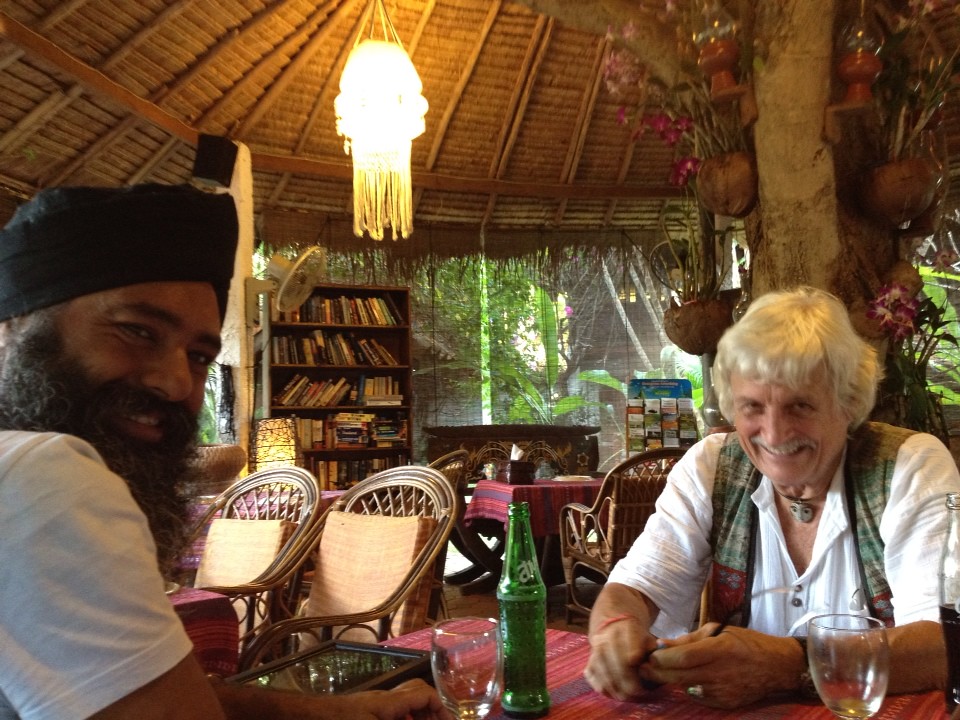
We debated whether to go into Chiang Mai at around 5pm and decided against it and relaxed at the resort instead. We got talking to Peter, from Germany, who runs the place with his wife Pai. The resort is a family business, Peter and Pai have done a fantastic job of building the guesthouse from what used to be rice fields. They show so much kindness and a lot of passion for the business. In the evening Pai made a fantastic vegan dinner just for Sangeet and I whilst the other guests ate in the buffet.
I was missing staying at the Hilton! The taxi cost 93 Thai Baht.
Waiting for the taxi
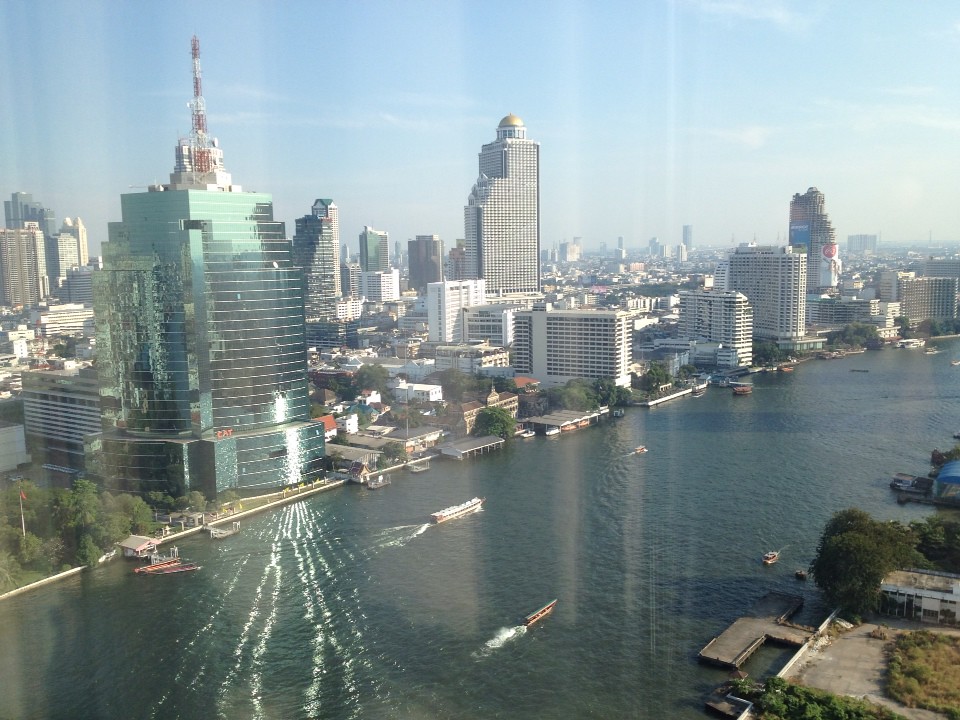
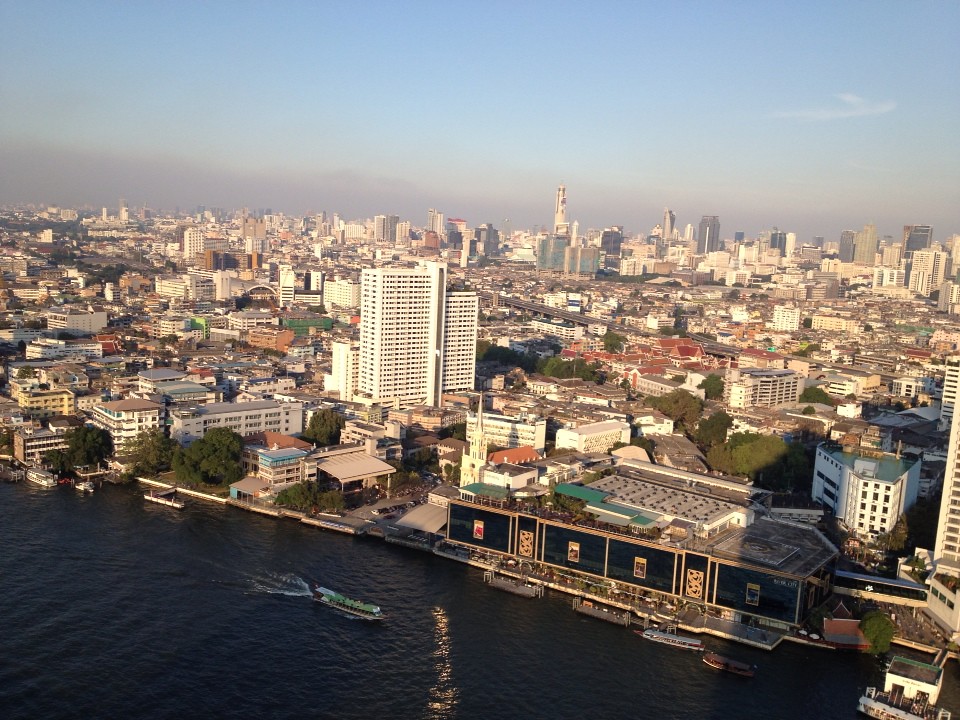
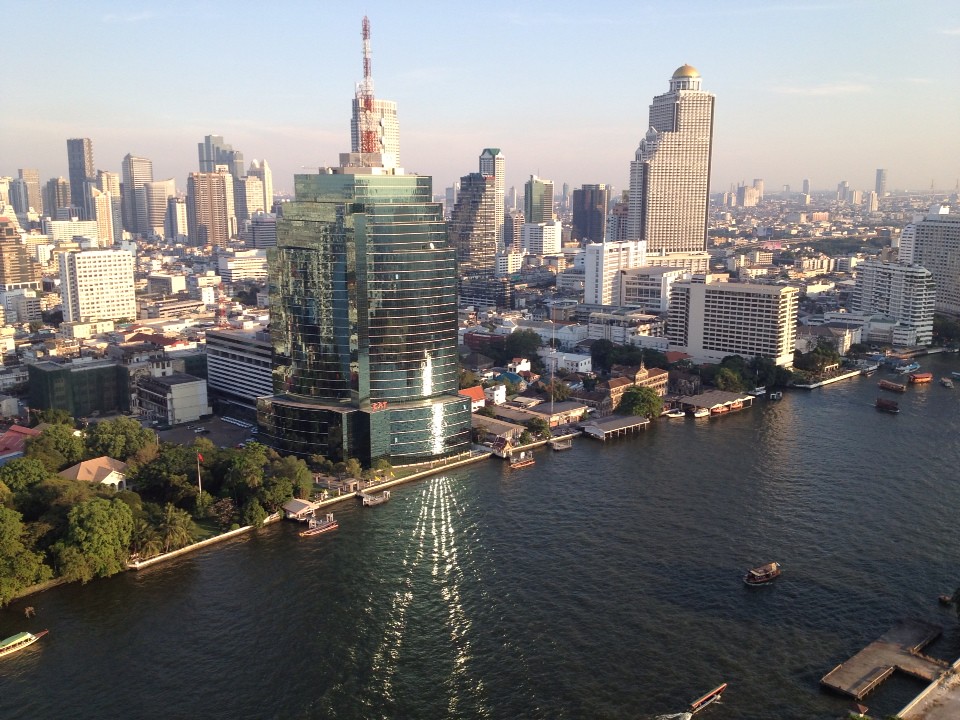
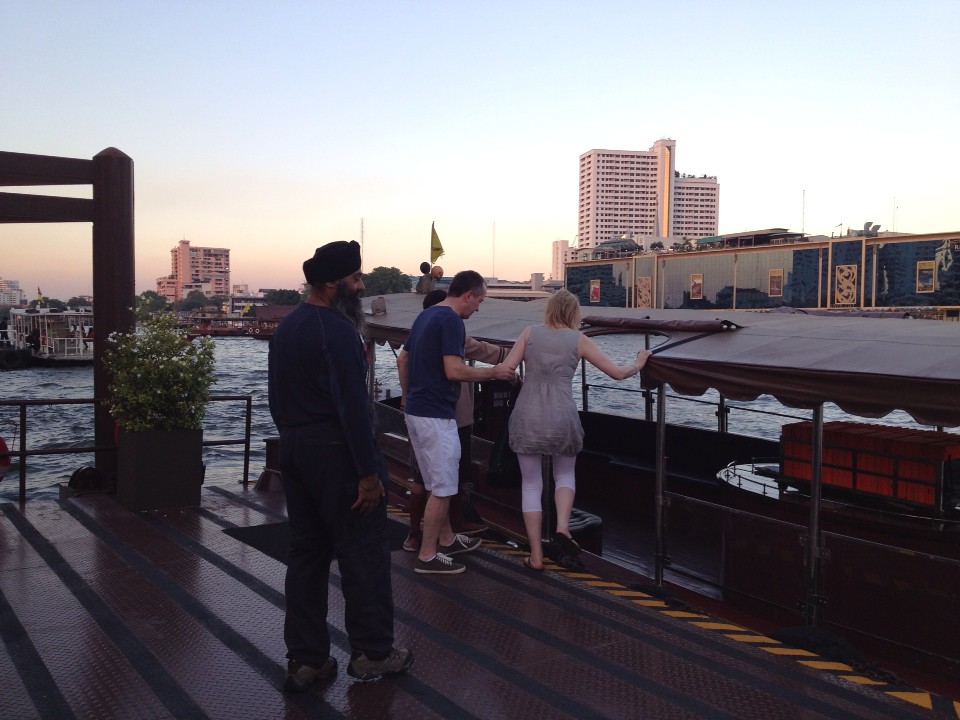
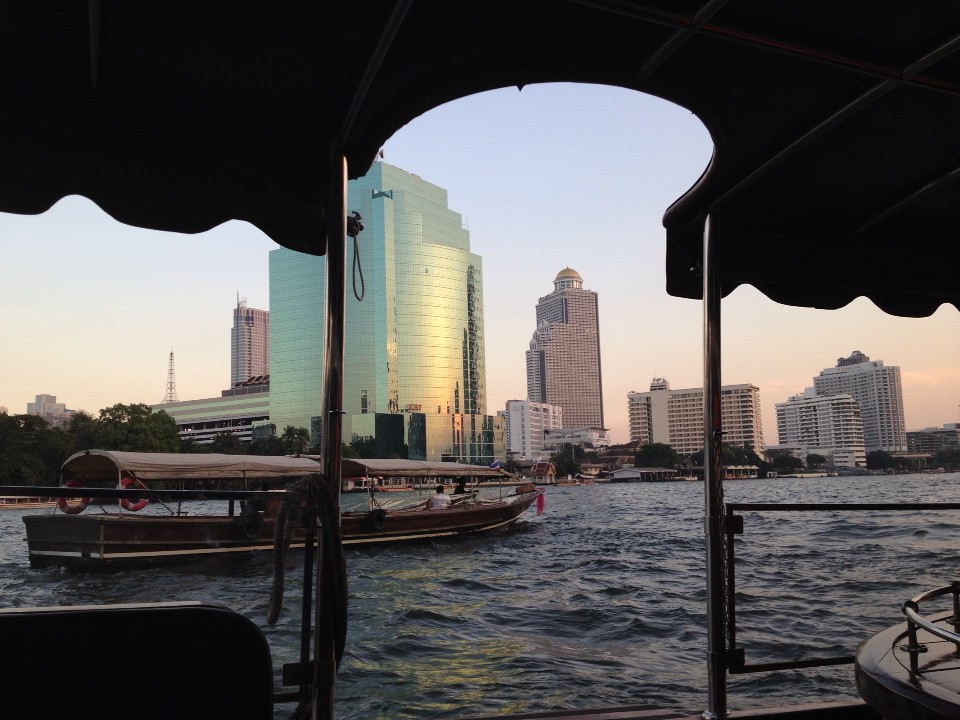
The hotel is situated on the banks of the Chao Phraya River. Hilton have a regular boat service which takes one to the skytrain station or to the mall.
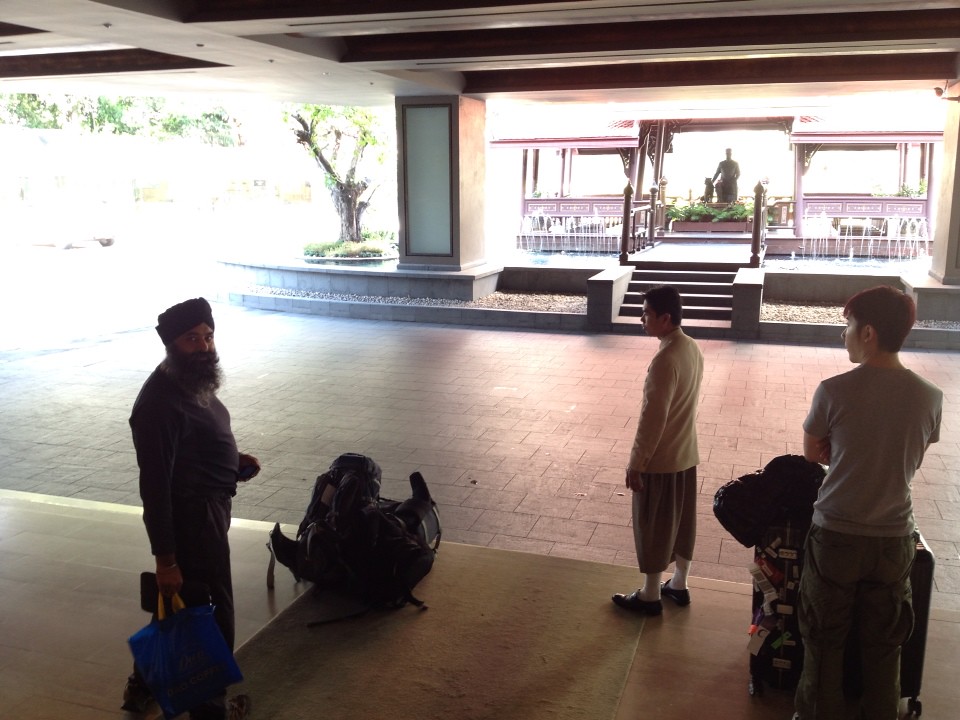
Arriving at Hilton
View from the hotel room
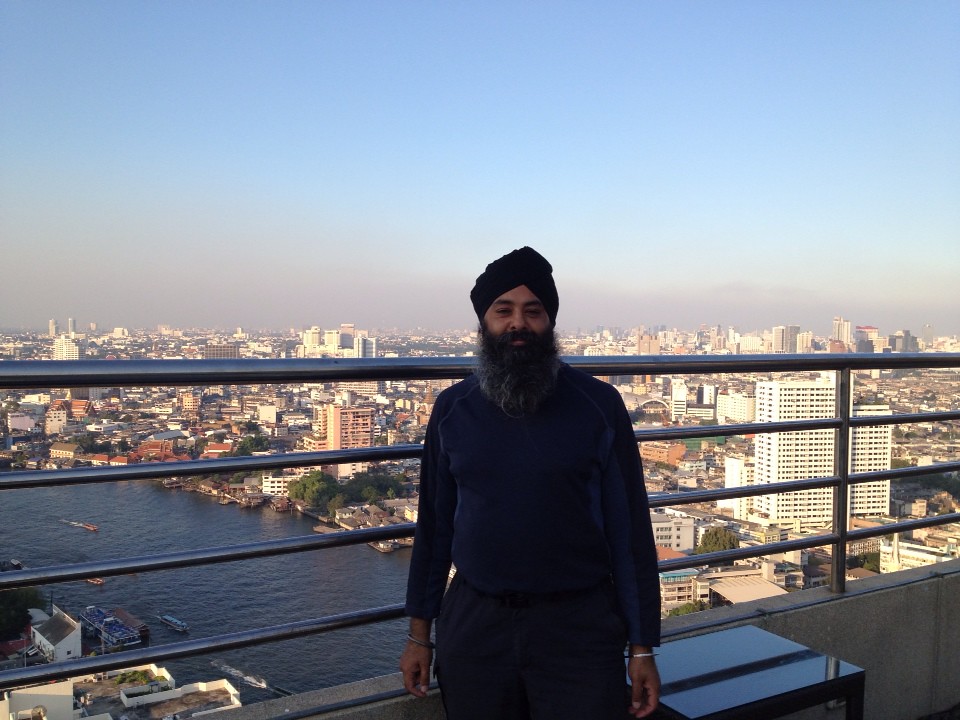
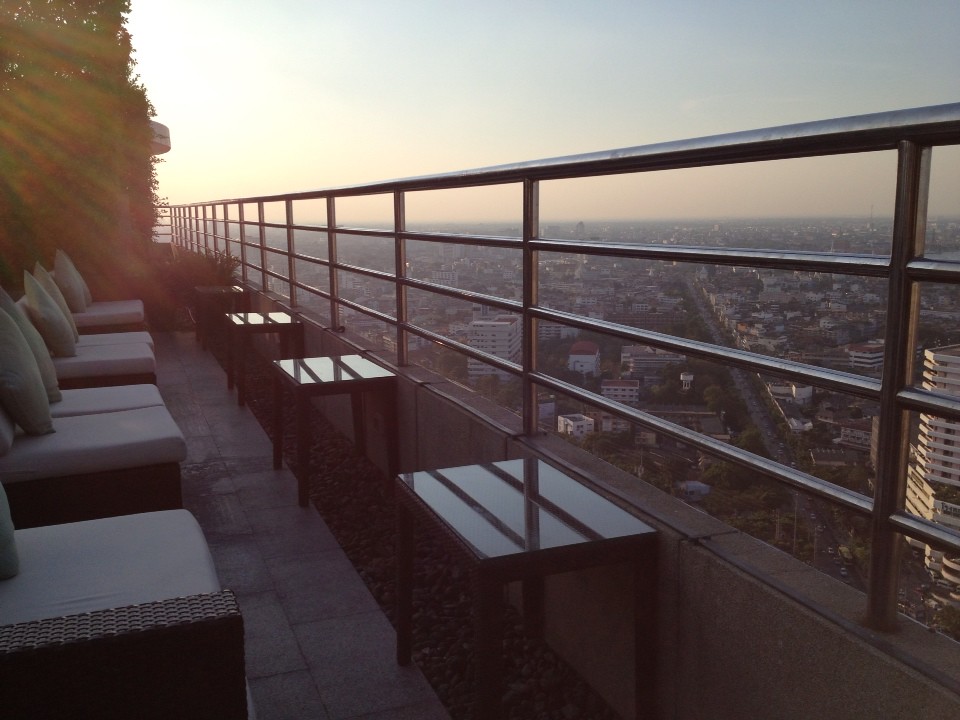
View from the top floor of the hotel
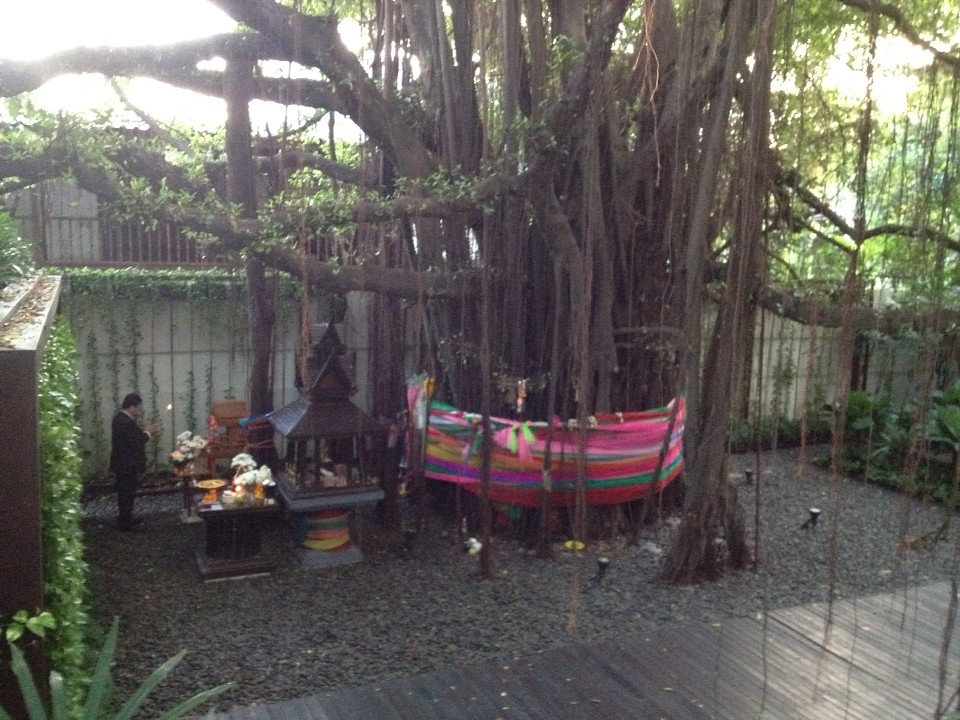
Most business an private homes have a shrine, this is the hotel shrine
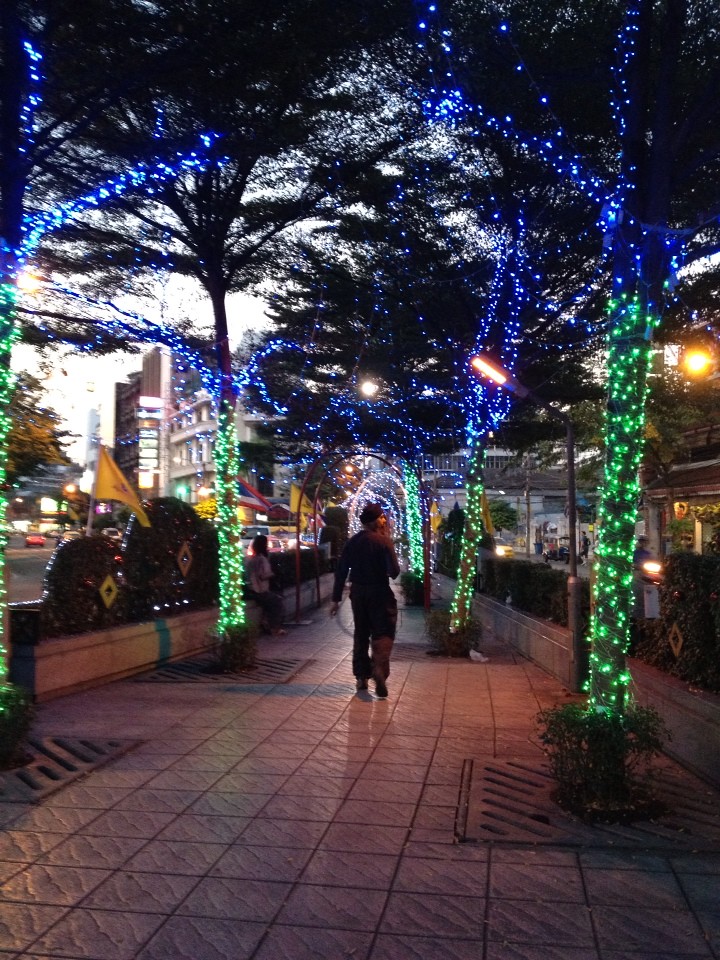
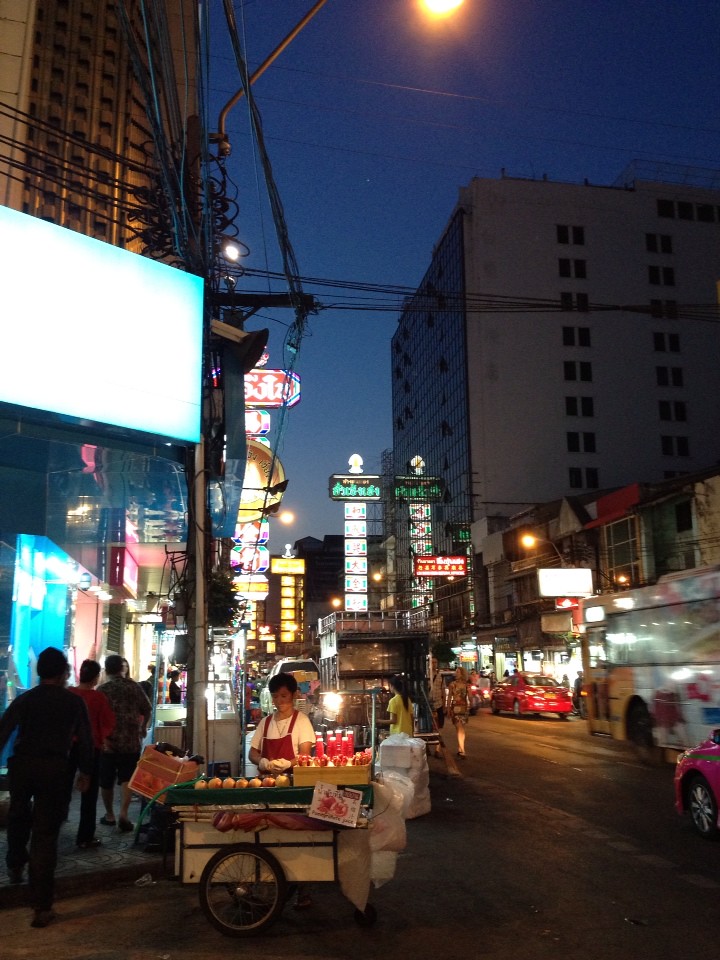
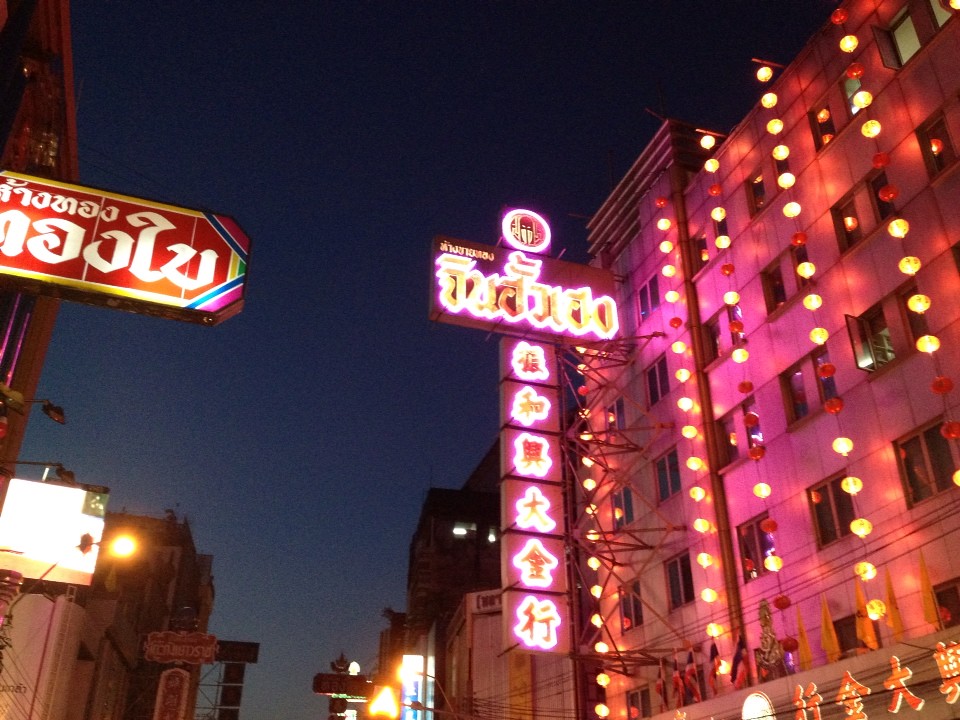
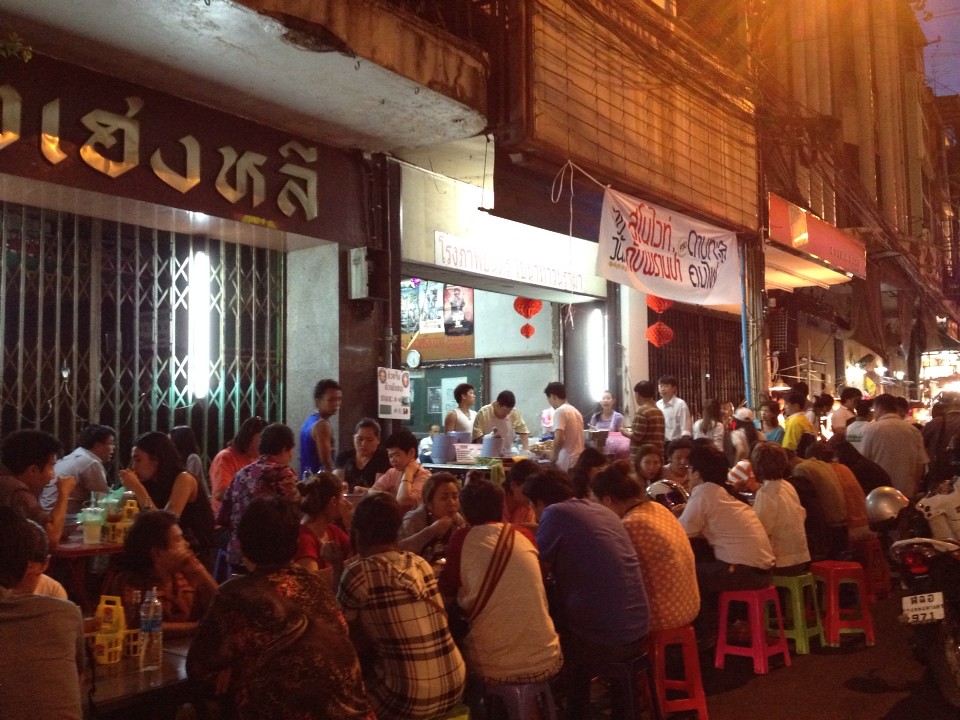
We got the boat to the mall and walked to the Gurdwara. It took an hour to walk to the Gurdwara, which passes through China Town. Yaowarat Road in Samphanthawong district is home to Bangkok’s Chinatown, which is centred on Sam Pheng Lane Chinatown’s Sam Peng Market is an old business centre noted for a post-WW II visit by the young king Ananda Mahidol. Modern Chinatown now covers a large area around Yaowarat and Charoen Krung Road. There are many small streets and alleys full of shops and vendors selling all types of goods. It has been the main centre for trading by the Chinese community since they moved from their old site some 200 years ago. Nearby Phahurat or Indian market. Yaowarat Road is also famous for many varieties of food, and it becomes a “food street” at night.
Hotel boat
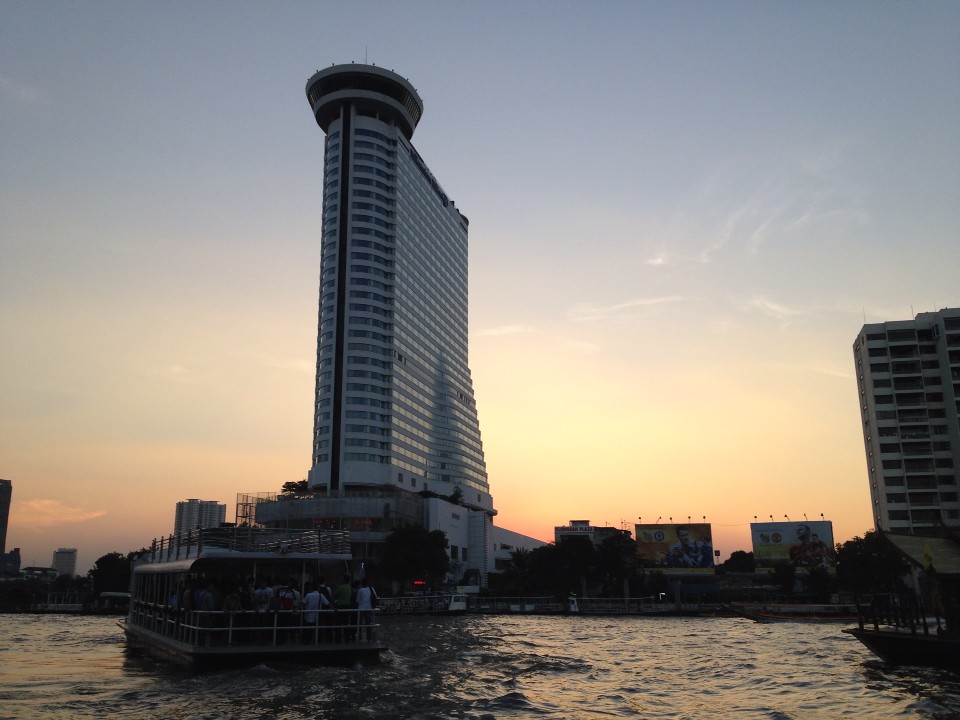
A view of the hotel from the river
Walking towards China Town
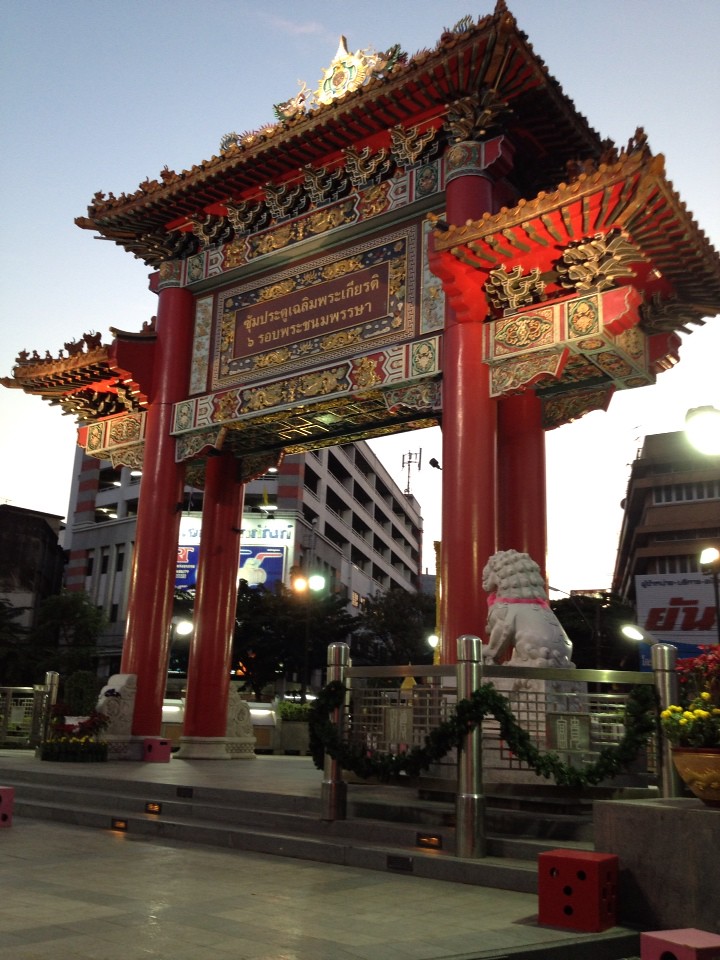
Chinatown Gate is a Chinese style gate at Odean Circle on the east end of Yaowarat Road, the main road through Samphathawong, the Chinatown district of Bangkok. The gate is often called Odean Gate after the Odean cinema which used to stand nearby. It was built as part of the celebrations of King Bhumibol Adulyadejs 72s birthday. The words on the gate says “Sheng Shou Wu Jiang”, which translate as “Long Live the King”.
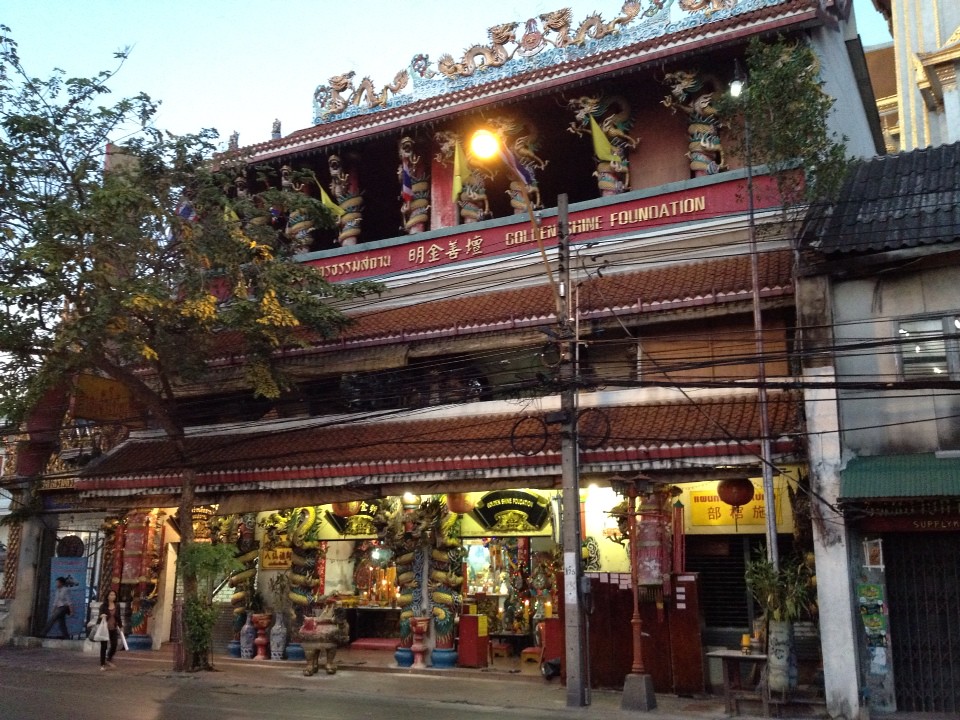
Some random shop we liked the look of
Temple in a hospital complex
Chinatown
At the Gurdwara there were a hand full of people. The sukhason of Guru Granth Sahib had already been done. I found it strange that you could sill visit where the Guru Granth Sahib in sachkhand.
Entrance to the Gurdwara
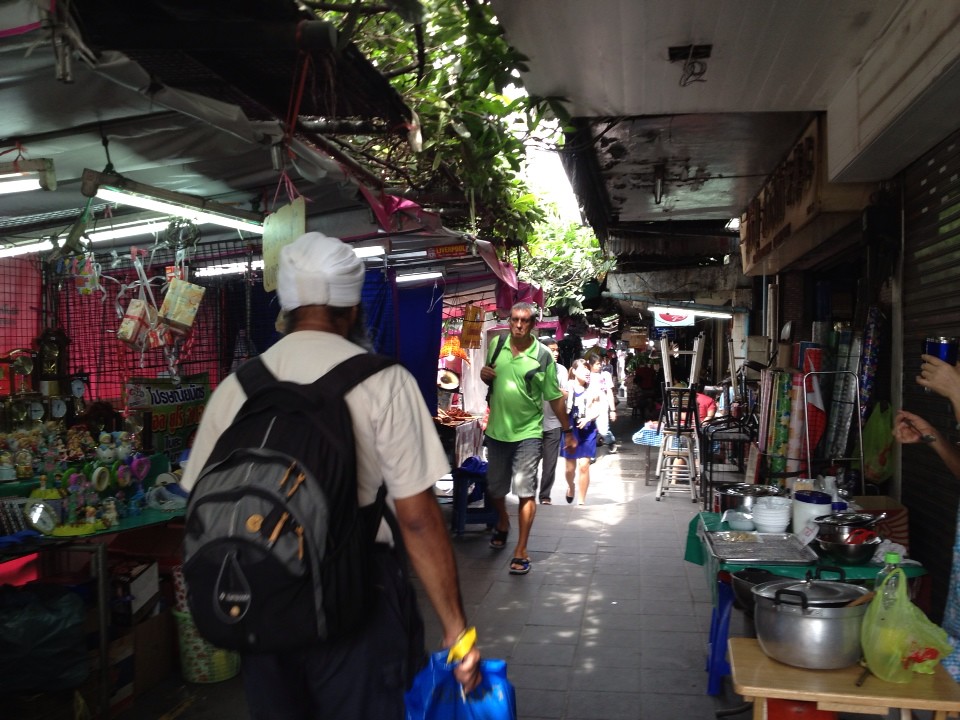
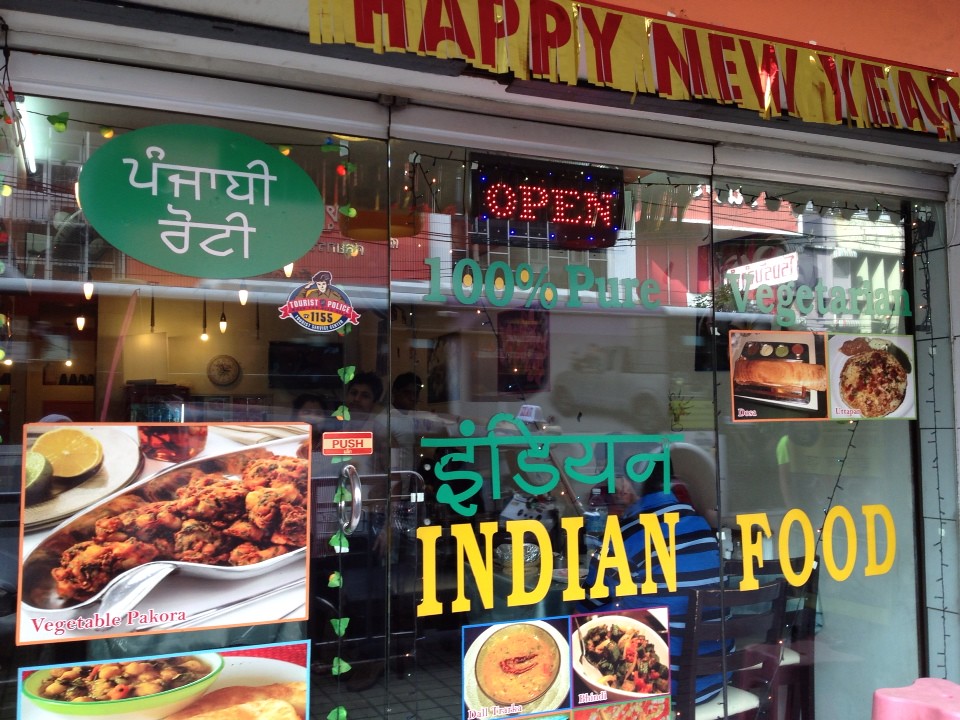
Afterwards we went for dinnner, I asked a Sikh guy on the street for directions to the nearest vegetarian restaurant. As we were in a mainly Indian area you can expect to find many Indian vegetarian restaurants. Unfortunately they are lacking in basic cleanliness!!! What is it about Indians are they allergic to basic hygiene standards!!!
I did not like the look of this restaurant so did not eat here, Sangeet ordered a dosa. Afterwards we walked back to the pier where the Hilton boat picked us up……
By now I am desperate to have my clothes washed so I created a washing machine
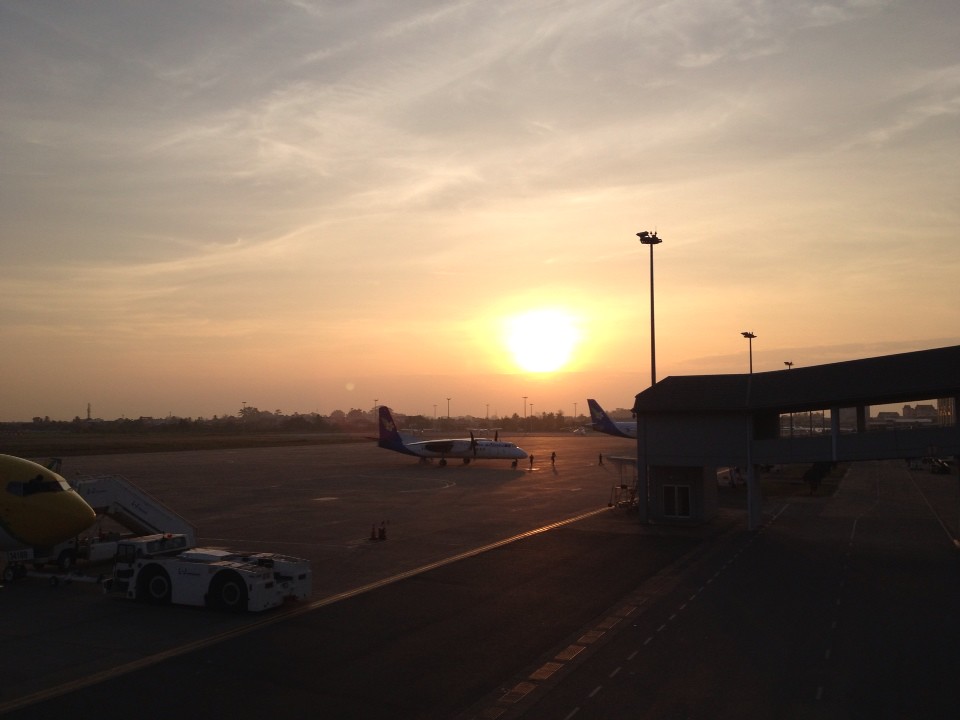
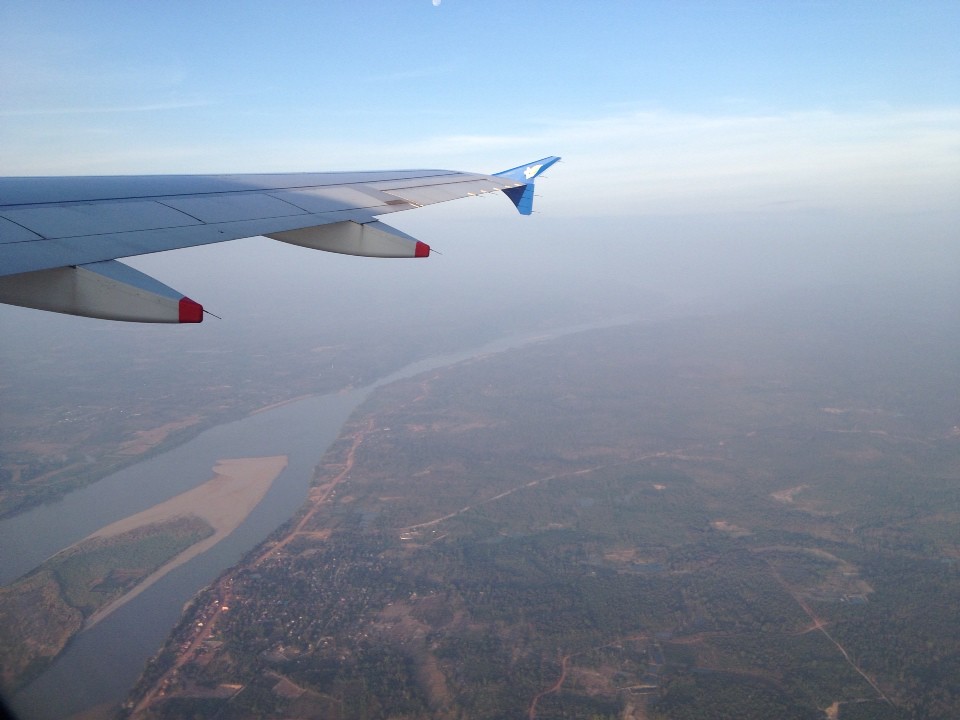
Today we had an early morning flight to Bangkok, Thailand. The flight departed at 07:30 via Lao airlines. Usual airport quite especially at that time in the morning!
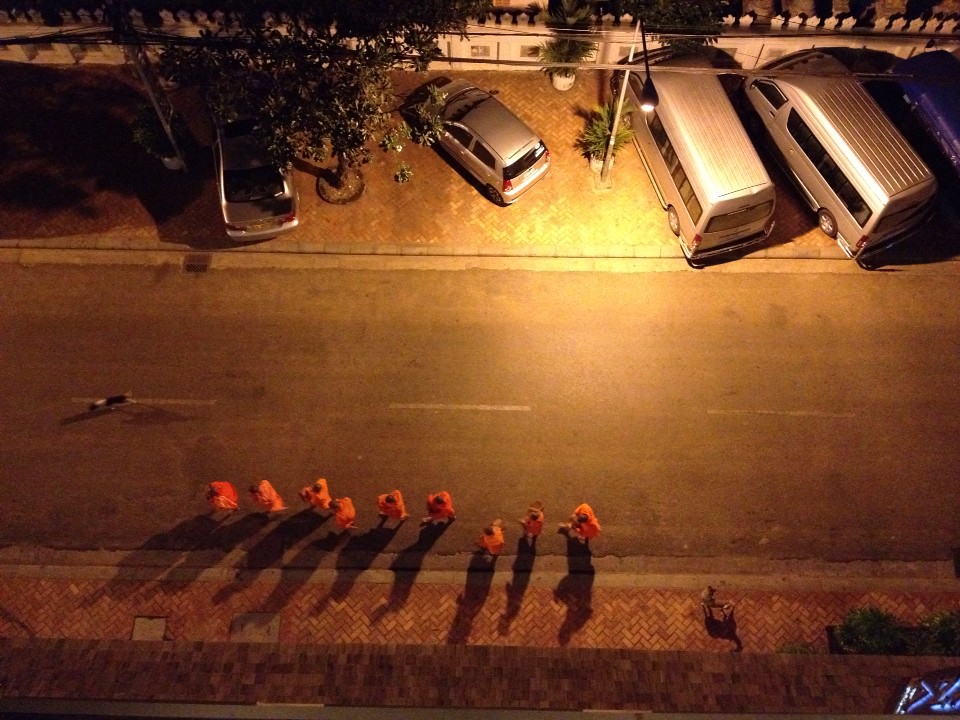
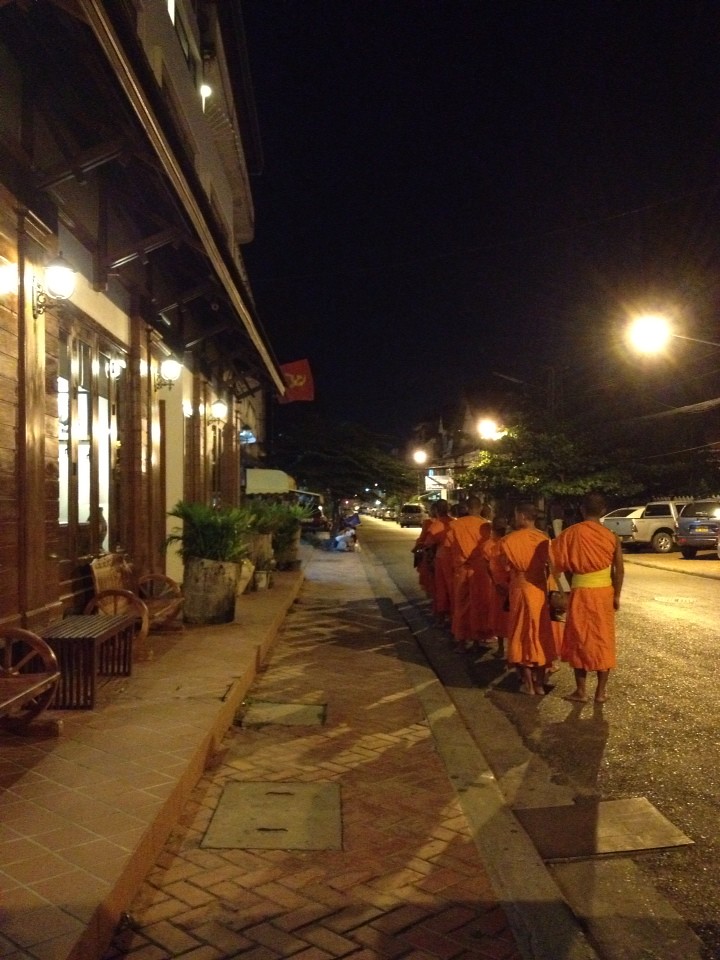
Whilst we were at the hotel at 5am you can hear the drums. This is alms giving, in Buddhism, alms or almsgiving is the respect given by a lay Buddhist to a Buddhist monk, nun, spiritually-developed person or other sentient being. It is not charity as presumed by Western interpreters. It is closer to a symbolic connection to the spiritual realm and to show humbleness and respect in the presence of the secular society. The act of alms giving assists in connecting the human to the monk or nun and what he/she represents.
As the Buddha has stated:
Householders & the homeless or charity [monastics]
in mutual dependence
both reach the true Dhamma….
—Itivuttaka 4.7
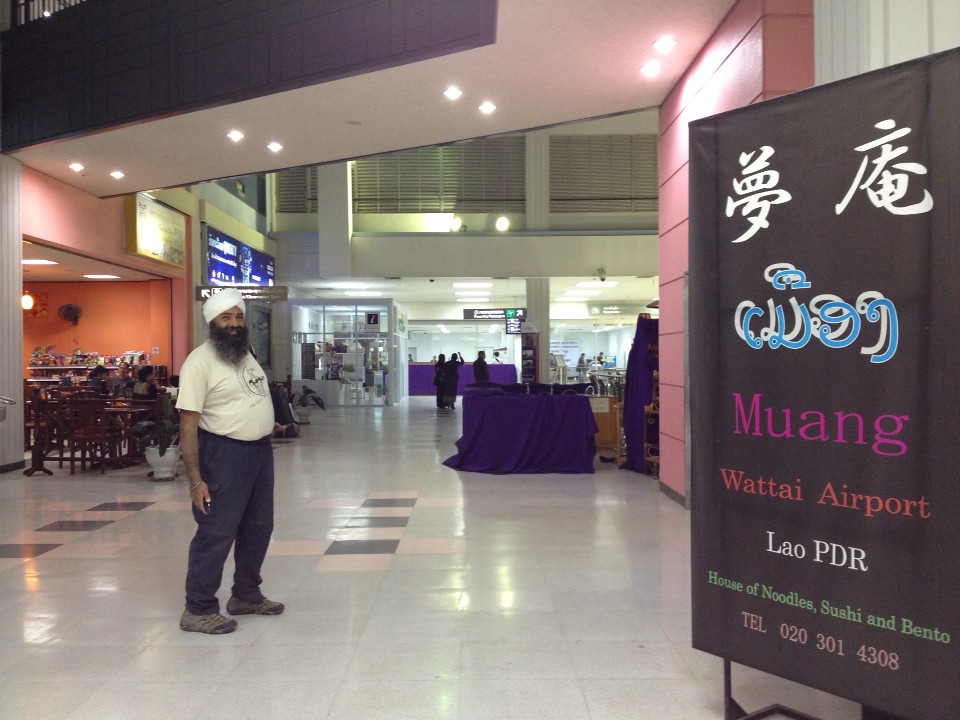
At the airport in Vientiane
Goodbye Vientiane, we are going to miss you!
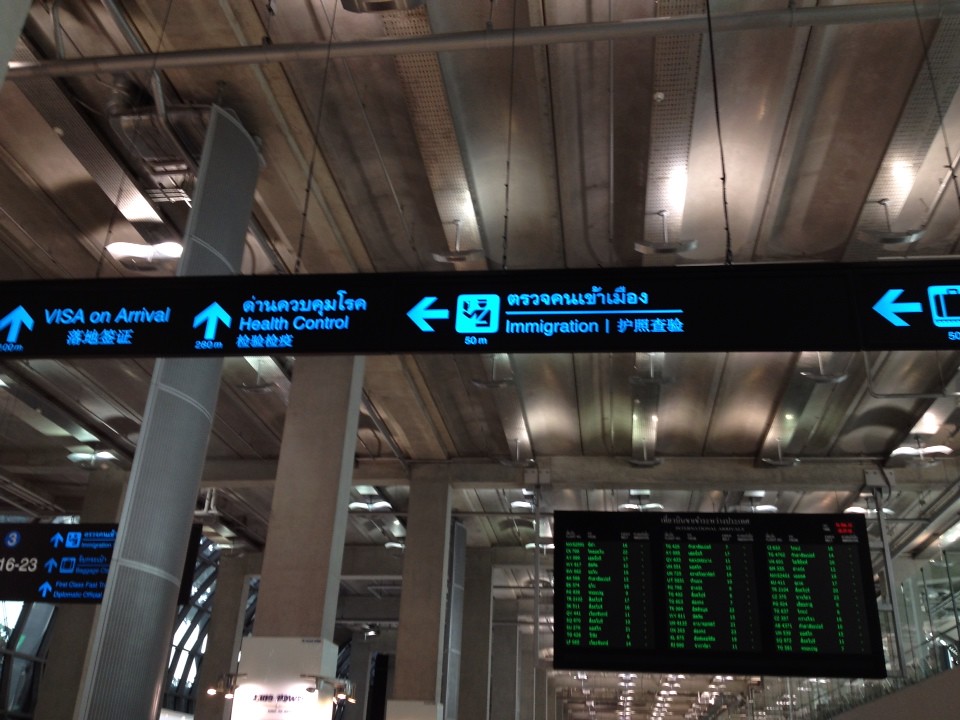
Welcome to Bangkok
As British passport holders we do not require an entry visa, on arrival by air we are allowed to stay in Thailand for up to 30 days.
Suvarnabhumi Airport is around 30 km from the city, we decided on taking the cheap option to get to the city centre which is by the city train. The Airport Link’s City Line runs every 15 minutes and the Express Line every 30 minutes. Both lines operate from 6am to midnight. The trains have a maximum speed of 160 kilometres per hour. The City Line will make eight stops across the capital, starting at Phaya Thai, before heading to the airport. The trains take 30 minutes from Phaya Thai to Suvarnabhumi. Passengers using the City Line pay between 15 baht to 45 baht, depending on the distance travelled.
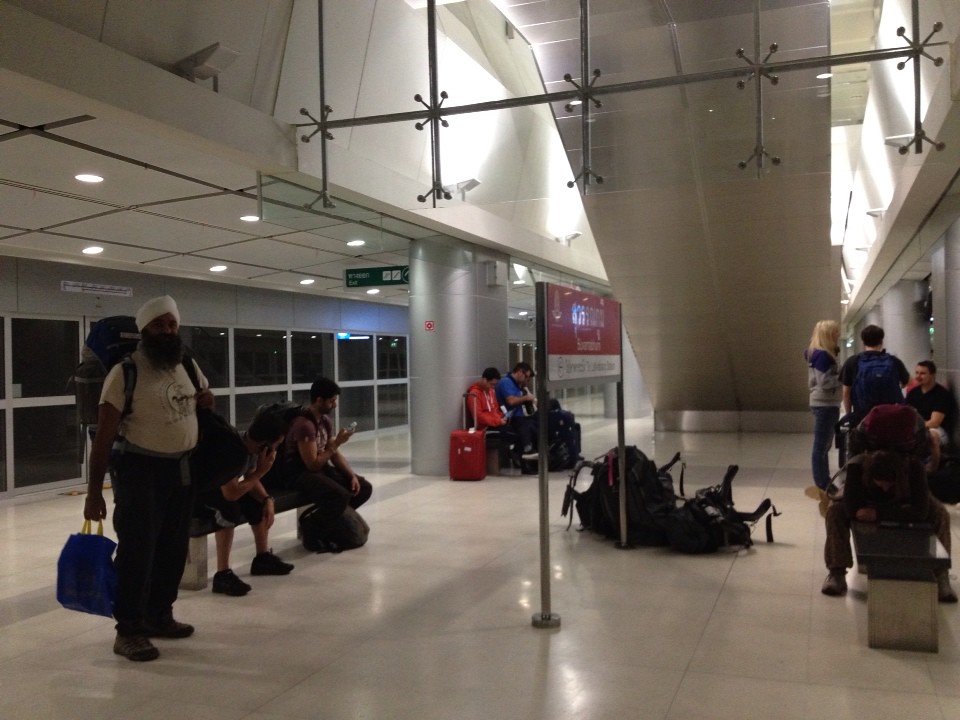
Waiting for the Airport Link
We got off at Makkasan, unfortunately this was the wrong stop, therefore we took the MRT to Lumphini. Luckily the Airport Link and the MRT are air conditioned. The Metropolitan Rapid Transit or MRT is a rapid transit system serving the Bangkok Metropolitan Region in Thailand. The first section of the Blue Line between Hua Lamphong and Bang Sue opened in 2004 as Bangkok’s second public transit system. The MRT is operated by the Bangkok Metro Public Company Limited (BMPCL) under a concession granted by the Mass Rapid Transit Authority of Thailand (MRTA). Along with the Bangkok Mass Transit System (BTS, also called the Skytrain), and the Airport Rail Link (ARL), the MRT is part of Bangkok’s rail transportation infrastructure.
The MRT serves more than 240,000 passengers each day. It has 18 operational stations along 27 kilometres (16 mi) of underground track. The Blue Line, officially the Chaloem Ratchamongkhon Line, is the only line currently in operation. As of 2011, two extensions of the Blue Line are under construction. When completed, the Blue Line will become a loop line around the centre of Bangkok, with an extension to Bang Khae on its western side. The MRT Purple Line is also under construction. It will connect Bang Sue with Nonthaburi in the north-west, and will be the first public transit line outside the Bangkok Metropolitan Administration.
The MRT line is officially known in Thai as rotfaifa mahanakhon or “metropolitan electric train”, but it is more commonly called rotfai taidin, literally, “underground train”. The metro has a fleet of 19 trains; the 19th train entered service in October 2007 after a major accident. The hotel offered airport pickup for 1400baht we managed to get to the city centre for 63baht!
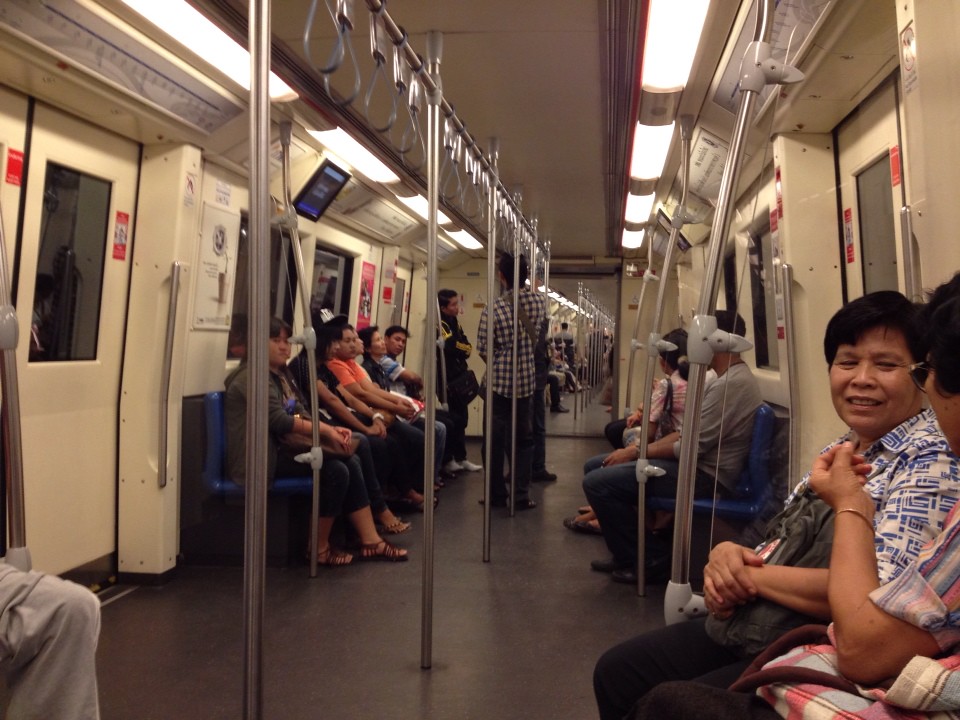
On the MRT
This took us to the bottom of Wireless Road….a VERY long road, as we later found out! Now fully loaded with our backpacks and in 31 degrees C we walked from the bottom end of Wireless Road to the top of Wireless Road a distance of around 2.5KM but with the very heavy backpacks it felt a lot further!
Start of the long walk up Wireless Road
A very hot and tiring walk
As we were both shattered I stopped a tuk tuk driver and asked him the price to the hotel, he said 50 baht I tried to bargain with him and said 30baht, he just drove off!!!!
As we checked in early the hotel did not have a room available, therefore we popped out for lunch.
Walking the streets of Bangkok
A safety hazard?!
From the web we found a vegetarian restaurant called Navrattan. On entering the restaurant your feet stick to the floor! Sangeet opened the menu to find a insect walking out of it….I think it was also trying to escape the restaurant!
We then went to Bombay Palace which advertises that it is vegetarian, turns out they also do meat and fish!
We ended up finding an Indian vegetarian restaurant where we ordered Dosa. We were both very hungry and it tasted very nice……the second one we ordered was not as nice…..funny, how when you are hungry, the food always tastes very nice………you could say that when you go to some bodies house…..I must have been hungry because that tasted nice!!!!
We got back to the hotel around 3pm the room was still not ready so I complained. At the hotel we had booked the basic room, we got upgrade to the business room, which gives you access to the lounge and free breakfast. Also we got two free drinks from the bar and one free use of the hotel car.
By the year 1911, many Sikh families had settled in Thailand. Bangkok was indeed the centre of migrant Sikhs. During that time there was no Gurdwara, so religious prayers were held in the homes of the Sikhs in rotation on every Sunday, Sangran and all the Gurpurab days.
The population of the Sikh community was on the rise, therefore in the year 1912, the Sikhs decided to establish a Gurdwara. A wooden house was rented in the vicinity of Baan Moh, a well known business area.
Thereafter, the place was decorated so that prayers could commence at this new Gurdwara. However, due to certain inconveniences, prayers and other religious duties were conducted only once a week.
In the year 1913 (or the year 2456 according to the Buddhist calendar), with the increasing rise of the Sikh community in Bangkok, a new larger wooden house was leased for a long term at the corner of Phaurat and Chakraphet road. After considerable renovation and decoration, the Guru Granth Sahib was installed and religious prayers were conducted on a daily basis.
Later in the year 1932 (the year 2475 according to the Buddhist calendar), the Sikhs community gathered some funds and purchased a piece of land for 16,200 baht and paid and additional 25,000 baht for the three and a half storey building plan. The new permanent Gurdwara was completed in the year 1933 was named “Gurdwara Siri Guru Singh Sabha”. It took about five and a half months to construct it. On completion this Gurdwara became the centre for the Sikh devotees and the Thai people who followed the Sikh faith.
A few years later, during the World War II, the Allied Air Forces targeted to knock out the metropolitan powerhouse and the memorial bridge (Saphan Phut), which are quite adjacent to the Gurdwara. The Allied forces dropped 2 bombs, each weighing about 1,000 pounds, which went off target and fell upon the roof top of the Gurdwara. The bombs, being really heavy penetrated the roof and fell right through the building till the ground floor. At that time several hundreds of Sikhs were taking shelter at the Gurdwara under the Holy grace of Guru Granth Sahib and to everyone’s surprise both the bombs (fallen on the ground) didn’t explode. Miraculously no one was injured.
However, due to the vibrations caused by one of the bombs that had exploded in the vicinity area behind the metropolitan powerhouse, made many cracks to the building and damaged part of the Gurdwara; thus making it impossible to continue the prayers at the Gurdwara. Prayers were stopped, while arrangements were being made to move the Gurdwara to a new location. A temporary wooden house was constructed and used as a Gurdwara. Shortly, the Gurdwara was repaired and prayers continued.
As time passed, in the year 1979, decision was made to renovate the Gurdwara and make it bigger to accommodate the increasing number of Sikhs. Together the committee of Siri Guru Singh Sabha and the other Thai-Sikhs asked for the blessing and permission from the Guru Granth Sahib to construct a new Gurdwara at the same location. The foundation stone was laid down by the Panj Piare, the Five Beloved Ones. The new Gurdwara was completed after two years in the year 1981.
The Gurdwara now technically had five floors plus a matinee floor. But however, people refer to the matinee floor as the third floor, thus making the Gurdwara having 6 floors. It was now a concrete building and was constructed on an area of total 1,440 square meters (360 “tarang wah”).
The ground floor is entrance hall which is width enough. There are three ways to enter the Gurdwara. The first way is a walk through a 3 meter wide lane, straight from the Chakraphet road. The second way is an entry from the door facing the Italian lane on Phaurat road. The third way is through the Jindamanee lane, allowing motorbikes to park at the entrance of the main gate of the Gurdwara. A fourth entrance could not be made because it was stuck to a department store, namely ATM. (Usually a Gurdwara will have entry doors on all four sides).
Towards the left side of the entrance hall, is a room, where religious books, tapes, CDs and cloth to cover the Guru Granth Sahib are sold. Any Sikh is permitted to either borrow or buy these items. Towards the right, is the clinic, namely “Sukshala Nanak Mission”. Needy patients are given free treatment irrespective of caster, creed or religion. This clinic was setup under the patronage of Siri Guru Singh Sabha and has been in service for more than 45 years. Right next to the clinic is the dining hall for the Granthi and Ragis of the Gurdwara and also for pilgrims who come from abroad and stay temporarily at the Gurdwara. Next to are the toilets for both men and women. As there is a strict rule in every Gurdwara, disallowing any person from wearing shoes to the upper floors, there is service provide on the ground floor for keeping your shoes. Left hand side for men and the right hand side for women. On the extreme left, there is the office of the Siri Guru Singh Sabha committee. A small meeting room is also present on the matinee floor above the office.
Facing the front but towards the end of the entrance hall, there are three elevators, leading to various floors of the Gurdwara. At the same time on either side of the elevators are the staircases, about 3 meters wide each and has to total of 84 steps from the ground floor to the main prayer hall where the Guru Granth Sahib is installed. Surprising the number of staircases here is exactly equal to the number of staircases in the Baoli Gurdwara, located at Goindwal. Gurdwara Baoli Sahib, which was constructed by Guru Amar Das Ji (the third Sikh Guru), is the first Sikh centre pilgrimage. Moreover, the number, 84, also indicates the total amount of re-incarnations (8.4 million births and deaths), which a human being has to go through. This is to remind us to only do good deeds and mediate in the name of Waheguru as well as provide service to the community and help the needy people. Life as a human being is considered the last step before realizing God.
On the second floor, is a big hall used as the Langar Hall (Guru-Ka-Langar) and many other kinds of different activities, such as arranging a dinner party during the wedding ceremony. This hall is also often used as a lecture hall by different people invited by the committee. During religious days and weekends, this hall is usually converted into a Langar Hall.
Next is the matinee floor. Although this floor is just half the size of other floors, it is now considered as the third floor. In the middle of this floor is a large room, which is often used for meetings or other religious activities.
The fourth floor, which is accessible either through the stairs or the elevators, is simply a big hall. This hall, excluding the side walkways, is about 15 meters in width and 37 meters in length.
There is pathway in the middle of this hall, leading to the Guru Granth Sahib. The floor is carpeted with a beautiful design and is used as a sitting place for all the Sikh devotees.
Ladies sit on the left hand side of the hall, while the men sit on the right hand side, facing the platform, on which the Guru Granth Sahib is installed. The reason for sitting separately is to maintain order and to maintain concentration in listening to the religious prayers.
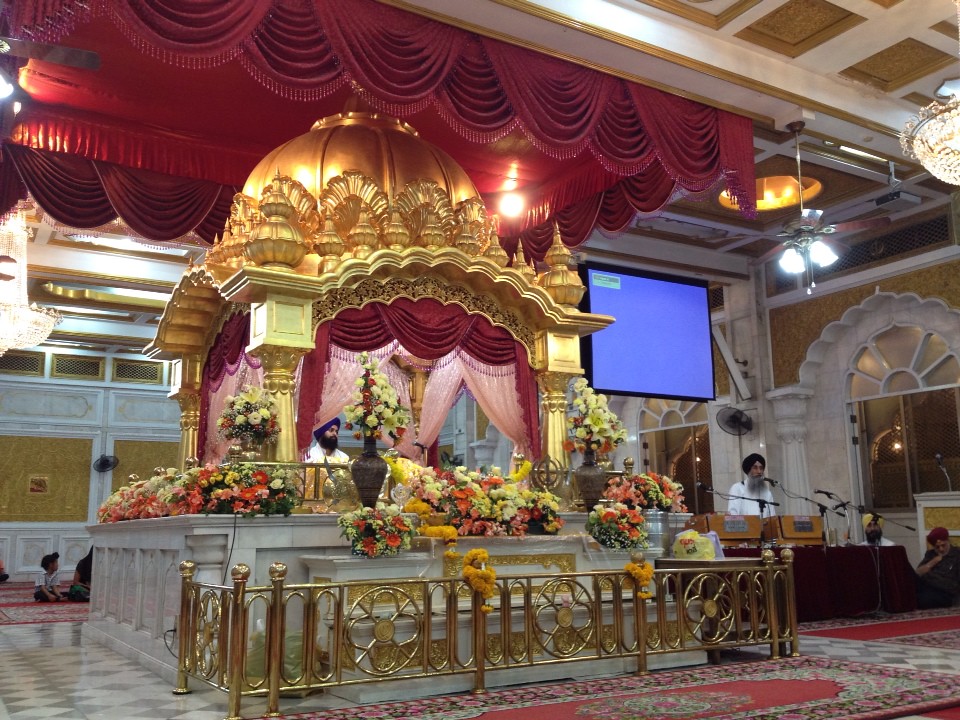
In the middle of the hall is a raised platform, about one meter above the floor, with carved gold-plated pillars on all fours sides. Above the platform is gold-plated dome, in the shape of a lotus, with petals around it. The top most is covered with a piece of cloth having a gold lace at the edge around it, giving a royal symbol. Placed on the platform, is the Guru Granth Sahib.
Sitting at the platform is the Granthi or the Giani, who wihile reading from the Holy Granth also uses a Chaur or Chauri (Yak hair or manmade fiber embedded in a metal placed in a wooden handle) and waves it over the Guru Granth Sahib Ji as a symbol of respect.
Towards the right of this platform, is a slightly raised platform used for Kirtan singings and giving religious lectures.
Daily at 4:30 a.m., the Granthi brings out the Guru Granth Sahib and places it on the designated platform and begins reading the Hukam Nama for the day and then covers the still opened Guru Granth Sahib with a piece of cloth. At around 6:30 p.m. daily, after reciting the Rehras prayer, the Granthi performs the Sukh Asan ceremony (formally closing of the Guru Granth Sahib for the day) and retires the Guru Granth Sahib.
On the fifth floor is the Thai Sikh International School. This campus provides education for children up to Kindergarten 2, so that small kids need not travel far to the other campus, located at Bangna, which is for higher education. However, when a student passes from here, he/she can continue his/her education at the other campus.
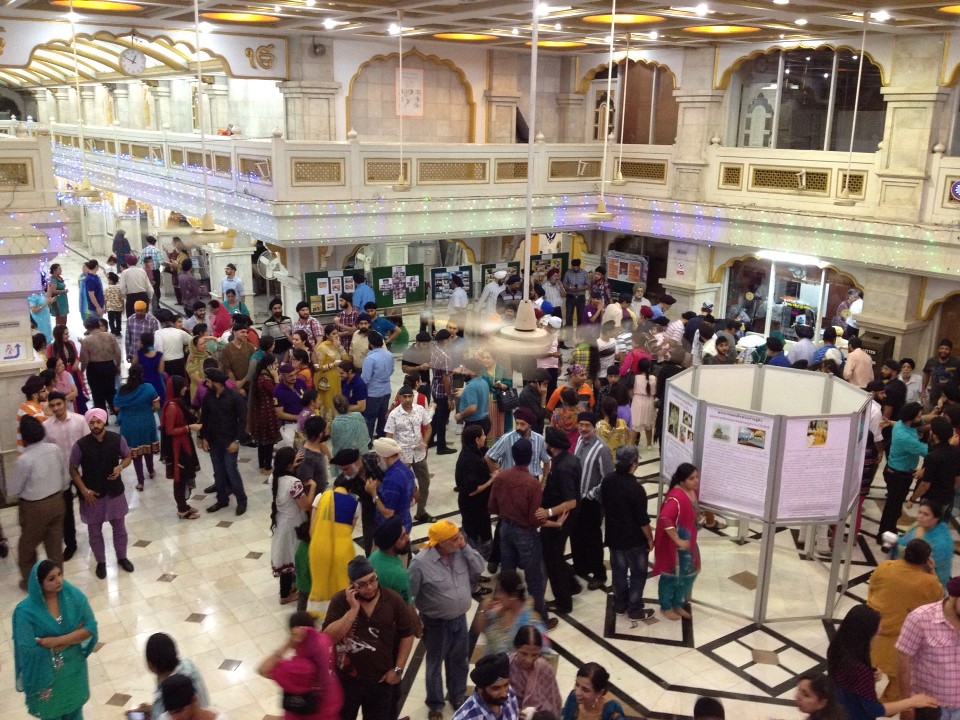
The darbar sahib was packed with the local sangat. Quite an amazing atmosphere.
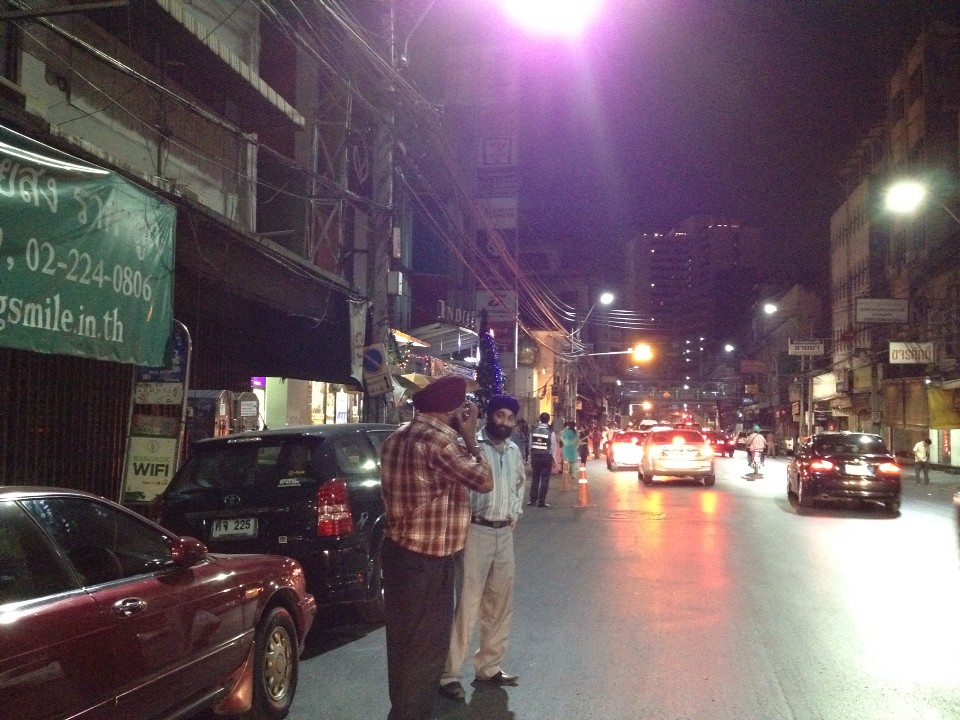
Getting a tuk tuk or taxi home is not easy, the first tuk tuk I stopped wanted 400 baht! It seems with it being the new year, the taxis and tuk tuks can command their charges.
Waiting with fellow Sikhs for a taxi
Negotiating the price with a tuk tuk
He drove off!
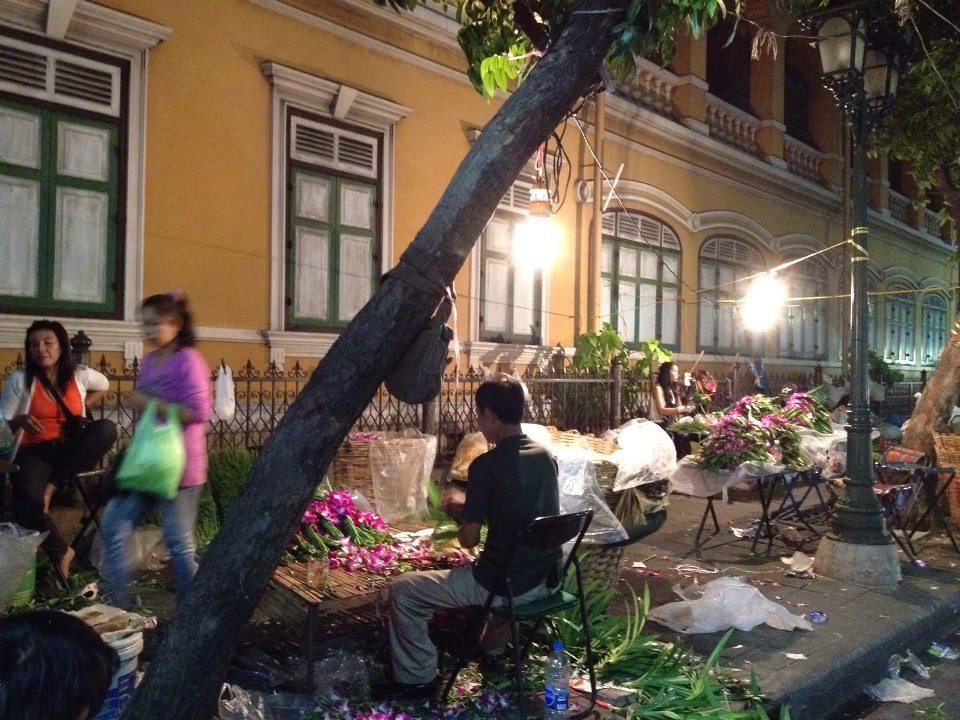
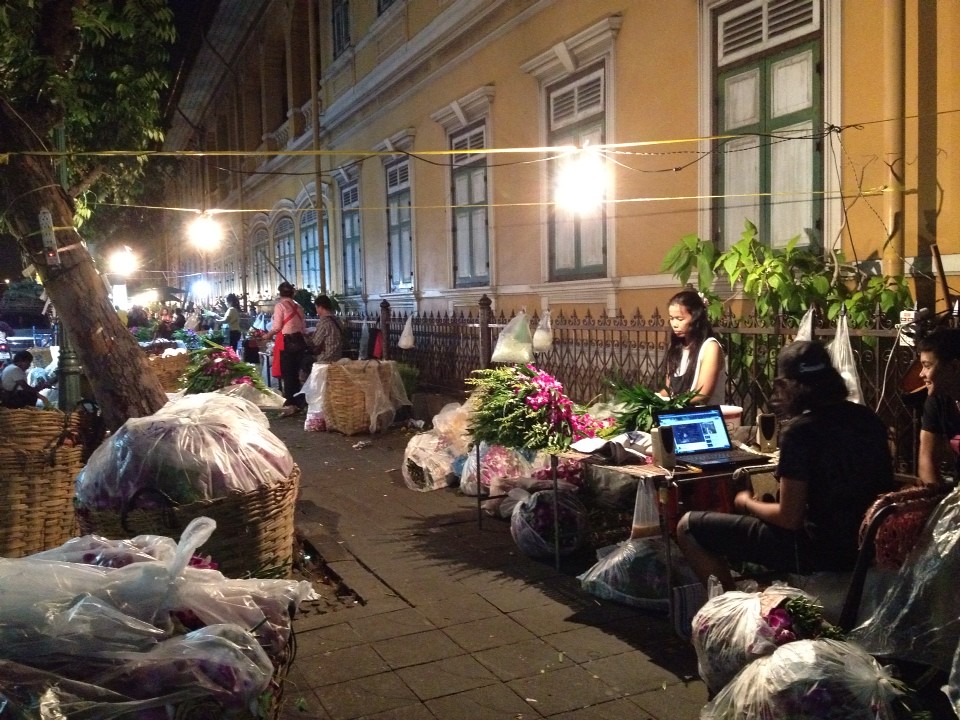
Passing a flower stall at 1am
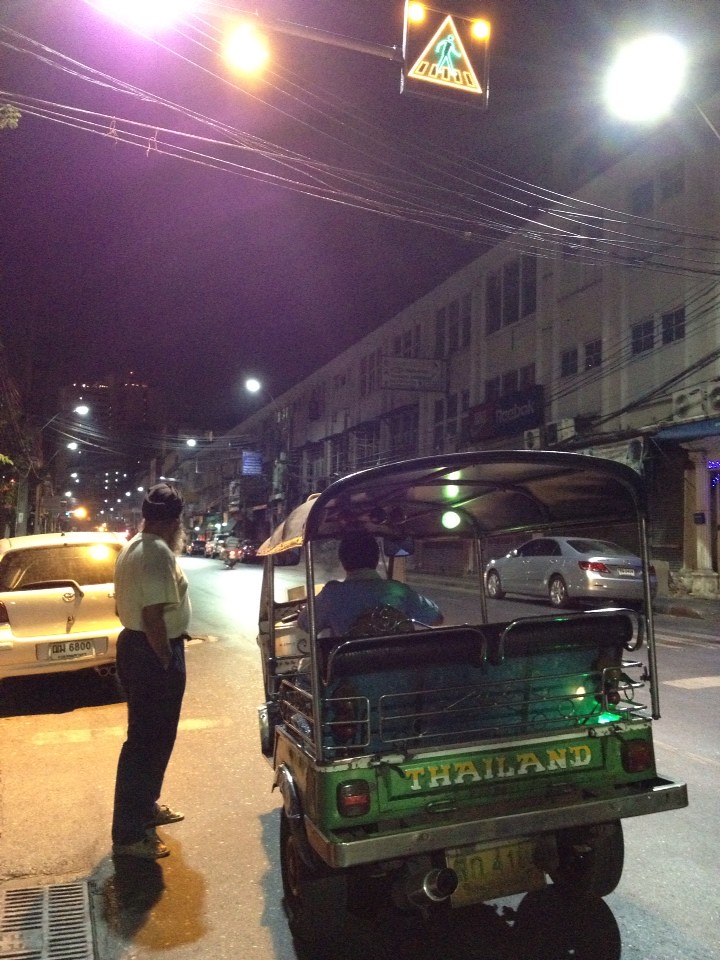
We finally managed to get a tuk tuk, on the picture you can see him on his mobile, probably calling his wife to pack the bags for a first class holiday. He charged us quite a lot!
It was strange to see, taxi’s having no customers just ignoring us, even though they were going the same way as us.
Vientiane is the capital and largest city of Laos, situated on the Mekong River near the border with Thailand. Vientiane became the capital in 1563 due to fears of a Burmese invasion. During French rule, Vientiane was the administrative capital and, due to economic growth in recent times, it has now become the economic centre of Laos.
The estimated population of the city is 754,000 (2009). The city hosted the 25th Southeast Asian Games in December 2009 celebrating the 50 years of SEA Games.
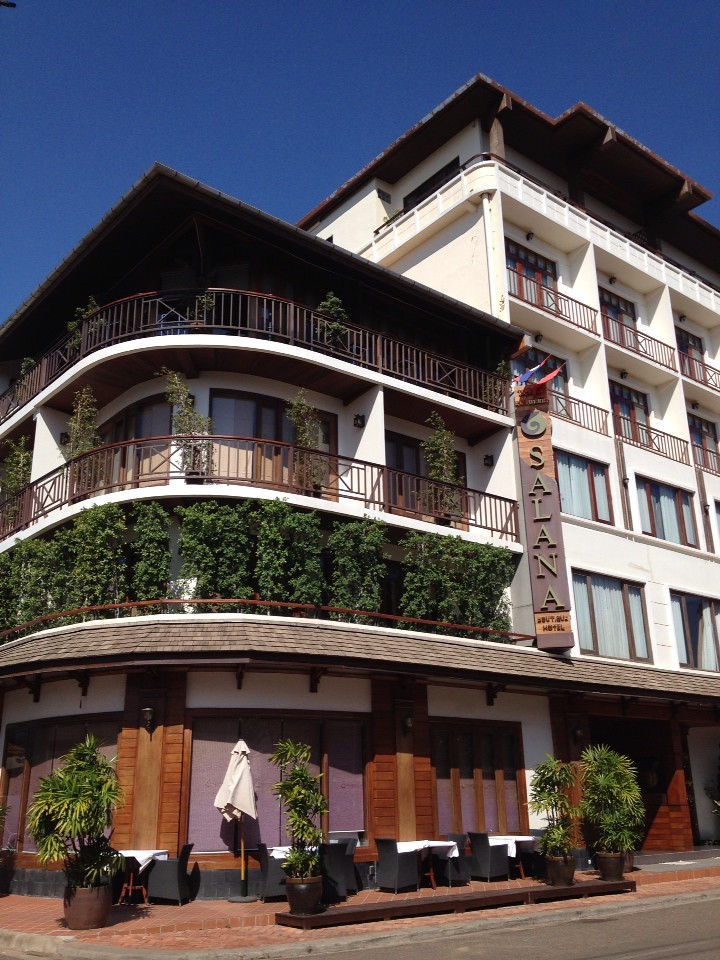
Our hotel
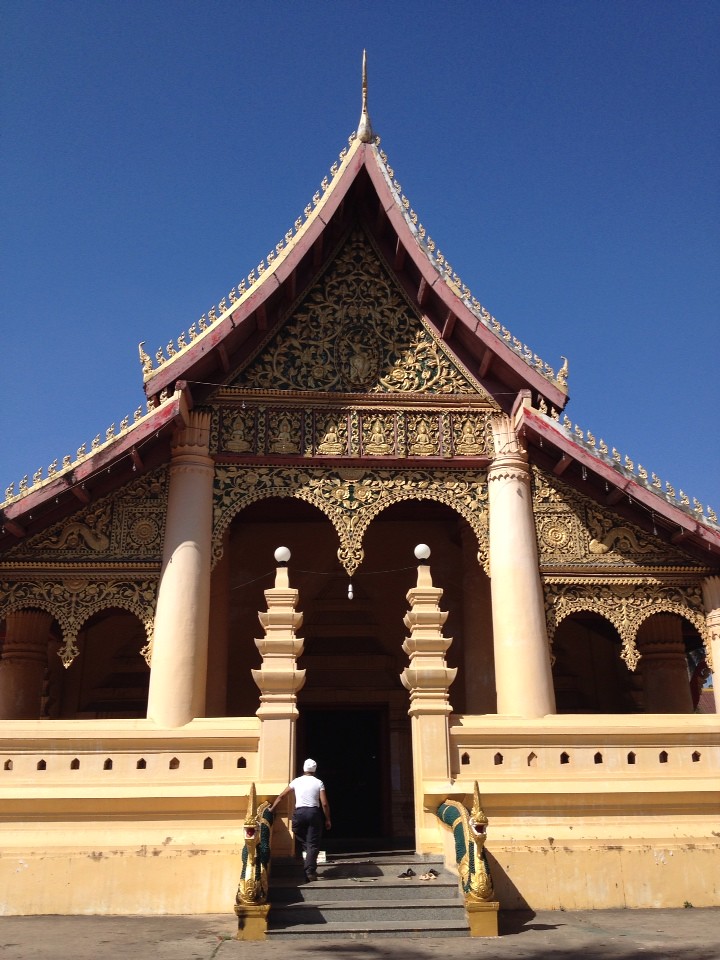
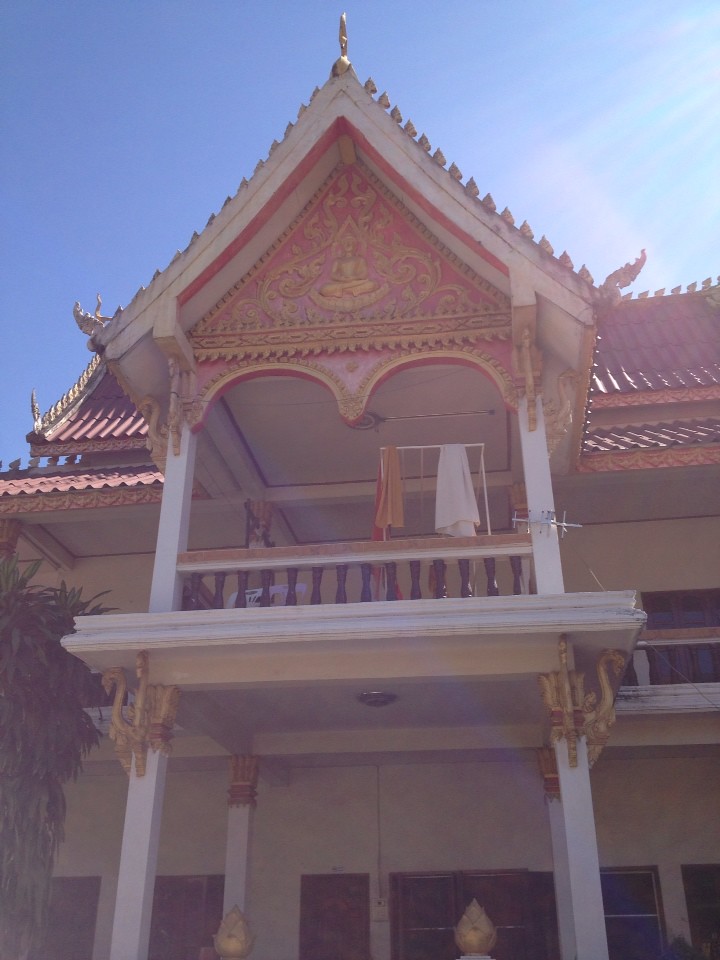
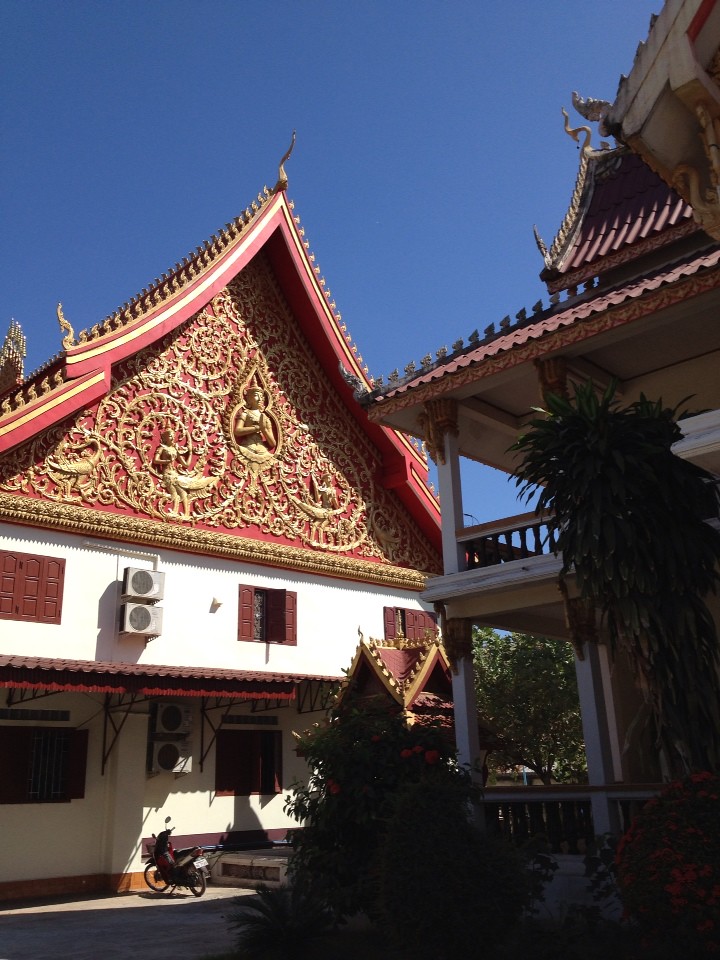
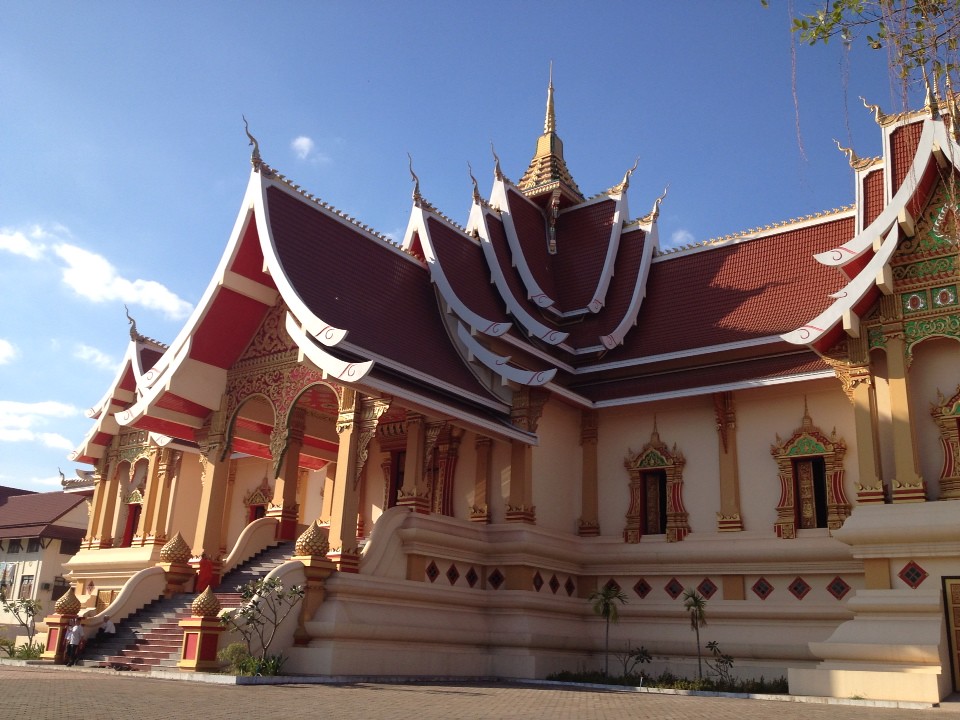
A temple opposite our hotel
Presidential palace
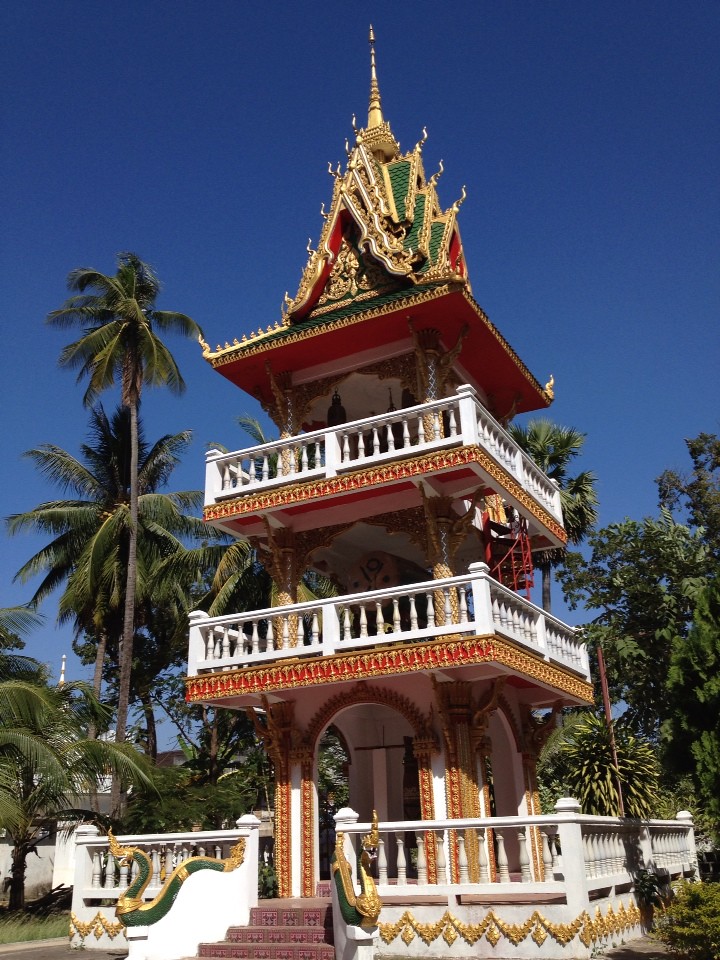
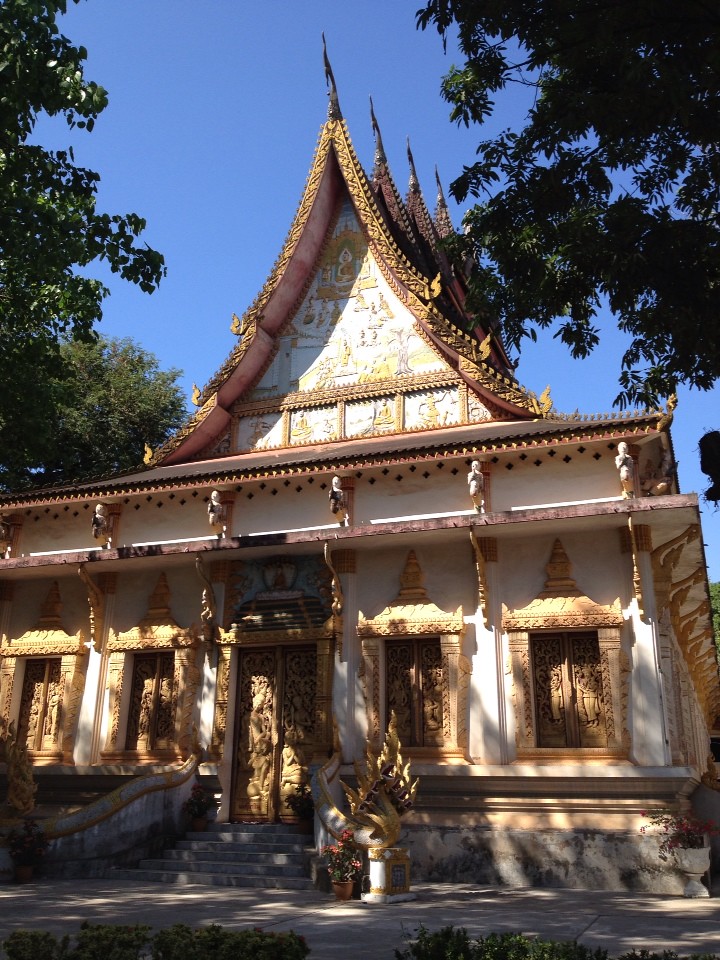
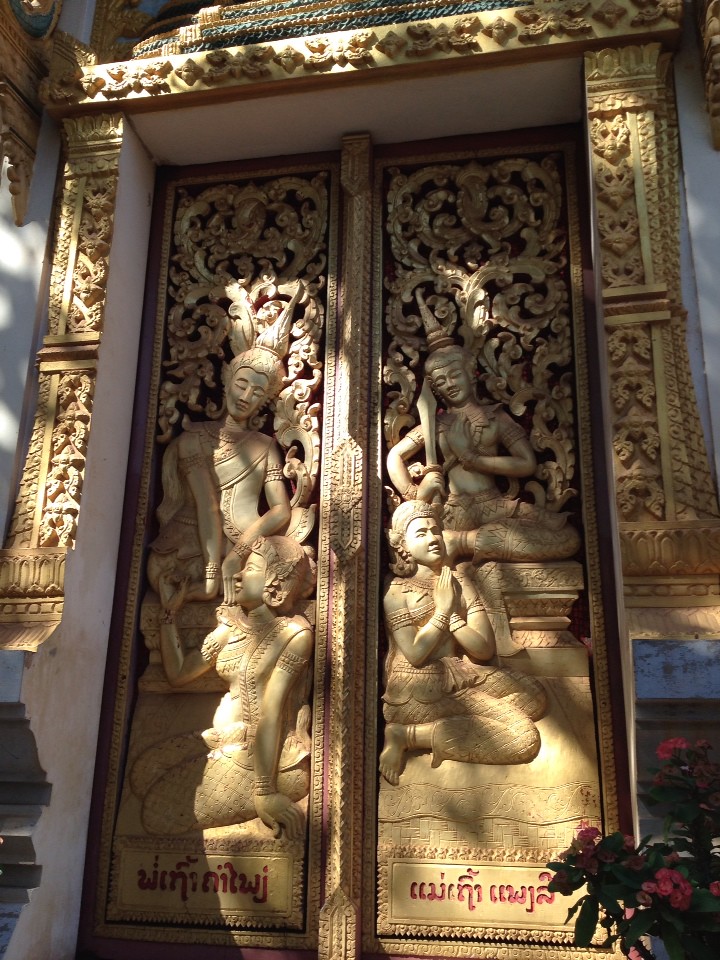
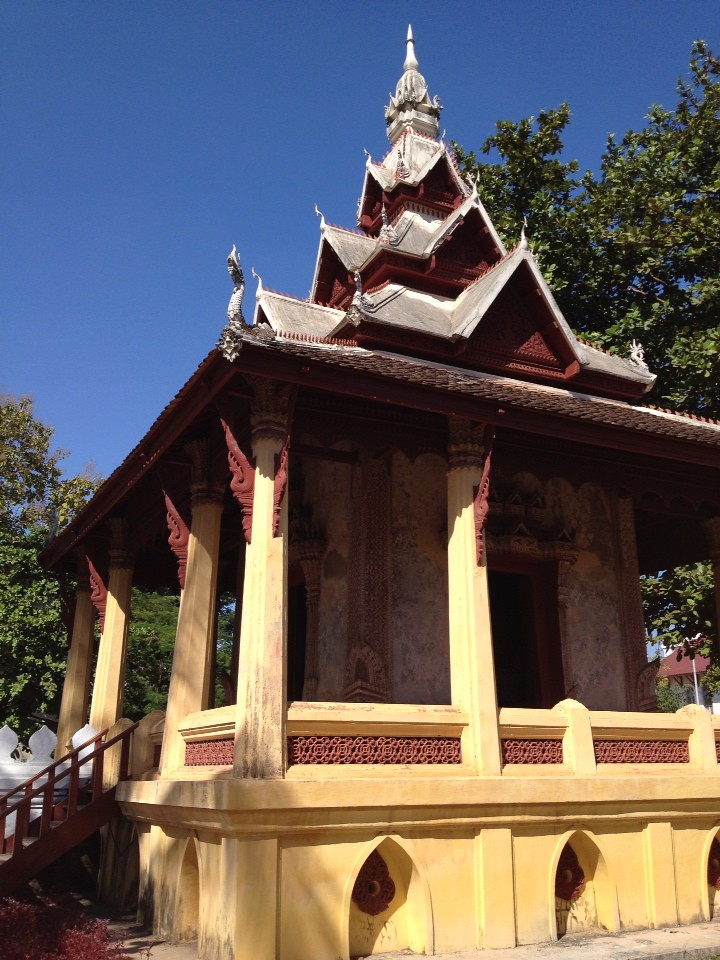
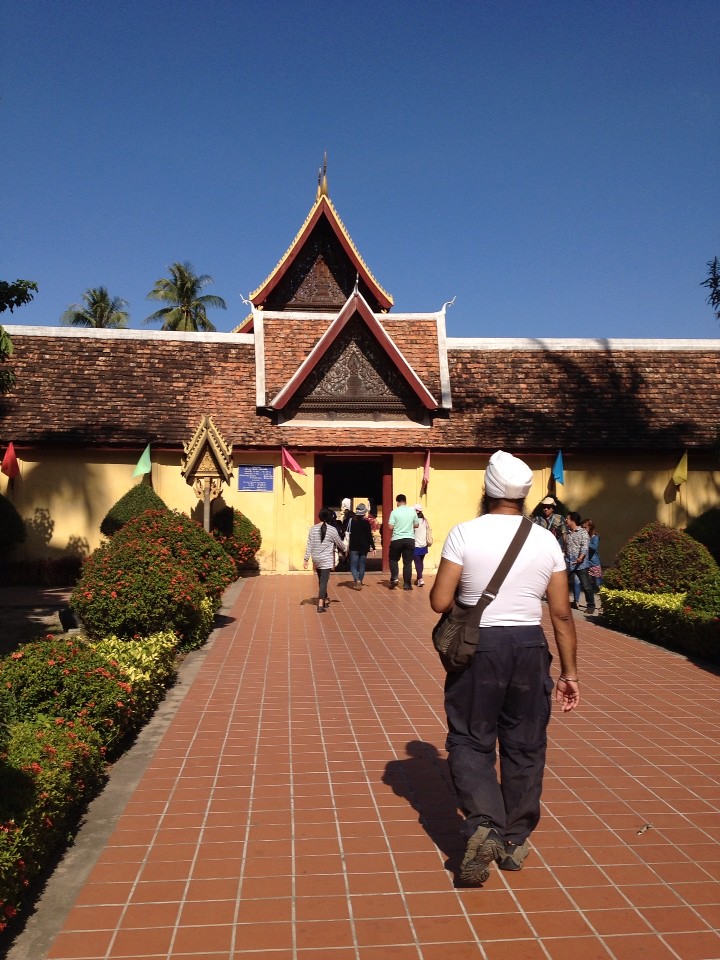
Wat Sisaket in Vientiane
As the temple was closed for lunch we also decided to go for lunch
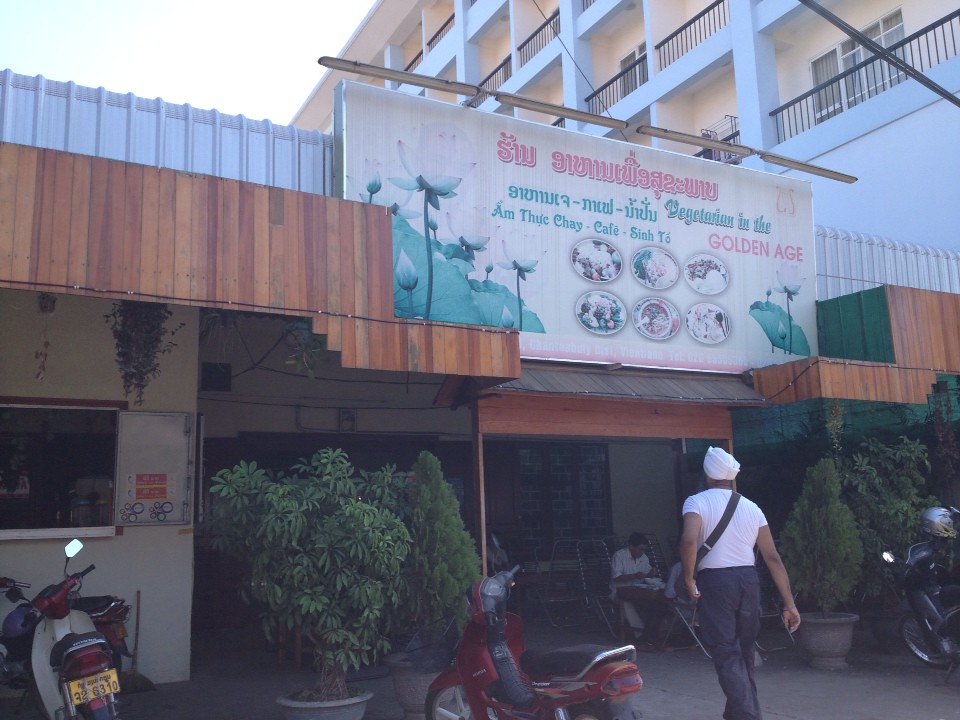
Vegetarian in the Golden Age
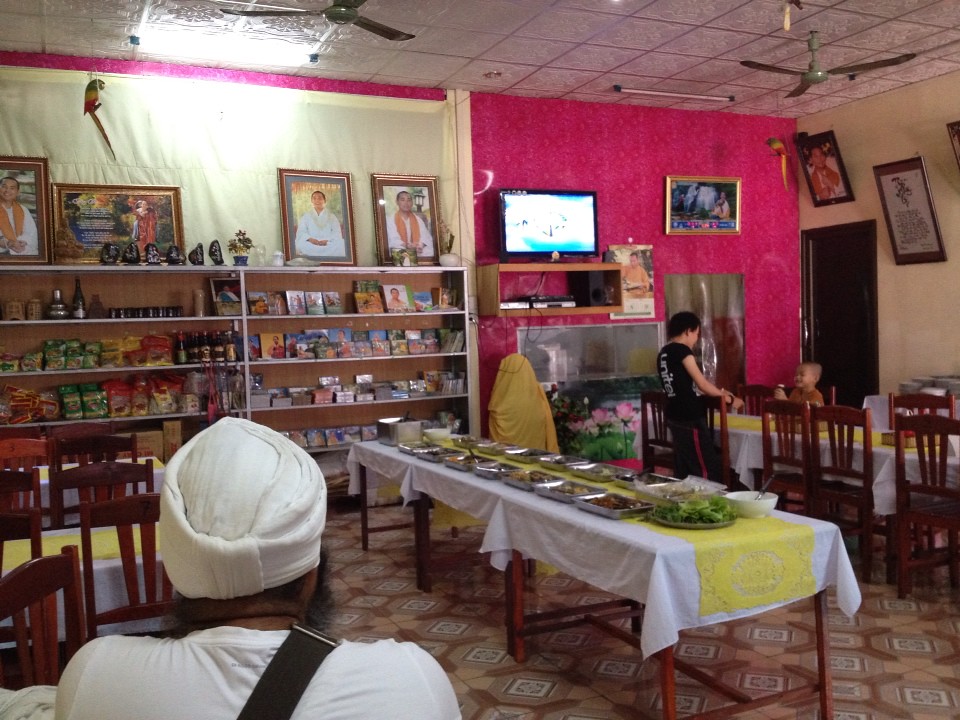
Buffet for 25,000 kip
We recommend getting there early as the food will taste fresh and will be hot
Afterwards we walked back to the temple
I misread the entrance fee instead of 5,000 kip I read 50,000 kip. We took out way too much money!
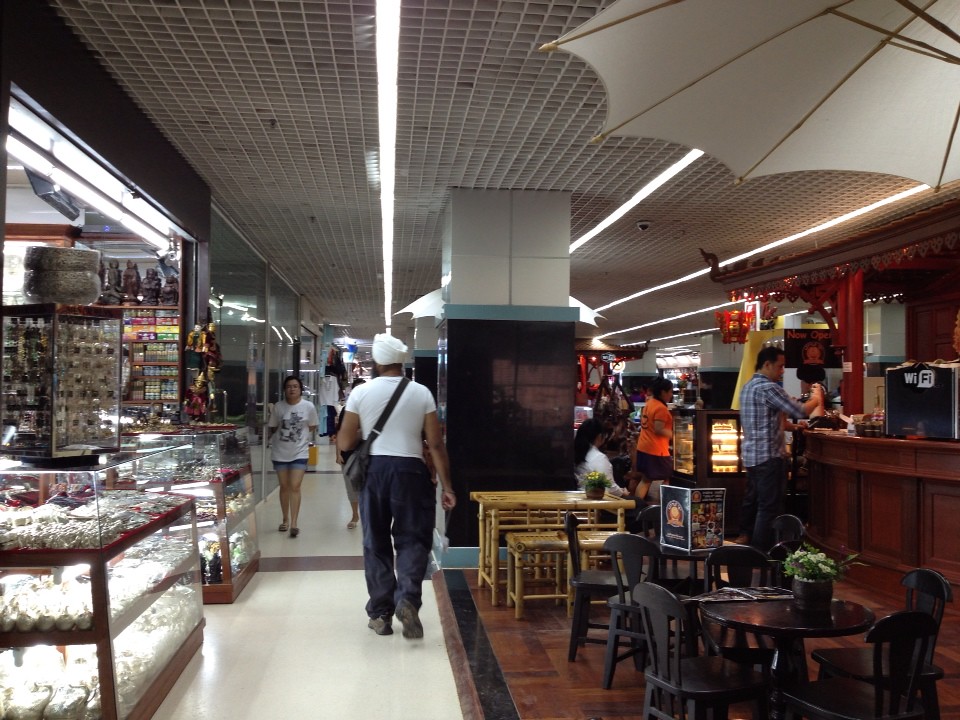
Walking through a mall
Back outside the temperature was a mild 26 degrees C
Back to Wat Sisaket in VIentiane
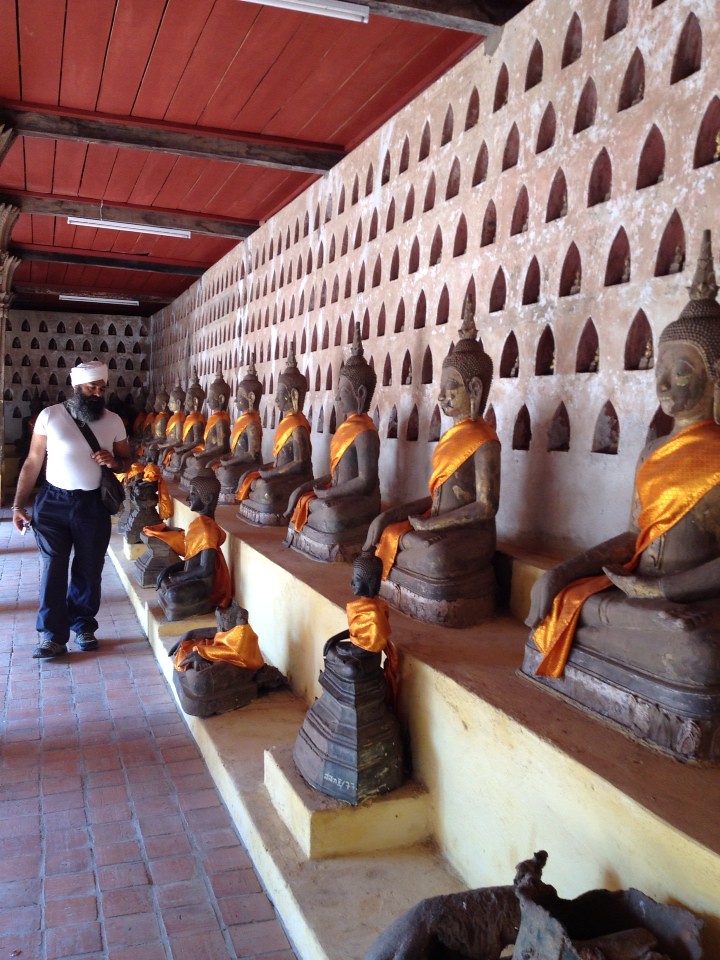
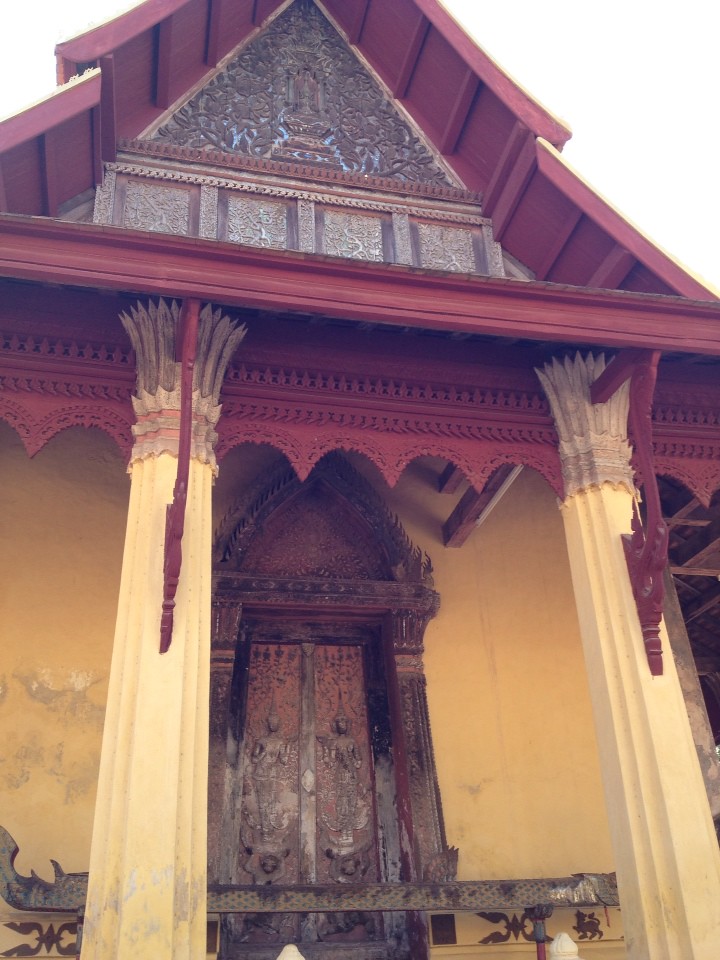
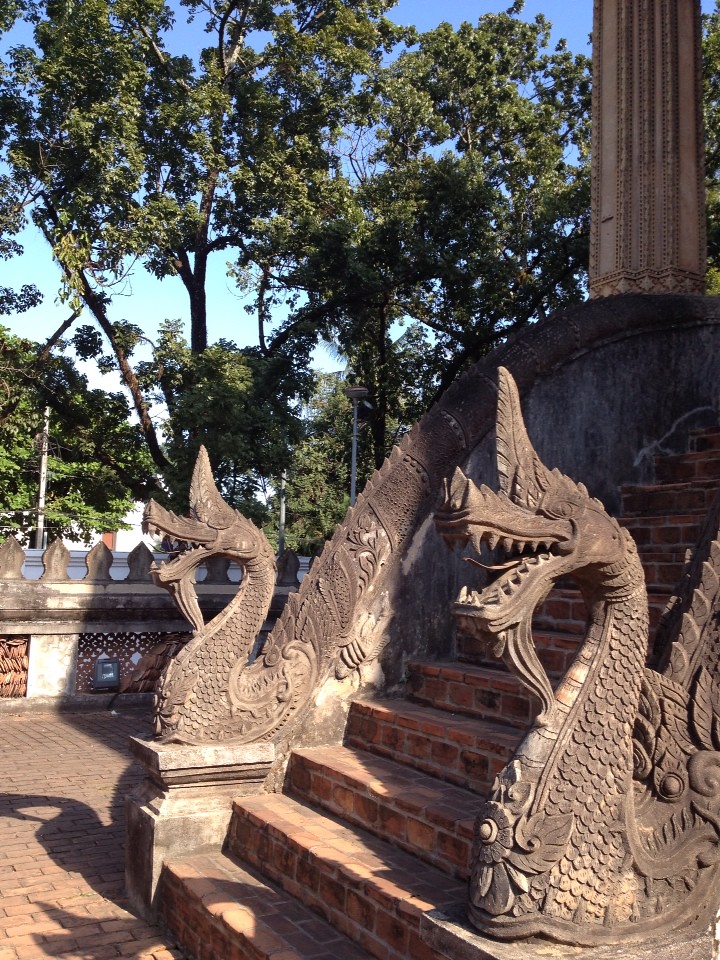
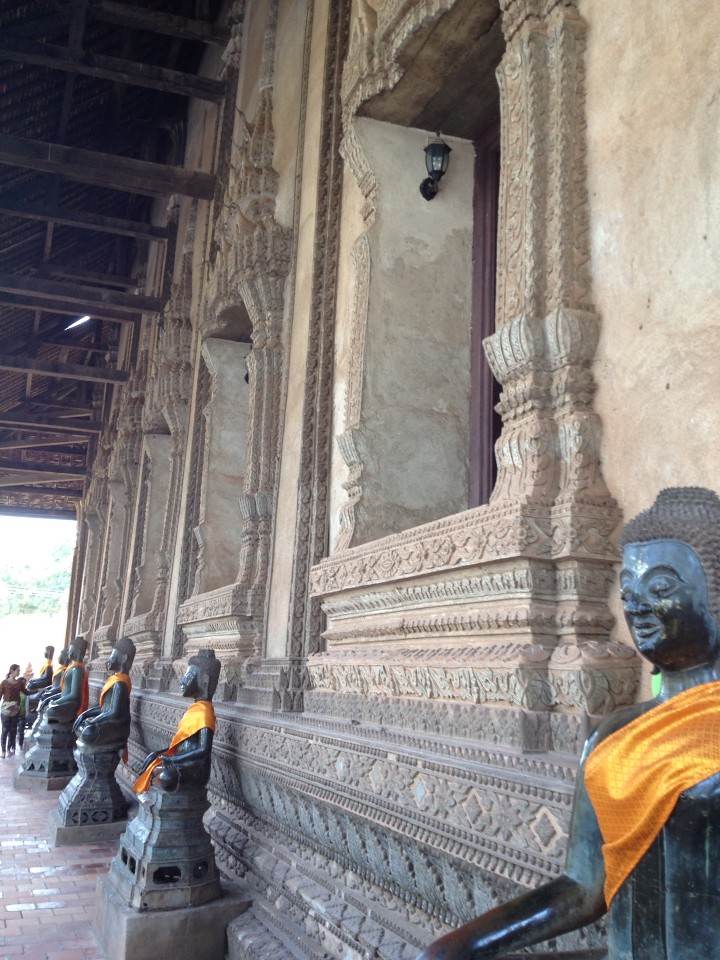
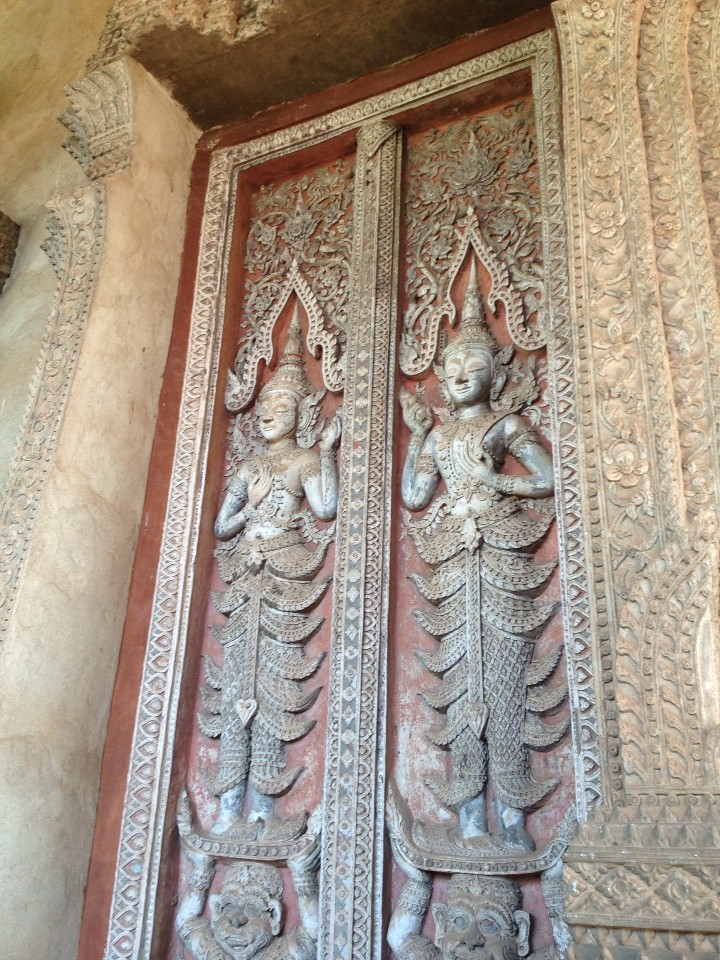
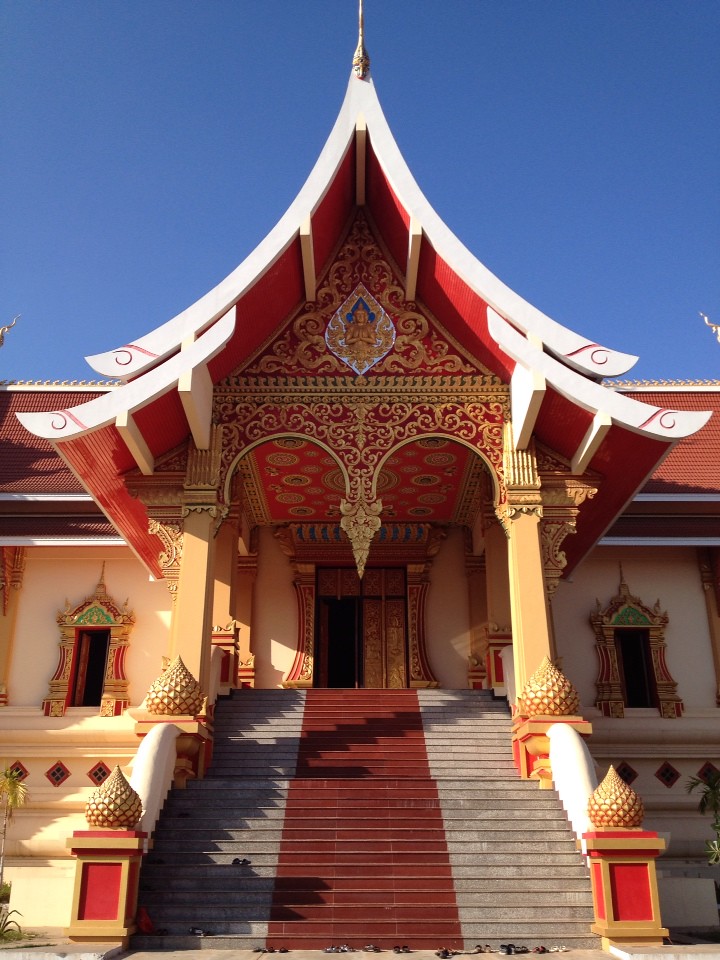
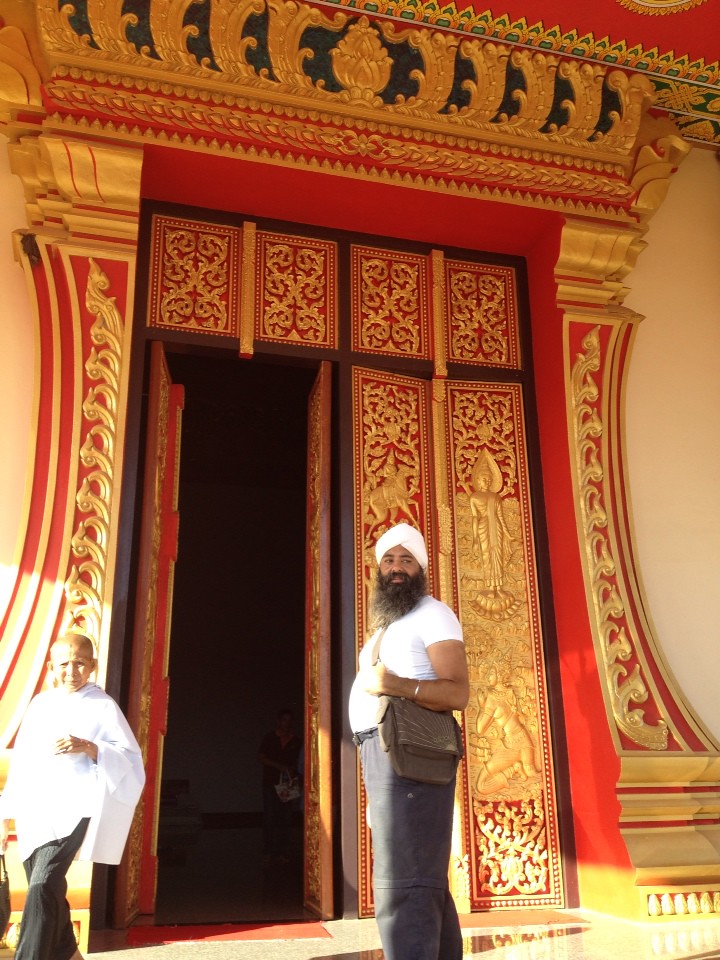
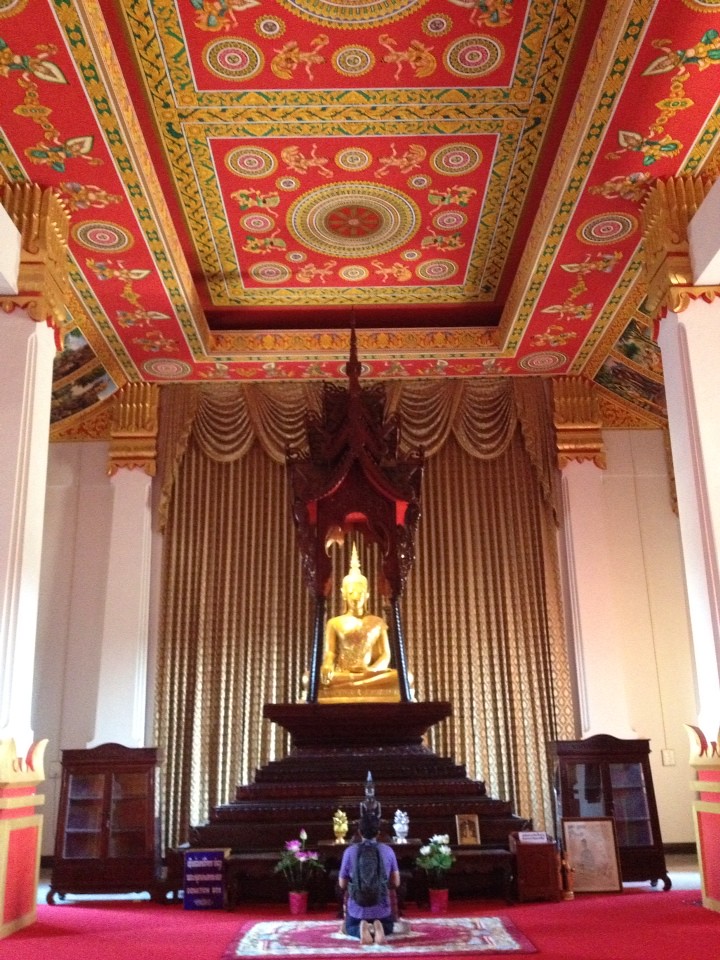
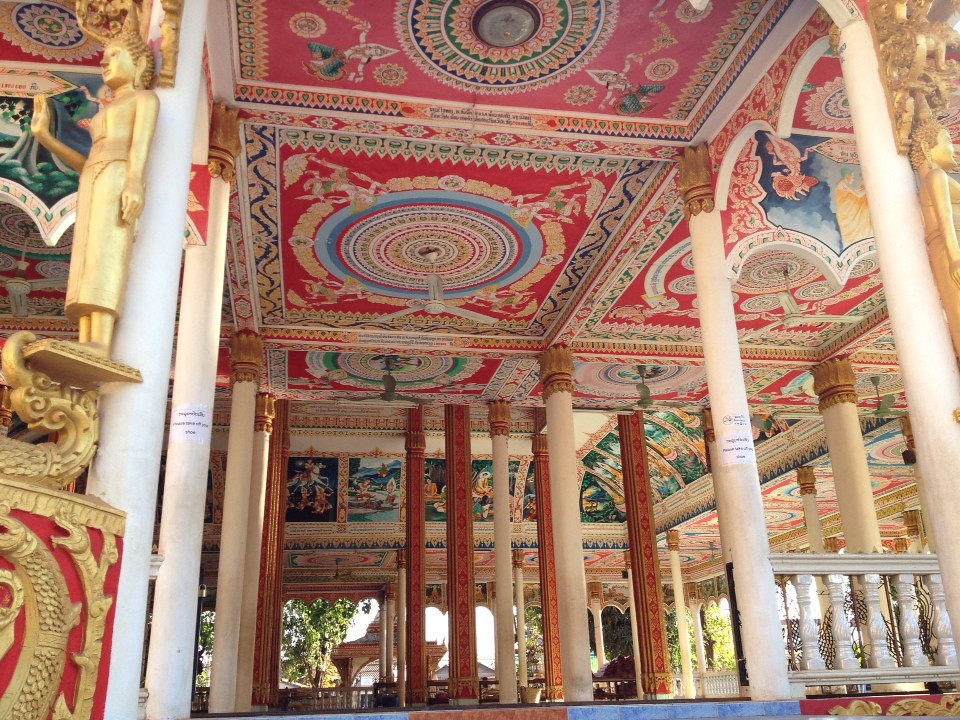
Wat Si Saket is a Buddhist wat in Vientiane, Laos. It is situated on Lan Xang Road, on the corner with Setthathirat Road, to the northwest of Haw Phra Kaew, which formerly held the Emerald Buddha.
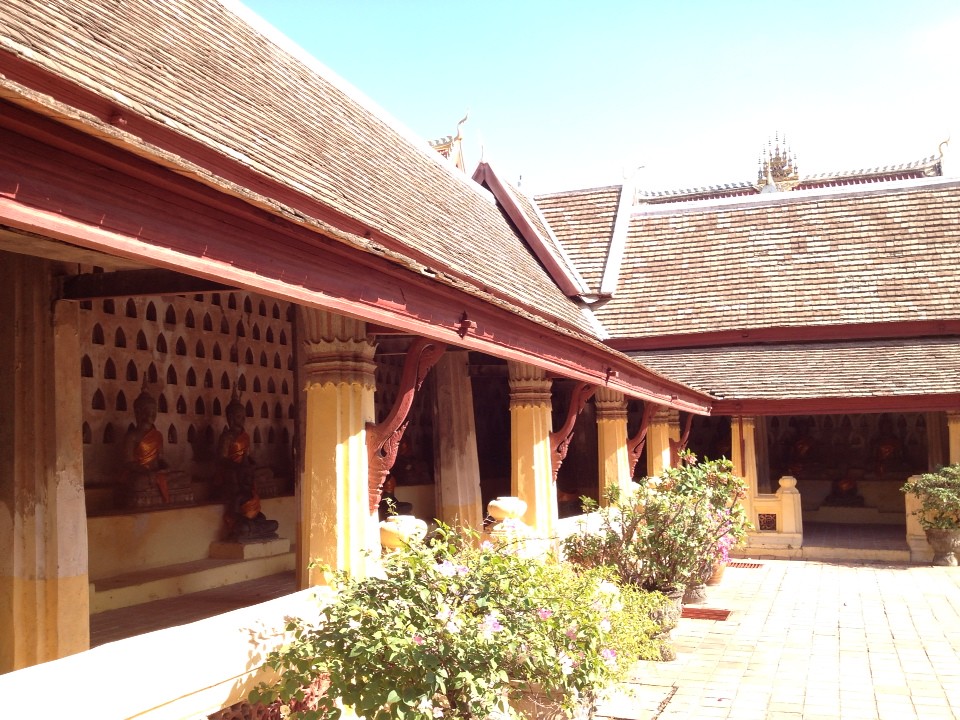
Wat Si Saket was built in 1818 on the orders of King Anouvong (Sethathirath V.) Si is derived from the Sanskrit title of veneration Sri, prefixed to the name of Wat Saket in Bangkok, which was renamed by Anouvong’s contemporary, King Rama I. Wat Si Saket was built in the Siamese style of Buddhist architecture, with a surrounding terrace and an ornate five-tiered roof, rather than in the Lao style. This may have kept it safe as the armies of Siam that sacked Vientiane in 1827 used the compound as their Headquarters and lodging place. It may now be the oldest temple still standing in Vientiane. The French restored Wat Si Saket in 1924 and again in 1930.
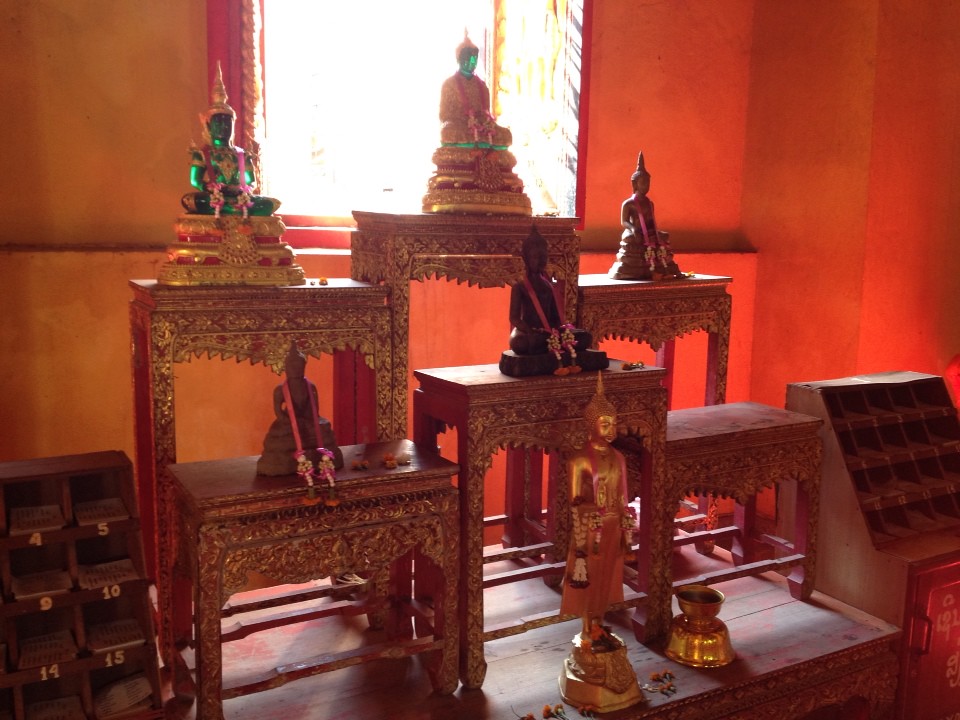
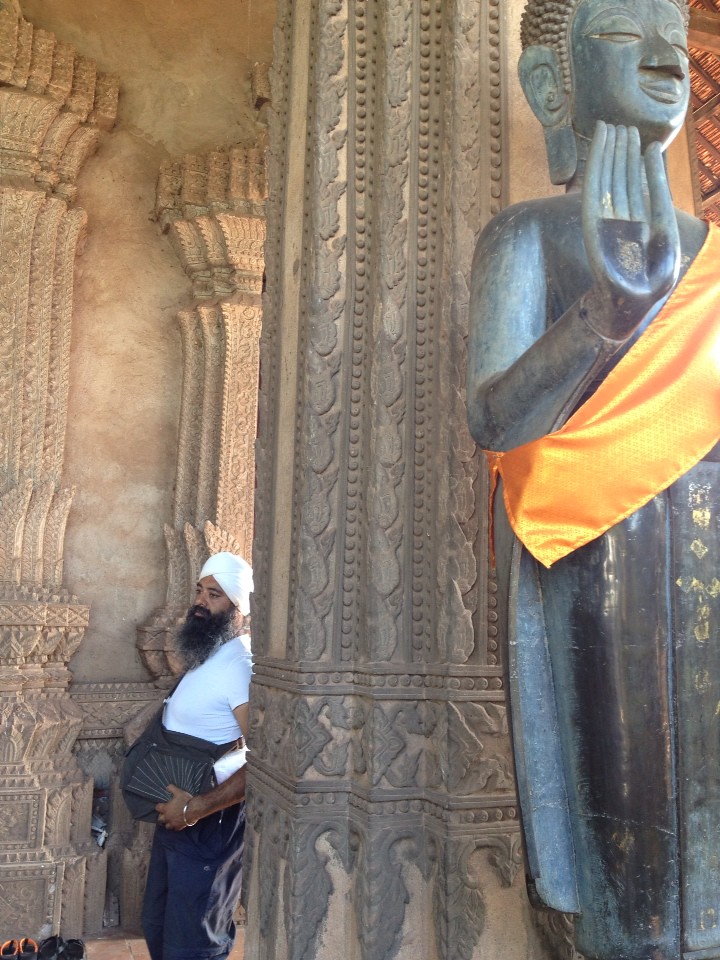
Wat Si Saket features a cloister wall with more than 2000 ceramic and silver Buddha images. The temple also houses a museum.
Next was Haw Phra Kaew which was built between 1565 and 1556, on the orders of King Setthathirath. The temple housed the Emerald Buddha figurine, which Setthathirath had brought from Chiang Mai, then the capital of Lanna, to Luang Prabang. When Vientiane was seized by Siam (now Thailand) in 1778, the figurine was taken to Thonburi and the temple was destroyed. After it was rebuilt by King Annouvong of Vientiane in the 19th century, it was again destroyed by Siamese forces when King Annouvong rebelled against Siam in an attempt to regain full independence. The revered Buddha now resides in Wat Phra Kaew, Bangkok. The temple was rebuilt for a third time by the French between 1936 and 1942, during colonization of French Indochina.
Looking out to the gardens the temple is behind us
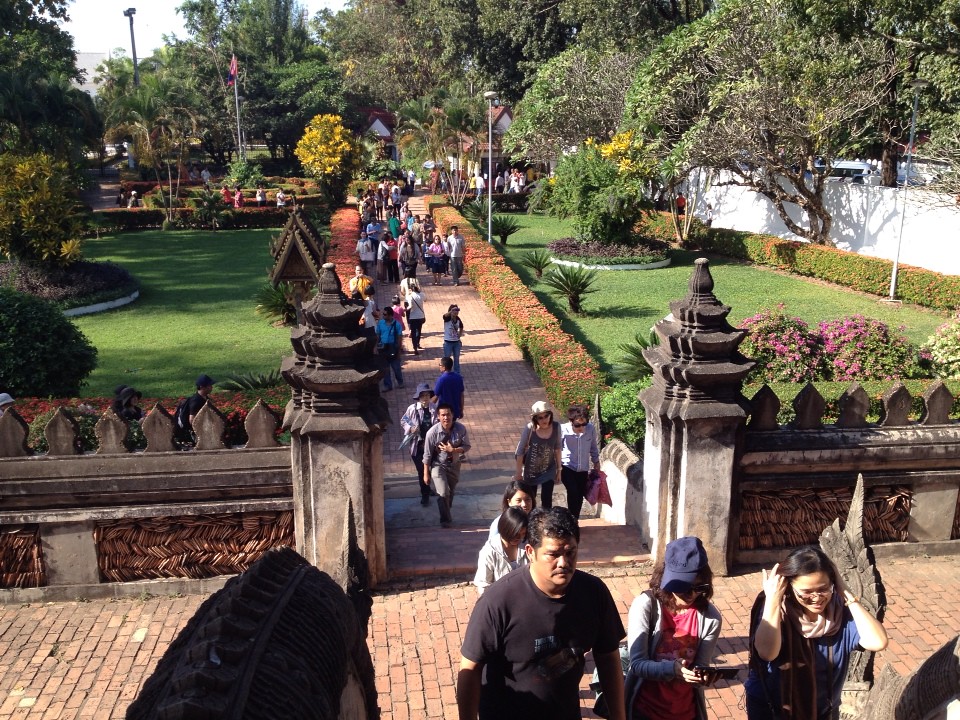
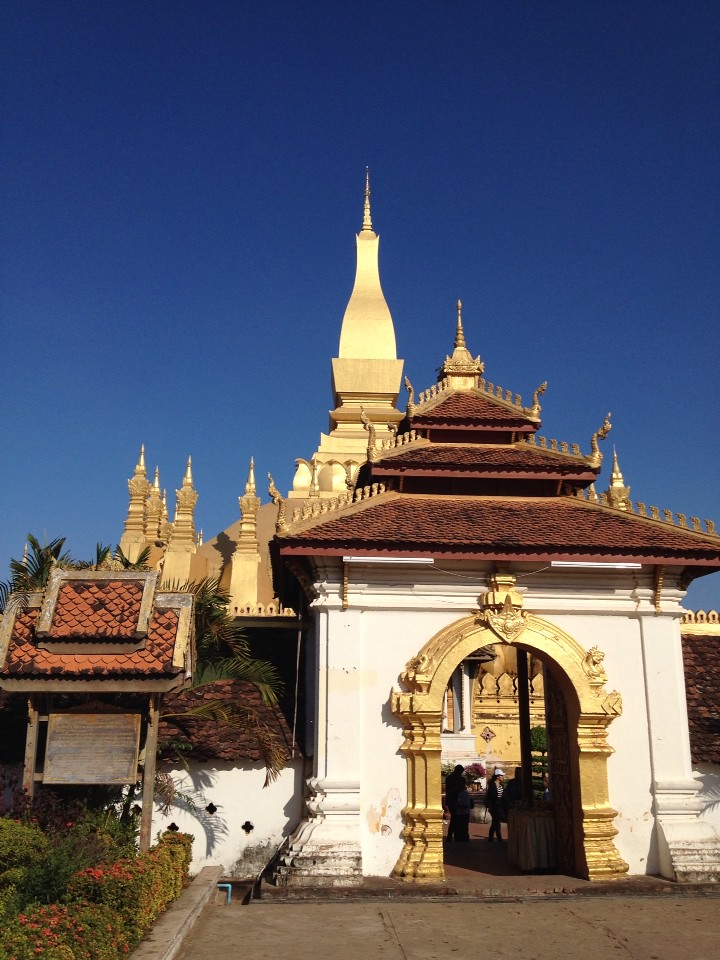
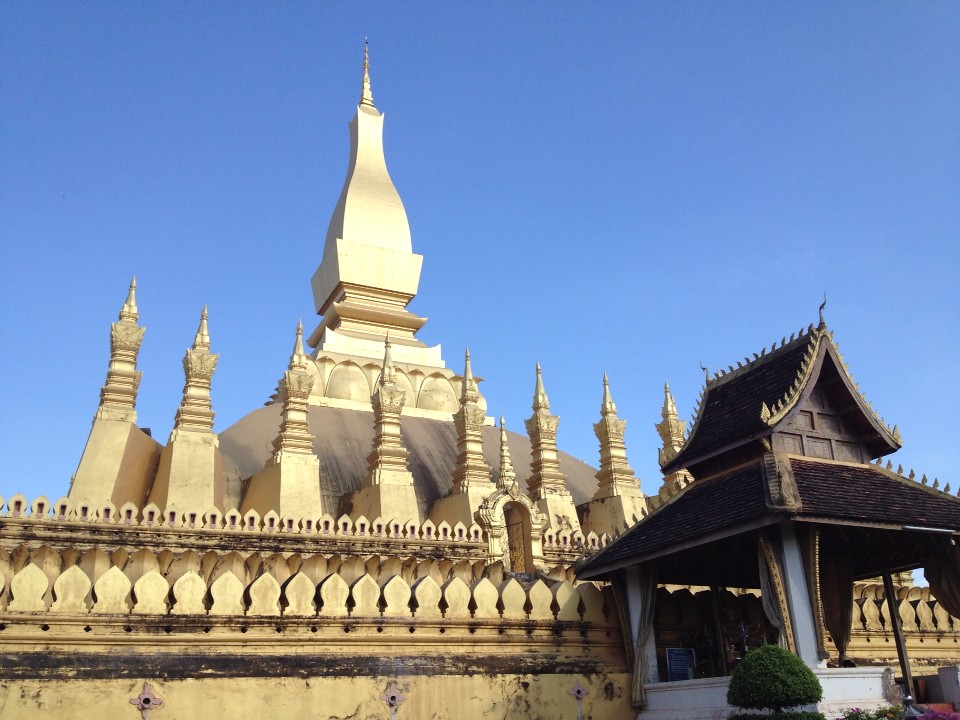
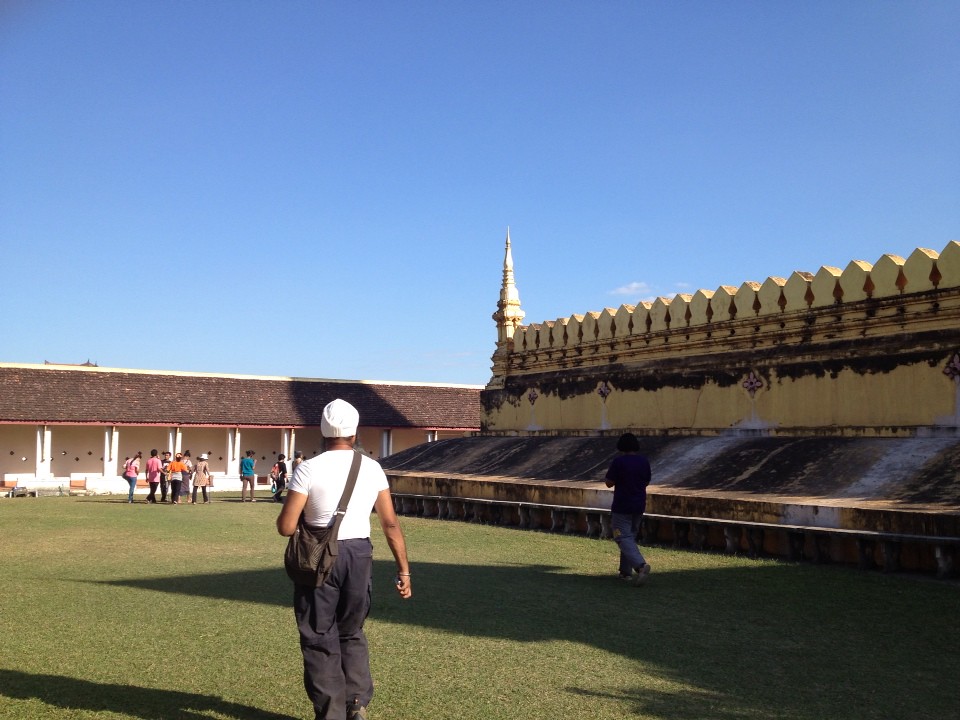
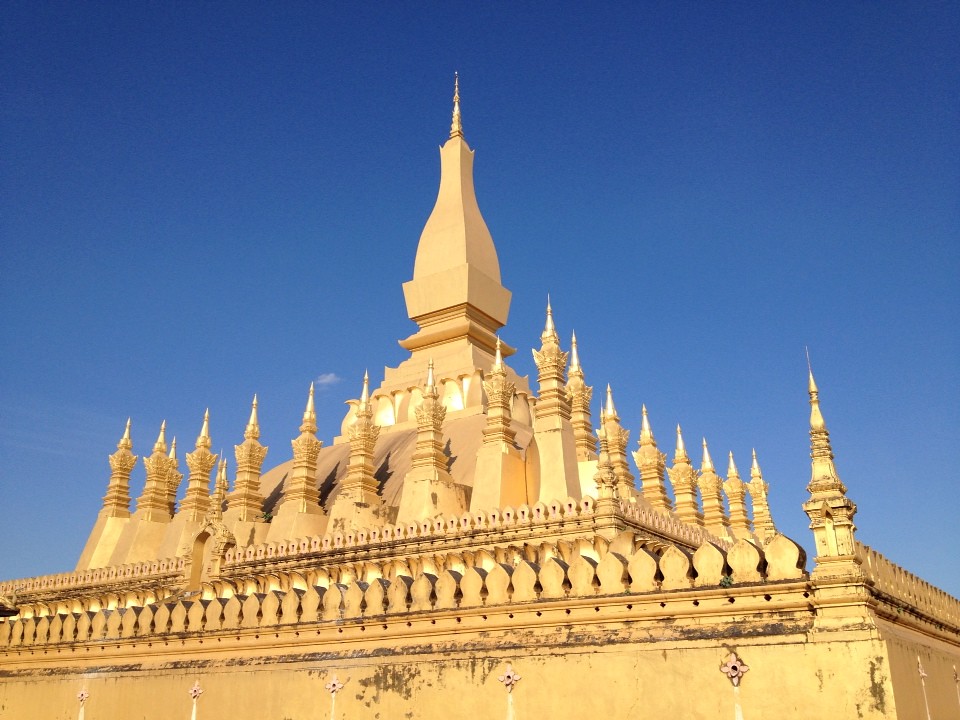
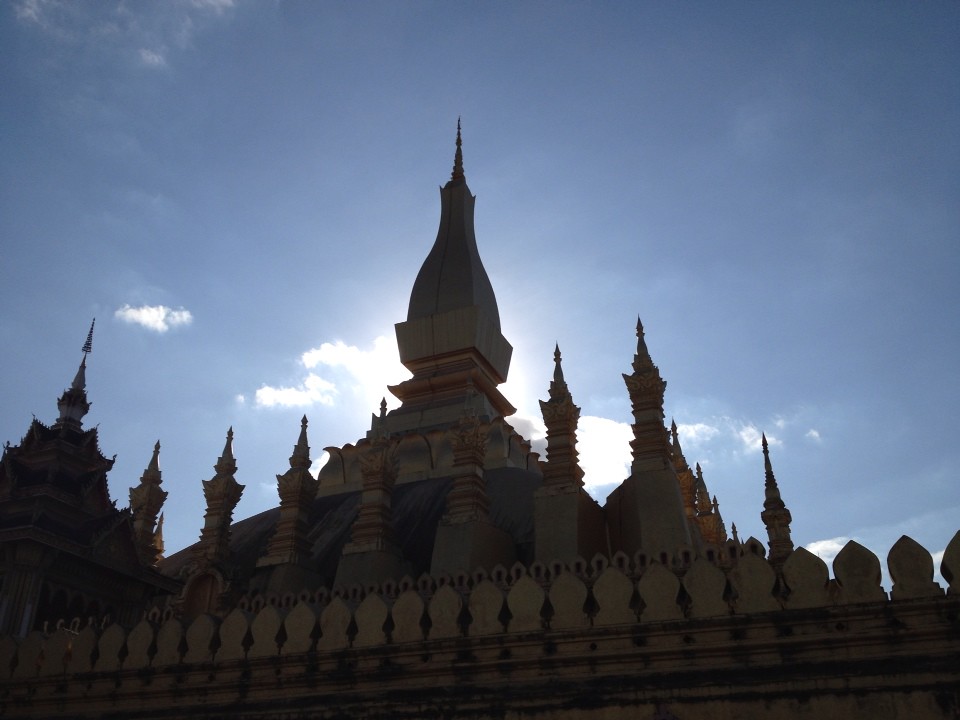
We took a tuk tuk to Pha That Luang (‘Great Stupa’) is a gold-covered large Buddhist stupa in the centre of Vientiane, Laos. Since its initial establishment suggested to be in the 3rd century, the stupa has undergone several reconstructions until the 1930s due to foreign invasions to the area. It is generally regarded as the most important national monument in Laos and a national symbol.
Pha That Luang according to the Lao people was originally built as a Hindu temple in the 3rd century. Buddhist missionaries from the Mauryan Empire are believed to have been sent by the Emperor Ashoka, including Bury Chan or Praya Chanthabury Pasithisak and five Arahata monks who brought a holy relic (believed to be the breast bone) of Lord Buddha to the stupa. It was rebuilt in the 13th century as a Khmer temple which fell into ruin.
In the mid-16th century, King Setthathirat relocated his capital from Luang Prabang to Vientiane and ordered construction of Pha That Luang in 1566. It was rebuilt about 4 km from the centre of Vientiane at the end of That Luang Road and named Pha That Luang. The bases had a length of 69 metres each and was 45 metres high, and was surrounded by 30 small Stupas.
In 1641, a Dutch envoy of the Dutch East India Company, Gerrit van Wuysoff, visited Vientiane and was received by King Sourigna Vongsa at the temple, where he was, reportedly, received in a magnificent ceremony. He wrote that he was particularly impressed by the “enormous pyramid and the top was covered with gold leaf weighing about a thousand pounds”. However, the stupa was repeatedly plundered by the Burmese, Siamese and Chinese.
Pha That Luang was destroyed by the Thai invasion in 1828, which left it heavily damaged and left abandoned. It was not until 1900, when the French restored to its original design based on the detailed drawings from 1867 by the French architect and explorer Louis Delaporte. However the first attempt to restore it was unsuccessful and it had to be redesigned and then reconstructed in the 1930s. During Franco-Thai war Pha That Luang was heavily damaged from Thais air raid. After the End of World War II Pha That Luang has been newly reconstruction.
The architecture of the building includes many references to Lao culture and identity, and so has become a symbol of Lao nationalism. The stupa today consists of three levels, each conveying a reflection of part of the Buddhist doctrine. The first level is 223 feet (67 metres) by 226 feet (68 metres), the second is 157 feet (47 metres) along each side and the third level is 98 feet (29 metres) along each side. From ground to pinniacle, Pha That Luang is 147.6 feet (44 metres) high.
The area around Pha That Luang is now gated, to keep traffic out. Previously visitors could drive around the whole complex. The encircling walls are roughly 279 feet (85 metres) long on each side and contain a large number of Lao and Khmer sculptures including one of Jayavarman VII.
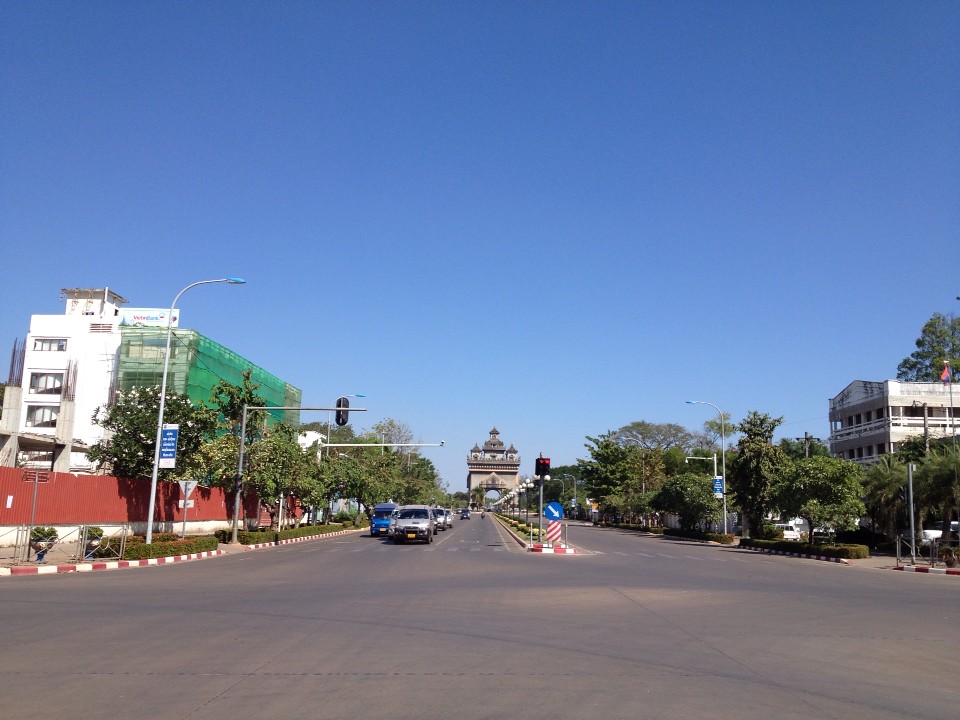
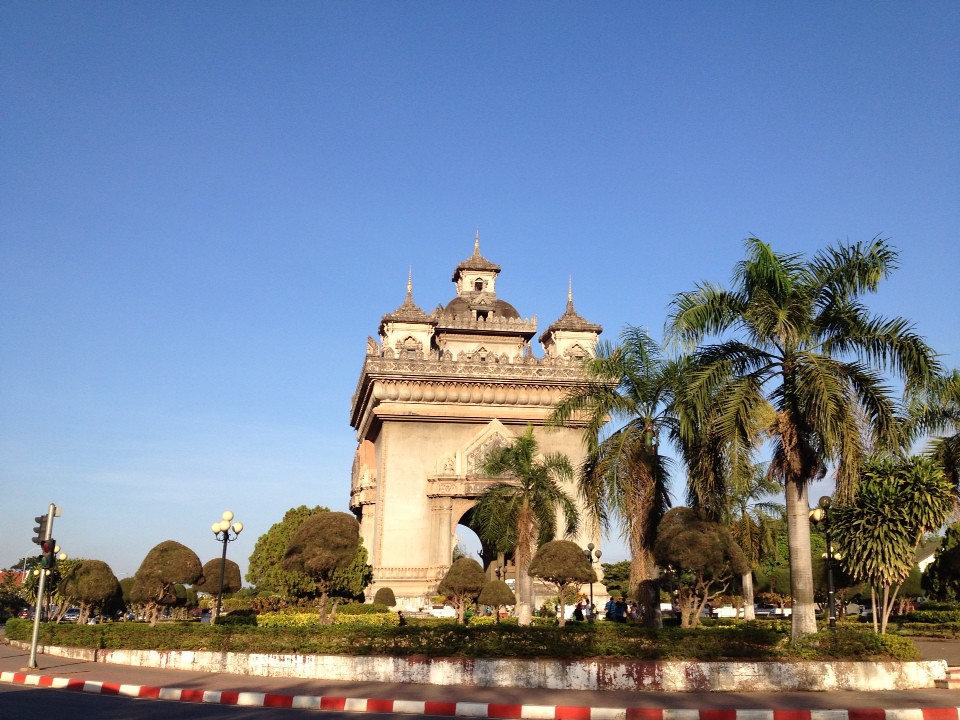
Patuxai (literally meaning Victory Gate or Gate of Triumph, formerly the Anousavary or Anosavari Monument, known by the French as Monument Aux Morts) is a war monument in the centre of Vientiane, Laos, which was built between 1957 and 1968. The Patuxai is dedicated to those who fought in the struggle for independence from France. In romanising the name from the Laotian language, it is variously transliterated as Patuxai, Patuxay, Patousai and Patusai. It is also called Patuxai Arch or the Arc de Triomphe of Vientiane as it resembles the Arc de Triomphe in Paris. However, it is typically Laotian in design, decorated with mythological creatures such as the kinnari (half-female, half-bird).
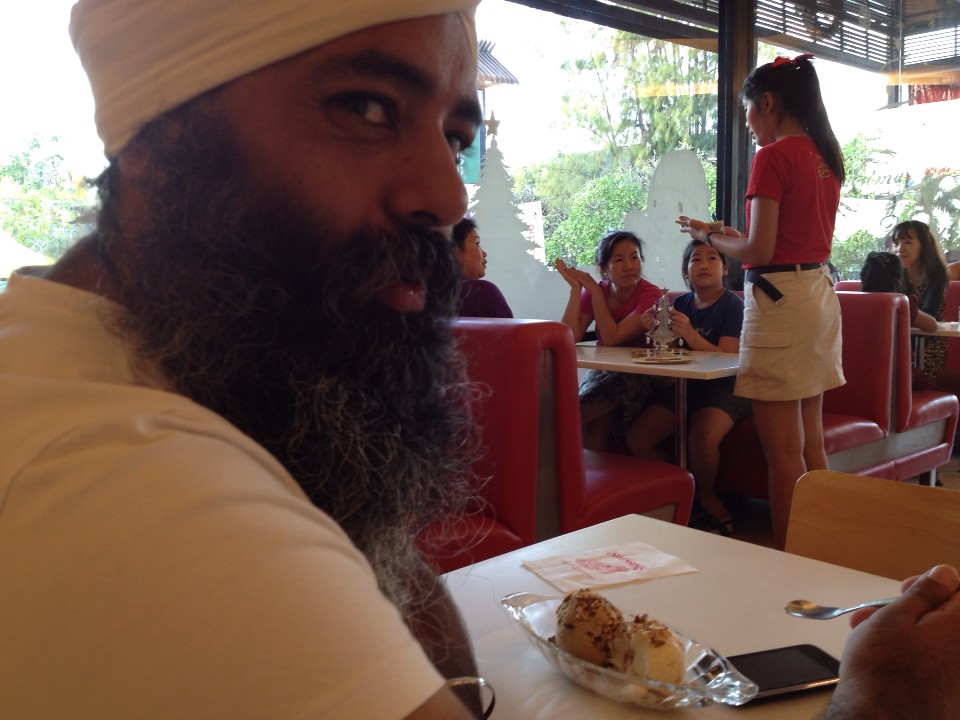
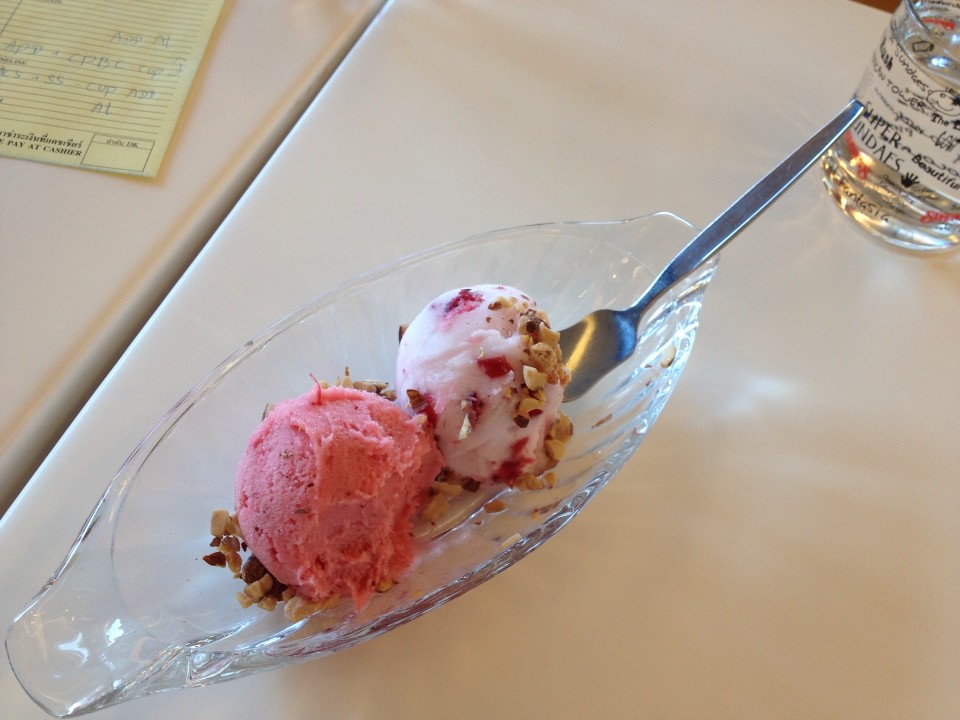
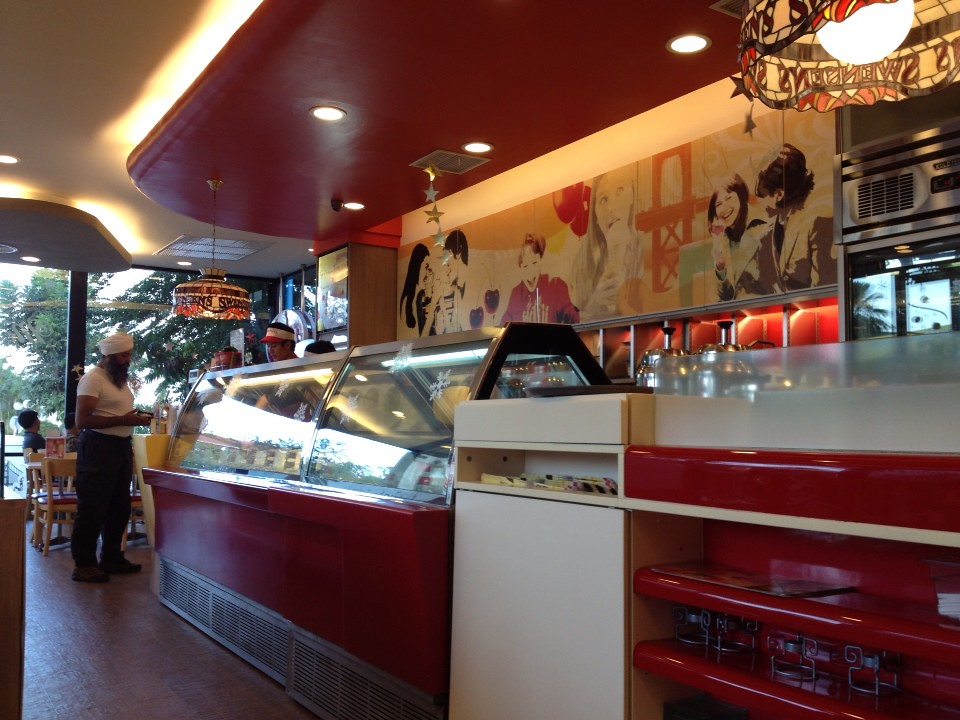
Had to complete the day with ice cream! So back to Swensens.
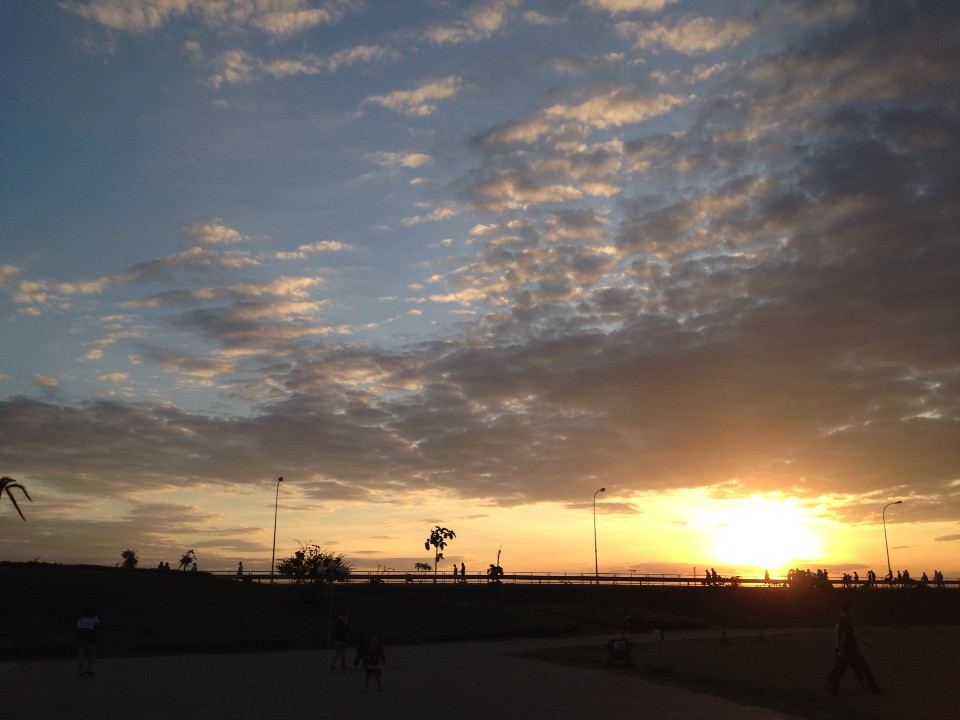
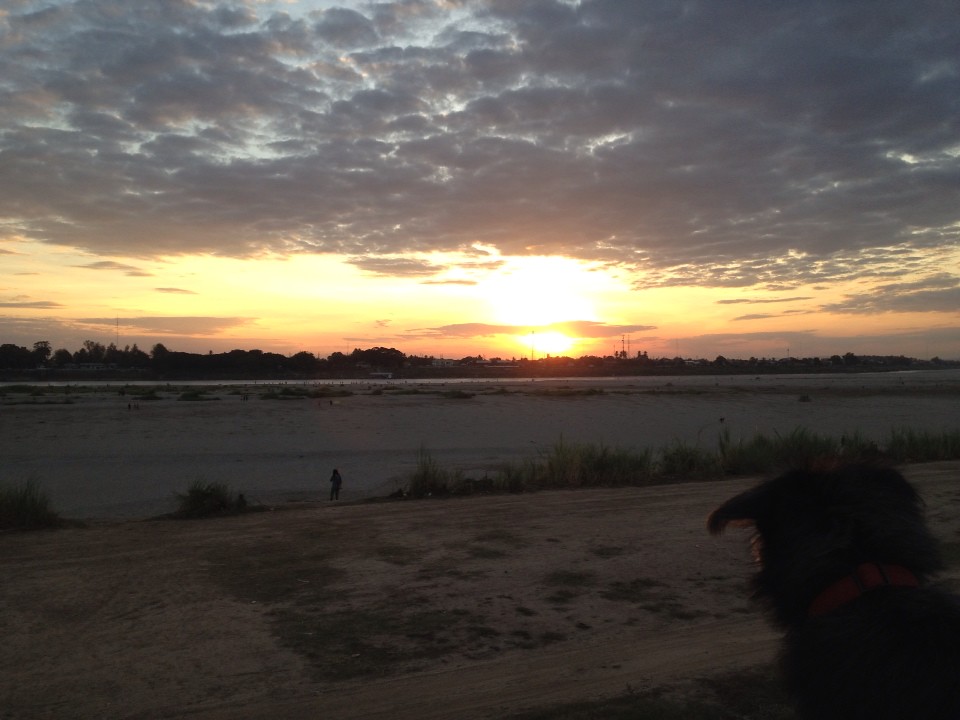
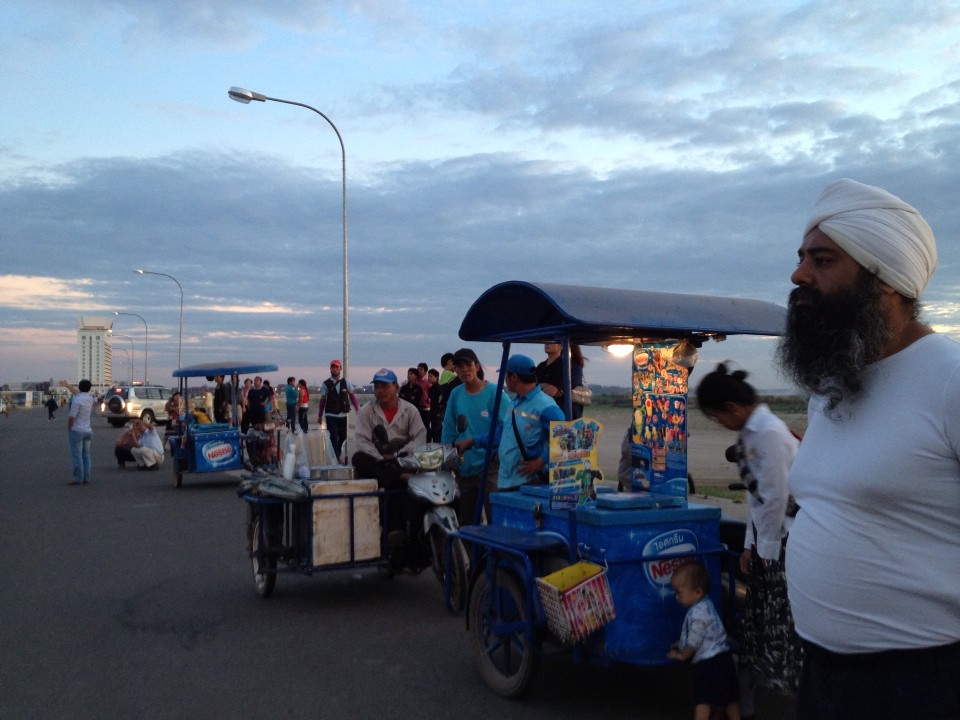
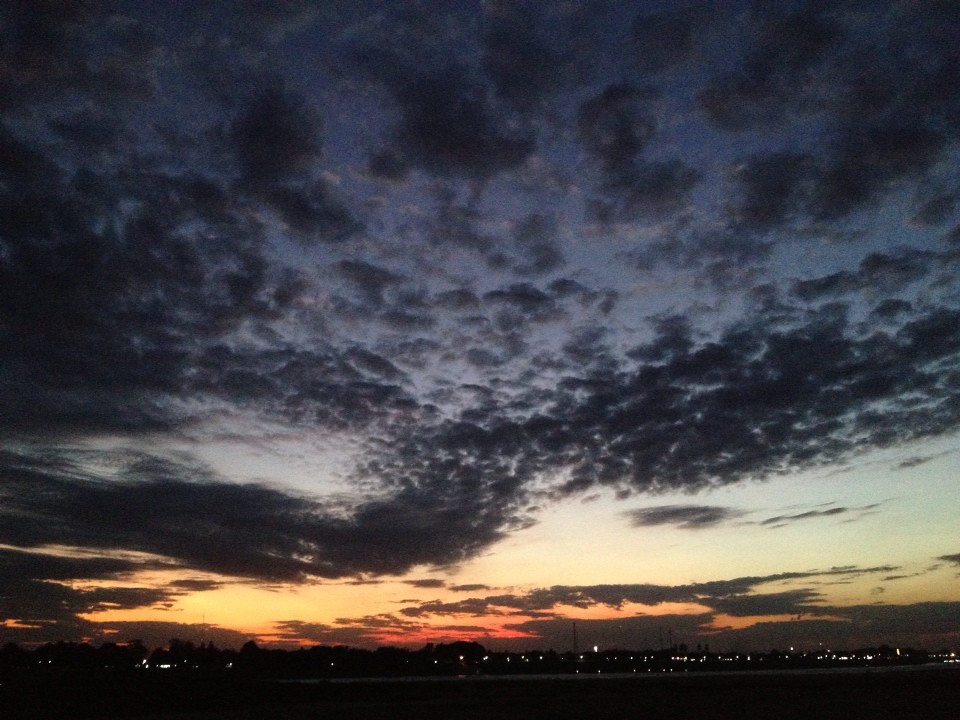
In the evening we walked to the banks of the Mekong River to view the sunset
The land across the Mekong River is Thailand
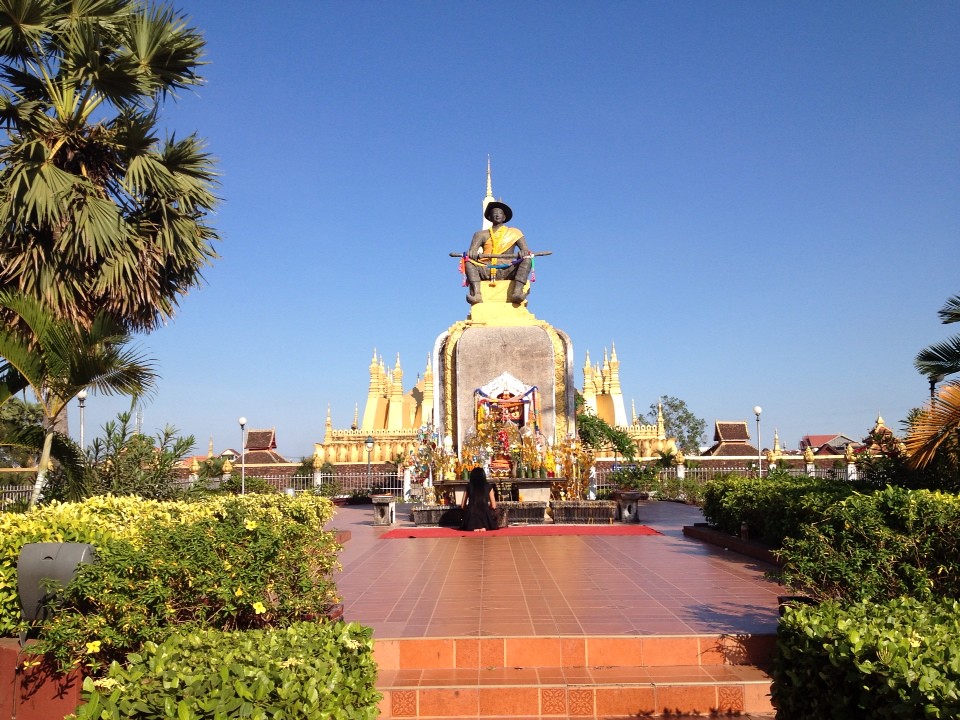
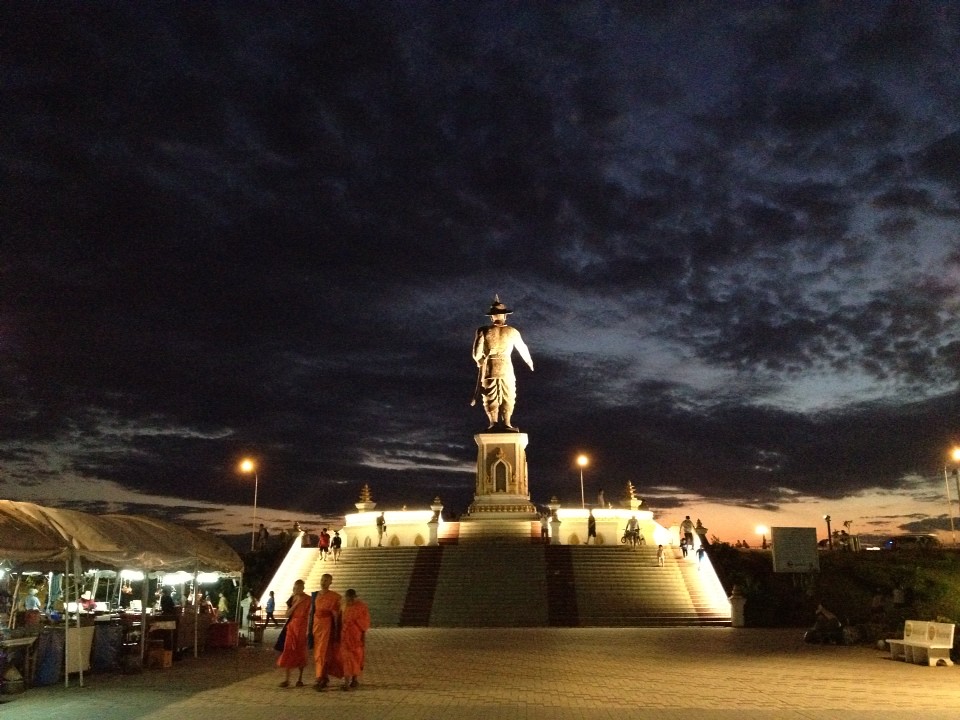
You walk through Chao Anouvong Park in which stands the majestic statue of King Anouvong. The park was named after the King and he is highly regarded amongst Laotians. The statue was constructed in 2010 during Vientiane’s 450th Anniversary to commemorate the King’s noble contribution to Vientiane during his reign.
Chao Anouvong was the last king of the Lao Kingdom of Vientiane. During his era, he struggled to fight against the Siamese invasion of Vientiane. In the end, he was unsuccessful and was captured and the Kingdom of Vientiane was forced to surrender to Siamese rule and ceased to exist. Because of his persistent attempts to defeat the Siamese forces, Chao Anouvong is considered a courageous hero who fought for Vientiane until his death.
You maybe asking why?!
Let me explain
Whilst looking at the statue I saw families having their photographs taken, by a local photographer. This photographer wears coloured top and carry badges to say they have permission to take and sell photographs. They are totally genuine and I am sure their charges are reasonable, otherwise, locals would not use them. Anyway, once the family takes a photograph they go for a wander whilst the photographer develops the picture. The family return to collect their picture and are mesmerised by the picture, some laugh whilst others are in awe of how is this possible, their in this piece of paper. They then very carefully handle the picture so as to not damage it. For them it is a very precious memory of the trip out. This made me appreciate what we take for granted…..between us we have a digital camera, iPad and two iPhones which we use as cameras, we take them for granted. The poor camera gets thrown about but it still serves us well. The iPhones get dropped every other day but still serves us so well. We always expect it to work as it should regardless of how we treat it. If not we would just buy another one and not think about it. Here families really do appreciate every little thing. The picture of them. Their family walk on the beach. I noticed in Luang Prabang their dinners around the family table. Watching their car battery powered televisions as a family. Here throwing away items e.g a radio, television is not an option. They treat it well if a mechanical fault does occur they will fix it, in the west if a mechanical fault occurs we throw it away and buy another one!
Sangeet took amazing pictures of the sunset, here they are…in fact 99% of the pictures on this blog are were taken by Sangeet.
The statue from behind
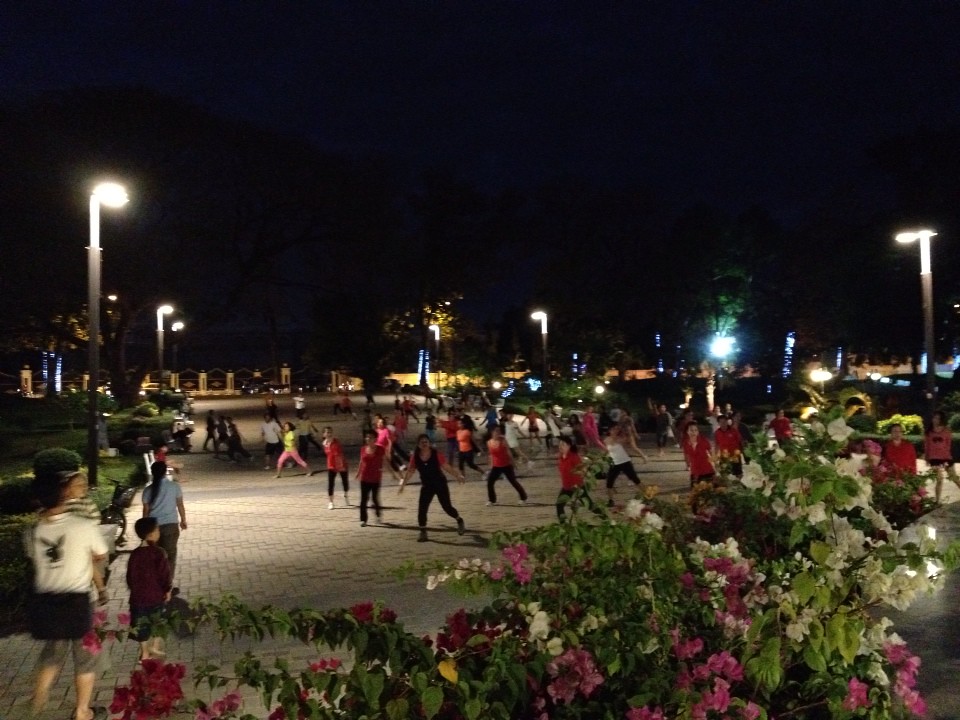
Whilst walking through the park we came across an aerobics class
Hi, thanks for visiting my blog, feel free and have a look around.Here is a bit about me, as you may or may not have guessed my name is Mandeep,I work to travel as opposed to work to pay bills and die!Every trip for me is an adventure, I have been very fortunate to stumble across amazing places and meet awesome people along the way.
Why gaygoat? When I first started this blog I was a vegetarian, so gaygoat – happy goat! Also you have to admit it is catchy and a URL you will not forget!
Get Regular Updates and Occasionals Special Offers
Join our mailing list to receive the latest news and updates from Gaygoat.com
Great, welcome aboard. Never miss another update I will keep you posted directly to your inbox,
Get Regular Updates and Occasionals Special Offers
Join our mailing list to receive the latest news and updates from Gaygoat.com
Welcome aboard, just one more step. Confirm your email address, don't forget to check you spam.
JOIN THE COMMUNITY
__________
Get regular updates sent directly to your inbox: latest blog posts, news, pictures and the occasional special offer.
I hate SPAM as much as you, and promise to always keep your details safe and never sell them on.
Thank you, just one more step. I have sent you an email to confirm your address. Click confirm and we're away... (don't forget to check you junk folder, sometimes messages end up in there!)
Subscribe for Regular Updates
Join my mailing list to receive the latest blog posts, offers and reviews to your inbox
You have Successfully Subscribed!
Pin It on Pinterest
Gaygoat use cookies to ensure that we give you the best experience on our website. If you continue to use this site we will assume that you are happy with it.






























Recent Comments